 Ferndale Siding
 Why Siding in the Nooksack Area Wears Differently
Homes around Nooksack and the greater Ferndale area sit in one of the wetter, greener corners of Whatcom County, and that combination shows up on exterior walls faster than most homeowners expect. Moist air moving in off Puget Sound and Bellingham Bay carries a fine load of salt that settles on siding, trim, and fasteners year-round. Add long stretches of driving rain that come in sideways during winter storms, and a moss season that can run eight or nine months under the region's tree cover and cloud cover, and you have three separate stresses working on the same wall system at once.
None of that means siding fails quickly here. It means small problems - a cracked panel, a gap at a butt joint, a piece of trim that's pulled away - turn into bigger problems faster than they would in a drier climate. Repair work in this area isn't just cosmetic patching. It's about interrupting a moisture cycle before it reaches the sheathing and framing behind the siding.
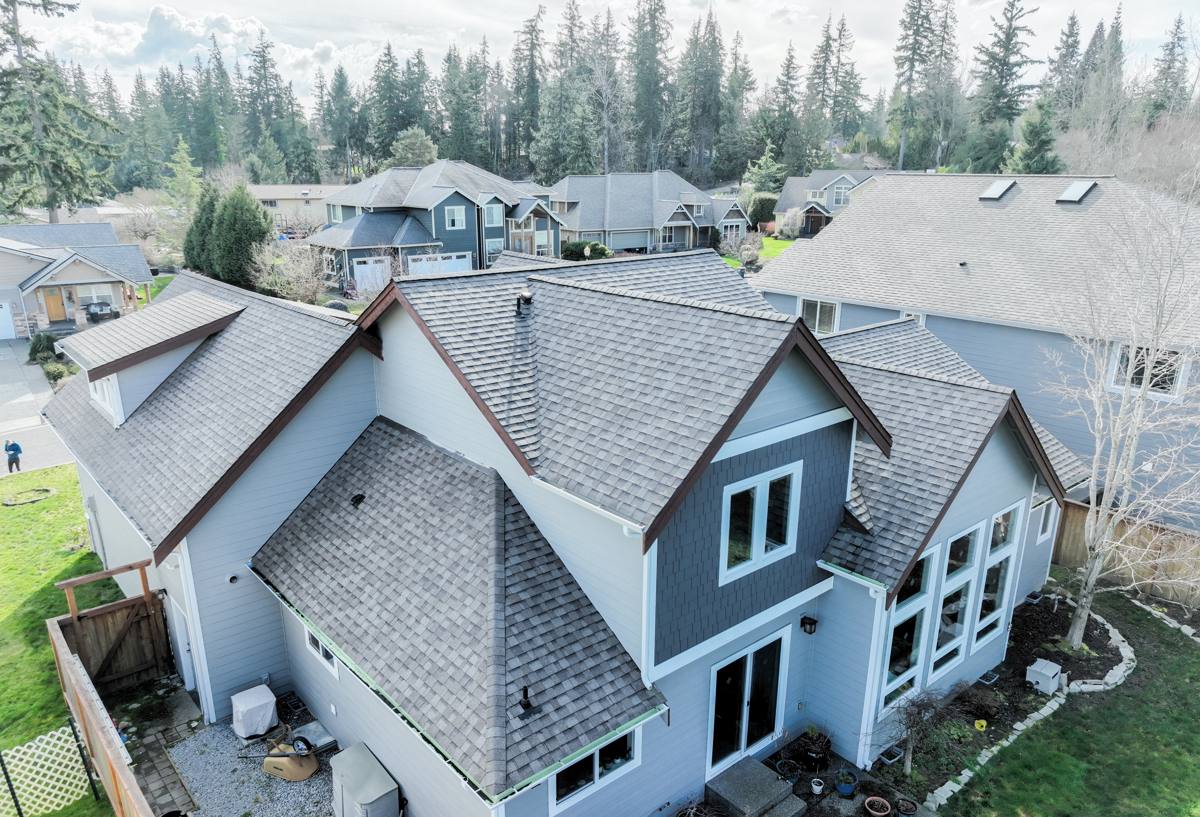
Signs Nooksack Homes Should Watch For
Most siding repair calls we get start with something the homeowner noticed during a walk around the house, not a dramatic failure. Catching these early is the difference between a half-day repair and a full section tear-out.
- Visible cracks or chips in siding panels, especially near corners and window trim
- Soft or spongy spots when you press on siding or trim near the ground level
- Persistent green or black staining that comes back within weeks of cleaning
- Bubbling, peeling, or discolored paint in one localized area rather than the whole wall
- Gaps opening up at seams, butt joints, or where siding meets trim, doors, or windows
- Musty smell or visible staining on an interior wall that backs up to an exterior wall
- Fastener heads popping through the surface or streaking with rust
Any one of these on its own might be minor. Several showing up in the same area, or on the same wall face that takes the worst weather, usually points to a moisture path that needs to be traced back to its source.
What a Correct Repair Actually Involves
Tracing the Water, Not Just Patching the Surface
The single biggest mistake in siding repair is treating the visible damage as the whole problem. A cracked panel or a stained board is usually a symptom. Before we cut anything out, we look at how water is reaching that spot - a failed kick-out flashing above, a gap at a window head, caulk that's shrunk and pulled away, or a grading issue throwing splashback onto the lower courses. Repairing the siding without addressing the water path just buys a year or two before the same spot fails again.
Matching Material and Profile
Siding repair only looks right - and performs right - when the replacement piece matches the existing wall in material, profile, and reveal. Mixing an incompatible product into an existing wall, even in a small patch, creates a seam that behaves differently than the rest of the siding: it expands and contracts at a different rate, takes paint differently, and often becomes the next spot that fails. This is one of the reasons we standardize our repair material to James Hardie fiber cement whenever the existing siding is Hardie, or recommend a full section replacement in Hardie when the existing product has reached the end of what's reasonable to patch.
Flashing and Sealant Details
Almost every repair job includes some flashing or sealant work, even when the call was just about a cracked board. Proper step flashing, head flashing over openings, and correctly placed (not over-caulked) joints are what keep water moving down and out instead of behind the wall. Skipping this step is the most common shortcut in cheap repair work, and it's usually invisible until the next wet season.
Repair vs. Replacement: How We Make the Call
Not every damaged wall needs full replacement, and not every crack can be safely spot-repaired. We look at the extent of the damage, the age and condition of the surrounding siding, and what's happening behind the wall before recommending either path.
| Factor | Favors Repair | Favors Replacement |
|---|---|---|
| Extent of damage | Isolated to one or two areas | Spread across multiple walls or elevations |
| Sheathing condition | Dry, solid framing behind the damage | Soft or rotted sheathing found on inspection |
| Age of existing siding | Product still well within its service life | Siding near or past its expected lifespan |
| Material match available | Compatible profile and color still obtainable | Product discontinued or no longer matches |
| Underlying cause | Single identifiable, fixable water path | Systemic issue affecting the whole wall system |
When the inspection turns up dry framing and a clear, fixable cause, repair is the honest recommendation - we're not going to push a full re-side on a homeowner who doesn't need one. When we find rot, chronic moisture, or siding old enough that patching would look and perform inconsistently, we'll say so plainly and explain why.
Why We Repair With James Hardie - and Won't Mix in Something Else
Our company installs and repairs with James Hardie fiber cement exclusively. We don't install or patch with vinyl, LP SmartSide, cedar, primed spruce, or other fiber cement brands like Cemplank or Allura. That's a deliberate standard, not a sales pitch, and it matters just as much on a repair job as it does on a full install.
James Hardie's ColorPlus factory finish and HZ5 formulation are engineered for exactly the wet, marine-influenced climate found around Whatcom County - resistant to moisture absorption, non-combustible, and backed by a strong transferable warranty when installed to spec. When we repair a Hardie wall, we can match panel profile, reveal, and finish closely enough that the repair blends in rather than standing out as an obvious patch. When a homeowner has a different siding product and wants repair work, we'll give an honest assessment of what's realistic - but our recommendation, when replacement becomes the better option, is always Hardie, because we've seen what holds up in this climate over the long run and what doesn't.
Our Repair Process
- On-site inspection. We walk the exterior, check moisture readings where staining or softness is present, and identify every affected area - not just the one that prompted the call.
- Root-cause diagnosis. We trace visible damage back to its water source: flashing, caulk failure, grading, or a construction detail that was never right to begin with.
- Written scope and estimate. You get a clear explanation of what needs repair, what caused it, and what it will cost - no vague line items.
- Repair work. Damaged material is removed, any wet sheathing or framing is addressed, flashing and sealant details are corrected, and matching Hardie material is installed and finished.
- Final walkthrough. We review the completed work with you and point out anything worth keeping an eye on going forward.
What Happens When Repairs Get Put Off
Whatcom County's wet season doesn't pause for a homeowner's schedule. A cracked panel that goes unrepaired through one winter of driving rain lets water behind the siding for months at a stretch. By spring, what would have been a straightforward panel swap can turn into replacing wet sheathing, dealing with insulation that's absorbed moisture, or - in the worst cases - structural framing repair. Moss left to spread across a damaged area also holds moisture against the wall longer, which speeds up exactly the kind of rot that turns a small repair into a big one. Addressing damage in the dry season, when it's found, is almost always the cheaper and simpler path.
Why Local Experience in the Nooksack Area Matters
A repair crew that already works around Ferndale and out toward Nooksack knows what this specific stretch of Whatcom County throws at a house - the moss buildup patterns on north-facing walls, the way driving rain hits certain exposures harder than others, and which construction details tend to fail first in homes built to older codes. That familiarity means a faster, more accurate diagnosis on the first visit instead of a guessing process. It also means we're a known, reachable crew if a repair needs a follow-up check after the next big storm season, not a company that did one job and moved on.
What to Ask Before Hiring Anyone for Siding Repair
- Will you identify the cause of the damage, or just patch what's visible?
- What material will you use, and will it match my existing siding's profile and finish?
- Do you check for wet or damaged sheathing before closing the wall back up?
- Is your estimate itemized, and does it explain why each part of the repair is needed?
- Are you licensed and insured to work in Washington, and can you provide proof?
A contractor who can't answer these clearly, or who wants to quote a repair without actually inspecting the damaged area in person, is worth being cautious about.
If you're seeing cracked, stained, or failing siding on a home in or around Nooksack, we're happy to take a look and give you a straightforward, no-pressure assessment of what's going on and what it would take to fix it right. Use the form below to request a free estimate.