 Ferndale Siding
 Roofs Near Lummi Nation Take a Different Kind of Beating
Homes around Lummi Nation sit close to the water, and that changes what a roof has to deal with year after year. You're not just fighting normal Pacific Northwest rain here — you're dealing with salt-laden air coming off Bellingham Bay and Lummi Bay, wind-driven rain that gets pushed sideways into valleys and flashing, and a long, damp moss season that starts earlier and lasts longer than it does further inland. A roof repair strategy that works fine in a dry, inland neighborhood often falls short out here, because the failure points are different and the exposure is more constant.
We've done roof work throughout Whatcom County long enough to know that a repair near the shoreline needs to account for corrosion, trapped moisture, and biological growth — not just a missing shingle or two. This page focuses specifically on roof repair for homes in and around Lummi Nation, what tends to go wrong here, and how we approach fixing it correctly the first time.
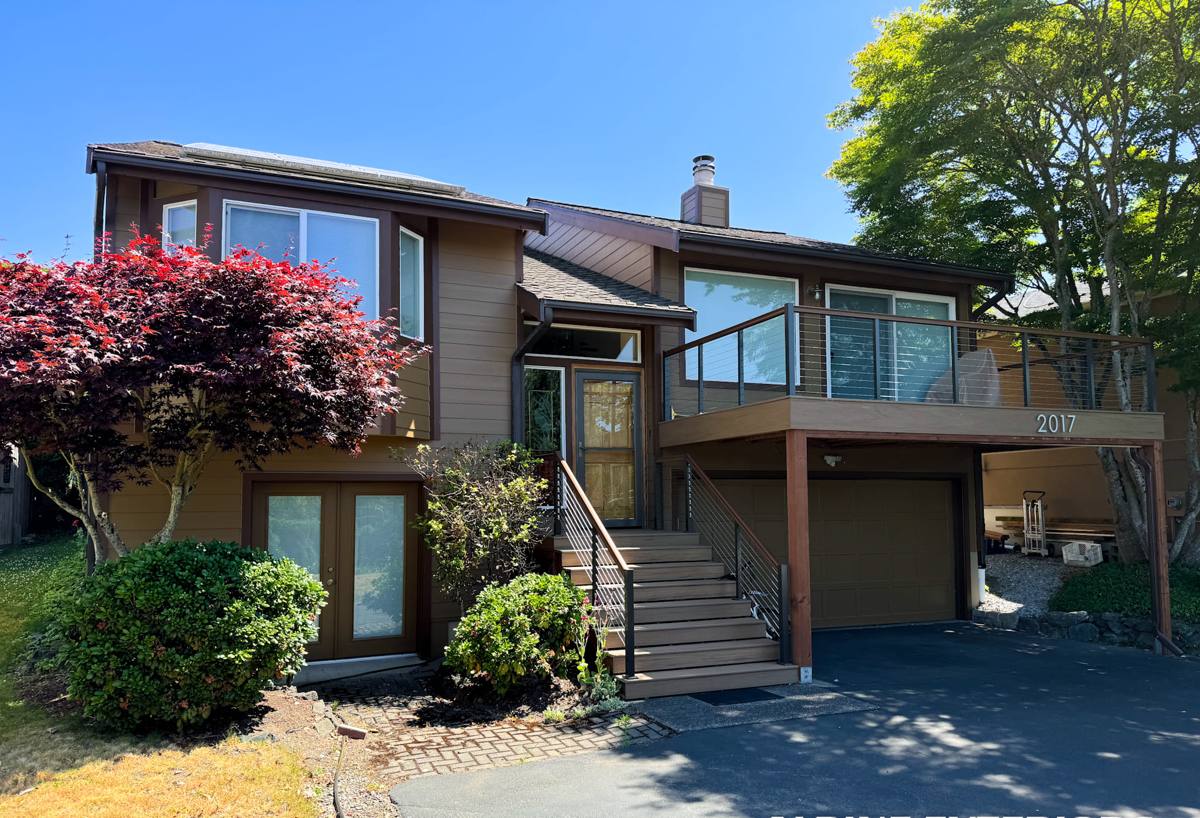
What Salt Air, Rain, and Moss Actually Do to a Roof
Salt Air and Metal Fatigue
Salt in the air accelerates corrosion on anything metal — nails, flashing, drip edge, gutter hangers, and exposed fasteners on metal roofing. A fastener that would last decades inland can start showing rust streaks or weakening well before that near the water. Once a fastener corrodes, the seal around it weakens, and that's often where a small leak starts.
Wind-Driven Rain
Storms coming off the water don't just drop rain straight down — they push it sideways, driving moisture up under shingle tabs, into valleys, and around chimney and vent flashing. Roofs that are otherwise in decent shape can still leak at these transition points because standard installation tolerances aren't built for sustained horizontal rain.
Moss, Shade, and Trapped Moisture
The tree cover common around Lummi Nation keeps roofs shaded and slow to dry out after rain. That combination — shade plus consistent moisture — is exactly what moss and algae need to take hold. Moss doesn't just look bad; it holds water against the roofing material, lifts shingle edges as it grows, and works its way into seams over time. Left alone, a moss mat can turn a simple maintenance issue into a repair job.
Signs Your Roof Needs Repair, Not Just a Look
A lot of homeowners wait until there's an active drip inside the house before calling anyone, but roofs usually give warning signs well before that point. Catching these early is almost always cheaper than waiting.
- Granules collecting in gutters or at the base of downspouts — a sign shingles are wearing thin
- Dark streaking or thick moss growth, especially on north-facing or heavily shaded slopes
- Curling, cracked, or lifted shingle edges near valleys and roof edges
- Rust stains running down from metal flashing, vents, or chimney caps
- Soft or discolored spots on ceilings or in the attic after a heavy storm
- Daylight visible through the roof deck when viewed from inside the attic
- Gutters pulling away from the fascia or sagging under debris weight
If you're seeing more than one of these, it's worth having someone look before the next big storm rolls through off the bay.
What a Correct Roof Repair Actually Involves
A good repair isn't just swapping out the shingle that's visibly damaged. The damaged shingle is usually a symptom, not the whole story. Here's what we check and address on a typical repair near Lummi Nation:
Diagnosing the Real Source
Water travels before it shows up as a stain, so the spot on your ceiling isn't always directly below the actual leak. We trace the path — checking flashing, valleys, vent boots, and underlayment condition — before deciding what needs to be replaced.
Flashing and Transition Points
Given how much wind-driven rain this area sees, flashing around chimneys, skylights, dormers, and roof-to-wall transitions gets extra attention. Corroded or improperly lapped flashing is one of the most common repeat-leak causes we find on shoreline-area homes.
Underlayment and Deck Condition
If water has been getting under the roofing material for a while, the underlayment and even the wood decking underneath can be compromised. A repair that just covers over soft or rotted decking won't hold — that section needs to be cut out and replaced before new material goes down.
Matching Materials Correctly
Whenever possible, we match existing shingle type, profile, and color so the repair blends in rather than standing out as an obvious patch. When an exact match isn't available, we'll tell you honestly rather than promising a seamless result we can't deliver.
Repair vs. Replacement: How We Help You Decide
Not every roof problem near Lummi Nation means you need a full replacement, but sometimes repair is just delaying an inevitable, more expensive job. We walk through this honestly with every homeowner rather than defaulting to whichever option is bigger.
| Factor | Favors Repair | Favors Replacement |
|---|---|---|
| Roof age | Under 15 years, isolated issue | Nearing or past expected lifespan |
| Extent of damage | Localized to one area or valley | Spread across multiple slopes |
| Decking condition | Solid, dry wood underneath | Soft, rotted, or repeatedly wet |
| Moss/algae coverage | Light, surface-level growth | Heavy mats lifting shingles |
| Leak history | First occurrence in this spot | Recurring leaks in the same or new areas |
| Budget timeline | Need a durable short-term fix | Ready to solve it long-term |
If your roof checks most of the boxes in the "favors repair" column, a targeted repair is usually the right call and the more cost-effective one. We'll never push a full replacement on a roof that just needs proper attention to a specific problem area.
Our Roof Repair Process
Homeowners near Lummi Nation deal with enough uncertainty around weather timing — the process shouldn't add to it. Here's how a typical repair goes with us:
- Inspection. We get on the roof (or use a camera when access or safety requires it) and check the full roof, not just the reported problem spot, since related issues often hide nearby.
- Honest diagnosis. We explain what's actually wrong, what caused it, and what your realistic options are — including if a repair alone will hold or if you're better off planning for replacement soon.
- Written estimate. You get a clear scope and price before any work starts. No surprise add-ons once we're already on the roof.
- Repair work. We replace damaged shingles, decking, flashing, or underlayment as needed, matching materials as closely as possible.
- Cleanup and check. Nails, debris, and old material get cleared from the roof and yard, and we do a final walkthrough with you.
Timing Around Local Weather
We schedule repairs with Whatcom County's storm patterns in mind. Between-storm windows in fall and spring are often the best time to get a repair done before winter systems roll in off the water, but we handle emergency tarping and temporary weatherproofing when a leak can't wait for ideal conditions.
Roof Types We Repair and What Each One Needs
| Roof Type | Common Issue Near Lummi Nation | Repair Focus |
|---|---|---|
| Asphalt shingle | Granule loss, curling, moss lift | Shingle replacement, valley resealing |
| Metal roofing | Fastener corrosion, seam movement | Fastener replacement, seam resealing |
| Cedar shake | Moss growth, splitting from moisture cycling | Shake replacement, ventilation check |
| Flat/low-slope | Ponding water, membrane seam failure | Membrane patching, drainage correction |
Each roof type fails differently, which is why we treat the diagnosis step as the most important part of the job — a fix that works on asphalt shingles isn't necessarily the right fix for a metal or cedar roof with a similar-looking problem.
Moss and Debris: An Ongoing Fight, Not a One-Time Job
Because of the tree cover and consistent moisture around Lummi Nation, moss and debris management isn't a once-and-done task — it's an ongoing part of roof care. As part of a repair visit, we'll often flag areas where moss is likely to return and talk through options for slowing it down.
- Physically remove moss rather than power-washing, which can strip granules and shorten shingle life
- Clear overhanging branches where reasonable to reduce shade and speed up drying time
- Keep gutters and valleys clear so water doesn't pool against shingle edges
- Consider zinc or copper strips near the ridge on moss-prone slopes to slow regrowth
- Schedule a moss check every year or two rather than waiting until growth is heavy
Why Working With a Crew That Knows This Area Matters
Roof repair advice that works in a dry inland climate doesn't automatically transfer to a shoreline-adjacent community like Lummi Nation. A crew unfamiliar with the area might under-spec flashing for wind-driven rain, skip moss-prevention steps that matter here, or miss early corrosion signs on metal components because they're not used to looking for them. We've repaired roofs throughout Whatcom County long enough to know which failure points show up again and again near the water, and we build that knowledge into every inspection and repair — not as an upsell, but because it's what actually holds up.
We're also straightforward about scope. If a repair is genuinely all your roof needs, that's what we'll recommend and do. If we spot signs that a bigger problem is developing, we'll tell you plainly and let you decide the timeline — no pressure tactics, no inflated urgency.
Simple Maintenance Between Repairs
A little regular attention goes a long way toward avoiding emergency repairs in this climate. A few habits worth keeping up between professional inspections:
- Walk the yard after major storms and look for shingle pieces or granules on the ground
- Check visible gutters and downspouts for clogs, especially after leaf drop in fall
- Look at the roofline from ground level for new moss patches or discoloration each season
- Note any new ceiling stains or musty smells in upper rooms or the attic promptly
- Have the roof looked at professionally at least once a year, more often if it's heavily shaded
If you're dealing with a leak, visible damage, or just want an honest read on your roof's condition, we're happy to come take a look. Reach out for a free, no-pressure estimate using the form below, and we'll give you a straight answer about what your roof actually needs.