 Ferndale Siding
 Why Nooksack-Area Roofs Wear Differently
Homes along the Nooksack River corridor near Ferndale sit in a specific kind of weather pocket. You're close enough to Bellingham Bay to pick up salt-laden air moving in off the water, low enough in the river valley to collect fog and standing moisture through fall and winter, and exposed to the driving, sideways rain that Whatcom County gets when storms roll in off the Strait of Georgia. None of that is dramatic on its own. Added together, year after year, it's exactly the kind of environment that shortens the life of a poorly built asphalt shingle roof and barely touches a properly built one.
That's the real difference between a roof that lasts its full rated life and one that needs granule repair, moss removal, or a full replacement ten years early. It's rarely one big failure. It's small shortcuts — the wrong underlayment, a skipped ice-and-water membrane at a valley, nails driven at the wrong angle — that let this climate in.
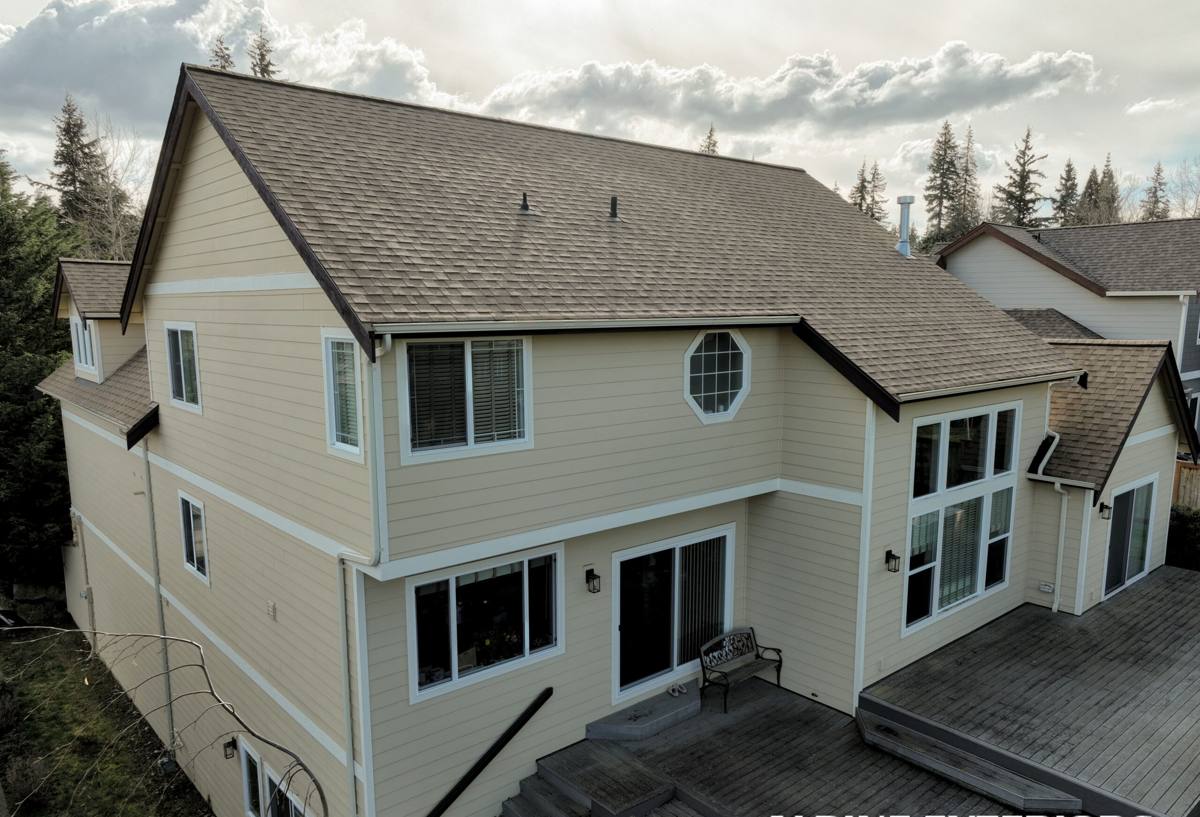
What This Climate Actually Does to Shingles
Moss and Organic Growth
Whatcom County's long, wet, moderate-temperature stretch from October through May is close to ideal growing conditions for moss and algae. On a roof, moss isn't just cosmetic. Its root structure works into the shingle mat, lifts tabs, and holds water against the surface long after the rest of the roof has dried out. That trapped moisture is what eventually works its way under the shingle edge and into the underlayment.
Driving Rain and Wind-Driven Water
Rain that falls straight down is easy for any roof to shed. Rain that comes in at an angle, pushed by wind off open fields and river flats, tests every lap, seam, and fastener. Valleys, low-slope transitions, and any spot where two roof planes meet are where wind-driven rain finds the path of least resistance if the flashing and underlayment underneath weren't detailed correctly.
Salt Air and Metal Fatigue
You don't need to be oceanfront to feel the effect of salt air — it travels inland on wind and settles on every exposed metal surface on a roof: flashing, nail heads, valley metal, vent stacks. Over years, that accelerates corrosion on lower-grade materials, which is why fastener and flashing metal grade matters more here than it would in a dry inland climate.
Choosing the Right Asphalt Shingle System
Not every asphalt shingle product is built the same, and in this climate the differences show up faster than they would somewhere drier. We generally steer homeowners toward laminated architectural shingles with algae-resistant (AR) granules over standard three-tab shingles for anything in the Nooksack area, for a few concrete reasons:
- Algae-resistant granules contain copper or zinc compounds that actively slow moss and algae colonization, rather than just resisting stains
- Laminated architectural shingles have a thicker, multi-layer construction that holds up better against wind uplift and holds granules longer under constant moisture cycling
- Higher wind-rated products (110+ mph sealed-strip designs) matter more here than the marketing suggests — this is a windy river valley, not a sheltered lot
- Manufacturer warranties on algae resistance and wind performance are only honored when the shingle is installed to spec, which is as much about our installation practices as the shingle itself
We don't push a specific brand as superior across the board — reputable manufacturers all make comparable-tier products. What matters more is matching the shingle's rated wind speed, algae resistance, and underlayment compatibility to what this specific site actually experiences, and installing it exactly to that manufacturer's specification so the warranty is real, not just paperwork.
What a Correct Installation Actually Involves
A roof that's going to hold up here is built in layers, and each layer has a job:
Deck Inspection and Repair
Before anything goes down, the existing deck gets checked for soft spots, delamination, or rot — especially around old vent penetrations and valleys, which is where slow leaks tend to do their damage first. Any bad sheathing gets replaced before a single shingle is installed.
Ice and Water Shield at Vulnerable Areas
Valleys, eaves, and roof-to-wall transitions get a self-adhering waterproof membrane underneath the shingles, not just felt. This is the layer that stops wind-driven rain that manages to get past the shingle surface from ever reaching the deck.
Synthetic Underlayment Across the Field
Synthetic underlayment sheds water better than old-style felt, holds up longer if the roof sits exposed for a day or two during install, and doesn't wrinkle the way felt can in damp conditions — a real consideration on a job site that might see rain mid-project here.
Correct Flashing at Every Penetration
Chimneys, vent stacks, skylights, and wall step-flashing are where most roof leaks actually originate — not the open shingle field. Each of these gets new, properly lapped flashing, not a bead of sealant over old metal.
Proper Nailing and Ventilation
Shingles are only as wind-resistant as their fastening. That means the manufacturer's specified nail count, placement in the nailing zone (not high or low), and a balanced intake/exhaust ventilation system so heat and moisture don't build up in the attic and cook the shingles from underneath.
Our Process, Start to Finish
- On-roof inspection — we walk the roof (weather permitting) and check the deck, flashing, ventilation, and current shingle condition, not just look from the ground
- Written estimate — a clear breakdown of material, labor, and any deck repair, so there are no surprise add-ons mid-job
- Material staging and protection — landscaping, gutters, and siding get protected before tear-off begins
- Tear-off and deck check — old roofing comes off down to the deck so we can actually see what's underneath, not roof over unknown problems
- Underlayment, flashing, and shingle installation — installed to manufacturer spec for wind and warranty compliance
- Cleanup and magnetic sweep — job site and yard cleared of debris and stray fasteners
- Final walkthrough — we review the finished roof with you before calling the job done
Ventilation and Moisture Control Matter as Much as the Shingle
A premium shingle installed over a poorly ventilated attic will still fail early in this climate. Trapped heat and moisture in the attic cook shingles from below and encourage condensation that can rot decking independent of anything happening on the roof surface. Here's how the common ventilation approaches compare for this region:
| Ventilation Approach | How It Performs Here | Best Fit |
|---|---|---|
| Ridge vent + soffit intake | Balanced airflow, handles our humid winters well, low profile | Most homes with adequate soffit depth |
| Box vents (static) | Workable but less consistent airflow than ridge venting | Roofs without a straight ridge run |
| Power attic fans | Can pull conditioned air from living space if not balanced correctly | Only when passive venting can't meet code minimums |
| Gable vents only | Often insufficient alone in wet, low-wind valley locations | Rarely recommended as the sole system here |
Cost Factors for a Nooksack-Area Reroof
Every roof is different, but the price of a reroof in this area is generally driven by the same handful of variables:
| Factor | Why It Matters Here |
|---|---|
| Roof size and pitch | Steeper pitches near river-valley wind exposure need more fall protection and time |
| Number of valleys and penetrations | Each one needs ice-and-water membrane and custom flashing — the leak-prone spots |
| Deck condition under old shingles | Moss and trapped moisture over the years sometimes mean hidden sheathing repair |
| Shingle tier chosen | Algae-resistant, higher wind-rated architectural shingles cost more but last longer here |
| Ventilation upgrades needed | Older homes often need intake or exhaust vents added, not just shingles swapped |
We don't quote a price without seeing the roof — anyone who does is guessing, and guesses on a reroof tend to turn into change orders.
Simple Maintenance That Extends Roof Life Here
A well-installed roof still benefits from basic upkeep given what this climate throws at it:
- Keep gutters clear so water isn't backing up under the eave edge during heavy rain
- Trim back overhanging branches that keep sections of roof shaded and slow to dry
- Have moss treated (not pressure washed, which strips granules) as soon as it appears rather than waiting a full season
- Schedule a roof check after any major windstorm to catch lifted or displaced shingles early
- Have an annual look at flashing around chimneys and vents, since that's where small leaks start
Why Local Experience on This Specific Job Matters
A roofing crew that already works the Nooksack area and greater Ferndale knows which side of a roof takes the worst of the wind-driven rain, how much moss pressure to expect on a north-facing slope shaded by trees, and which flashing details tend to fail first on homes built to older code in this part of Whatcom County. That's not something you get from a general roofing crew passing through — it comes from working this specific climate, on this specific terrain, repeatedly.
If you're weighing a repair against a full reroof, or just want an honest read on how much life is left in your current shingles, we're glad to take a look. Fill out the form below for a free, no-pressure estimate — we'll tell you what we actually see, not just what sells a job.