 Ferndale Siding
 Building a Deck That Actually Holds Up in Kendall
Kendall sits up the valley from Ferndale, closer to the foothills and the tree line, which means a different set of conditions than a deck built closer to town. Homes out here deal with more shade, more standing moisture under the canopy, and a longer stretch of the year where wood surfaces simply don't dry out between rains. Add in the driving rain that moves through Whatcom County off the Sound and the moisture-laden marine air that pushes up the valley, and you have a climate that is unusually hard on outdoor structures. A deck built to a generic spec sheet will show it within a few seasons — soft spots, black streaking, loose fasteners, boards that cup or crown.
A deck built correctly for this specific area is a different animal. It's not about using fancier materials for the sake of it; it's about matching the structure, the fasteners, the drainage, and the finish to what Kendall's climate actually does to wood and metal over time. That's the whole focus of this page — not decks in general, but decks that are built and detailed for this particular corner of the county.
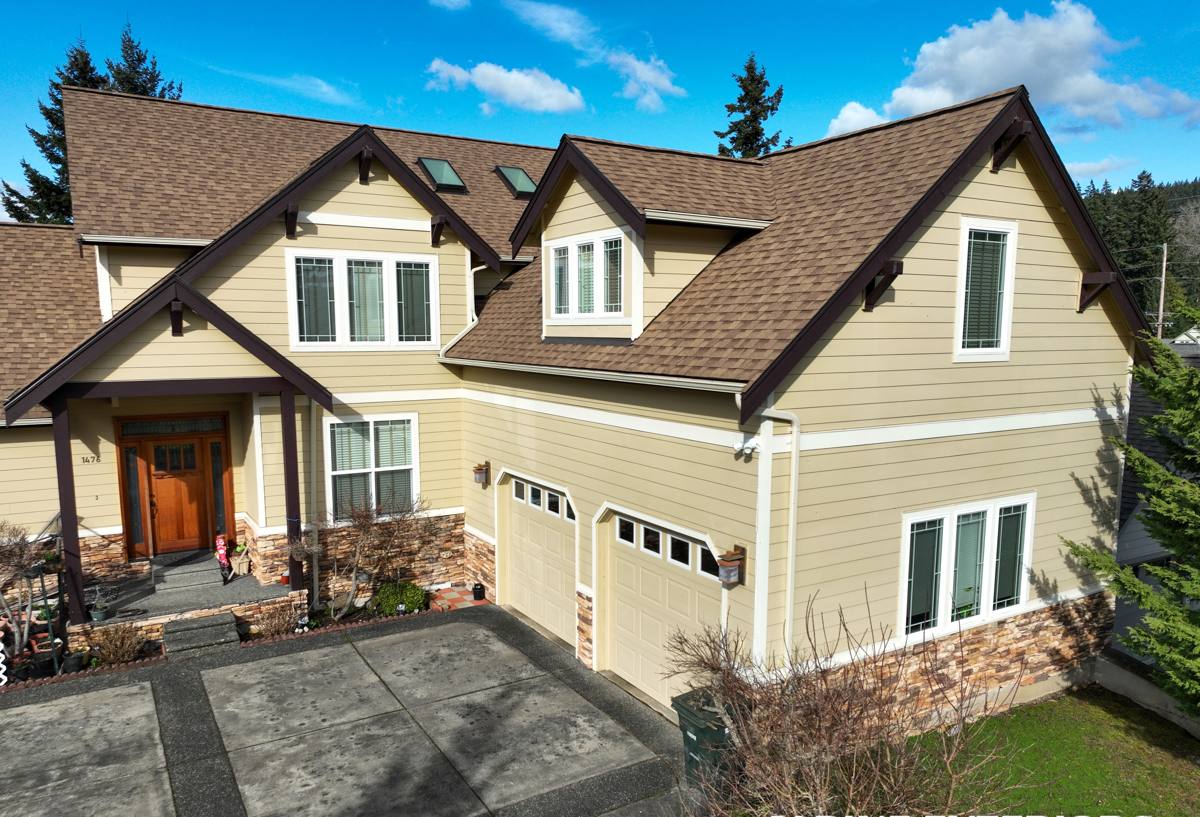
What Kendall's Site Conditions Demand From a Deck
Every deck we build starts with a walk of the site, because Kendall properties vary more than people expect. Some sit in fairly open yards; a lot of them back up to trees or sit on sloped, wooded lots where sun exposure is limited for large parts of the day. That shade is pleasant to sit under and terrible for a deck surface, because it slows drying time after every rain event and gives moss and algae a head start.
Shade and Moisture Load
A deck under heavy tree cover can stay damp for days after a storm rolls through. That extended wet time is what drives rot in ledger boards, softens joists, and turns decking boards slick and green if they're not detailed and finished correctly.
Slope and Drainage
Many Kendall lots have some grade to them. Water needs somewhere to go once it comes off the deck surface — if the ground under and around the structure doesn't shed water away from the house foundation and footings, you end up with standing moisture right where you don't want it.
Snow and Cold Snaps
Being closer to the foothills, Kendall sees more of the occasional heavy wet snow load and hard freeze than lower-elevation parts of the county. Footings need to be set to the proper frost depth, and framing needs to be sized to carry that extra weight without flexing.
Choosing Decking Material for This Climate
There's no single "best" decking material — there's the right material for how a specific deck will be used, how much shade it sits in, and what the homeowner wants to maintain. We walk every Kendall client through the honest trade-offs rather than pushing whatever has the best margin.
| Material | How It Handles Kendall's Climate | Maintenance |
|---|---|---|
| Pressure-treated lumber | Affordable and strong, but needs a solid finish schedule to resist moss and checking under heavy shade | Sealing every 1-2 years, more often in shaded spots |
| Cedar | Naturally resists rot better than untreated wood and looks warm, but softens faster than composite under constant wet-dry cycling | Regular sealing/staining, cleaning to slow graying and moss |
| Composite decking | Doesn't absorb moisture the way wood does, so it resists warping and rot in shaded, damp spots — but can still grow surface algae if it's never cleaned | Periodic washing, no sealing or staining needed |
For decks that sit under significant tree cover — which describes a good number of Kendall lots — we lean toward composite or a well-detailed cedar build over bare pressure-treated boards, simply because the extended wet time in the shade is hard on lumber that isn't maintained on a strict schedule. That's a recommendation based on how the site behaves, not a blanket rule; plenty of open, sunny Kendall lots do fine with quality pressure-treated construction and a good finish.
The Structural Work Nobody Sees
The decking boards are what you walk on, but the framing underneath is what determines whether the deck is still solid in ten or twenty years. This is where a lot of corner-cutting happens on lower-bid deck jobs, and it's the part homeowners can't easily inspect once it's finished.
Ledger Board Flashing
The ledger board — where the deck attaches to the house — is the single most common failure point on decks in wet climates. If it isn't properly flashed to shed water away from the house rim joist, moisture works its way behind the flashing and rots both the ledger and the framing it's attached to, often silently for years. We flash every ledger connection with the assumption that water will hit it directly, because in this climate it will.
Footings and Frost Depth
Footings need to be dug to the correct depth for our frost line and set on undisturbed or properly compacted soil. A footing that's too shallow or poured on loose fill will shift over time, which shows up later as a deck that feels bouncy or slightly out of level.
Fasteners and Hardware
Standard hardware corrodes faster than most people expect in a climate with this much sustained moisture and, closer to the water, some salt-laden air working its way inland. We use stainless steel or hot-dip galvanized fasteners and connectors rated for treated lumber, and we make sure every joist hanger, post base, and structural screw matches that standard — not just the ones that are easy to see.
Joist Protection
Taping the tops of joists before decking goes down keeps water from pooling in fastener holes and wicking into the joist itself. It's a small step that adds real years to the life of the framing, especially under a deck that doesn't get much direct sun to dry out.
Moss, Mildew, and the Long-Term Maintenance Picture
Moss isn't just cosmetic — on a deck surface it holds moisture against the boards and makes the surface genuinely slick and dangerous, especially on stairs. Whatcom County's long wet season and Kendall's extra tree cover both work against a deck surface here more than they would somewhere drier or more open.
The building phase can reduce how bad this gets over time. Proper board spacing lets air move and water drain through instead of sitting on top. Good drainage under the deck keeps the ground below from staying saturated and feeding moisture back up into the structure. And picking a surface material suited to the amount of shade a given deck sits in cuts down on how often it needs attention.
Even with all of that done right, every deck in this climate benefits from periodic cleaning — sweeping off debris, rinsing pollen and organic buildup, and keeping gutters above the deck clear so runoff isn't dumping directly onto the surface. We're upfront with clients about what a realistic maintenance schedule looks like for their specific deck rather than promising a "no-maintenance" outcome that doesn't hold up in this climate.
Permits and Whatcom County Requirements
Most custom decks in Whatcom County require a building permit, and the requirements depend on the deck's height, size, and attachment to the house. Permitted work means an inspector checks the footings and framing before the decking goes down — which is actually a benefit to the homeowner, since it catches structural issues before they're covered up.
We handle the permitting process as part of the job: pulling the permit, scheduling inspections, and building to the code requirements that apply to the specific site rather than treating permits as paperwork to work around. A deck built without proper permitting can create real problems later, from insurance questions to issues at resale.
Our Process, Start to Finish
1. On-Site Consultation
We walk the property with you, look at sun exposure, slope, tree cover, and how you actually plan to use the space, and talk through material options honestly.
2. Design and Proposal
We put together a design and a written proposal that spells out materials, structural approach, and cost — no vague allowances that turn into surprise change orders.
3. Permitting
We pull the required Whatcom County permit and schedule inspections at the appropriate points in the build.
4. Site Prep and Footings
Footings are dug to proper frost depth and inspected before we build on top of them.
5. Framing and Flashing
Ledger flashing, joist layout, hardware, and joist tape all go in before decking starts — this is the stage that determines the deck's real lifespan.
6. Decking and Finish
Boards are installed with proper spacing for drainage and airflow, and any sealing or staining is done to spec.
7. Final Walkthrough
We walk the finished deck with you, cover the maintenance schedule that fits your specific site, and make sure every question is answered before we consider the job done.
A Practical Checklist Before You Sign a Deck Contract
- Is the contractor pulling a Whatcom County building permit, or asking you to skip it?
- Are footings specified to the correct frost depth for our area?
- Is the ledger board flashing detailed in writing, not just assumed?
- Are fasteners and structural hardware rated stainless or hot-dip galvanized?
- Does the proposal specify board spacing and under-deck drainage, especially for shaded lots?
- Is the decking material recommendation matched to your site's actual sun and shade conditions?
- Does the contractor give you a realistic maintenance schedule instead of a "no-maintenance" promise?
Why Hire a Crew That Already Works in Kendall
A contractor who mainly builds decks in drier climates or in wide-open, sunny lots doesn't always think about the compounding effect of tree cover, slope, and sustained coastal moisture the way a crew that works this specific area does. Kendall's mix of foothill terrain, heavy shade on a lot of properties, and Whatcom County's long wet season is a specific combination — and the details that matter most, like ledger flashing, fastener grade, and drainage under the deck, are exactly the parts that are easy to shortcut and hard for a homeowner to check after the fact.
Working regularly in Kendall and the surrounding Ferndale area means we've seen how decks in these conditions actually age, not just how they look on installation day. That shapes the material recommendations we make, how we detail the framing, and the maintenance guidance we give you at the end of the job.
If you're planning a new custom deck or replacing one that hasn't held up, we're happy to walk your property and give you a straightforward assessment — no pressure, no hard sell. Use the form below to request a free estimate, and we'll take it from there.