 Ferndale Siding
 Sudden Valley Roofs Work Harder Than Most
If you own a home in Sudden Valley, you already know your roof doesn't get an easy life. Whatcom County sits close enough to the water that salt-laden air moves through the region year-round, and it settles into roofing materials the same way it settles into everything else out here — quietly, and over years. Add in long stretches of driving rain each fall and winter, plus a moss season that can run from October through May in shaded or north-facing sections of a roof, and you've got three separate stressors working on the same shingles, flashing, and underlayment at the same time.
None of that means a Sudden Valley roof is doomed to constant problems. It means the roof needs to be built, maintained, and repaired with those conditions in mind — not treated like it's sitting in a dry, low-moisture climate somewhere else in the country. A repair that would hold up fine in a drier region can fail here in a single wet season if it wasn't done with local conditions accounted for.
What "Roof Repair" Actually Covers
Roof repair is a broad term, and it covers a wide range of jobs — some small, some substantial. In Sudden Valley, the repair calls we see tend to fall into a few recurring categories, almost all tied back to moisture, moss, or wind.
Common Repair Calls in This Area
- Shingles lifted, cracked, or blown loose from wind-driven rain
- Flashing that has pulled away or corroded around chimneys, vents, and skylights
- Moss growth that has worked its way under shingle edges, holding moisture against the roof deck
- Soft spots or staining on interior ceilings that trace back to a slow, hard-to-spot leak
- Gutter and edge issues that let water back up under the roofline instead of shedding off
- Nail and fastener failure where repeated wet-dry cycles have loosened the roof's grip on itself
Some of these are quick fixes. Others are a sign that a small area of the roof has been compromised for a while and needs more than a patch. Part of doing this job honestly is telling a homeowner which situation they're actually in, rather than defaulting to the biggest possible scope of work.
How We Diagnose the Problem Before We Touch Anything
A roof repair is only as good as the diagnosis behind it. Chasing the spot where water is dripping inside the house often leads to the wrong location on the roof — water travels along rafters and sheathing before it shows up as a stain, sometimes several feet from where it actually entered. We start every repair call by tracing the problem from the inside out where possible, then confirming it on the roof itself, rather than guessing based on where the ceiling looks worst.
That matters more here than in drier climates. With as much rain as Whatcom County sees, a leak that isn't correctly traced gets "fixed" in the wrong spot, the homeowner thinks it's resolved, and the actual entry point keeps feeding moisture into the deck all winter. By the time it's caught, what could have been a shingle repair has turned into a deck replacement.
Signs You Need a Repair Call Now, Not Later
- A ceiling stain that's new, growing, or darker after a heavy rain
- Visible daylight through the roof deck from inside an attic
- Shingles you can see are curling, cracked, or missing from the ground
- Thick moss mats, especially where two roof planes meet or on north-facing slopes
- Granules collecting in gutters or at the base of downspouts
- A musty smell in an upstairs room or attic that wasn't there before
What a Correct Repair Actually Involves
A proper roof repair isn't just swapping a shingle and calling it done. Done right, it involves a few consistent steps regardless of the size of the job:
- Confirming the full extent of the damage, not just the visible surface symptom
- Checking the roof deck underneath for soft spots, rot, or delamination before covering it back up
- Replacing or repairing underlayment in the affected area, not just the shingles on top of it
- Matching flashing details to the original roof geometry so water is redirected, not trapped
- Using fasteners and materials rated for the exposure that section of roof actually sees
- Checking adjacent areas for early-stage problems that haven't caused visible damage yet
That last step is one that gets skipped when a repair is rushed. Moss and moisture damage rarely stay contained to one shingle — if there's a wet, compromised section, there's usually a related weak spot nearby that hasn't failed yet but will if it's ignored.
Repair or Replace? What Actually Decides It
Homeowners often ask us to just tell them whether they need a repair or a full roof replacement before we've even looked at anything. The honest answer is that it depends on a handful of specific factors, not the age of the roof alone.
| Factor | Usually Points to Repair | Usually Points to Replacement |
|---|---|---|
| Roof age | Under 15–20 years, depending on material | At or beyond material's expected service life |
| Extent of damage | Localized to one section or penetration | Spread across multiple roof planes |
| Deck condition | Solid, no soft spots found | Soft, spongy, or rotted decking underneath |
| Moss/moisture history | First or occasional occurrence | Chronic moss return year after year |
| Shingle granule loss | Minor, isolated areas | Widespread, bare patches visible |
| Number of prior repairs | First repair on this roof | Third or fourth patch to the same area |
A roof that's had two or three repairs to the same general area in a few years is usually telling you something — either the underlying material is past its useful life, or an earlier repair wasn't done thoroughly. We'll always say so plainly rather than billing for another patch that's likely to fail again.
Materials and What We Use for Repairs
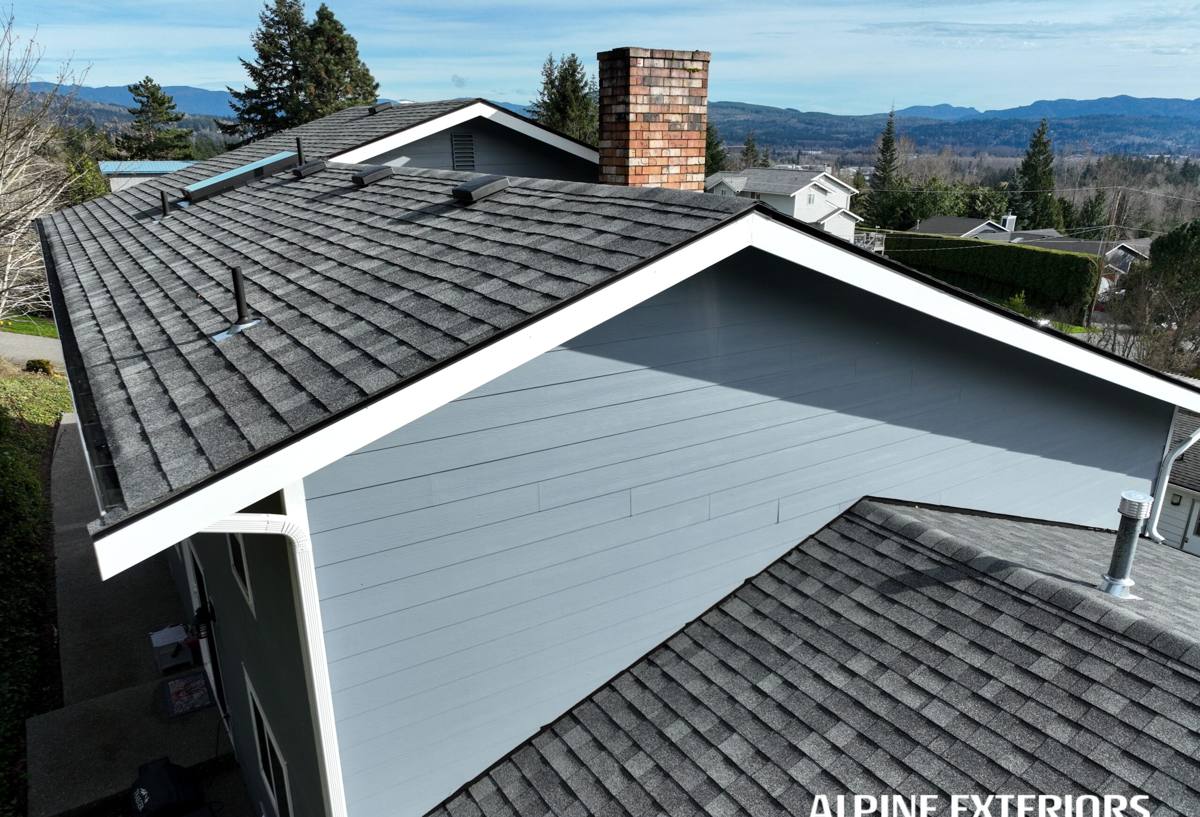
Most Sudden Valley homes are roofed in asphalt composition shingles, with a smaller number of metal roofs and older cedar shake roofs mixed in. Repair work needs to match what's already there — using the wrong shingle profile or a mismatched metal panel doesn't just look off, it can create a new water path where the old and new materials meet.
For asphalt roofs, we favor architectural (laminated) shingles for any repair work where matching allows it, over older 3-tab profiles, because they perform better against wind uplift and shed water more effectively on the kind of driving, wind-pushed rain this area gets. Where a roof has cedar shake, repairs get more attention to moisture behavior specifically — shake holds water differently than composition shingles, and a repair that doesn't account for that can trap moisture instead of shedding it. For metal roofing, most repair issues come down to fastener backout and flashing at penetrations rather than the panels themselves.
We don't push a full material swap on a repair call unless the existing material is genuinely failing. Our standard is to fix what's there correctly, not to upsell a homeowner into a different roofing system when a proper repair will do the job.
Our Process for Sudden Valley Repair Calls
Because we already work regularly in this part of Whatcom County, we're familiar with the general roof pitches, exposure patterns, and moss tendencies common to the area's homes — which speeds up the diagnostic part of the visit. Our process on a typical repair call looks like this:
- A scheduled visit to inspect the roof and the affected interior area, weather permitting
- A clear explanation of what we found, in plain language, before any work starts
- A written estimate that separates the repair scope from any optional recommendations
- The repair itself, completed in a single visit for most standard jobs
- A final check confirming the fix and a look at nearby areas for related early wear
We try to schedule repair work around the weather rather than through it. Roofing over a wet deck or sealing flashing in active rain doesn't hold up, and rushing a repair to fit a tight window is how a fix ends up needing to be redone within a year.
Why Local Experience on This Specific Roof Type Matters
A roof repair crew that mostly works inland, in drier climates, will approach a leak differently than one that works Whatcom County roofs regularly. The difference shows up in small decisions — how much overlap to give flashing given the wind direction driving rain typically comes from, how aggressively to treat moss versus just removing it, which sections of a roof are worth extra scrutiny because they stay shaded and damp longer than the rest.
None of that is exotic knowledge, but it's the kind of thing you only build by repairing roofs in this specific area, in this specific climate, season after season. It's also why we're comfortable giving a straight answer about whether a job is a repair or something bigger — we've seen what these roofs look like at every stage of wear, not just the ones that walk through the door already failing.
Get a Straight Answer on Your Roof
If you're dealing with a leak, moss buildup, or storm damage on a Sudden Valley roof, we're happy to take a look and give you an honest read on what it actually needs — no pressure, no inflated scope. Use the form below to request a free estimate, and we'll get back to you to schedule a time to come out.