 Ferndale Siding
 Metal Roofing in Point Roberts: A Different Kind of Exposure
Point Roberts sits on the tip of a peninsula, with water on three sides and very little standing between the homes there and whatever the Strait of Georgia is doing that day. That's a different exposure profile than most of Whatcom County, including Ferndale proper, and it changes what a roof actually needs to hold up over time. Salt-laden air, wind-driven rain, and a moss season that runs long on shaded, north-facing slopes all put more stress on a roof here than the same roof would face a few miles inland. Metal roofing, installed correctly, handles that combination better than most other roofing materials — but "installed correctly" is doing a lot of work in that sentence, and it's where a lot of jobs go wrong.
This page covers what a Point Roberts home actually needs from a metal roof, what separates a correct installation from one that will cause problems in five to ten years, and how our process works for homeowners in this specific area.
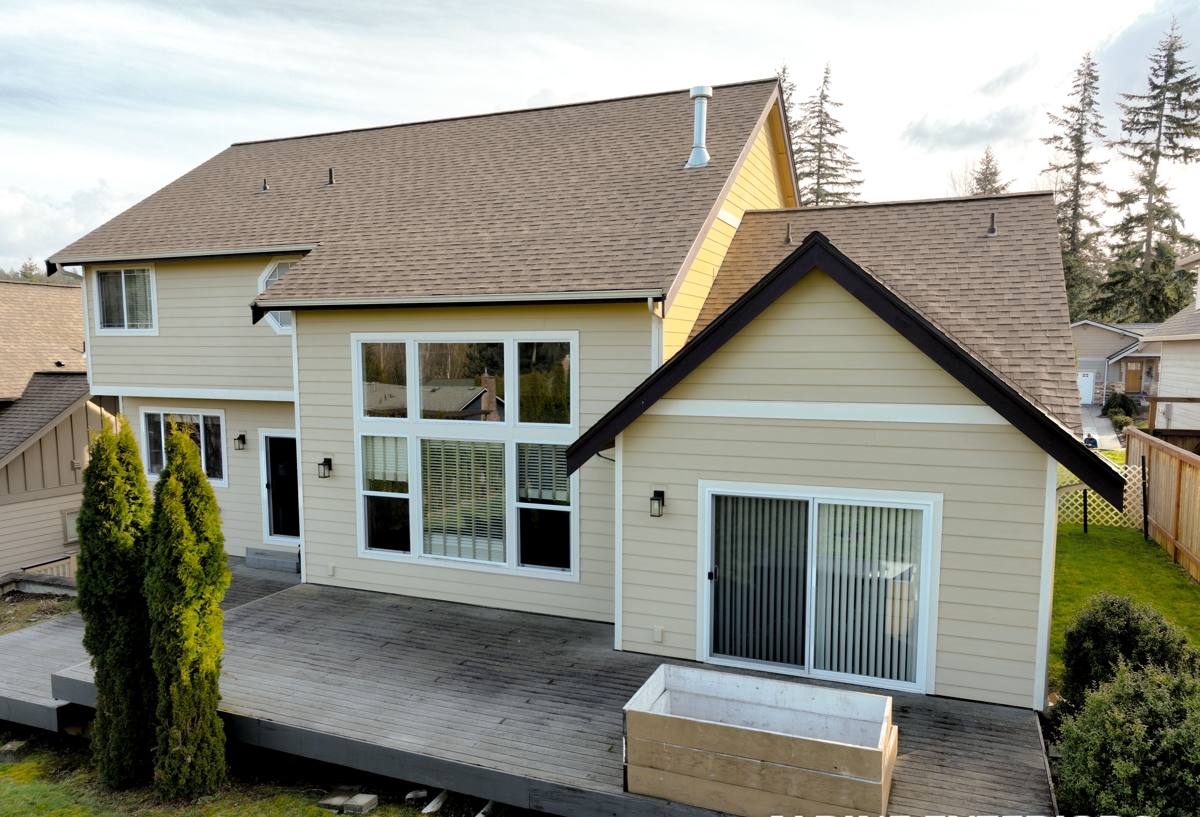
Why Point Roberts' Climate Is Harder on a Roof
Every roof in this region deals with rain and moisture. What makes a peninsula location like Point Roberts more demanding is the combination of factors working together rather than one at a time.
- Salt air corrosion: Being surrounded by marine water on three sides means airborne salt reaches roof metal, fasteners, and flashing more consistently than it does further inland, accelerating corrosion on anything not rated for it.
- Wind-driven rain: Open water exposure means wind isn't blocked by the terrain and tree cover that a more inland lot would have. Rain gets pushed sideways and upward under panel laps and flashing edges instead of just falling straight down.
- A long moss and organic growth season: The Pacific Northwest's mild, wet winters already favor moss. Shaded slopes on a peninsula lot that rarely dries out fully hold that moss and the moisture underneath it even longer.
- Temperature swings near open water: Metal roofing expands and contracts with temperature. Daily swings near open water can be sharper than inland, which matters for how panels are fastened and how they're allowed to move.
None of these factors are exotic or unusual for the region — they're the same forces that shape roofing decisions across Whatcom County. They're simply more concentrated here because of the exposure, which is exactly why the installation details matter more than they might on a sheltered inland roof.
What a Correct Metal Roof Installation Actually Involves
A metal roof is only as good as the details underneath and around it. The panels themselves are rarely where a metal roof fails — the failures show up at fasteners, flashing, underlayment, and the connections between dissimilar materials.
Fastener and Metal Compatibility
Mixing incompatible metals causes galvanic corrosion, where one metal deteriorates faster because it's in contact with another. Steel fasteners against aluminum panels, or the wrong flashing metal against the panel material, will corrode long before the panels themselves show any wear. In a salt-air environment like Point Roberts, this mistake shows up faster and more visibly than it would inland.
Underlayment
Metal panels are the outer weather skin, not the only line of defense. A synthetic, high-temperature underlayment beneath the panels is what actually stops water that gets past a lap or a fastener penetration from reaching the deck. On a wind-exposed roof, this layer matters more, not less.
Flashing at Valleys, Penetrations, and Wall Intersections
Most roof leaks, on metal or any other material, start at flashing details rather than in the open field of the roof. Valleys, chimney and vent penetrations, and where the roof meets a wall are the places wind-driven rain is most likely to find a way in if the flashing isn't lapped, sealed, and fastened correctly for the direction the weather actually comes from on this site.
Fastening Pattern and Panel Movement
Exposed-fastener panels rely on the fastener pattern and spacing to resist wind uplift, and that pattern needs to account for actual local exposure, not a generic minimum. Standing seam systems use concealed clips that let the panel expand and contract with temperature without stressing the fastener points — a real advantage in a location with sharper daily temperature swings near open water.
Choosing the Right Metal Roofing System
Not all metal roofing is the same product wearing different colors. The panel style you choose affects cost, appearance, longevity, and how well the roof handles wind and water in an exposed location.
| System | How It's Fastened | Best Fit for Point Roberts |
|---|---|---|
| Standing seam | Concealed clips, no exposed fasteners through the panel face | Strongest option for wind-driven rain resistance and long-term weathertightness on exposed sites |
| Exposed-fastener panel | Screws driven through the panel face into the deck or purlins | Lower upfront cost, but fastener seals are a maintenance point that needs periodic attention in a salt-air climate |
| Metal shingle or shake profile | Interlocking panels designed to mimic shingle or shake appearance | Good option where a homeowner wants a traditional look with metal's durability |
For a peninsula lot with direct wind and water exposure, we generally steer homeowners toward standing seam for the roof planes that take the worst weather, and reserve exposed-fastener systems for more sheltered secondary roof sections where the cost savings make more sense.
Coatings and Corrosion Protection
The paint or coating system on a metal panel is doing real structural work, not just providing color. In a marine-influenced climate, the coating is the first thing standing between the base metal and salt air.
- PVDF (Kynar-type) coatings: Hold color and chalk resistance longer under UV and salt exposure, which is why we recommend them for roofs facing open water or prevailing weather.
- Polyester or SMP coatings: Lower upfront cost, but generally show fading and chalking sooner, especially with this level of sun and salt exposure.
- Galvalume and other substrate coatings: The base metal coating underneath the paint matters too — it's what protects the steel itself if the paint layer is ever scratched or worn through.
We'll walk through the coating specification for any panel we quote, because the difference between a coating rated for this exposure and one that isn't often doesn't show up for several years — well after the invoice is paid.
What Drives Cost on a Point Roberts Metal Roof
Metal roofing costs more upfront than asphalt shingles, and the final number on any given home depends on more than just square footage.
| Cost Factor | What It Affects | Why It Matters Here |
|---|---|---|
| Panel system (standing seam vs. exposed-fastener) | Material and labor cost | Standing seam costs more but resists wind-driven rain and fastener corrosion better on exposed roof planes |
| Coating grade | Long-term color retention and corrosion resistance | PVDF coatings cost more but hold up longer against salt air and UV near open water |
| Roof complexity | Number of valleys, penetrations, and flashing details | More flashing detail work means more labor and more places water can intrude if done poorly |
| Tear-off and deck condition | Whether existing roofing and decking need replacement | Long-standing moisture exposure on older peninsula homes sometimes means deck repair is needed before panels go on |
| Underlayment system | Secondary water protection | Higher-grade synthetic underlayment matters more given the wind exposure on this site |
| Access and logistics | Labor time and material staging | Point Roberts' location adds real logistical planning that a typical inland job doesn't require |
We give a written estimate that breaks out these factors so you can see exactly what's driving the number, rather than a single lump sum that leaves you guessing what you're actually paying for.
Our Process for Point Roberts Homes
Working on a peninsula that's geographically separated from the rest of Whatcom County by water and an international border changes how a roofing job needs to be planned. Materials, crew scheduling, and equipment all have to be coordinated in advance rather than handled the way a same-day inland job might be.
- In-person inspection and measurement: We walk the roof, document its condition, and assess deck and ventilation issues before quoting anything.
- Written estimate: A detailed, itemized bid covering panel system, coating, underlayment, flashing scope, and any deck repair — not a one-line number.
- Material and crew logistics planned in advance: Because of Point Roberts' location, we plan material delivery and crew scheduling as a single coordinated trip rather than piecemeal, which keeps the job efficient and on schedule.
- Tear-off and deck inspection: Where a tear-off is part of the scope, we inspect the exposed decking for moisture damage before any new material goes down.
- Underlayment and flashing installed to the actual exposure: Flashing details at valleys, penetrations, and wall intersections are installed to handle wind-driven rain from the direction it actually comes from on this site.
- Panel installation: Panels and fasteners installed to the specified pattern, with attention to metal compatibility to avoid galvanic corrosion.
- Final walkthrough and cleanup: We review the completed roof with you and make sure the site is left clean before the job is considered done.
Why Hiring a Crew That Already Works Point Roberts Matters
Point Roberts is part of Whatcom County, but it isn't reached the way most of the county is — getting people and materials there takes real advance planning that a lot of contractors simply aren't set up for. A crew that hasn't worked the area before has to solve that logistics problem from scratch on your job, which shows up as delays, schedule surprises, or a contractor quietly declining to bid the work at all.
A crew that already works Point Roberts regularly has that logistics figured out, understands the permitting process through Whatcom County for the area, and has already seen firsthand how the peninsula's wind and salt exposure affects roofing material choices and installation details. That experience translates directly into fewer surprises during the job and a roof that's specified correctly for where it actually sits, not for a generic inland job.
Maintenance: What Keeps a Metal Roof Performing Here
A correctly installed metal roof needs less maintenance than asphalt shingles, but "less" isn't "none," especially in this exposure.
- Periodic visual inspection of fastener seals on exposed-fastener systems, since these are the most common point of gradual water intrusion over time
- Clearing debris and organic buildup from valleys and gutters, which hold moisture against the roof surface if left in place
- Checking flashing at penetrations and wall intersections after major wind events
- Watching shaded, north-facing slopes for moss establishment, since removing it early is far easier than dealing with buildup that's been growing for a season or more
- Rinsing accumulated salt residue off the roof surface periodically, which helps preserve the coating's appearance and performance over time
Most of this is straightforward homeowner-level upkeep. The point isn't that a metal roof demands constant attention — it's that a little periodic attention on this specific exposure goes a long way toward getting the full lifespan out of the investment.
Metal Roofing Compared to Other Options for This Site
Homeowners considering a reroof on a Point Roberts property often ask how metal stacks up against asphalt shingles given the added upfront cost. The honest answer depends on how long you plan to own the home and how much weight you put on long-term durability versus upfront price. Metal roofing generally outlasts asphalt shingles by a wide margin and handles wind-driven rain and salt exposure with less degradation over time when the coating and fastening details are specified correctly for this environment. Asphalt remains a reasonable, lower-cost option, particularly on a home where a full metal system isn't in the budget, but it will require re-roofing sooner and needs algae-resistant granules to hold up against the same moss season that pushes homeowners toward metal in the first place. Neither choice is wrong — it's a question of matching the material to your timeline and budget honestly, which is a conversation worth having before you commit to either one.
If you own a home in Point Roberts and want a straightforward look at what a correctly specified metal roof would involve for your property, we're happy to come take a look and put together a written, no-pressure estimate.