 Ferndale Siding
 Lummi Island's Climate Is Harder on Windows Than People Expect
Lummi Island sits out in the salt air off the Whatcom County coast, and that changes what a window needs to survive here. Homes on the island get a steady dose of salt-laden wind off the water, driving rain that comes in sideways during winter storms, and a long stretch of the year when moss, algae, and general dampness sit right up against the siding and window trim. A window that would hold up fine twenty miles inland in Ferndale or Bellingham can fail years early out here if it wasn't installed with the island's conditions in mind.
That's not a knock on any particular window brand — it's just physics. Salt air accelerates corrosion on hardware and fasteners. Wind-driven rain finds any gap in flashing or sealant that a calmer climate would never test. And moss and mildew thrive in the shade and moisture that surround a lot of island homes, working into any seam that wasn't sealed correctly the first time. Getting a window installation right on Lummi Island means designing for all three of those pressures from the start, not just hanging a window in a rough opening and calling it done.
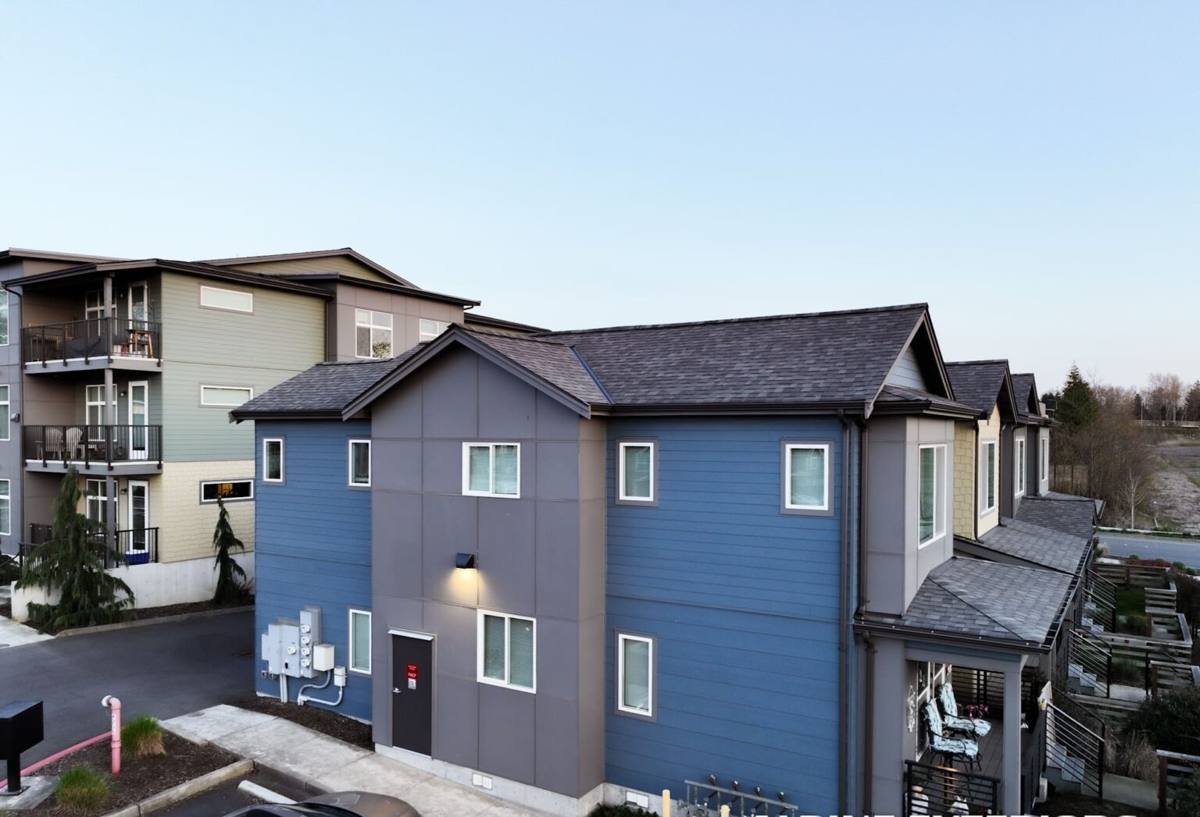
What a Correct Window Installation Actually Involves
Window installation is often sold as a simple swap — old window out, new window in. On Lummi Island, that shortcut is where problems start. A correct install is really a system of small details that each do one job, and if any one of them is skipped, water and salt air will find the weak point eventually.
Flashing and Weather Barrier Detail
The flashing around a window — the layered strips of material that direct water down and out and away from the wall — matters more here than almost anywhere else in Whatcom County. Wind-driven rain doesn't just fall on a window, it pushes against it, so flashing has to be lapped correctly with the house wrap or weather barrier in the right order, sill pan first, so any water that does get past the glass has a clear path back outside instead of into the wall cavity.
Frame Material and Hardware Choice
Not every fastener or hinge holds up to salt air the same way. We pay attention to corrosion-resistant hardware and fasteners around window installs near the water, because standard hardware that's fine on an inland job can start rusting and staining within a couple of seasons out here.
Sealant Selection and Joint Design
Caulk and sealant on Lummi Island work harder and wear faster than the same products used inland. We use sealants rated for exterior marine exposure and pay close attention to joint design — the width and depth of the sealant bead — because an undersized bead is one of the most common reasons a window that looked fine on install day starts leaking two or three years later.
Choosing Window Materials for a Marine Climate
Frame material is one of the first decisions on any window project, and it matters more on Lummi Island than in a lot of other parts of the county. Here's how the common options compare for homes exposed to salt air and constant moisture:
| Frame Material | Salt Air Behavior | Maintenance | Typical Fit for Lummi Island |
|---|---|---|---|
| Vinyl | Doesn't corrode; UV and salt exposure can affect finish over many years | Low — occasional rinse | Strong, budget-friendly choice for most island homes |
| Fiberglass | Very stable in temperature swings and salt exposure; holds paint well | Low to moderate | Good for homes wanting a more solid feel and paintable finish |
| Aluminum | Prone to corrosion and pitting near salt water unless marine-grade and well-finished | Moderate to high | We're cautious with standard aluminum this close to the water |
| Wood / Wood-Clad | Attractive but moisture-sensitive; cladding helps but exposed wood needs upkeep | High | Workable with disciplined maintenance; not our default recommendation here |
We don't push one material on every homeowner — the right call depends on the home's exposure, the look you want, and how much upkeep you're willing to put in. What we won't do is install a frame material in a spot where we know from experience it's going to fight the climate. If we steer you away from an option, it's because of how it holds up in this specific environment, not because of the product itself.
Our Window Installation Process on Lummi Island
Working on the island adds a logistics layer that doesn't exist on a mainland job, and we plan around it so your project stays on schedule.
- Assessment and measurement — we look at existing flashing, sill condition, and any signs of past water intrusion before we ever order a window.
- Scheduling around ferry access — materials, crew, and equipment all have to make the ferry crossing, so we plan delivery and crew time in blocks rather than piecemeal trips.
- Careful removal — old windows come out with attention to the surrounding sheathing and framing, since that's often where hidden moisture damage shows up.
- Sill pan and flashing install — done in the correct order, sill first, so water has a way out if it ever gets past the window itself.
- Window set and shim — the unit is leveled, plumbed, and squared before a single fastener goes in.
- Sealing and insulation — low-expansion foam and marine-rated sealant around the frame, sized correctly for the joint.
- Interior and exterior trim — finished to match the home, with attention to any spots where moss or algae tend to collect.
- Final walkthrough — we check operation, look for any gaps, and go over basic care with the homeowner before we leave.
Timing a Window Project Around the Island's Seasons
Window installation on Lummi Island goes smoother, and holds up better long-term, when it's scheduled around the weather rather than in spite of it. Late spring through early fall tends to bring the driest, calmest stretch of weather for opening up a wall and getting a new window sealed in before it's tested by rain. That's not a hard rule — installs happen year-round when they have to — but if you have flexibility on timing, working with your contractor to target a drier window gives sealants and flashing components the best chance to cure and seat properly before the fall storms roll back in off the water.
Problems We Commonly Find on Older Island Windows
When we're called out to Lummi Island to replace windows, a handful of issues show up again and again:
- Moss and mildew staining built up in the shaded, damp corners around the frame
- Failed or shrunken sealant beads that let wind-driven rain track into the wall cavity
- Fogged or failed insulated glass units from years of temperature and moisture cycling
- Corroded hardware — hinges, locks, and cranks — that binds or stops working
- Soft or discolored sill and trim wood where flashing was missing or installed out of order
None of these are unusual for a home this close to the water — they're simply what salt air, driving rain, and a long moss season do to a window system over enough years. Catching them early during a replacement keeps the damage from spreading into the surrounding wall framing.
Why Local Experience on Lummi Island Matters
A crew that only occasionally works out here is learning the island's quirks on your project. A crew that already works Lummi Island regularly already knows the ferry schedule, has a rhythm for getting materials and equipment across efficiently, and has seen firsthand how the local salt air and rain patterns affect different window products over time. That experience shows up in fewer surprises, tighter scheduling, and installation details — like flashing laps and sealant choice — that are already dialed in for this specific environment rather than generic best practices from an inland job.
We also understand Whatcom County's permitting requirements for window replacement, which can vary depending on whether you're doing a like-for-like swap or changing the size or structural opening. We handle that piece so you don't have to chase it down yourself.
Maintaining New Windows in a Salt Air, High-Moss Climate
A well-installed window on Lummi Island can last decades, but a little regular care goes a long way in this environment. We walk every homeowner through the basics after install:
- Rinse frames and glass periodically to clear salt residue, especially on wind-exposed sides of the home
- Keep gutters and nearby vegetation clear so water and moss-forming moisture don't sit against the trim
- Check and refresh exterior caulking every few years, sooner on the most weather-exposed elevations
- Operate hardware — locks, cranks, hinges — a few times a year even on windows you rarely open, to keep moving parts from seizing
- Look for early staining or soft trim after major storms and address it before it spreads
What Affects the Cost of a Window Project Here
Every home and project is different, so we won't quote a number without seeing the job, but a few factors consistently move the price on Lummi Island work:
| Factor | Why It Matters |
|---|---|
| Frame material | Vinyl, fiberglass, and wood-clad options carry different material and labor costs |
| Number and size of openings | More or larger windows mean more material, flashing, and labor time |
| Condition of existing framing | Rot or water damage found during removal adds repair scope before the new window goes in |
| Access and logistics | Ferry scheduling and site access can affect crew time and delivery planning |
| Trim and finish work | Matching existing interior and exterior trim adds finish carpentry time |
Broadly, homeowners should expect window replacement costs to range from a few hundred dollars per opening for straightforward vinyl swaps up to several thousand per opening for larger, higher-end, or structurally complex installs — but the only way to get a real number is a look at your specific windows and home.
If you're weighing a window project on Lummi Island, we're glad to take a look and give you a straightforward, no-pressure estimate — just fill out the form below and we'll get in touch.