 Ferndale Siding
 Fiber Cement Siding for Lummi Nation's Waterfront Exposure
Lummi Nation sits out on the peninsula along the water, west of Ferndale, and that position changes what a home's siding is actually up against compared to a house a few miles inland in Whatcom County. Salt-laden air moves off the bay and the strait more or less constantly here, rain arrives sideways as often as it falls straight down, and the combination of shade, moisture, and mild temperatures keeps moss and mildew active for most of the year instead of just a few wet months. Siding on a Lummi Nation home isn't a cosmetic layer — it's the thing standing between that exposure and the framing behind it, every day, year after year.
This page is specifically about fiber cement siding installation for homes in and around Lummi Nation. We install James Hardie fiber cement exclusively, and on a property with this level of sustained coastal exposure, the material choice and the installation detail both matter more than they would on a calmer, more sheltered site.
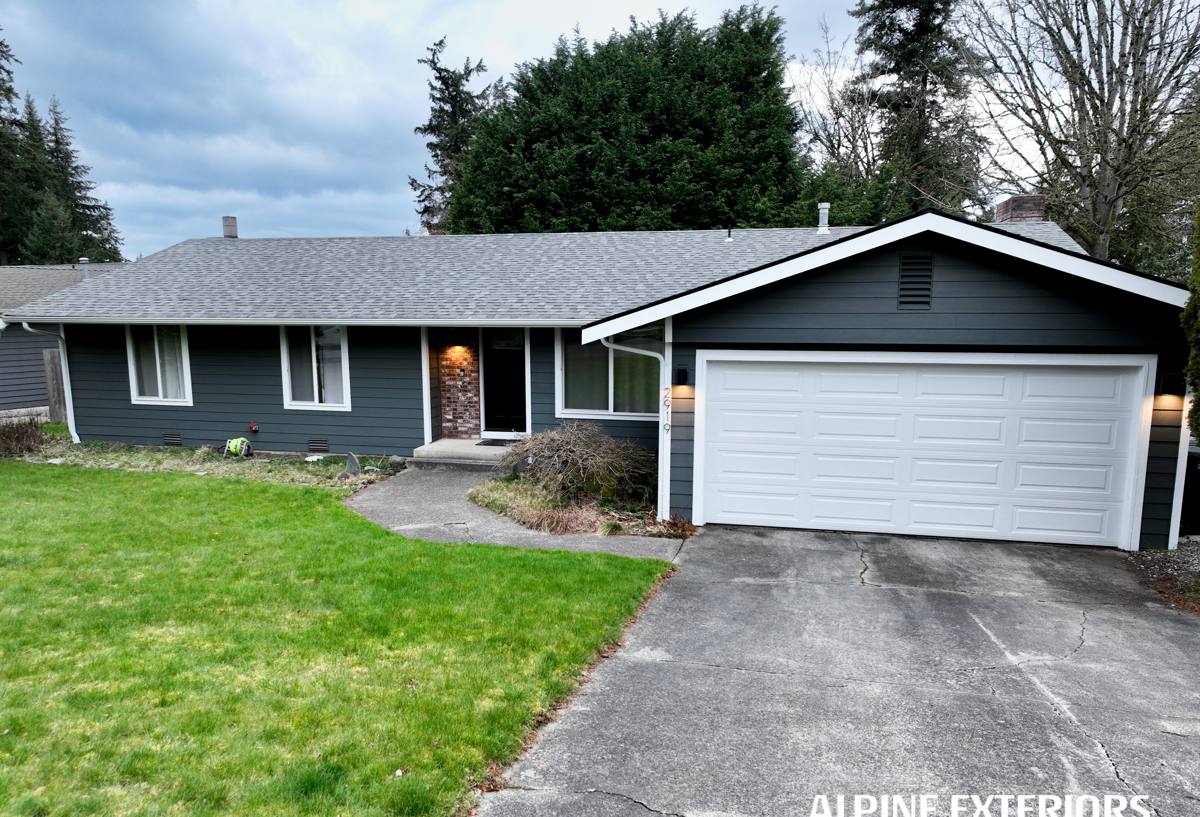
What Salt Air, Driving Rain, and a Long Moss Season Do to Siding
Salt Air
Airborne salt accelerates corrosion in fasteners, flashing, and hardware, and it breaks down lower-grade paints and coatings faster than a drier climate would. Homes closer to open water get a heavier, more constant dose of it than homes tucked further inland, which is why siding and trim that would hold up fine in a sheltered neighborhood can start chalking, fading, or showing rust streaks within a few years on an exposed Lummi Nation lot.
Driving Rain
Open water exposure means fewer windbreaks, and wind is what turns rain into a sideways problem instead of a straight-down one. Wind-driven rain gets pushed into lap joints, trim seams, and butt joints that a calmer site would never test the same way. A siding system that relies on caulk alone to keep water out, rather than a properly lapped and flashed assembly behind it, is a much bigger liability here than it would be somewhere less exposed.
A Long Moss and Mildew Season
Near-constant moisture, mild temperatures, and shaded elevations add up to a moss and mildew season that runs longer here than in the drier parts of the county. It shows up first on north-facing walls and shaded siding, and beyond looking bad, sustained organic growth holds moisture against the siding and the wall behind it — exactly the condition that leads to hidden rot if it isn't dealt with.
Why James Hardie Is the Only System We Put on These Homes
We used to install a wider range of siding products. We narrowed to one system after seeing, repeatedly, which materials actually held up under sustained coastal exposure and which ones quietly failed a few years in. For a Lummi Nation property, the case for fiber cement over the alternatives is stronger than it is almost anywhere else in our service area.
Climate-Engineered HZ5 Formulation
Hardie's HZ5 product line is engineered for regions with heavy, sustained moisture exposure and freeze-thaw cycling, which is a close match for a Lummi Nation property. We spec HZ5 on homes in this area for that reason, rather than defaulting to a formulation built for a drier inland climate.
Factory-Applied ColorPlus Finish
ColorPlus color is baked on at the factory under controlled conditions instead of brushed on in the field after installation. That finish resists salt exposure, UV fading, and chipping far longer than site-applied paint, which matters on a property that takes this much sun, salt, and moisture over the course of a year.
Non-Combustible Core and a Real Warranty
Fiber cement doesn't feed a fire the way wood-based or wood-derived siding can, which matters for household safety and for insurance underwriting. Hardie also backs its products with a strong transferable warranty, provided the installation follows spec — real protection for a homeowner, not just a marketing claim, and one more reason installation quality matters as much as the material itself.
Fiber Cement Compared to the Alternatives
Homeowners in this area sometimes ask why we don't offer a cheaper option alongside Hardie. The honest answer is in how each material actually behaves under this specific combination of salt, wind-driven rain, and prolonged dampness.
| Material | Salt Air & Wind-Driven Rain | Moss & Moisture Behavior | Maintenance Here |
|---|---|---|---|
| James Hardie fiber cement | Factory finish resists salt and UV; dense core doesn't wick moisture | Doesn't feed mold or provide an organic food source | Occasional cleaning; repainting cycle measured in decades, not years |
| Vinyl | Can warp, fade, or become brittle under sustained UV and temperature swings | Doesn't rot, but trapped moisture behind it can still damage sheathing unnoticed | Low upkeep, but panels can crack on impact and are hard to color-match if damaged |
| Engineered wood (e.g. LP SmartSide) | Wood-based core can swell or deteriorate if moisture reaches it past the coating | More susceptible to sustained moss and mildew exposure over time | Coating maintenance matters more; edge sealing and caulking need regular checks |
| Cedar or primed wood | Natural wood absorbs moisture and salt exposure accelerates weathering | Prime moss and mildew substrate without diligent upkeep | Frequent repainting or staining; highest long-term maintenance burden |
Every one of those alternatives has a place in the broader siding market and plenty of owners who are satisfied with it elsewhere. On a peninsula property with this much sustained exposure, we made a professional call that one system we trust completely is worth more than a cheaper option that quietly shifts maintenance risk onto the homeowner down the road.
What a Correct Installation Involves Here
Drainage Plane and Moisture Barrier
Good fiber cement siding starts before a single board goes up. A continuous water-resistive barrier, taped and lapped correctly at every seam, and a drainage gap behind the siding give any water that does get past the surface a way to drain and dry instead of sitting against the sheathing. On a site that takes this much wind-driven rain, skipping or shortcutting the drainage plane is one of the most common ways a siding job fails early — and it's invisible once the siding is up, which is exactly why it has to be done right the first time.
Fastening and Clearances
Correct fastening patterns matter more here than on a sheltered inland lot, since higher wind exposure puts more load on every nail. Clearance from grade, roofline, and decks also matters — siding installed too close to the ground or to a roof surface wicks moisture directly, which is one of the fastest ways to void a warranty and start rot regardless of how good the material itself is.
Joints, Trim, and Caulking
Joints should be lapped, flashed, or covered with a proper trim detail rather than butted together and sealed with caulk alone — caulk is a backup, not a water management strategy, and it's the first thing to fail under repeated wind-driven rain. Field-cut edges need to be sealed since the factory finish doesn't extend into a cut, and corner and trim details need to be built to shed water rather than collect it.
Our Process for a Fiber Cement Siding Job in Lummi Nation
The steps themselves aren't unusual, but on an exposed peninsula property, how carefully each one is executed matters more than it would elsewhere.
- Walk-through and assessment: We look at the existing siding, trim, and any visible moisture or moss issues, and check for signs of hidden damage before quoting the job.
- Tear-off and substrate check: Removing the old siding is when hidden rot, damaged sheathing, or a failed prior moisture barrier actually shows up — and it needs to be addressed before anything new goes on.
- Moisture barrier and flashing: A continuous, properly lapped water-resistive barrier and flashing at every window, door, and penetration goes on before siding starts.
- Installation to spec: HZ5 James Hardie siding, fastened per manufacturer requirements for this exposure, with proper clearances, lapped joints, and sealed field cuts.
- Trim, caulking, and final walk-through: Trim and corner details finished, touch-up work done, and a final walk with the homeowner before we call the job complete.
Repair, Partial Re-Side, or Full Tear-Off?
Not every siding problem on a Lummi Nation home calls for a full replacement. Storm-damaged sections, a trim failure isolated around one window, or an area that's taken impact can often be repaired and matched into existing Hardie siding without touching the rest of the house. But when water has been tracking behind the wall for a while, or a home still has an older, non-Hardie product nearing the end of its life, patching usually just delays a bigger job while hidden rot keeps spreading underneath. We'll tell you honestly which situation you're actually in — a straightforward repair, a partial re-side of the affected elevation, or a full tear-off — rather than defaulting to whichever answer is more profitable for us.
Cost Factors for Fiber Cement Siding Here
| Factor | What It Affects | Why It Matters in Lummi Nation |
|---|---|---|
| Tear-off vs. overlay | Labor scope and substrate access | Tear-off is usually the right call here since it's the only way to catch hidden moisture damage under older siding |
| Substrate condition | Repair costs before new siding goes on | Long-term trapped moisture on exposed lots can rot sheathing and framing that isn't visible until tear-off |
| Home size and trim complexity | Material and labor hours | More corners, windows, and trim details mean more joints and flashing points that need to be done right |
| Site access | Labor time and equipment needs | Peninsula and waterfront lots can have limited access or tighter staging areas than a typical inland lot |
| Lap profile and reveal | Material quantity and finished look | Different exposure widths change material needs and how the finished siding reads on the house |
Exact costs depend on the specific property, its exposure, and what tear-off reveals, which is why we walk the home in person before giving a real number instead of quoting off a generic price sheet.
Signs Your Current Siding Needs Attention
- Moss or dark staining that returns quickly after cleaning, especially on shaded or north-facing walls
- Soft or spongy siding low on the wall or around window and door trim
- Cracked, chipped, warped, or missing siding sections, especially after a winter storm
- Rusting fasteners, corroding flashing, or chalky, faded paint on older siding
- Visible gaps at seams, corners, or trim joints where caulk has pulled away or cracked
- Peeling or bubbling paint, which often points to moisture trapped behind the surface
- Rising energy bills that may point to a wall assembly that's no longer sealing properly
Why a Crew That Already Works Lummi Nation Matters
A crew that installs fiber cement siding on this stretch of the peninsula regularly understands how salt air, wind-driven rain, and a long moss season actually behave on real homes over a full year — not just how HZ5 performs on a manufacturer's spec sheet. That experience shapes decisions on install day: which elevations stay wet the longest and deserve extra flashing attention, how tight the fastening pattern needs to be for this level of wind exposure, and where a shortcut that would go unnoticed on a sheltered inland job would show up here within a single wet season. Lummi Nation's proximity to open water means its homes see a heavier version of the challenges the rest of Ferndale and Whatcom County deal with, and a crew with hands-on local experience treats that difference as central to the job rather than an afterthought.
If your Lummi Nation home needs new siding, a repair, or just an honest assessment of what's happening behind an aging wall, we're glad to take a look. Reach out using the form below to schedule a free, no-pressure estimate.