 Ferndale Siding
 Why Birch Bay Windows Face a Tougher Job Than Most
Birch Bay sits right on the water, which means homes here take on weather that inland Whatcom County properties simply don't deal with. Wind coming off the bay carries salt, and that salt lands on everything — siding, hardware, and window frames included. Add in wind-driven rain that hits horizontally during winter storms, plus a long, damp stretch of the year that keeps north-facing surfaces shaded and wet enough for moss to take hold, and you've got a climate that's genuinely hard on building materials. Windows are one of the first things to show the wear.
A window that performs fine in a dry inland town can fail early in Birch Bay if it wasn't built or installed with this exposure in mind. That's the whole reason this page exists as its own topic rather than a generic write-up on energy-efficient windows — the material choices, the installation details, and the maintenance schedule all shift when your house is a few blocks from saltwater.
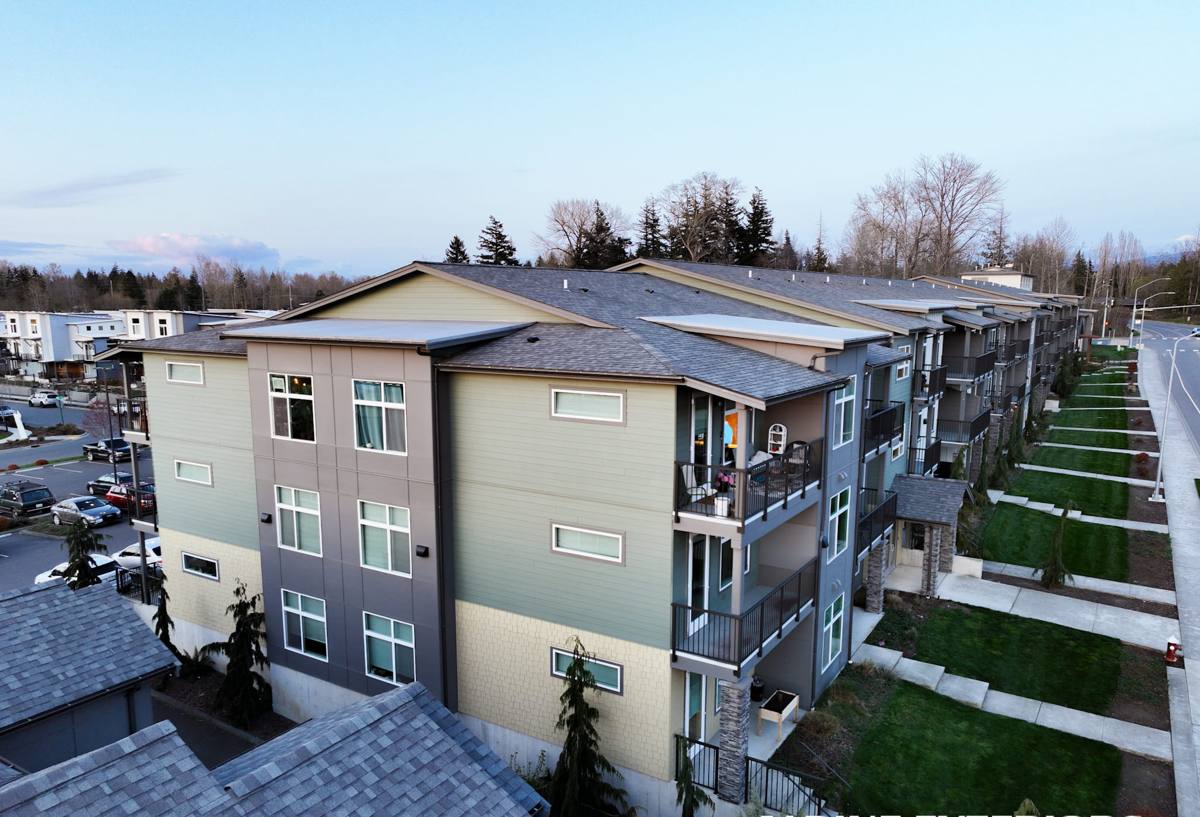
What Salt Air and Coastal Moisture Do to Windows Over Time
Corrosion at the Hardware Level
Salt air is corrosive to metal, and window hardware — hinges, locks, balance systems, screen frames — is often where problems show up first. Cheaper hardware finishes can start pitting or seizing up years before the glass or frame shows any issue. It's a slow process, so it's easy to miss until a window won't latch properly or a crank mechanism starts grinding.
Seal and Frame Stress
Driving rain doesn't just test whether a window is watertight on day one — it tests the seal and flashing year after year, storm after storm. Repeated cycles of wetting and drying, combined with wind pressure pushing against the glass, put ongoing stress on seals. When a seal fails, you get fogging between panes, drafts, and eventually moisture getting into the wall framing itself, which is a much bigger and more expensive problem than the window alone.
Choosing a Window Material That Holds Up Near the Water
There's no single "best" window material for every situation, but some hold up better than others in a salt-air, high-moisture environment. Here's how the common options generally compare for a Birch Bay home:
| Material | Coastal Durability | Maintenance | Typical Cost Tier |
|---|---|---|---|
| Vinyl | Good — won't corrode or rot, handles moisture well | Low | Lower to mid |
| Fiberglass | Very good — dimensionally stable, resists warping and corrosion | Low | Mid to higher |
| Wood-clad | Fair — the cladding protects the wood, but any breach exposes it to rot risk | Higher | Higher |
| Aluminum | Fair — durable but prone to corrosion near saltwater unless well-coated | Moderate | Mid |
We steer most Birch Bay homeowners toward vinyl or fiberglass for this reason — not because wood-clad or aluminum are bad products, but because a marine environment stacks the odds against materials that depend on a coating or cladding staying perfectly intact for decades. Vinyl and fiberglass simply have less that can go wrong when salt and moisture are a constant factor. If you have a strong preference for a wood-look interior, clad options can still work — we'll just walk you through the added maintenance commitment honestly before you decide.
The Energy-Efficiency Side: What Actually Matters in This Climate
U-Factor Over Everything
In Whatcom County's climate, U-factor (how well the window resists heat transfer) matters more than solar heat gain coefficient does in hotter, sunnier regions. We don't get the intense summer sun load that drives cooling-focused window choices elsewhere. What we do get is a long heating season and persistent damp cold, so a low U-factor window keeps more of your heating dollars inside the house.
Low-E Coatings and Gas Fills
Low-E (low-emissivity) glass coatings and argon or krypton gas fills between panes both improve insulating performance without changing how the window looks. For a coastal home, there's a secondary benefit too: better-insulated glass runs warmer on the interior surface, which cuts down on interior condensation during cold, humid stretches — a real issue in homes sitting this close to the water.
Triple-pane windows exist and do offer a modest efficiency bump over quality double-pane units, but the added cost usually isn't justified by our climate unless you're dealing with a specific noise or extreme-exposure situation. We'll tell you honestly if we think triple-pane makes sense for your particular house rather than upselling it by default.
What a Correct Installation Looks Like in a Wind-Driven Rain Climate
Flashing and Water Management
In a climate where rain regularly hits windows at an angle instead of falling straight down, flashing detail is not optional trim work — it's the difference between a window that stays dry for thirty years and one that leaks into the wall cavity within a few. Proper flashing directs water that gets past the window trim back out, rather than letting it pool at the sill or track behind the siding.
Sealing Without Trapping Moisture
It's tempting to think "more sealant is better," but over-sealing a window opening can trap moisture inside the wall assembly instead of letting it drain and dry out. Correct installation uses sealant strategically — around the perimeter where it belongs — while preserving drainage paths the wall system needs.
Here's what a homeowner should reasonably expect to see (or ask about) during a proper installation:
- Old window and any rotted or damaged framing removed and inspected before the new unit goes in
- Sill pan flashing installed to direct any water that gets past the window back outside
- Weather-resistive barrier integrated properly with the flashing, not just taped over gaps
- Window shimmed and leveled so it operates smoothly and seals evenly, not just eyeballed into place
- Insulation placed around the frame gap — not stuffed too tight, which can bow the frame
- Exterior trim and caulking finished cleanly, with interior sealing completed to close the air barrier
- Hardware tested — locks, cranks, and screens operating smoothly before the crew leaves
Our Process, Start to Finish
- On-site assessment: We look at your existing windows, note any signs of moisture damage or hardware wear, and talk through what's driving the replacement — comfort, energy bills, appearance, or a specific problem window.
- Product selection: We walk through material and glass package options based on your budget and how exposed your home is to wind and salt air.
- Accurate measurement and ordering: Every opening is measured individually — older homes especially can have openings that aren't perfectly square or consistent from window to window.
- Installation: Removal, flashing, air-sealing, and finish work handled by the same crew, in a logical order that keeps your home protected from weather throughout the job.
- Cleanup and walkthrough: We clear debris, confirm every window operates and locks correctly, and go over basic care with you before we consider the job done.
Why Local Experience in Birch Bay Specifically Matters
A crew that's worked in Birch Bay before knows which sides of a house typically take the worst of the weather off the water, and adjusts flashing and sealing details accordingly rather than treating every wall the same. That kind of judgment comes from having done the work here repeatedly, not from a general contracting background alone.
Local familiarity also means fewer surprises on permitting and inspection timing for Whatcom County jobs, and a realistic sense of how long materials actually hold up in this specific microclimate versus how they're rated on paper. We're not guessing at how a product will perform near the water — we've seen it firsthand on homes not far from yours.
Maintaining Your Windows Through Moss Season and Beyond
Even the best window installation benefits from a little seasonal attention in a climate like this. A short annual routine goes a long way toward protecting your investment:
- Rinse frames and glass periodically to clear salt residue, especially on wind-facing sides of the house
- Check and lightly lubricate hardware — locks, cranks, hinges — once a year to keep salt air from seizing moving parts
- Keep nearby moss and organic buildup off sills and trim; trapped moisture under debris accelerates wear
- Inspect exterior caulking annually and have any cracked or separated sealant redone before it lets water in
- Wipe down interior sills after heavy rain or cold snaps if you notice condensation buildup
None of this is complicated, but skipping it in a coastal environment tends to shorten a window's useful life more than people expect.
Ready to Talk About Your Windows?
If you're dealing with drafty, foggy, or hard-to-operate windows in Birch Bay, or you're just planning ahead before the next storm season, we're happy to take a look and give you an honest read on what your home needs. Reach out for a free, no-pressure estimate using the form below.