 Ferndale Siding
 Birch Bay's Waterfront Location Puts Extra Demands on a Roof
Birch Bay sits right on the water, and that location shapes everything about how a roof ages here. Homes closer to the shoreline take on salt-laden air and wind off the Strait of Georgia that inland Whatcom County properties simply don't deal with. Add in the long Pacific Northwest wet season and the shaded, tree-covered lots common throughout the area, and you've got a combination that wears on asphalt shingle roofs faster than a generic install can handle. A roof that would hold up fine in a dry inland climate can show real problems within a few years out here if it wasn't built with this environment in mind.
That's the reason this page exists as its own thing rather than a repeat of a general shingle roofing page. The materials, the flashing details, the fastener choices, and the maintenance schedule all shift when a roof sits a short walk from saltwater and spends half the year under a marine layer of moisture.
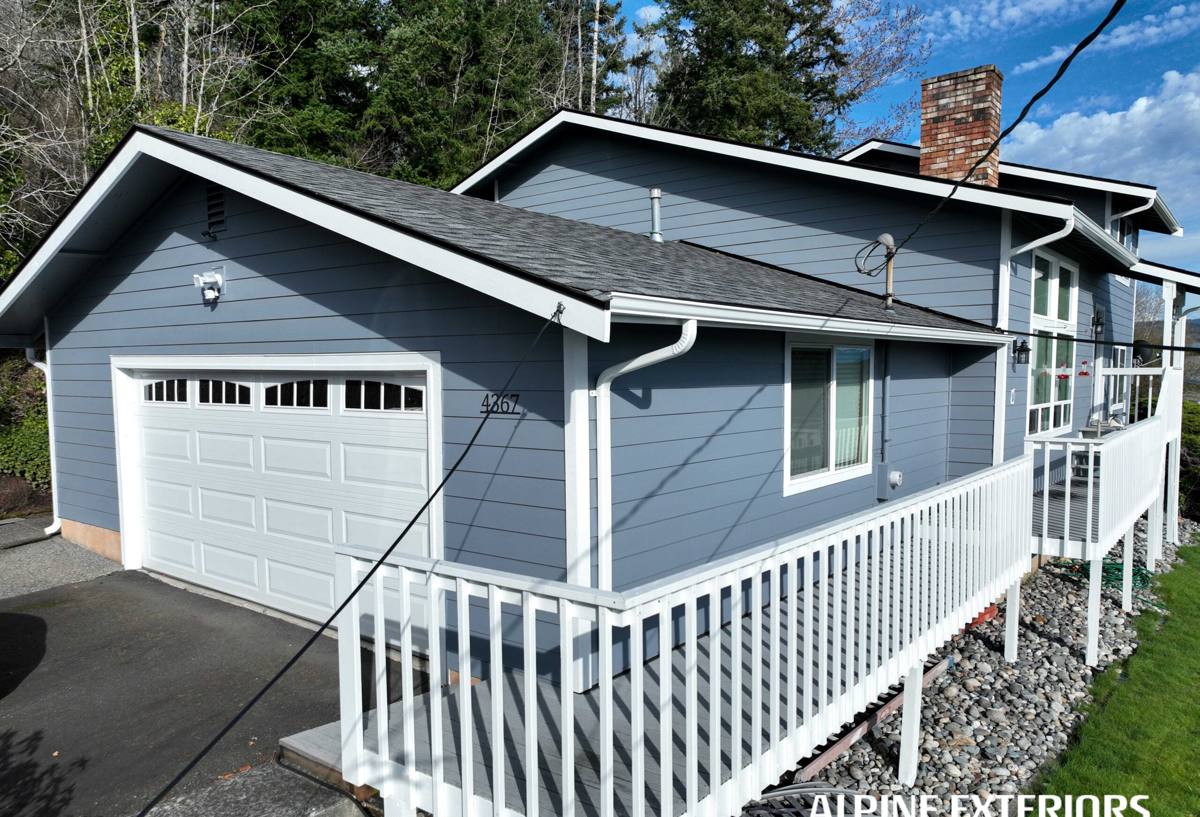
What Salt Air and Driving Rain Actually Do to a Shingle Roof
Fastener and Flashing Corrosion
Salt air accelerates corrosion on any exposed metal — nail heads, drip edge, step flashing, and vent boots. Once a fastener starts to rust, it loses grip and can back out slightly, which is exactly how water finds its way under a shingle. This isn't a dramatic failure; it's a slow one, which is why so many salt-air roof problems get discovered only after they've caused interior damage.
Wind-Driven Rain at Eaves, Valleys, and Penetrations
Rain that comes in sideways off the water behaves differently than a straight-down downpour. It gets pushed up under shingle tabs, into valleys, and around anything that penetrates the roof deck — plumbing vents, chimneys, skylights. A roof detailed for calm-weather rain isn't always detailed for wind-driven rain, and that gap shows up as leaks around penetrations long before the shingles themselves look worn.
Moss and Algae in Shaded, Damp Areas
Whatcom County's wet season runs long, and Birch Bay's tree cover keeps plenty of roof surfaces shaded and slow to dry out. Moss needs exactly that — shade, moisture, and time — and once it takes hold it lifts shingle edges, holds water against the roof deck, and works its way into every low spot on the roof. Algae staining is more cosmetic but is often an early sign that a roof isn't drying out the way it should between rain events.
What a Correctly Built Shingle Roof Looks Like Out Here
None of the problems above are unusual or exotic — they're just the normal cost of building on a coastline in the Pacific Northwest. A roof built correctly for Birch Bay accounts for them from the start instead of leaving them to be discovered later.
| Component | Minimum/Budget Approach | What We Prioritize Here |
|---|---|---|
| Underlayment | Standard felt, single layer | Synthetic or ice-and-water membrane at eaves, valleys, and penetrations for extra wind-driven rain protection |
| Fasteners | Standard electro-galvanized nails | Corrosion-resistant fasteners rated for coastal exposure |
| Flashing | Reused or minimal flashing at penetrations | New, properly lapped metal flashing at every valley, chimney, and vent |
| Ventilation | Whatever existing vents are already there | Balanced intake and exhaust sized to the actual attic, checked during tear-off |
| Shingle sealant strips | Standard adhesive strip | Confirmed proper activation — sealant strips need warmth and time to bond, which matters in a cooler, wetter climate |
None of this is exotic material or a proprietary system — it's paying attention to the details that matter most for a roof that has to shed wind-driven rain and dry out between storms.
Choosing a Shingle Line for This Climate
Asphalt shingles are sold in tiers, and the differences between them aren't just cosmetic. For a Birch Bay roof, wind rating and algae resistance matter more than they would somewhere drier and less exposed.
| Shingle Tier | Typical Wind Rating | Best Fit For |
|---|---|---|
| Standard 3-tab | Lower wind rating, lighter weight | Budget-driven projects on more sheltered, inland lots |
| Architectural / laminate | Higher wind rating, heavier and more rigid | Most Birch Bay homes — better wind and impact performance for the exposure here |
| Premium / designer laminate | Highest wind rating in the asphalt category | Waterfront-facing homes or roofs with steep pitch and full sun/wind exposure |
We also pay attention to algae-resistant granules (often marketed under names tied to copper or zinc content) on any roof with shaded sections, since that's where staining and moss growth show up first. It's a modest upgrade in material cost that pays for itself in how the roof looks and drains ten years down the road.
Moss, Algae, and the Long Wet Season — A Maintenance Checklist
Even a well-built roof needs some seasonal attention in this climate. Most of it is simple, and skipping it is what turns a small issue into a repair.
- Clear gutters and downspouts before the fall rains start, so water isn't backing up under the eaves
- Have moss physically removed rather than just treated — chemical treatments kill it but don't get it off the roof
- Check valleys and around chimneys/vents for granule loss or lifted shingle edges after a windy storm
- Trim back overhanging branches to cut down on shade and debris buildup, which slows drying and feeds moss
- Have an inspection done every couple of years, especially after any unusually severe windstorm off the water
- Avoid pressure washing shingles — it strips granules and shortens the roof's life; soft washing or hand removal is safer
Our Process for a Birch Bay Roof Replacement
Every roof is a little different, but the sequence we follow doesn't change, because skipping a step is how problems get sealed under new shingles instead of fixed.
- On-site inspection and honest assessment of whether repair or full replacement makes sense
- Full tear-off of old roofing so the deck can actually be inspected, not covered over
- Repair or replacement of any soft, water-damaged decking found underneath
- Installation of new underlayment, with reinforced protection at eaves, valleys, and penetrations
- New metal flashing at chimneys, vents, skylights, and valleys — never reused
- Shingle installation with corrosion-resistant fasteners, following manufacturer spacing and nailing patterns
- Ventilation check and correction if the existing intake/exhaust balance isn't adequate
- Full site cleanup, including a magnetic sweep for stray nails
- Final walkthrough so you know exactly what was done and what to watch for going forward
Repair or Replace? What We Actually Look At
Not every roof problem in Birch Bay means a full replacement. We look at the age, condition, and pattern of damage before recommending either option.
| Factor | Points Toward Repair | Points Toward Replacement |
|---|---|---|
| Age of roof | Well under expected shingle lifespan | At or past the typical service life for the shingle type installed |
| Damage pattern | Isolated to one area — a valley, a vent, storm damage in one spot | Widespread granule loss, curling, or moss damage across multiple slopes |
| Decking condition | Solid, no soft spots found | Soft or damaged decking discovered under shingles |
| Underlying cause | A single failed flashing detail or fastener issue | Systemic underbuilt ventilation or underlayment for the site's exposure |
We'll always tell you honestly which side of that table your roof falls on. A well-timed repair can add years of life to a roof that isn't ready for full replacement, and we'd rather earn a repair job now and the replacement later than push a bigger project you don't need yet.
Why Hiring a Crew That Already Works in Birch Bay Matters
Roofing crews that mostly work inland don't always think about salt exposure, wind direction off the water, or how much shade a tree-lined Birch Bay lot actually gets through the winter. Those details change fastener choices, flashing details, and how aggressive the moss and algae plan needs to be. A crew that already works this stretch of Whatcom County has already seen how roofs here fail and builds around it instead of learning that lesson on your home.
There's also the practical side — knowing local permitting requirements, understanding how waterfront wind exposure differs from a sheltered inland lot even a few miles away, and being set up to work efficiently around narrow driveways, tree cover, and tighter lots that are common in this area.
What to Expect After Installation
A correctly installed asphalt shingle roof in Birch Bay should need only the maintenance checklist above for years — not emergency repairs. Manufacturer warranties cover materials, and workmanship coverage should come from whoever installs it, separate from that. We'll walk you through exactly what's covered, for how long, and what voids it (usually improper attic ventilation or unqualified repair work down the line), so there are no surprises later.
If you're dealing with an aging shingle roof in Birch Bay, seeing moss creep back no matter how often you clear it, or just want a straight answer on repair versus replacement, we're glad to take a look. Fill out the form below for a free, no-pressure estimate — we'll assess your roof honestly and let you know exactly where it stands.