 Ferndale Siding
 Siding That Has to Work Under Trees, Not Just Under Sky
Sudden Valley is not a typical open-lot suburban neighborhood, and siding that performs fine on a sunny, exposed street somewhere else in Whatcom County doesn't always perform the same way here. Homes tucked under mature tree canopy, close to Lake Whatcom, deal with something most siding products were never really engineered for: shade that never fully burns off, humidity that lingers into the afternoon, and organic debris — needles, leaves, pollen, seed pods — that settles into every horizontal lap and corner trim on the house. Add in the region's long, wet winters and a moss season that can run most of the year on a north-facing wall, and you have a climate that punishes the wrong siding choice slowly, quietly, and expensively.
This page is specifically about siding installation for Sudden Valley homes — not a general overview of siding everywhere we work. The fundamentals of a correct install don't change from neighborhood to neighborhood, but the priorities do. Here, moisture management, ventilation behind the cladding, and material stability matter more than they would on a dry, wide-open lot ten minutes away.
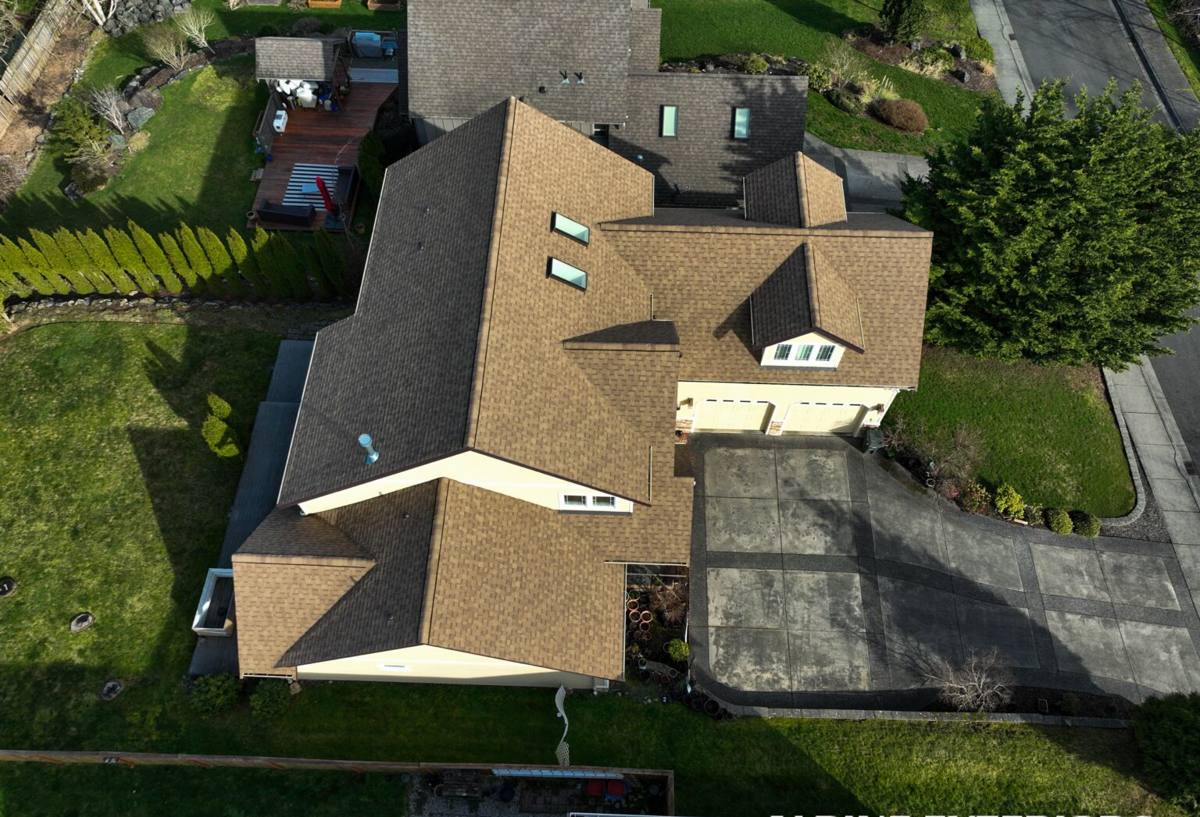
What Shade, Moisture, and Moss Actually Do to Siding
Before we talk about the fix, it's worth understanding the failure pattern, because it shows up on Sudden Valley homes in a fairly consistent way:
- Moss and algae take hold first on shaded walls and under roof overhangs, where surfaces stay damp long after the rest of the house has dried out.
- Wood-based and wood-composite sidings absorb that trapped moisture at cut edges, seams, and fastener points, which is where swelling, soft spots, and paint failure usually start.
- Caulk and paint film break down faster in a shaded, humid microclimate than they would in full sun, which accelerates water intrusion at joints once that protective layer starts to crack.
- Once moisture gets behind the cladding, low airflow under dense tree cover means the wall assembly dries out slowly — sometimes not at all before the next rain.
None of this is unique to Sudden Valley — it's the same pattern you'll find anywhere in western Whatcom County where salt-laden coastal air, driving winter rain, and heavy shade combine. But a shaded lake community concentrates the moisture and moss side of that equation more than most.
What a Correct Siding Installation Involves Here
A siding job is only as good as what's underneath it. On a shaded, moisture-prone lot, the assembly behind the cladding matters as much as the cladding itself.
Weather-Resistive Barrier
A continuous, properly lapped weather-resistive barrier goes on before any cladding, with every penetration, window, and door opening flashed to shed water downward and outward — never trapping it against the sheathing.
Rainscreen Gap
On shaded walls especially, we build in a drainage/ventilation gap behind the siding rather than fastening it tight to the wall. That gap lets bulk water drain out and lets residual moisture dry to the outside instead of sitting against the back of the panel — the single biggest factor in how long a siding job actually lasts on a low-sun lot.
Flashing and Trim Details
Kick-out flashing at roof-to-wall intersections, head flashing over windows, and proper drip caps at trim boards all matter more here, because water that would evaporate quickly on a sunnier lot instead lingers and finds the path of least resistance.
Fastening and Layout
Correct fastener placement, gapping for material expansion, and factory-mitered or properly caulked joints keep the field of siding from becoming a network of small entry points for moisture over time.
Why We Install Only James Hardie Fiber Cement
We don't install vinyl, LP SmartSide, Cemplank, Allura, primed spruce, or cedar. That's a deliberate standard, not a sales pitch, and on a lot like Sudden Valley's the reasoning is easy to explain plainly:
- Fiber cement doesn't feed moss the way wood-based products can. It's not organic material, so sustained shade and dampness don't create the same rot risk that wood, wood-composite, or wood-fiber siding carries.
- It's dimensionally stable. Constant humidity swings that cause wood and composite products to swell, cup, or telegraph seams over time have far less effect on properly installed fiber cement.
- It's non-combustible. That matters anywhere in Washington with nearby tree cover and wildfire-season exposure, and Sudden Valley's wooded lots are exactly that kind of setting.
- The factory finish holds up. James Hardie's ColorPlus finish is baked on and warrantied against fading and peeling, which matters more, not less, in a shaded environment where field-applied paint tends to fail faster.
- The HZ5 product line is engineered for this climate — it's Hardie's own climate-specific formulation for regions with the freeze-thaw cycles and moisture exposure typical of the Pacific Northwest, rather than a one-size-fits-all national product.
We're not going to tell you every other product on the market is worthless — vinyl, wood, and engineered wood sidings all have legitimate uses. But given what we've seen happen to siding on shaded, moisture-heavy lots over the years, we made a professional decision to only stand behind one product system, and Sudden Valley's climate is a good example of why.
Our Installation Process for Sudden Valley Projects
- On-site assessment. We look at tree cover, sun exposure per wall, drainage patterns, existing moisture damage, and access — not just square footage.
- Tear-off and inspection. Old siding comes off and the sheathing gets inspected for hidden rot or moisture damage before anything new goes on. This step regularly turns up problems that weren't visible from outside.
- Repair and barrier installation. Any damaged sheathing gets replaced, then the weather-resistive barrier, flashing, and rainscreen furring go in correctly the first time.
- Hardie installation. Panels or lap siding go up to manufacturer specification — correct fastener type, spacing, and gapping, with trim and joint detailing built for long-term water shedding.
- Final detailing and walkthrough. Caulking, touch-up, and a walkthrough so you understand what was done and what basic upkeep looks like going forward.
Cost Factors for a Sudden Valley Siding Project
| Factor | Why It Affects Cost or Timeline |
|---|---|
| Tree cover and site access | Tight, wooded lots and limited driveway/staging space can slow material delivery and scaffolding compared to an open lot. |
| Condition of existing sheathing | Hidden moisture damage found during tear-off is common on shaded walls and may require repair before new siding can go on. |
| Home size and wall complexity | Multiple stories, dormers, and cut-up wall lines all add labor time and material waste factor. |
| Trim, window, and door count | Every opening needs flashing and trim detail — more openings means more of the labor-intensive work that protects against water intrusion. |
| Rainscreen/furring installation | Adding a drainage gap behind the siding is additional labor but pays off directly in how long the assembly stays dry. |
| HOA or design review requirements | If your property is part of a community association with architectural guidelines, color and material approval can add lead time before work starts. |
Site Access and Working in a Lake Community
Sudden Valley has its own logistics compared to a standard subdivision. Many lots have limited staging area, private or narrower roads, and steep or wooded driveways, all of which we plan around before crews show up — not after. If your property is part of the Sudden Valley Community Association or has an architectural control committee, it's worth checking early whether exterior color or material changes need sign-off before work begins, since that can affect scheduling more than the installation itself does.
Because a number of properties here sit close to Lake Whatcom's watershed, we're careful about containing old siding debris and dust during tear-off rather than letting it scatter across the yard or toward the water. It's a small thing, but it's part of doing the job the right way in this particular setting.
Maintaining Fiber Cement Siding on a Shaded Lot
Correct installation is most of the work, but a little seasonal attention keeps a Sudden Valley home looking right for years:
- Rinse moss and algae off shaded walls with a garden hose and soft brush rather than a pressure washer, which can force water behind panels and joints.
- Keep gutters and downspouts clear of needles and leaf debris so water isn't overflowing directly onto siding below.
- Trim back branches and brush that keep a wall in permanent shade or hold moisture against it.
- Re-caulk joints and trim seams if you notice cracking, rather than waiting for water intrusion to show up as a stain or soft spot.
- Have a professional check flashing at roof-to-wall intersections periodically — this is where most hidden leaks start.
Why Local Experience in This Neighborhood Matters
A siding crew that has actually worked in Sudden Valley knows which walls on a typical lot stay shaded longest, how to plan around tree-lined access, and what it takes to get a project through community design review without losing weeks to back-and-forth. That's different from general siding experience somewhere flatter and sunnier. As a Ferndale-based crew covering Whatcom County, we've seen firsthand how differently a shaded lake lot ages compared to an open one, and we build every Sudden Valley project around that reality rather than a generic installation checklist.
If you're weighing a siding replacement or new install for a Sudden Valley home, we're happy to walk the property, point out what we're actually seeing on your walls, and put together a straightforward, no-pressure estimate — no obligation, just a clear look at what your home needs.