 Ferndale Siding
 Roofing in a Wooded, Rain-Heavy Corner of Whatcom County
Sudden Valley sits under heavy tree cover, and that changes the math on roof replacement compared to a wide-open lot. Shade keeps shingles cooler in summer, which is good, but it also means roof surfaces stay damp longer after every rain. Add in Whatcom County's long wet season and the salt air that moves through the broader region off the Sound, and you get a roofing environment that's harder on materials than most homeowners realize until they're dealing with soft decking or a stained ceiling.
We work throughout the Ferndale area and out to communities like Sudden Valley regularly, and the pattern is consistent: roofs here don't usually fail because of one big storm. They fail slowly, from moisture that never fully dries out between rain events, moss that holds water against the surface, and debris that dams up valleys and gutters until water finds a way under the shingles instead of over them.
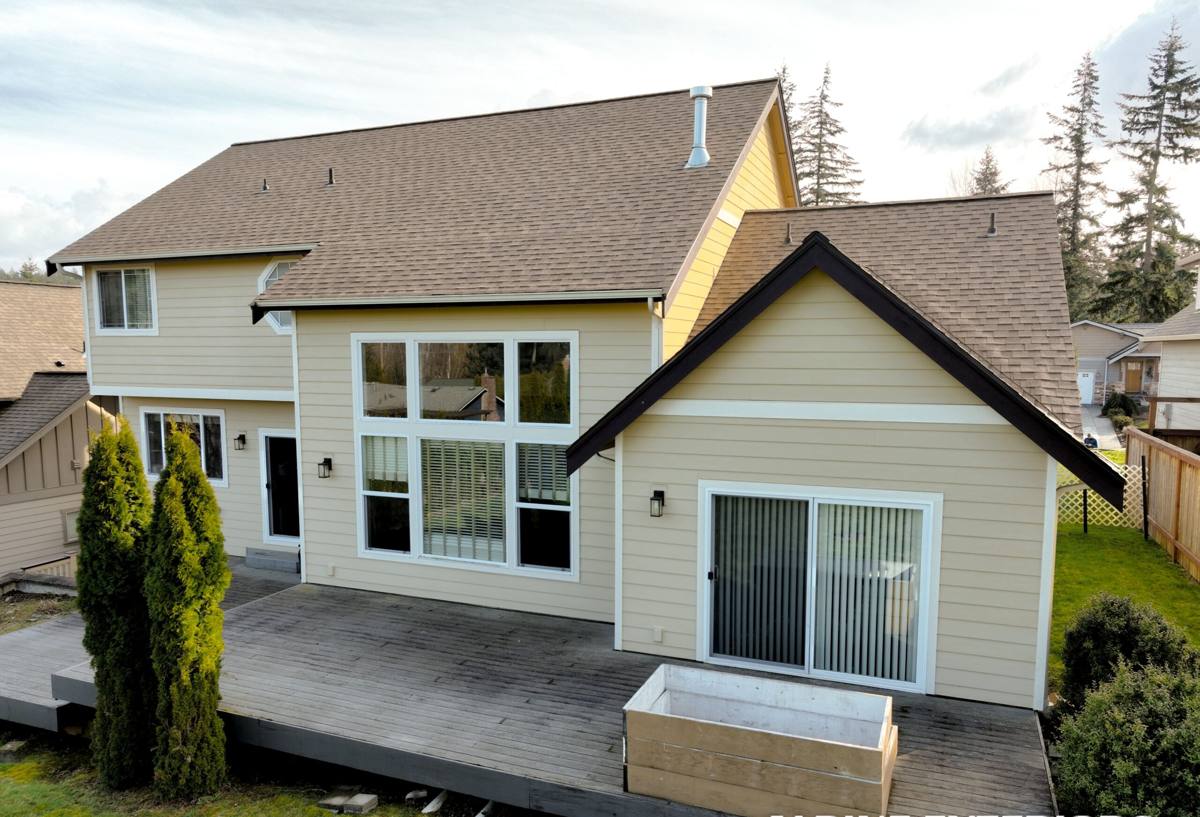
Why Tree Cover and Moisture Change the Job
Moss Isn't Cosmetic — It's a Moisture Problem
A moss-covered roof looks like a maintenance issue, but moss is really a water-retention problem. Moss holds moisture against the shingle surface long after the rest of the roof has dried, and its root structure works into the granule layer over time. On a shaded roof, that cycle repeats for most of the year. By the time moss is visible from the ground, it's often been established long enough to have already shortened the life of the shingles underneath it.
Needle and Debris Buildup
Homes with a lot of surrounding trees deal with a steady drop of needles, cones, and leaf debris, especially in fall and through winter storms. That debris collects in valleys, behind chimneys, and in gutters, and it holds water against the roof deck in exactly the spots where flashing and seams are already the most vulnerable.
Slower Drying Times
A roof in full sun sheds water and dries out between storms. A roof under a tree canopy can stay damp for days. That extended moisture exposure is the single biggest reason we see premature granule loss, algae staining, and soft decking on shaded properties before we see it on open ones.
Signs a Roof Needs Replacement, Not Another Repair
Not every roofing problem calls for a full replacement, but there's a point where patching individual leaks stops being the economical choice. We look for a combination of these signs before recommending replacement over repair:
- Shingles that are cupping, curling, or losing granules across large sections rather than one isolated spot
- Soft or spongy decking felt underfoot during inspection, which signals moisture has already reached the plywood
- Repeated leaks in different locations after previous repairs, rather than one recurring spot
- Heavy, established moss or algae growth across most of the roof rather than a shaded corner
- Flashing around chimneys, skylights, or vents that's rusted, lifted, or was never properly sealed
- A roof already past or near the end of its expected material lifespan combined with any of the above
If a roof only shows one or two of these in a limited area, targeted repair is usually the honest recommendation. We'll tell you that directly — replacement is a bigger investment, and we don't push it when a repair will genuinely hold.
What a Correct Roof Replacement Involves
A roof replacement that's built for this climate is more than swapping old shingles for new ones. The parts homeowners don't see are what determine whether the new roof handles a shaded, wet lot better than the last one did.
Full Tear-Off, Not Overlay
We remove the existing roofing down to the deck rather than layering new shingles over old. That's the only way to actually inspect the decking, catch soft or delaminated plywood before it's covered up again, and give the new roofing system a flat, sound surface to attach to.
Deck Repair Before Anything Goes Down
Any section of decking that's soft, stained, or delaminated from long-term moisture gets replaced before underlayment goes on. Installing a new roof over compromised decking just hides the problem for a few more years.
Underlayment and Ice/Water Barrier
Given how much moisture this area sees, we pay particular attention to underlayment quality and to installing a water-resistant barrier in the vulnerable areas — valleys, eaves, and around penetrations — where the risk of water working its way under the shingles is highest.
Ventilation
Proper attic and roof ventilation matters everywhere, but it matters more under tree cover, where ambient humidity around the home tends to run higher. Balanced intake and exhaust ventilation helps the roof deck dry from underneath and keeps moisture from getting trapped in the attic.
Flashing Done Right
Flashing around chimneys, skylights, sidewalls, and vents is one of the most common places we find leaks originating on older roofs, and it's one of the most common things to get shortcut on a rushed job. We replace flashing as part of a full roof replacement rather than reusing old pieces.
Material Choices for a Shaded, Wet Property
There's no single "best" roofing material — the right choice depends on your home's sun exposure, roof pitch, budget, and how much moss and moisture resistance matters given the tree cover on your lot. Here's how the common options compare for a property like a typical Sudden Valley home:
| Material | Performance in Shade & Moisture | Maintenance | Typical Lifespan |
|---|---|---|---|
| Standard architectural asphalt shingles | Good with proper ventilation; can be moss-prone under heavy tree cover without algae-resistant granules | Periodic moss/debris removal recommended | 20-30 years |
| Algae-resistant asphalt shingles | Better moss and algae resistance via copper- or zinc-infused granules | Lower moss maintenance than standard shingles | 25-30 years |
| Metal roofing | Sheds moisture quickly, resists moss better due to smooth surface and drainage | Low; occasional debris clearing | 40-50+ years |
| Cedar shake | Attractive but holds moisture in shaded, damp conditions unless well-ventilated and maintained | Higher; regular treatment and inspection needed | 20-30 years with upkeep |
We'll walk through these trade-offs with you directly rather than steering everyone toward the same product. A heavily shaded roof is a strong argument for algae-resistant shingles or metal; a roof with more sun exposure has more flexibility.
Our Process, Start to Finish
- Inspection and estimate. We get on the roof, check the decking, flashing, ventilation, and overall condition, and give you a straight assessment of whether repair or replacement makes sense.
- Material selection. We go over options based on your roof's sun exposure, pitch, and budget, with honest trade-offs on each.
- Scheduling around the weather. Roofing work in this region gets planned around dry stretches whenever possible, since a tear-off leaves a home briefly exposed.
- Tear-off and deck inspection. Old roofing comes off, decking gets inspected and repaired as needed before anything new goes down.
- Underlayment, flashing, and ventilation. The parts that determine long-term performance go in before a single shingle or panel is installed.
- Installation. New roofing goes on to manufacturer specifications, which matters for both performance and warranty coverage.
- Cleanup and final walkthrough. We clear debris and nails from the property and walk the finished roof with you.
What Affects the Cost
Roof replacement cost ranges widely based on size, pitch, material, and how much deck repair is needed — anywhere from several thousand dollars for a smaller, straightforward asphalt job to well into five figures for a larger roof, steeper pitch, or premium material like metal. The factors below move the number more than anything else:
| Factor | Why It Matters |
|---|---|
| Roof size and pitch | More square footage and steeper slopes mean more material and labor time |
| Deck condition | Rot or soft plywood found during tear-off adds repair cost that can't always be quoted upfront |
| Material choice | Metal and algae-resistant shingles cost more upfront but less in long-term maintenance |
| Number of penetrations | Chimneys, skylights, and vents each need proper flashing, which adds labor |
| Access and tree clearance | Heavily wooded lots can require extra care and time around limbs and landscaping |
We give a firm, itemized estimate after inspection — not a ballpark over the phone — because deck condition especially can't be judged accurately until the old roofing is off.
Why a Crew That Already Works Sudden Valley Matters
Roofing crews that mostly work open, sunny lots don't always anticipate how differently a shaded, moisture-heavy property ages. We've worked enough roofs in and around Sudden Valley and the rest of the Ferndale area to know where moss builds up first, which valleys tend to dam with debris, and how much ventilation a shaded attic actually needs — not as a generic textbook answer, but based on what we see repeatedly on homes like yours.
That local familiarity also shows up in the small decisions during the job: how we sequence work around tree limbs, where we're extra careful with tarps and cleanup on a wooded lot, and which flashing details matter most given the moisture load this area sees for most of the year.
After Installation: Keeping a New Roof Performing
A correctly installed roof still benefits from basic upkeep, especially under tree cover. A few habits go a long way toward getting the full lifespan out of the investment:
- Clear gutters and valleys of needle and leaf debris at least twice a year, more often on heavily wooded lots
- Have moss growth addressed before it establishes, rather than after it's visibly thick
- Trim back overhanging branches that keep sections of the roof shaded and damp
- Schedule a periodic visual inspection, particularly after major windstorms
- Watch for granule buildup in gutters, which can signal accelerated shingle wear
If you're weighing a roof replacement for a home in Sudden Valley, we're glad to take a look and give you a straight answer on what your roof actually needs. The estimate is free, there's no pressure attached to it, and you can use the form below to get started.