 Ferndale Siding
 Windows Built for the Sudden Valley Climate, Not a Catalog Average
Homes in and around Sudden Valley deal with a specific combination of weather that most window manufacturers never design around: salt-laden air moving in off the water, long stretches of driving rain, and a moss season that can run half the year. A window that performs fine in a dry inland climate can start failing here in a fraction of the time — swelling frames, fogged glass, corroded hardware, and sills that never fully dry out. Custom windows aren't a luxury upsell in this area. They're often the only way to get a window that actually fits the opening, seals correctly, and holds up to what Whatcom County throws at it year after year.
This page is specifically about custom window work for homes in the Sudden Valley area near Ferndale — what the local climate demands, what a correct installation actually involves, and what to look for in a crew that does this work regularly rather than occasionally.
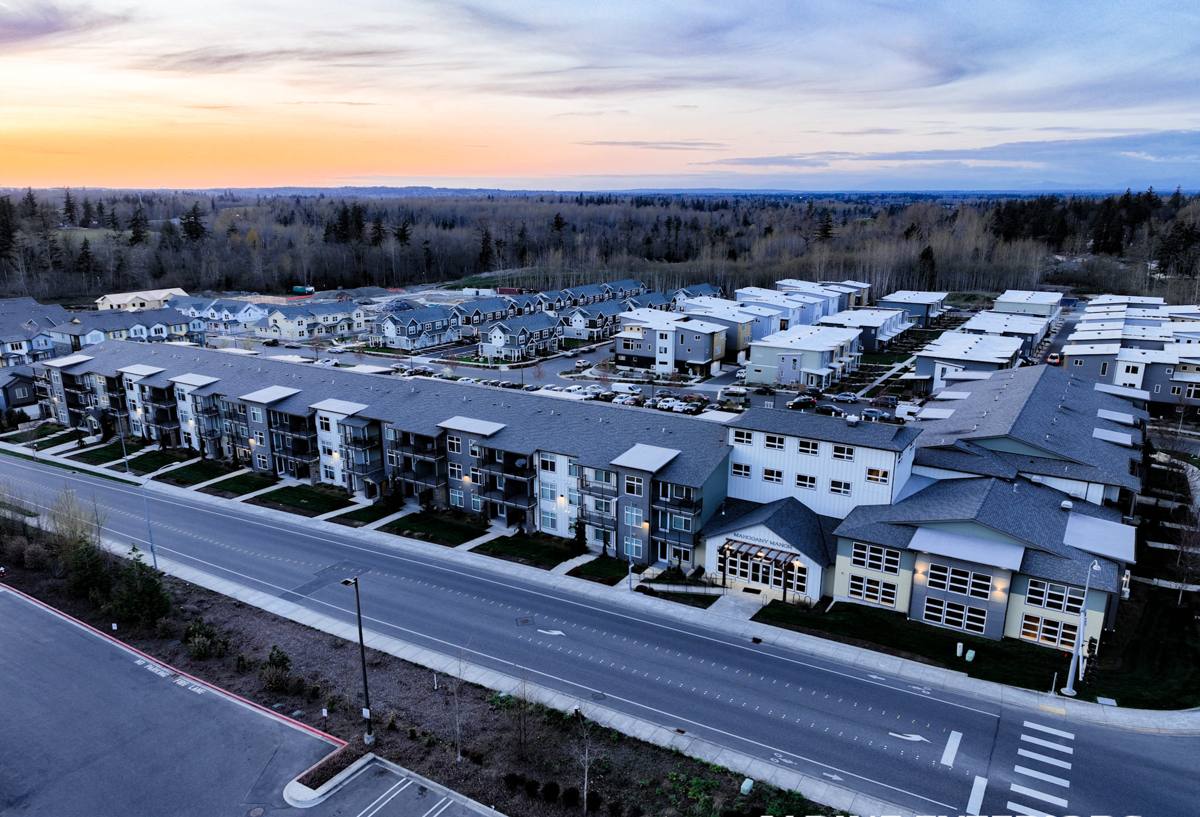
What Salt Air, Rain, and Moss Actually Do to Windows Here
Salt Air
Even homes set back from open water pick up airborne salt on breezy days. Over time it accelerates corrosion on window hardware — hinges, locks, balance mechanisms, and screen frames — especially anything made from bare aluminum or lower-grade steel. It also degrades certain finishes faster than the manufacturer's warranty documentation assumes, since most warranty testing isn't done in a coastal-adjacent environment.
Driving Rain
Wind-driven rain doesn't just hit a window — it gets pushed sideways and upward into gaps that would stay dry in a calmer climate. This is where installation detail matters more than the window itself. Flashing, sill pans, and sealant joints have to be done correctly, because a well-built window installed with sloppy flashing will still leak.
Moss Season
Moss doesn't just grow on roofs. It takes hold on north-facing sills, in track channels, and in any spot that stays shaded and damp for months at a time. Left alone, it holds moisture directly against wood trim and frame material, which is a slow but steady path to rot — long after the moss itself looks like a cosmetic issue rather than a structural one.
Signs a Sudden Valley Home Needs New or Custom Windows
Most homeowners don't replace windows on a schedule — they replace them when something starts to go wrong. In this climate, the warning signs tend to show up in a fairly consistent pattern:
- Condensation or fogging between the panes of a double-pane window (a sign the seal has failed)
- Visible gaps, drafts, or a window that no longer sits flush when latched
- Soft or discolored wood trim around the frame, especially at the bottom corners
- Moss or persistent green staining on sills, tracks, or exterior trim
- Difficulty opening, closing, or locking a window that used to operate smoothly
- Visible corrosion on hinges, cranks, or screen frames
- A noticeable rise in heating costs without any other explanation
Any one of these on its own might just need a repair. Several at once, especially on the weather-exposed side of the house, usually points to windows that are past the point where patching makes sense.
Why "Custom" Matters More Than It Sounds Like It Should
"Custom" doesn't mean fancy shapes or unusual glass. In most Sudden Valley homes it simply means the window is built to the exact opening rather than forcing the opening to fit a stock size. Older homes, additions, and homes that have settled slightly over the decades often have openings that are no longer perfectly square or standard-sized. Installing a stock window into an out-of-square opening means shimming, gapping, and extra sealant to make up the difference — and every one of those workarounds is a future leak point in a climate that gets this much rain.
A properly custom window is measured and built to the actual opening, which means the flashing and sealing details can be done the way they're supposed to be done, not adapted around a size mismatch. It also matters when replacing windows in additions or older sections of a house where the original manufacturer's exact sizes are long out of production.
Retrofit vs. Full-Frame Replacement
There are two honest approaches to replacing a window, and the right one depends on the condition of what's already there — not on what's easiest to sell:
- Retrofit (insert) replacement: The new window is built to fit inside the existing frame, which stays in place. Faster and less invasive, appropriate when the existing frame is still solid and properly flashed.
- Full-frame replacement: The old frame is removed entirely down to the rough opening, including old flashing and trim. Necessary when there's any sign of water damage, rot, or a frame that was never flashed correctly in the first place.
Given how often driving rain finds its way into small gaps around here, we check the condition of the existing frame and flashing before recommending which approach fits — not the other way around.
Choosing a Frame Material for This Climate
There's no single "best" window material for every home — it depends on exposure, budget, and how much upkeep an owner wants to take on. Here's an honest comparison for a salt-air, high-rain, moss-prone environment:
| Material | How It Handles This Climate | Maintenance Needs | General Cost Position |
|---|---|---|---|
| Vinyl | Resists moisture and corrosion well; won't rot or rust | Low — occasional cleaning | Lower to mid |
| Fiberglass | Very stable in wet, temperature-swinging conditions; strong seal retention | Low | Mid to higher |
| Wood (unclad) | Classic look, but most vulnerable to moss, moisture, and rot without diligent upkeep | High — regular repainting/sealing | Mid to higher |
| Wood-clad (exterior aluminum or vinyl shell) | Good compromise — exterior shell resists weather, wood interior stays protected | Moderate | Higher |
| Aluminum | Durable but conducts cold and is more prone to condensation; hardware needs corrosion-resistant coatings near salt air | Low to moderate | Mid |
For homes closer to open water or with heavy shade and moss exposure, we lean toward vinyl or fiberglass with corrosion-resistant hardware. For homes going for a specific architectural look, wood-clad is a reasonable middle ground as long as the owner understands the added upkeep at the joints and sills.
Our Installation Process
The window itself is only part of the job. In this climate, the installation detail is what decides whether it performs for twenty years or leaks in three. Here's how we approach it:
- On-site assessment: We check the condition of the existing frame, sill, and surrounding wall for any hidden moisture damage before quoting the job.
- Precise measurement: Each opening is measured individually — we don't assume uniform sizes even in homes where the windows look identical from the outside.
- Moisture barrier and flashing: Proper sill pan flashing and weather-resistant barrier integration around the opening, sequenced so water is directed out and down, never trapped behind the frame.
- Installation and leveling: The window is set plumb, level, and square, with shimming only where truly needed — not as a substitute for accurate measurement.
- Sealing: Interior and exterior sealant applied at the correct joints, leaving weep paths clear so any incidental moisture can still drain.
- Trim and finish work: Interior and exterior trim reinstalled or replaced to match the home, with attention to any wood trim that showed early moss or moisture staining.
- Final walkthrough: Every window is opened, closed, and locked to confirm smooth operation before we consider the job done.
Why Local Installation Experience Matters
A window installation crew that works regularly in Whatcom County knows which details actually matter here versus in a drier climate. That means recognizing early moss staining as a moisture signal rather than a cosmetic issue, knowing how far up a wall driving rain can actually push during a storm, and building in flashing details that hold up specifically to this exposure. It also means being familiar with the permitting and inspection expectations that apply to window replacement work in the area, so the job doesn't stall on paperwork.
Homeowners in Sudden Valley are often better served by a crew that treats this climate as the baseline expectation, not an edge case they occasionally run into.
Living With Custom Windows in a Moss-and-Rain Climate
Even a correctly installed window benefits from a little seasonal attention in this environment:
- Clear moss and debris from tracks and sills before it holds moisture against the frame
- Check weep holes on the exterior bottom of the frame to make sure they're not blocked
- Inspect exterior sealant joints once a year for cracking or separation
- Wipe down hardware periodically, especially on windows facing open air or wind exposure
- Address any soft trim or discoloration early rather than waiting for it to spread
None of this is heavy maintenance — it's the difference between a window that lasts its full expected lifespan and one that starts showing problems a decade early because moisture was left sitting where it shouldn't have been.
If your Sudden Valley home has windows showing any of these signs, or you're planning a project that involves new openings, we're happy to take a look and give you a straightforward, no-pressure estimate — just fill out the form below.