 Ferndale Siding
 Building Decks for Sudden Valley the Way This Climate Requires
Sudden Valley homeowners ask us for custom decks more than almost any other outdoor project, and it's not hard to see why. A deck extends the living space of a home in a part of Washington where the outdoors is only fully usable a few months a year unless the structure underneath it is built right. The problem is that most deck failures we get called out to inspect in this area aren't design failures — they're climate failures. Wood that wasn't rated for constant moisture. Fasteners that corroded from salt-laden coastal air. Framing that never had a chance to dry out because nobody thought about airflow underneath. A deck built for a dry inland climate simply does not hold up the same way here.
This page is specifically about custom deck work for homes in and around Sudden Valley. We're not going to give you a generic decking pitch — we want to walk through what actually needs to be different about a deck built for this part of Whatcom County, and what a correct job looks like from the ground up.
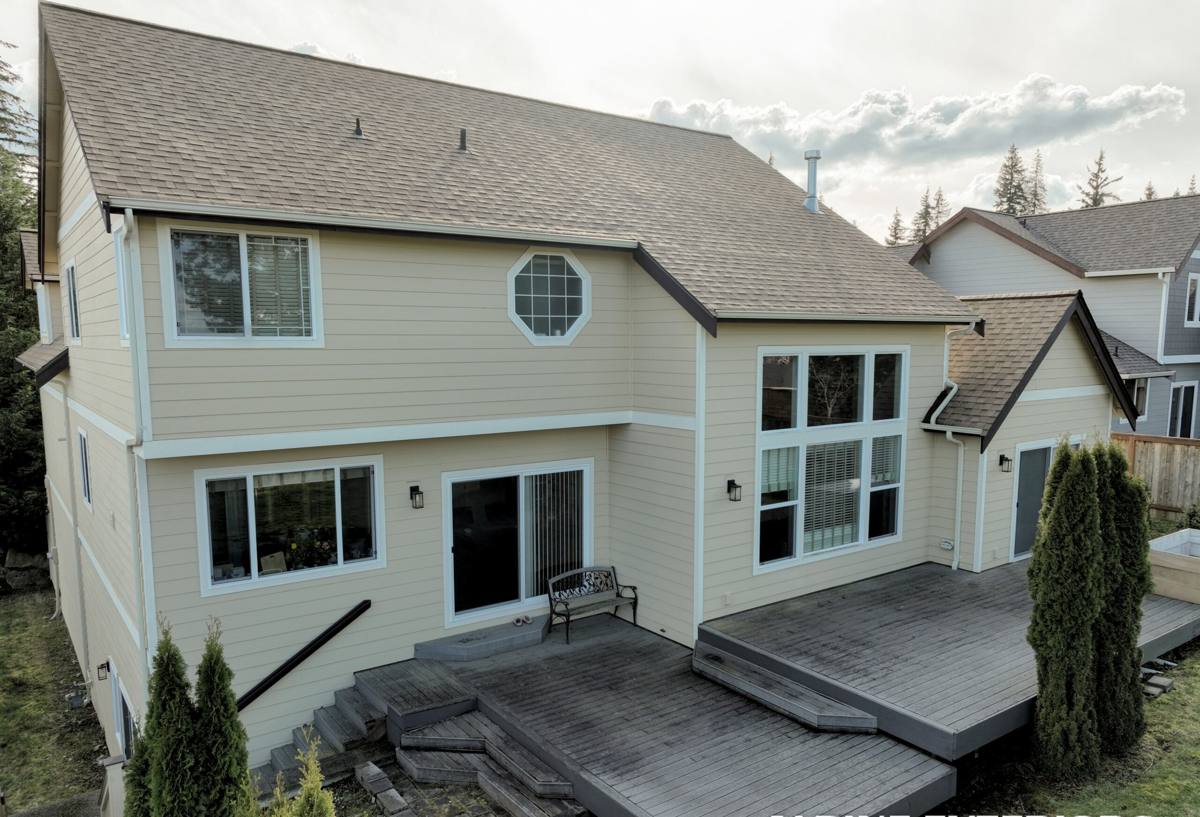
What Whatcom County Weather Actually Does to a Deck
Driving Rain and Standing Moisture
Rain here isn't just frequent, it comes in sideways during winter storms, which means vertical surfaces like fascia boards, stair stringers, and railing posts take on water that a purely horizontal rain assumption would miss. Combined with long stretches of overcast, low-drying-potential weather, any spot on a deck that traps water instead of shedding it will stay wet for days at a time. That's where rot starts.
Salt Air and Corrosion
Homes closer to the water and open exposures around Whatcom County deal with a steady drift of salt-laden air, and it's harder on hardware than most homeowners expect. Standard coated screws and bargain-grade brackets can start showing rust streaks within a couple of seasons. Once a fastener starts corroding, it loses holding strength long before it looks obviously bad — which is exactly why we don't shortcut hardware selection on any deck we build in this area.
Moss, Algae, and Shade
Between tree cover and the long damp season, north-facing and shaded sections of a deck grow moss and algae faster here than almost anywhere else in the state. Beyond looking bad, moss holds moisture against the decking surface and turns handrails and stair treads slick and genuinely dangerous underfoot for a good part of the year.
The Foundation Work That Doesn't Show But Matters Most
Footings Sized for Saturated Ground
Whatcom County soil holds a lot of water for a lot of the year, and footings need to be sized and set below frost depth and on undisturbed, properly compacted soil so they don't shift as the ground repeatedly saturates and drains. We don't guess on footing depth or diameter — it's based on the actual load path of the deck, not a one-size assumption.
Ledger Attachment and Flashing
The ledger board — where the deck attaches to the house — is the single most common point of structural failure we find on older decks in this region, almost always because of missing or improperly lapped flashing. Water gets behind the ledger, the rim joist behind it rots quietly for years, and nobody knows until the deck starts to pull away from the house. Correct flashing detail here isn't optional trim work, it's the difference between a deck that lasts decades and one that fails structurally.
Airflow Underneath
Framing that sits low to the ground or gets boxed in without ventilation traps humidity underneath the deck, which speeds up rot in joists and posts even if the surface boards look fine. We plan clearance and airflow paths into the framing design from the start, not as an afterthought.
Choosing Decking Material for This Specific Climate
There's no single "best" decking material — there's a best material for your budget, your maintenance appetite, and how exposed your specific lot is to rain, shade, and salt air. Here's how the common options actually compare for Sudden Valley conditions:
| Material | Moisture Behavior | Moss/Algae Resistance | Maintenance Needed |
|---|---|---|---|
| Pressure-treated wood | Absorbs water; needs sealing to control swelling and checking | Low — needs regular cleaning and treatment | Annual cleaning, periodic staining/sealing |
| Cedar | Naturally moisture-resistant but still needs finish upkeep | Moderate — better than treated pine, still grows moss in shade | Periodic re-staining, cleaning |
| Composite decking | Doesn't absorb or swell; some early products trapped surface moisture | Better on capped/modern composites; varies by brand and shade level | Occasional washing, no staining |
| PVC decking | Fully moisture-resistant, won't rot or swell | Good, though still needs occasional washing in heavy shade | Lowest — washing only |
We'll talk through these trade-offs honestly during your estimate rather than pushing one product line. A lot depends on how much shade your specific spot in Sudden Valley gets, since shaded, tree-covered lots are where moss and slow-drying surfaces become the real long-term issue, regardless of material.
Hardware and Fasteners: The Part Homeowners Never See
Given the salt-air exposure common to this area, we treat fastener selection as a structural decision, not a cosmetic one. That means stainless or high-grade coated fasteners rated for the specific application — deck screws, structural hangers, post bases, and hidden fastening systems all have different corrosion-resistance requirements depending on whether they're buried in framing or exposed to weather. Cutting corners here is invisible on install day and expensive five years later.
Railing Systems
Railings take the most direct weather exposure on the whole structure — full sun, full rain, and in more open parts of the neighborhood, more direct salt air drift than the decking surface itself. Post connections and baluster hardware need the same corrosion-resistant treatment as the rest of the frame, and we grade railing height and spacing to current code, not whatever was standard when an older deck was originally built.
Designing Around Sudden Valley Lots
Lots in this area tend to have real topography — slopes, tree cover, and lake or territorial views that shape what a deck should actually do for the house. A few things we account for on nearly every design here:
- Sloped lots often call for multi-level decks or taller post construction, which changes footing and bracing requirements significantly
- Tree cover means planning for shaded, slow-drying zones separately from sun-exposed zones — they don't need the same material or maintenance plan
- Stair placement and orientation matter more on a slope, both for safety and for keeping runoff from pooling at the base
- Views toward the lake or open space often drive railing style — cable or glass panel rail preserves sightlines better than solid picket rail
- Existing drainage on the lot needs to be respected, not blocked, by new footings or grade changes
Our Process for a Custom Deck Build
- On-site walkthrough of the specific lot — grade, drainage, tree cover, sun exposure, and how the deck should connect to the house
- Honest material conversation based on your budget and how much upkeep you actually want to do long-term
- Design and permit drawings sized to Whatcom County code and your local jurisdiction's requirements
- Footing and framing work built for saturated soil conditions, with proper ledger flashing and ventilation planned in from the start
- Decking, railing, and hardware installation using fasteners rated for the exposure your specific lot actually gets
- Final walkthrough covering how to care for the specific materials we installed
What to Expect for Upkeep After the Build
No deck in this climate is maintenance-free, no matter what material it's built from. What changes by material is how much upkeep and how often. A simple seasonal routine keeps most Sudden Valley decks in good shape:
- Clear leaves and debris from between boards before the fall rains set in — trapped debris is where rot and moss both get started
- Wash down shaded areas at least once a year to knock back moss and algae growth before it builds up
- Check railing posts and stair connections annually for looseness, which is often the first sign of a fastener issue
- Re-seal or re-stain wood decking on the schedule appropriate to the product — don't wait until the finish has fully failed
- Confirm gutters and downspouts near the deck are directing water away, not onto the structure
Why Local Deck-Building Experience Actually Matters Here
A deck built to a generic national spec sheet can still fail in Sudden Valley conditions if it wasn't adjusted for this area's rain patterns, salt exposure, and shade-driven moss growth. Crews who already work this neighborhood know which lots drain poorly, which orientations stay wet longest, and which fastener and material choices actually hold up here versus which ones look fine on the showroom floor. That local pattern recognition is the difference between a deck we build once and a deck we get called back to fix in a few years.
If you're planning a new deck or replacing one that's showing its age, we're glad to come take a look and talk through what makes sense for your specific lot. There's no pressure and no obligation — just fill out the form below and we'll set up a free estimate.