 Ferndale Siding
 Siding Built for the Lummi Nation Waterfront
Homes in and around Lummi Nation sit closer to the water than almost anywhere else in Whatcom County. That location is part of what makes the area special, but it's also exactly why siding wears out faster here than it does a few miles inland in Ferndale or Bellingham. Salt-laden air off Bellingham Bay and the Strait of Georgia, wind-driven rain that hits walls sideways instead of falling straight down, and a shaded, damp growing season that keeps moss and algae active for much of the year all combine to shorten the life of siding that wasn't built or installed for this exposure.
This page is about one job, done right, in one place: full siding replacement for homes in the Lummi Nation area. Not a repair, not a patch — a complete removal of failing siding and a correct rebuild of the wall system underneath it, using a product engineered for coastal Pacific Northwest conditions.
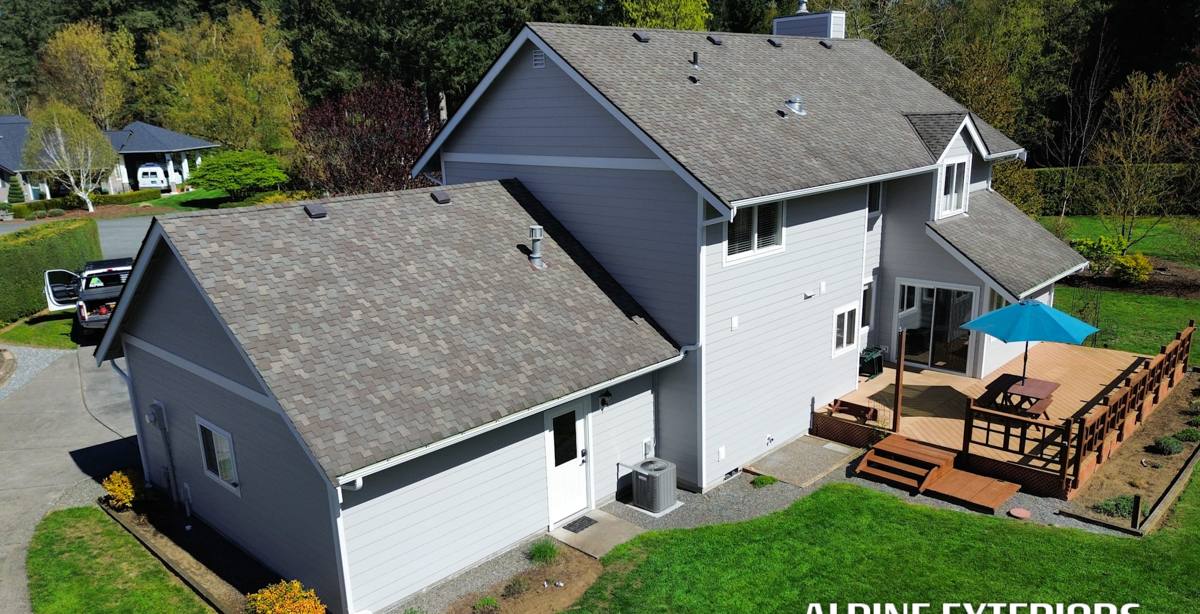
Why This Climate Is Hard on Siding
Salt air
Airborne salt from the bay settles on exterior surfaces and accelerates the breakdown of paint films, caulk, and fasteners. On wood-based and wood-composite sidings, that means faster edge swelling, faster paint failure, and corroded fasteners years before an inland home would see the same wear. On metal trim and flashing, it means earlier rust if the wrong materials were used.
Driving rain
Storms off the water don't just fall on a roof — they push rain horizontally into walls, seams, and butt joints. Siding and the water-resistive barrier behind it have to work as a system to shed that water. A siding product with poor seams, or an installation that skips proper flashing and gapping, will let that wind-driven rain find its way behind the cladding.
Moss and shaded moisture
Mature trees, marine-layer humidity, and long stretches of overcast weather keep north- and west-facing walls damp longer than sunnier exposures. Moss and algae take hold on siding surfaces that stay wet, and on porous or absorbent materials that moisture doesn't just stay on the surface — it can work its way in.
Signs a Lummi Nation Home Needs Full Replacement (Not a Patch)
- Soft, spongy, or crumbling siding when pressed near the bottom edges or around windows
- Paint that won't hold — blistering, peeling, or needing repainting every few years
- Visible cupping, warping, or separation at panel seams
- Persistent moss or dark staining that returns quickly after cleaning
- Rot or soft spots discovered at corners, trim boards, or below windowsills
- Rising energy bills that suggest the wall assembly is no longer sealing properly
- Siding style or condition that's dragging down the home's value or curb appeal
One or two of these on their own might mean a repair is enough. Several together, especially rot or seam separation, usually mean the underlying wall system has been compromised and a full replacement is the honest recommendation.
What a Correct Replacement Actually Involves
Replacing siding is not simply removing old panels and nailing up new ones. A correct job addresses the whole wall assembly, because the siding is only the outermost layer of a system that's supposed to keep water out and let the wall breathe.
Tear-off and inspection
Old siding comes off down to the sheathing so the crew can actually see what's underneath — soft sheathing, damaged framing, or old trapped moisture doesn't show up until the wall is opened up. This is also the point where problems get found and fixed, not covered over.
Water-resistive barrier and flashing
A new weather-resistive barrier goes on correctly lapped, with flashing at every window, door, and penetration so water is directed out and down, never behind the cladding. In a climate with driving rain off the water, this layer matters as much as the siding itself.
Correct fastening and clearances
Manufacturer-specified nailing patterns, proper gapping at butt joints and trim, and correct ground and roof clearances all affect how well the siding sheds water and resists wind. Skipping these details is one of the most common reasons siding fails early, regardless of the product.
Trim, caulking, and finish details
Corners, window and door trim, and transitions to roofing or decking are where most water intrusion problems start. These details take longer to do correctly, which is exactly why they're often rushed on lower-bid jobs.
Our Process for Lummi Nation Homeowners
- Walkthrough and assessment — we look at current siding condition, wall exposure to wind and rain, moss patterns, and any signs of trapped moisture before recommending a scope of work.
- Written estimate — a clear breakdown of tear-off, wall prep, materials, and installation, with no vague allowances.
- Tear-off and wall inspection — old siding removed, sheathing and framing inspected and repaired as needed.
- Weather barrier and flashing installation — done to manufacturer specification, not shortcuts.
- James Hardie installation — panels, planks, or shingle-style siding installed per Hardie's fastening and clearance requirements.
- Final walkthrough — we go over the finished work with the homeowner before calling the job complete.
Why We Install Only James Hardie
We don't offer vinyl, LP SmartSide, primed spruce, cedar, or other fiber cement brands. That's a deliberate standard, not a lack of options, and it matters even more in a salt-air, high-rain environment like this one.
Vinyl siding can warp and become brittle over time, its seams are a weak point against wind-driven rain, and it's a combustible plastic product — a real consideration in Washington's increasingly active wildfire seasons. Wood-based composite siding, even engineered versions, is still an organic material at its core; in a climate that keeps walls damp for long stretches, moisture-related failure is a real long-term risk, no matter how good the factory treatment is. Other fiber cement brands may perform reasonably, but we've standardized on one manufacturer so our crews install one system, to one spec, every time — which is how consistent quality actually happens on a job site.
James Hardie fiber cement is non-combustible, dimensionally stable in wet climates, and factory-finished with ColorPlus technology, which resists fading and chipping far better than field-applied paint. For coastal, high-moisture exposures like Lummi Nation, Hardie also makes HZ5 products engineered specifically for wetter, harsher climate zones — which is the category the Pacific Northwest falls into. It carries a strong transferable warranty when installed to spec, which protects the investment for whoever owns the home next.
What "climate-engineered" actually means
| Factor | Standard-climate siding | HZ5 James Hardie (this region) |
|---|---|---|
| Moisture exposure | Assumes moderate rain, less humidity | Engineered for wetter, harsher climates |
| Finish | Often field-painted, wears unevenly | Factory ColorPlus finish, consistent fade resistance |
| Combustibility | Varies — some products are combustible | Non-combustible fiber cement |
| Warranty structure | Varies by brand and product | Strong, transferable manufacturer warranty when installed to spec |
What Affects the Cost of a Lummi Nation Siding Replacement
| Cost factor | Why it matters here |
|---|---|
| Extent of wall damage found at tear-off | Rot or damaged sheathing found near the water can mean more repair before new siding goes up |
| Home size and wall complexity | More corners, dormers, and trim details mean more labor and more flashing detail work |
| Siding profile chosen | Lap, shingle-style, and panel Hardie products differ in material and labor cost |
| Trim and accessory scope | Full trim replacement adds cost but keeps the whole system consistent and correctly flashed |
| Site access and exposure | Waterfront wind exposure and site access can affect scaffolding, scheduling, and protection measures |
We don't quote prices on a page like this — every home and every wall is different, and giving a number without seeing the site does homeowners a disservice. What we can promise is a written estimate that spells out exactly what's included.
Why a Crew That Already Works This Area Matters
Siding work in Lummi Nation isn't the same as siding work in a dry, inland neighborhood, and a crew that hasn't worked coastal Whatcom County exposure before can miss things that matter — under-flashing a window that faces the prevailing wind, skipping extra clearance at grade in a spot that stays damp longer, or not accounting for how much faster moss returns on a north wall near the water. A crew that's replaced siding on homes in this specific area already knows which walls take the worst of the weather and builds accordingly, instead of treating every wall the same.
Familiarity with the area also means fewer surprises on scheduling and logistics — knowing typical site conditions, seasonal weather windows for tear-off work, and what it takes to protect a home properly during a multi-day project this close to the water.
A Simple Checklist Before You Hire Anyone
- Ask what's included in tear-off — do they inspect and repair sheathing, or just cover over it?
- Ask what weather-resistive barrier and flashing details they use, and why
- Confirm the siding manufacturer's installation instructions are being followed, not shortcuts
- Get a written estimate that itemizes tear-off, materials, trim, and labor separately
- Ask about warranty coverage — both the manufacturer's and the installer's workmanship warranty
- Ask whether they've worked in this specific area before and what they watch for here
Maintenance After Installation
Correctly installed James Hardie siding is low-maintenance, not zero-maintenance. In this climate, that means an occasional gentle rinse to keep moss and salt residue from building up, a yearly visual check of caulking at trim and window edges, and prompt attention if a corner or transition ever looks like it's separating. None of that compares to the upkeep that painted wood or wood-composite siding demands in a wet coastal climate, but a five-minute check once or twice a year goes a long way toward getting the full lifespan out of the material.
Get a Free, No-Pressure Estimate
If your Lummi Nation home's siding is showing its age — soft spots, failing paint, moss that won't quit, or seams that have started to separate — we're glad to come take a look. There's no obligation and no pressure, just a straight assessment of what's going on and what it would take to fix it right. Use the form below to get started.