 Ferndale Siding
 Siding Installation for Point Roberts Homes
Point Roberts sits out at the very tip of a peninsula, cut off from the rest of Washington by land and reachable only by driving through Canada or coming in by water. That geography does more than make it an interesting place on a map — it means homes here take on a version of Whatcom County's coastal weather that's more constant and more concentrated than almost anywhere else in our service area. Salt air, driving rain, and a long moss season all show up across the county, but on a spit of land with open water on multiple sides, they show up harder and more often. We install siding in Point Roberts regularly, and the approach we bring is built specifically around what that exposure does to a home's exterior over time.
We install James Hardie fiber cement siding exclusively, and for a property in this location, it's the material we recommend without hesitation.
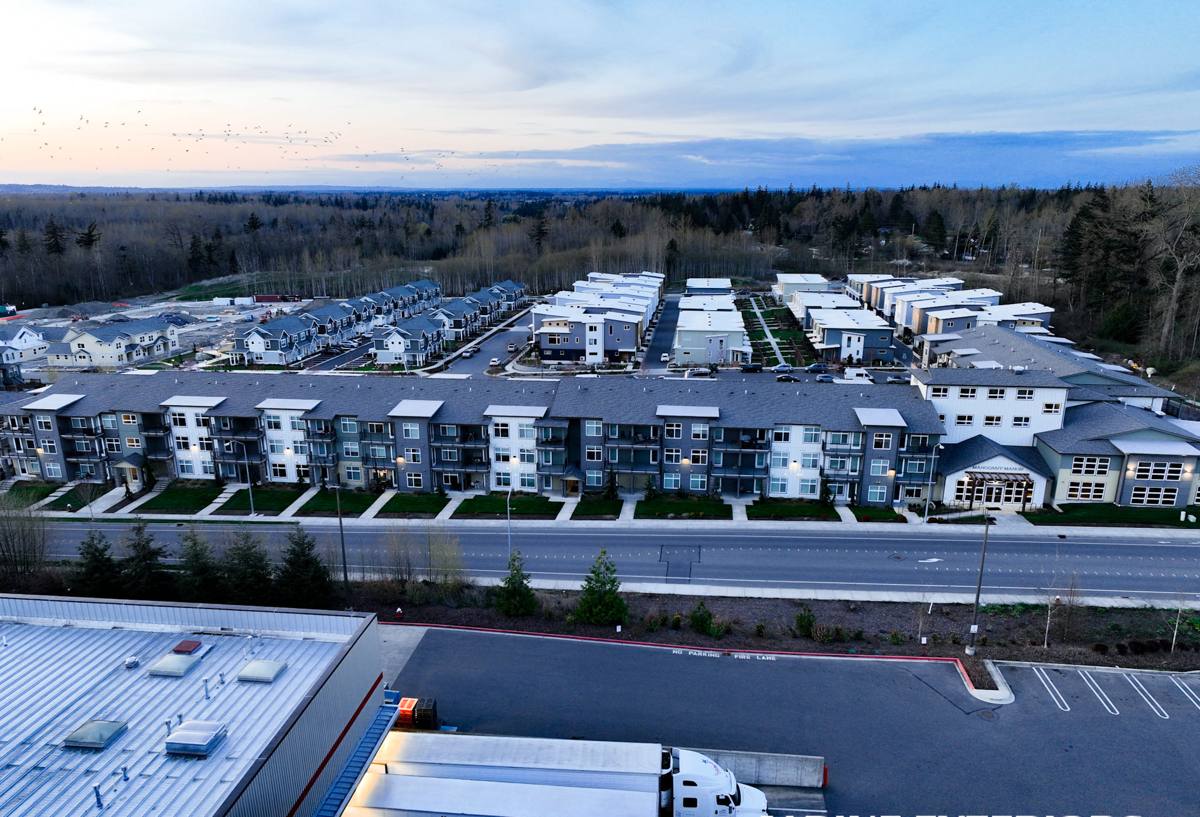
What Point Roberts' Exposure Does to a Home's Exterior
Salt Air From Open Water on Multiple Sides
Most homes in Whatcom County face salt air from one general direction. A home on the Point Roberts peninsula can face it from more than one, since the community sits with water on several sides rather than tucked behind a single shoreline. That concentrated salt exposure accelerates corrosion in fasteners, flashing, and hardware, and it wears down lower-grade paints and finishes faster than a typical inland property ever sees. Materials chosen without that in mind tend to show their age early — chalky finishes, rusting nail heads, and trim that fails well ahead of schedule.
Wind-Driven Rain
Open water on multiple sides also means fewer windbreaks, and less windbreak means storms push rain sideways into a wall instead of letting it run straight down and off. That driving rain gets forced into lap joints, trim seams, and any spot where flashing isn't doing its full job — a tougher test than a simple rainfall total suggests. Siding and trim detailed for calmer, more sheltered conditions can fail here even when the material itself is sound, simply because the water is finding its way in from the side rather than from above.
A Long Moss and Mildew Season
Persistent marine moisture, mild temperatures, and shaded or north-facing wall area on most homes add up to a moss and mildew season that runs long here, often stretching across most of the year. It usually shows up first as staining or green growth on shaded elevations, and it's more than a cosmetic problem — sustained organic growth holds moisture directly against the wall assembly, which is exactly the condition that leads to hidden rot behind the siding if it isn't cleaned up and addressed.
Seasonal Occupancy and Slow-to-Notice Damage
A meaningful share of homes in Point Roberts are part-time or seasonal residences, which changes how exterior damage typically gets found. On a home that's occupied year-round, a leak or a soft spot in the siding tends to get noticed within weeks. On a home that sits empty for stretches of the year, the same problem can run for months before anyone's there to see it, giving moisture more time to work its way behind the siding and into the sheathing underneath. That makes durable, correctly installed siding — and periodic exterior checks even when the home isn't in daily use — more important here than on a property someone's living in and walking past every day.
Why James Hardie Is What We Install
We used to work with a wider range of siding products before narrowing to one system. That decision came out of watching, across years of jobs in this county, which materials genuinely held up under sustained marine exposure and which ones quietly turned into maintenance problems a few years down the road. For a Point Roberts property specifically, facing this much concentrated salt, wind, and moisture, the case for fiber cement is about as strong as it gets in our service area.
- Non-combustible core: Fiber cement doesn't feed a fire the way wood-based or wood-derived siding products can, which matters for household safety and for insurance underwriting.
- Factory-applied ColorPlus finish: The color is baked on under controlled factory conditions rather than brushed on in the field, so it resists fading, chalking, and salt-driven wear far longer than site-applied paint.
- Climate-engineered HZ product lines: Hardie builds different formulations for different climate zones, including versions engineered for regions with heavy, sustained moisture exposure — a close match for a peninsula property with water on more than one side.
- Dimensional stability: Fiber cement doesn't swell, cup, or warp the way engineered wood siding can after repeated wet-season moisture cycles, which matters more here given how long that wet season runs.
- Strong transferable warranty: Hardie backs its products with a solid warranty structure, provided installation follows spec, giving a homeowner real protection rather than a marketing claim, whether they live in the home full-time or visit a few times a year.
We don't install LP SmartSide, vinyl siding, Cemplank, Allura, primed spruce, or cedar. Each has a place in the broader market, and plenty of homeowners elsewhere are satisfied with them. But we made a professional call that one system we trust completely, installed correctly, beats a cheaper option that quietly shifts maintenance risk onto the homeowner — and on a property that may sit unwatched for stretches of the year, that risk matters even more than usual.
What Correct Siding Installation Looks Like Here
Material choice only gets a Point Roberts home halfway there. The rest comes down to installation detail: fastening patterns rated for real wind exposure, correct clearance from grade, joints that are lapped and properly sealed rather than simply butted together, and a house wrap and flashing system that does the actual work of shedding water instead of relying on caulk to cover gaps. On a peninsula that takes more direct wind and driving rain than a typical inland lot, shortcuts on any of these details tend to show up faster — sometimes within a single wet season instead of several.
Repair vs. Full Replacement
Not every siding problem on a Point Roberts home calls for a full tear-off. Storm-damaged sections, an isolated trim failure around a window, or a section that's taken impact can often be repaired and matched into existing Hardie siding. But when water has been tracking behind the wall for a while — which happens more easily on a home that isn't occupied every day — or the home still has an older, non-Hardie product nearing the end of its service life, patching it usually just delays a bigger job while hidden rot keeps spreading underneath. We'll give you an honest read on which situation you're actually looking at.
Why Crossing the Border Matters for This Job
Point Roberts is part of Washington State, but reaching it means crossing an international border, since the only land route runs through Canada. That's a fact of life for anyone who lives there, and it's also something a contractor working here needs to plan around, not treat as an afterthought. Crew scheduling, material deliveries, and equipment staging all take more coordination on a job that involves crossing a border twice for every trip, and a contractor unfamiliar with that routine can lose real time to it — time that often gets passed along to the homeowner as delays or added cost.
A crew that already works in Point Roberts on a regular basis has that logistics problem solved before your project ever starts. Materials get staged and timed around border crossings in advance, crew scheduling accounts for the extra travel, and a site visit doesn't turn into a half-day detour because nobody planned for it. That's a real, practical difference for a project in this location, separate from anything about the siding material itself.
Our Installation Process
- An in-person walk-through of the home to assess current siding condition, trim, and any signs of trapped moisture
- An honest recommendation on repair versus partial or full replacement, explained in plain terms
- A written estimate with a clear scope, product selection, and timeline that accounts for border-crossing logistics up front
- Material staging and delivery planned in advance so the job isn't held up mid-project waiting on a border crossing
- Correct tear-off, house wrap and flashing installation, and Hardie siding installation to manufacturer spec
- A final walk-through with the homeowner before we consider the job finished
Cost Factors for Point Roberts Siding Installation
| Factor | What It Affects | Why It Matters Here |
|---|---|---|
| Tear-off vs. overlay | Labor scope and substrate access | Tear-off reveals hidden moisture and rot damage that's common under older siding on exposed peninsula homes |
| Substrate condition | Repair costs before new siding goes on | Long-term trapped moisture, especially on seasonally occupied homes, can rot sheathing and framing before anyone notices |
| Wind and fastening spec | Material and labor requirements | Open water exposure on multiple sides often calls for tighter fastening patterns than a sheltered inland site |
| Logistics and scheduling | Project timeline and crew planning | Border-crossing coordination for crew and materials needs to be built into the schedule from the start |
| Site access | Labor time and equipment needs | Individual lots vary in access and staging space, which affects how efficiently a crew can work |
Exact costs depend on the specific property and its exposure, which is why we walk the home in person before giving a real number instead of quoting off a generic price sheet.
Signs a Point Roberts Home Needs Siding Attention
- Moss or dark staining that returns quickly after cleaning, especially on shaded or north-facing walls
- Soft or spongy siding low on the wall or around window and door trim
- Rusting fasteners, corroding flashing, or chalky, faded paint finishes
- Cracked, chipped, lifted, or missing sections after a storm
- Visible gaps at seams, corners, or trim joints
- Any signs of moisture on a home that's sat unoccupied for a stretch of time, which are worth checking each time you return
Why a Local Crew Matters Here
A crew that already works in Point Roberts understands how salt air, wind-driven rain, and a long moss season behave on real homes here over a full year, not just how a product performs on a spec sheet. That experience shapes practical decisions on install day: which wall orientations stay wet the longest, where extra flashing attention actually pays off, and which fastening details are worth the added time so a homeowner isn't dealing with a callback after the next storm off the water. It also means the logistics of getting a crew and materials to the peninsula and back are already worked out, rather than something a homeowner has to hope gets figured out along the way. Point Roberts' isolation and open-water exposure make it a different job than a typical in-town Ferndale property, and it deserves a crew that treats that difference seriously.
What to Expect When You Call Us
If your Point Roberts home needs new siding, a partial repair, or just an honest second opinion on what's happening behind an aging wall, we're glad to take a look. We'll walk the property, give you a straight answer about what it actually needs, and explain why we recommend James Hardie for a home facing this level of exposure. Reach out using the form below to schedule a free, no-pressure estimate.