 Ferndale Siding
 Siding That Holds Up in Kendall's Climate
Kendall sits back from the water in the foothills east of Ferndale, but distance from the shoreline doesn't mean distance from the weather that shoreline creates. Whatcom County's marine climate reaches inland along the Mt. Baker corridor in the form of driving rain, heavy seasonal humidity, and shade from the tree cover that many Kendall properties enjoy. That combination is exactly what breaks down the wrong siding material over time: moisture gets in, doesn't fully dry out between storms, and moss and algae find a foothold on north-facing walls and anything shaded by mature trees.
We install James Hardie fiber cement siding exclusively, and Kendall is one of the areas where that decision pays off most visibly. Fiber cement doesn't swell, rot, or delaminate the way wood-based products can when they stay damp for weeks at a stretch during a Pacific Northwest fall and winter. It's also non-combustible, which matters more every year as wildfire smoke and dry spells become part of the regional calendar even in a generally wet county.
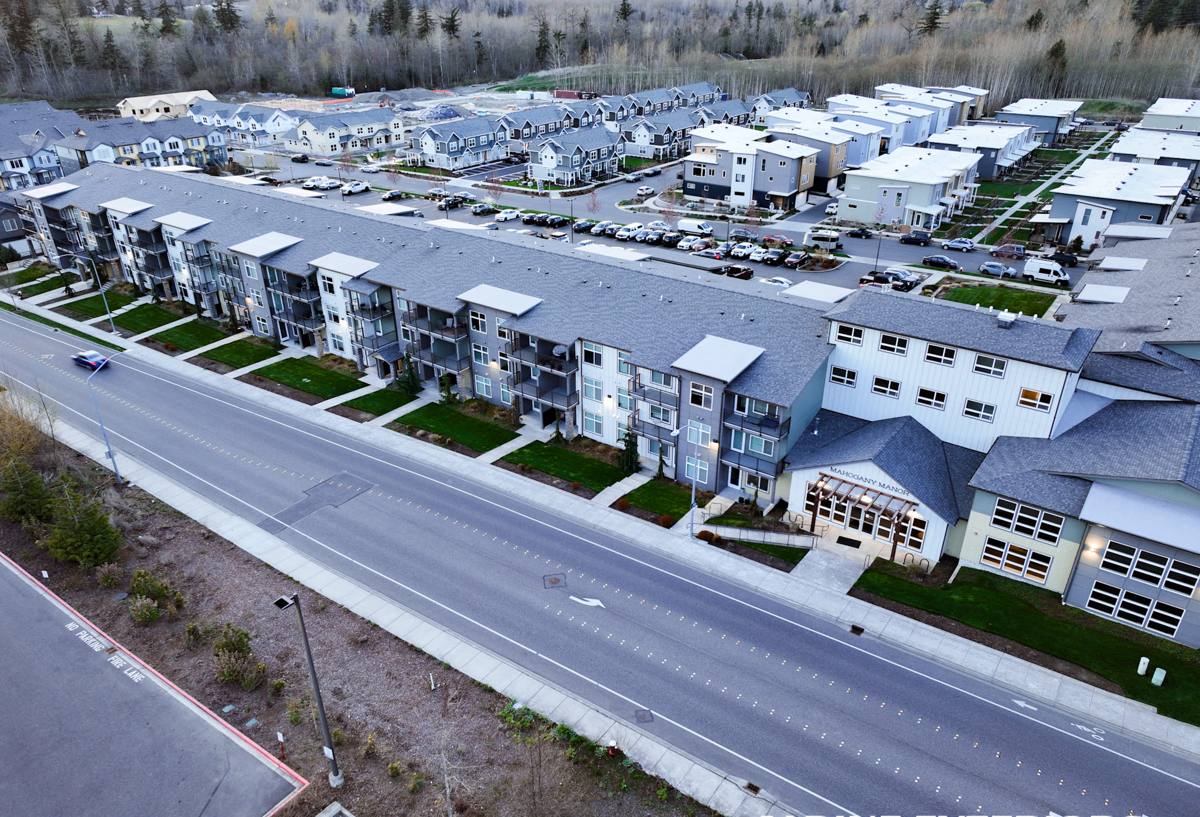
What Kendall Homes Actually Deal With
Every neighborhood has its own siding stressors. In Kendall, the pattern we see most often comes down to a few overlapping factors:
- Extended damp periods: Long stretches of low-intensity rain and overcast skies mean siding surfaces can stay wet for days, not hours.
- Tree cover and shade: Wooded lots and mature landscaping slow down drying time on shaded elevations, which is prime territory for moss and algae growth.
- Temperature swings: Foothill locations can see wider day-to-night and seasonal temperature shifts than close-in coastal towns, which stresses caulking, seams, and any material prone to expansion and contraction.
- Driving rain on exposed walls: Storms coming off the Strait push horizontal rain into west- and south-facing walls, testing every seam, joint, and piece of flashing.
None of this is unique to Kendall — it's the reality of siding anywhere in this part of Whatcom County. But it's worth naming specifically, because the fixes (material choice, installation detail, and long-term maintenance) are different depending on what's actually attacking the siding.
Why Moss Season Matters More Than People Think
Moss doesn't just look bad. Once it establishes on a wall surface, it holds moisture directly against the substrate long after the surrounding air has dried out. On wood-based or engineered wood siding, that's a slow but steady path to soft spots and rot, especially at butt joints and lower courses where moss tends to build up first. On James Hardie fiber cement, moss can still grow on the surface if a wall never gets sun or airflow, but the material underneath doesn't break down the same way — it's cement-based, not wood-based, so sustained moisture contact isn't the structural threat it is with other products.
Why We Only Install James Hardie
We made a deliberate choice years ago to stop installing anything except James Hardie fiber cement, and we stand behind that choice on every job, including the ones in Kendall. It's worth explaining honestly why, rather than just asserting it.
What We Moved Away From
Vinyl siding is inexpensive and low-maintenance in the sense that it doesn't need painting, but it's a thin plastic product that can warp in direct sun, crack in a hard freeze, and simply doesn't hold up to wind-driven debris the way a rigid fiber cement board does. It also doesn't offer real fire resistance, which matters as insurance underwriting and building codes increasingly account for wildfire exposure even in wet climates.
LP SmartSide and similar engineered wood products have improved a lot over the years and can be a reasonable choice when installed and maintained correctly. But they're still wood-based at the core, which means they depend on an intact factory coating and diligent caulk maintenance to keep moisture out. In a climate like Kendall's, where walls can stay damp for days, that margin for error is thinner than we're comfortable with. Cemplank and Allura are also fiber cement products and are legitimate materials in general — we simply standardized on James Hardie's specific formulation, factory finish, and warranty structure rather than installing multiple competing lines.
Primed spruce and cedar are honest, traditional materials with real appeal, but they require an ongoing maintenance commitment — recoating, caulking, and repainting on a cycle — that most homeowners underestimate when they choose it, especially on a home surrounded by trees where drying time is already limited.
What Hardie Gets Right for This Area
James Hardie fiber cement is engineered specifically for climate zones like ours through its HZ5 product line, built for regions with cold-wet weather patterns. It resists moisture absorption at the core, doesn't provide a food source for pests, and carries a factory-applied ColorPlus finish that's baked on under controlled conditions rather than field-painted — which means better adhesion and color consistency than a site-applied coat, especially in a climate where you can't always count on a dry install window.
What a Correct Installation Involves
Material alone doesn't guarantee performance. James Hardie's own warranty coverage depends on installation following their published specifications, and in a wet climate like Kendall's, the details matter more than they would somewhere dry.
| Installation Detail | Why It Matters Here |
|---|---|
| Weather-resistive barrier and proper flashing | Manages the water that inevitably gets behind the cladding during driving rain |
| Correct fastener pattern and depth | Prevents overdriven or underdriven nails that create weak points where moisture can enter |
| Rain screen / drainage gap where called for | Lets walls dry between storms instead of trapping moisture against the sheathing |
| Proper clearance from grade, roofline, and decks | Keeps splashback and roof runoff from saturating the lowest courses |
| Sealed and caulked joints per Hardie spec | Closes the gaps where wind-driven rain would otherwise find a way in |
Skipping or rushing any one of these doesn't usually cause an immediate problem — it shows up two, five, or ten years later as a soft spot, a stained wall, or a warranty claim that gets denied because the installation didn't meet spec. That's a big part of why installer experience matters as much as the product itself.
Our Process for a Kendall Project
Every job starts with an in-person look at the house, not a phone estimate. On a Kendall property that usually means paying close attention to tree cover, drainage around the foundation, and which elevations take the worst of the weather. From there:
- On-site inspection of existing siding, trim, and any moisture or rot already present
- Honest assessment of what's driving the current problems — sun exposure, shade, drainage, or age of the existing material
- A written estimate covering the James Hardie product line, color, and trim that fits the home
- Removal of old siding and inspection of the sheathing underneath before anything new goes up
- Installation following James Hardie's published specifications, including flashing, fastening, and clearances
- Final walkthrough so you know what to expect from the new siding and how little maintenance it actually needs
Why Local Installation Experience Matters
Fiber cement installed to spec in a dry climate and fiber cement installed to spec in Whatcom County aren't quite the same job. A crew that regularly works Kendall and the surrounding Ferndale area already knows where the moss builds up first, which elevations take the worst of the wind-driven rain, and how tree cover on a given lot affects drying time — knowledge that shows up in small decisions during installation that don't get written down in a general spec sheet. That's the difference between siding that looks good on install day and siding that still looks good in year fifteen.
A Simple Pre-Estimate Checklist
- Note which walls stay shaded or damp longest after a storm
- Check for moss, algae, or dark staining on any siding surface
- Look for soft spots, warping, or gaps at seams and butt joints
- Check caulking around windows and trim for cracking or gaps
- Note any areas where gutters or downspouts dump water near the wall
What to Expect Cost-Wise
Siding cost depends on the size of the home, how much trim and detail work is involved, tear-off versus install-over-sheathing conditions, and which James Hardie plank profile and finish you choose. We don't quote blind — every estimate is based on an actual look at the house, because guessing a number over the phone doesn't serve anyone well. What we can say honestly is that James Hardie sits above vinyl and below premium cedar in upfront cost, but its low maintenance requirements and long service life change the math significantly once you look past year one.
Get a Free Estimate for Your Kendall Home
If you're weighing a siding replacement or just want an honest read on how your current siding is holding up against Whatcom County's weather, we're happy to come take a look. There's no pressure and no obligation — just a straight assessment and a written estimate for James Hardie siding done right. Use the form below to get started.