 Ferndale Siding
 Roof Repair for a Peninsula That Takes a Beating
Point Roberts sits out on its own point of land, surrounded on three sides by water, which means every roof out here deals with more salt-laden wind, more driving rain off the Strait, and a longer moss season than homes further inland. A roof that would go ten or fifteen years between repairs in a sheltered spot can start showing problems much sooner when it's catching that exposure day after day. Ferndale Siding Companies works roofs across Whatcom County, and Point Roberts is one of the areas where we see the clearest pattern: small, ignorable-looking issues turn into real leaks faster here than almost anywhere else we work.
This page is about roof repair specifically — not full tear-offs, not siding, not gutters — and specifically for Point Roberts homes dealing with the combination of salt air, wind-driven rain, and moss that defines the local climate.
Why Point Roberts Roofs Wear Differently
Three things drive most of the repair calls we get out here, and they compound each other.
Salt Air
Airborne salt accelerates corrosion on anything metal — flashing, fasteners, vent boots with metal collars, gutter hangers. A nail or screw that would hold fine for decades somewhere dry can rust and lose its grip years earlier when it's exposed to salt spray day in and day out. That's often the real story behind a shingle that's "just lifting" — it's not the shingle failing, it's the fastener underneath it giving up.
Driving Rain
Rain that comes in sideways off the water doesn't behave like rain falling straight down. It gets pushed under shingle tabs, into flashing laps, and along ridge and hip lines that would stay dry in a calmer setting. Repairs that don't account for wind-driven rain — using standard nailing patterns or skipping extra sealant at vulnerable laps — tend to fail again within a season or two.
Moss and Algae
Cool, damp conditions for a large part of the year mean moss gets a long runway to establish itself, especially on north-facing slopes and anywhere shaded by trees. Moss doesn't just look bad — it holds moisture against the roofing material, works its way under shingle edges, and can lift tabs enough to let water in underneath.
What Actually Causes Most Point Roberts Roof Leaks
Homeowners often assume a leak means the whole roof is failing. In our experience with repair calls in this area, the actual cause is usually narrower and more fixable than that:
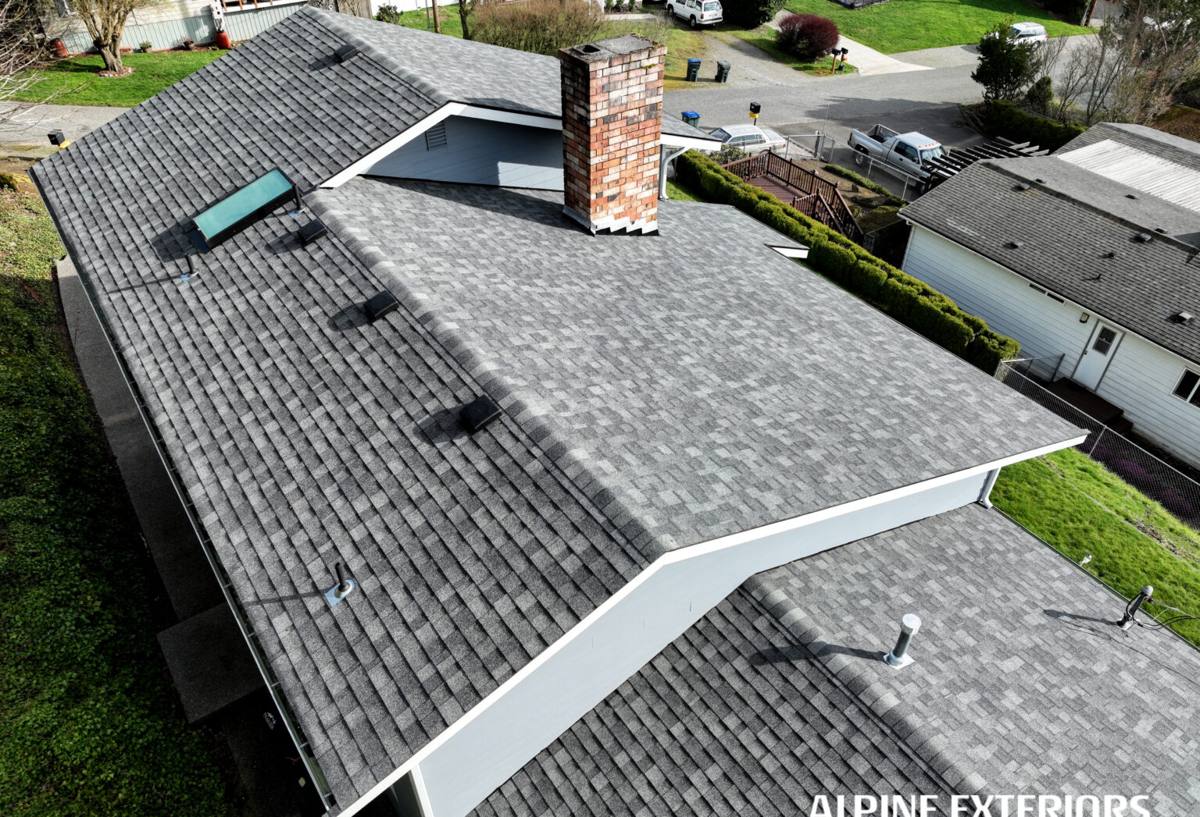
- Cracked or lifted flashing around chimneys, skylights, and roof-to-wall transitions
- Rusted or backed-out fasteners letting shingles work loose in wind
- Moss growth holding moisture against shingles and lifting edges
- Deteriorated pipe boots (the rubber collar around plumbing vents dries out and cracks faster with sun and salt exposure)
- Damaged or missing shingles from wind gusts off the water
- Clogged valleys or gutters redirecting water where it isn't supposed to go
Most of these are legitimate repairs, not replacement situations — but only if they're diagnosed correctly the first time.
What a Correct Repair Actually Involves
Diagnosis Before Patching
A leak inside the house doesn't always show up directly below the roof problem — water travels along rafters and sheathing before it drips. A repair that just patches the spot above the ceiling stain without tracing the actual entry point is a repair that comes back. We check the suspect area and the surrounding field of the roof, not just the ceiling stain location.
Matching Materials, Not Guessing at Them
Shingle color, profile, and even granule type vary by manufacturer and by production run. We do our best to match existing shingles closely for patch repairs, and we're upfront when an exact match isn't possible — sun fading alone can make a five-year-old shingle look different from a new one off the shelf. What matters more than a perfect color match is that the patch is installed correctly: proper overlap, correct nailing pattern, and sealant where wind-driven rain is a factor.
Flashing and Sealing Details
Given how much of the leak activity out here traces back to flashing and fasteners rather than the shingles themselves, we pay particular attention to step flashing, counter-flashing, and the transitions around chimneys, skylights, and dormers. These are the details that separate a repair that lasts from one that just looks fixed for a season.
Repair or Replace? How We Help You Decide
Not every roof problem in Point Roberts calls for a full replacement, and not every roof is a good candidate for another round of patching. We look at the roof as a whole before recommending either.
| Factor | Leans Toward Repair | Leans Toward Replacement |
|---|---|---|
| Roof age | Under 15 years, or well-maintained older roof | Near or past the material's expected service life |
| Problem scope | Isolated to flashing, fasteners, or a small shingle area | Widespread granule loss, curling, or multiple leak points |
| Decking condition | Solid, no rot or soft spots found | Soft, spongy, or rotted sheathing discovered |
| Moss/algae extent | Surface growth, shingles still intact underneath | Moss has been lifting shingles for an extended period |
| History | First repair call, or an isolated storm-damage event | Repeated repairs to the same or nearby areas |
We'll tell you honestly which side of that table your roof falls on. If a repair is the right call, that's what we'll recommend — we don't push a replacement a roof doesn't need.
Our Point Roberts Roof Repair Process
- Inspection. We look at the reported problem area plus the rest of the roof — flashing, valleys, vents, and any spots showing early moss or granule loss.
- Straightforward explanation. We walk you through what we found, what's causing it, and what a proper fix involves — no pressure, no upsell.
- Written estimate. You get a clear scope of work and price before anything is scheduled.
- The repair. Matched materials where possible, corrosion-resistant fasteners, and flashing details built for wind-driven rain — not a quick patch job.
- Cleanup and check. We clear debris and confirm the fix addresses the actual entry point, not just the visible symptom.
Materials That Hold Up to Salt Air
Fasteners
Standard galvanized nails can corrode faster than expected this close to the water. We use corrosion-resistant fasteners appropriate to the repair, because a fastener that fails is very often what turns a small shingle problem into a leak in the first place.
Flashing Metals
Flashing material choice matters more here than in a sheltered inland setting. We select flashing suited to coastal exposure and install it with proper laps and sealant at the joints most exposed to wind-driven rain — chimney bases, skylight curbs, and roof-to-wall transitions.
Sealants
Sealant is a supplement to correct flashing work, not a substitute for it. We use it at the details where it belongs — never as the primary fix for a flashing or fastener problem, because sealant-only patches are exactly the kind of "repair" that fails again within a year or two out here.
Keeping Moss and Algae From Undoing Your Repair
A repair only holds up if the conditions that caused the original problem are managed going forward. Between visits, a few habits make a real difference for Point Roberts roofs:
- Keep gutters and valleys clear of needles and debris so water doesn't pool or back up under shingle edges
- Trim back overhanging branches to cut down on shade and debris that feed moss growth
- Have moss removed by hand or with an appropriate treatment rather than scraping, which can damage the shingle surface underneath
- Check pipe boots and flashing sealant every year or two — they age faster in salt air and sun than the shingles around them
- Address small leaks or lifted shingles promptly; a delayed repair almost always costs more than an early one
Why It Matters That We Already Work in Point Roberts
Point Roberts is a U.S. exclave — the only road access is through Canada — which is something a lot of contractors based elsewhere in Whatcom County don't account for when they quote a job. Scheduling, material delivery, and border crossing all take planning that a crew unfamiliar with the area tends to underestimate, which shows up as delays or rushed work. We factor that into how we schedule Point Roberts repairs so the job gets done properly and on the timeline we commit to.
Beyond logistics, familiarity with how the local exposure behaves matters. A crew that's worked roofs on this peninsula knows which slopes hold moss longest, which flashing details tend to fail first in this wind pattern, and what "matched" materials realistically look like on a roof that's had a few years of sun and salt exposure. That local knowledge is the difference between a repair that's just cosmetically fine and one that actually holds up through the next storm season.
Get a Straightforward Roof Repair Estimate
If you've got a leak, lifted shingles, or moss taking hold on a Point Roberts roof, we're glad to take a look and give you an honest read on what it needs — repair or otherwise. Request a free, no-pressure estimate using the form below and we'll follow up to schedule a time that works.