 Ferndale Siding
 Siding Built for Life on the Lummi Peninsula
Homes in and around Lummi Nation sit about as close to the water as a house in Whatcom County can get. Between Bellingham Bay, Lummi Bay, and the open exposure of the Strait of Georgia, this stretch of coastline throws a combination of weather at exterior siding that inland Ferndale neighborhoods simply don't deal with in the same way. Salt-laden air, wind-driven rain off the water, and a long, wet moss season all work on a home's exterior every day of the year, not just during the big storms. Siding installation out here isn't a generic job — it's a job that has to account for constant marine exposure from day one.
We're a Ferndale-based crew that already works this stretch of Whatcom County regularly, and this page covers exactly what siding installation for a Lummi Nation home should look like: what the climate demands, what a correct install actually involves, and why we've standardized on one product system instead of offering the usual menu of options.
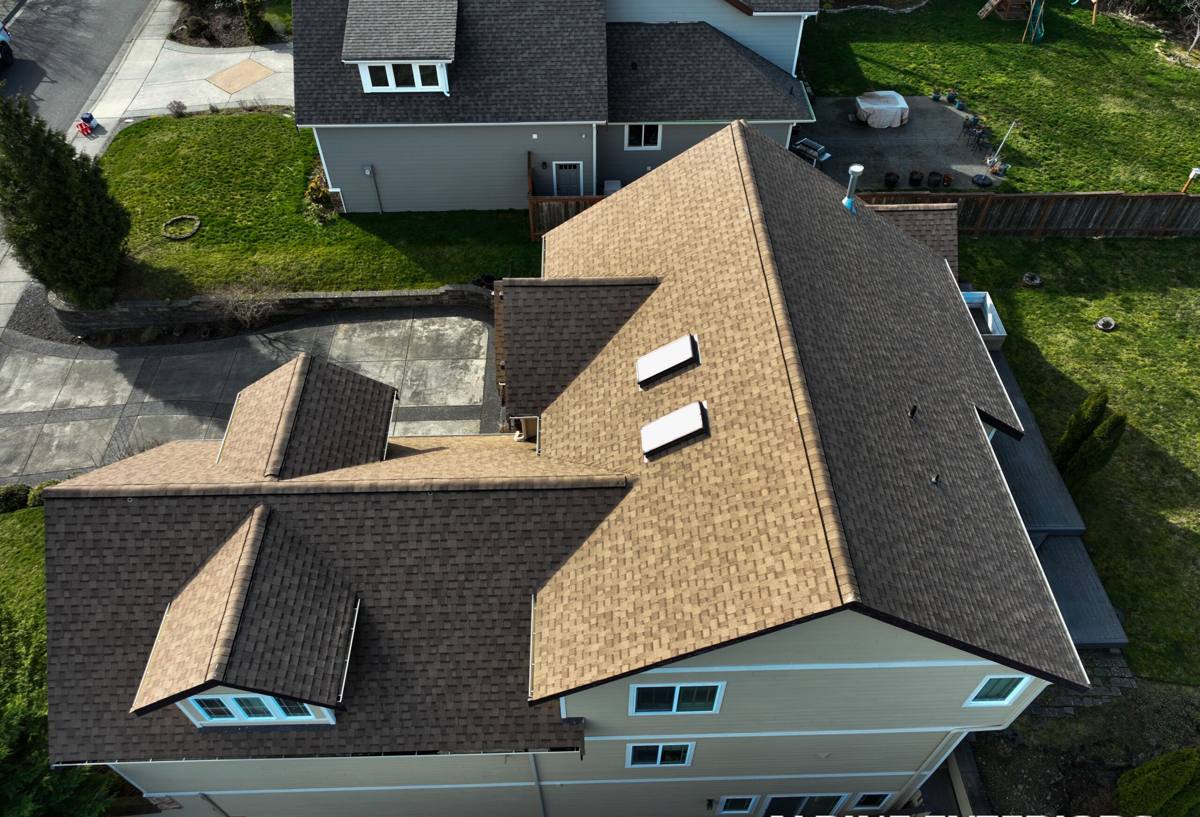
What Salt Air, Driving Rain, and Moss Season Actually Do to Siding
Salt-laden air
Airborne salt from the bay doesn't just affect boats and fencing. It settles on exterior surfaces, works into fasteners and trim connections, and accelerates corrosion on anything metal — flashing, nail heads, hose bibs, light fixtures mounted to the wall. Siding materials and fasteners that aren't rated for coastal exposure corrode faster here than they would ten miles inland, and once fasteners start failing, siding panels loosen and water finds a way behind them.
Wind-driven rain
Rain that comes in sideways off open water behaves differently than rain falling straight down. It gets pushed up under laps, into seams, and behind trim in ways that vertical rain doesn't. A siding system with weak lap geometry, undersized overlaps, or gaps at butt joints and corners will take on water in these conditions even if it looks fine on a calm day. The house's weather-resistive barrier and flashing details end up doing as much work as the siding itself.
Moss season
Whatcom County's wet season runs long, and on shaded, north-facing, or tree-lined lots near Lummi Nation, moss and algae can hold moisture against a wall for weeks at a stretch. Materials that absorb moisture or swell when damp stay wet longer, which is exactly the condition moss needs to take hold and exactly the condition that leads to rot at seams, corners, and butt joints over time.
None of these three factors is dramatic on its own. The problem is that they run together, year-round, for the life of the siding — which is why material choice and installation detail matter more here than in a drier, more sheltered part of the region.
Why We Install Only James Hardie Fiber Cement
We don't offer vinyl, LP SmartSide, Cemplank, Allura, or wood siding like primed spruce or cedar. That's not a marketing position — it's a standard we've settled on after weighing how each of those products actually performs under sustained coastal exposure versus how James Hardie fiber cement performs, and choosing to only put our name behind the one we trust in this environment.
Non-combustible, dimensionally stable material
Fiber cement is made from cement, sand, and cellulose fibers. It doesn't expand and contract with humidity the way wood-based products can, and it doesn't provide fuel the way wood or wood-composite siding does. In a marine climate where moisture exposure is constant, a material that doesn't swell, cup, or absorb water at the core is a real advantage, not a marketing point.
HZ5 climate engineering
James Hardie manufactures regional formulations of its siding for different climate zones, and the Pacific Northwest falls under the HZ5 line, engineered specifically for high-moisture, high-humidity conditions. That's a meaningful distinction for a Lummi Nation installation, where the product is dealing with salt air and prolonged dampness on top of ordinary Western Washington rain.
ColorPlus factory finish
Field-painted siding is only as good as the paint job and the maintenance schedule behind it. James Hardie's ColorPlus finish is baked on at the factory in a controlled environment, which gives more consistent coverage and adhesion than most site-applied paint, along with a color warranty backing it. In a salt-air environment where field-applied coatings tend to break down faster, a factory finish holds its look longer with less upkeep.
A warranty built for the product, not the installer
James Hardie backs its siding with a transferable limited warranty on the product itself, separate from whatever workmanship warranty the installing contractor provides. That matters to a homeowner because it means the manufacturer stands behind the material's performance over a long time horizon, not just the crew that installed it.
What a Correct Installation Involves
Fiber cement siding performs the way it's supposed to only when it's installed to Hardie's published specifications. A rushed or generic install undermines the product's climate advantages no matter how good the material is. On every job, that means:
- A weather-resistive barrier installed and lapped correctly over the sheathing before any siding goes up
- Properly sized and positioned flashing at every window, door, and roof-to-wall intersection
- Correct minimum clearances between the siding's bottom edge and the roofline, deck, patio, or grade
- Fastener type, spacing, and placement matched to Hardie's specifications for the coastal exposure this home faces
- Proper lap dimensions and butt joint treatment so wind-driven rain can't work its way behind the panel
- Factory-cut and factory-primed edges kept intact, with any field cuts sealed per manufacturer instructions
- Caulking and sealant used only where specified — not as a substitute for correct flashing
Skipping any one of these steps might not show up as a problem in the first year. It shows up three, five, or ten years in, as a soft spot at a corner, a stain below a window, or a section of siding that's holding water it shouldn't be.
Our Process, Start to Finish
1. On-site assessment
We start by walking the exterior with the homeowner, looking at current siding condition, existing moisture damage, trim and flashing condition, and any problem areas tied to sun exposure, shade, or prevailing wind direction off the water.
2. Tear-off and sheathing check
Old siding comes off in sections so we can inspect the sheathing underneath. Any rot or soft sheathing gets replaced before anything new goes on — covering damaged sheathing with new siding just traps the problem.
3. Weather barrier and flashing
A new weather-resistive barrier goes on the wall, followed by flashing at every penetration and transition. This layer is what actually keeps water out long-term; the siding is the second line of defense, not the first.
4. Siding installation
James Hardie panels or planks go up per manufacturer spec, with fastener placement, lap dimensions, and clearances set for this home's specific exposure. Corners, trim, and joints are detailed to shed water rather than collect it.
5. Trim, caulking, and touch-up
Trim goes on, ColorPlus touch-up is applied only where factory finish was field-cut, and sealant is placed at the specific joints Hardie specifies — not smeared across every seam as a catch-all.
6. Final walkthrough
We walk the finished job with the homeowner, point out anything they should know about maintenance, and answer questions before we consider the job done.
Comparing Siding Options in This Climate
| Material | Behavior in salt air / wind-driven rain | Moss / moisture resistance | Why it's off our list (or is our standard) |
|---|---|---|---|
| Vinyl siding | Can warp, buckle, or crack under temperature swings; seams can allow wind-driven rain intrusion | Doesn't feed moss itself, but trapped moisture behind panels goes unnoticed | We don't install it — moisture that gets behind it is hard to detect early |
| LP SmartSide | Engineered wood strand product; edges are vulnerable if cut edges aren't sealed and maintained | Wood-based core can swell and support rot if moisture reaches it | We don't install it — ongoing edge-sealing maintenance is a real burden in this climate |
| Cemplank / Allura | Other fiber cement brands; similar core material chemistry to Hardie | Comparable moisture resistance to Hardie's core | We don't install them — we've standardized on Hardie's HZ5 formulation, factory finish, and warranty structure specifically |
| Primed spruce / cedar | Natural wood movement with humidity; salt air accelerates fastener corrosion | Highest susceptibility to moss, rot, and repainting cycles | We don't install it — the maintenance schedule needed here is demanding and easy to fall behind on |
| James Hardie fiber cement (HZ5) | Dimensionally stable; engineered for high-moisture regions | Doesn't swell or feed rot at the core; factory finish resists fading | Our standard — the best match we've found for sustained coastal exposure |
This isn't a claim that other products are defective. It's an honest reflection of the trade-offs — maintenance burden, moisture behavior, and installation sensitivity — that led us to install one system and stand fully behind it, rather than offer several options with very different long-term outcomes in this climate.
Choosing a Siding Crew for a Lummi Nation Home
Because this area's exposure is more demanding than the regional average, the installer matters as much as the material. Before hiring anyone for a siding project out here, it's worth checking for:
- Manufacturer training or certification specific to James Hardie installation, not just general siding experience
- A written scope that names the weather-resistive barrier, flashing details, and fastening pattern — not just "siding replacement"
- Local project experience in coastal or waterfront-exposed parts of Whatcom County, not just inland neighborhoods
- A clear explanation of both the manufacturer's product warranty and the contractor's own workmanship warranty
- Willingness to inspect and address sheathing condition during tear-off, not just cover over what's there
- References or a portfolio that show they've worked in similarly exposed conditions before
A crew that already works Lummi Nation and the surrounding Ferndale waterfront knows which walls take the worst of the wind-driven rain, which sides need extra attention for moss, and how salt exposure changes fastener and flashing choices — details that don't show up on a generic siding estimate from a crew unfamiliar with this specific stretch of coastline.
Cost Factors for a Lummi Nation Siding Project
Every home is different, but the price of a siding installation here is generally driven by a consistent set of factors rather than one flat rate:
- Total square footage of exterior wall area and the home's overall complexity (corners, gables, dormers)
- Condition of the existing sheathing once old siding comes off, and how much repair is needed
- Amount of trim, window, and door detail work involved
- Accessibility of the property, including waterfront or sloped lots common in this area
- Product selection within the James Hardie lineup, including panel versus lap profile and color/finish options
We provide a specific, itemized number after walking the property, not a rough guess over the phone — coastal exposure and sheathing condition vary too much house to house to price accurately without seeing it.
Maintenance After Installation
James Hardie siding installed correctly is low-maintenance, but "low" isn't "none," especially this close to the water. A simple annual routine goes a long way: rinse off salt residue and moss buildup with a garden hose or low-pressure wash (never a high-pressure blast directed at seams), keep gutters clear so water isn't overflowing down the wall face, trim back vegetation that's holding shade and moisture against the siding, and do a quick visual check of caulking at trim joints each year. None of this requires special equipment or a repaint cycle — it's the kind of upkeep that protects the investment without becoming a chore.
Why the Right Installation Matters More Here Than Elsewhere
A siding job that would hold up fine in a sheltered inland neighborhood can fail early on a home facing open water near Lummi Nation if the flashing, fastening, or clearances aren't dialed in for this specific exposure. That's the core reason we've narrowed our focus to one product system installed to spec, rather than offering a range of materials and hoping each performs evenly across very different conditions. A correct installation here is the difference between siding that quietly does its job for decades and siding that starts showing problems within a few wet seasons.
If you're planning a siding project for a home in or near Lummi Nation, we're glad to come take a look and put together a free, no-pressure estimate — just fill out the form below.