 Ferndale Siding
 Why Lummi Nation Roofs Wear Differently
Homes on and around Lummi Nation sit right where salt water, wind, and rain all meet in the same place. That combination is harder on a roof than most homeowners realize until they're up close to shingles that are curling, granules washing into the gutters, or moss creeping under the ridge cap. A roof that would last two or three decades a few miles inland can start showing real trouble sooner out here, simply because of what it's exposed to every day.
We work on roofs across Ferndale and the surrounding Whatcom County coastline, and the homes closest to the water — including those on Lummi Nation — consistently need a different approach than roofs set back from the shoreline. This page walks through what that means in practice: what the climate does to a roof, what a correct replacement looks like here, and how our process works from first look to final inspection.
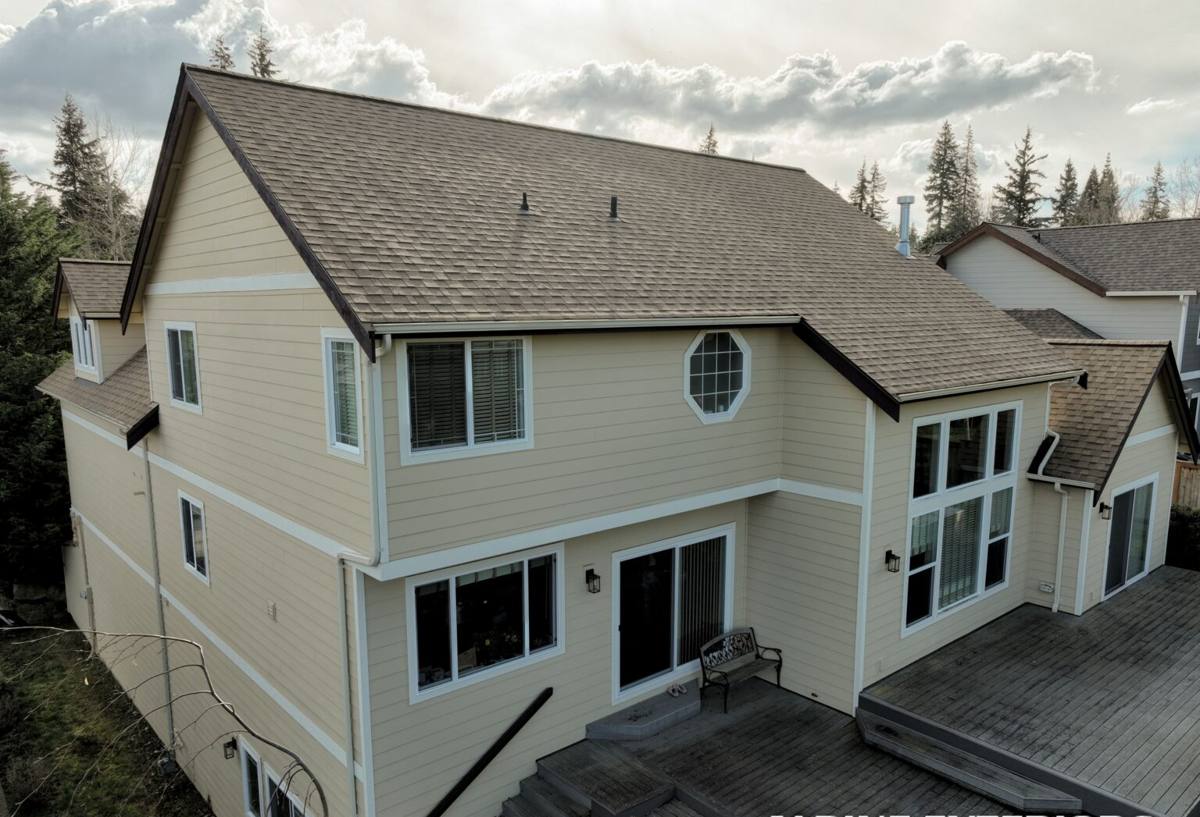
What the Local Climate Does to a Roof
Salt Air and Marine Corrosion
Salt-laden air off Bellingham Bay and the Strait of Georgia doesn't just affect siding and outdoor metal — it works on a roof too. Exposed fasteners, flashing, vents, and any unpainted or lower-grade metal components corrode faster near the water than they would twenty miles inland. Once corrosion starts at a nail head or flashing seam, that's a direct path for water to get underneath the roofing system, and it's often invisible from the ground.
Driving Rain and Wind-Driven Water
Whatcom County gets its share of steady rain, but the bigger issue near the water is wind-driven rain — storms that push water sideways and upward under shingle tabs, around vents, and into any flashing detail that isn't sealed correctly. A roof that's fine in a straight-down rain can still leak in a wind-driven storm if the underlayment, flashing, and shingle overlap weren't done with that in mind.
Moss, Shade, and Moisture Retention
The Pacific Northwest's long moss season is well known, but roofs near the water get a double dose: cooler, damp air off the bay keeps roof surfaces wet longer, and many lots here have mature tree cover that adds shade and drops needles and debris into valleys and gutters. Moss holds moisture against the roofing material, works its way under shingle edges, and slowly lifts them — which is exactly how small leaks start.
Signs Your Roof Needs Replacing, Not Just Repair
Not every problem means a full tear-off. But there's a point where patching individual leaks costs more over time than doing the job right once. Here's what tells us a roof is past the point of spot repair:
- Granule loss heavy enough that you can see bare, shiny patches on shingles
- Shingles that are curling, cupping, or cracking across large sections of the roof, not just one spot
- Moss or algae growth that's spread beyond the shaded north side and is lifting shingle edges
- Flashing around chimneys, vents, or skylights that's rusted, bent, or pulling away
- Soft spots or sagging visible when walking the roof or viewed from a ladder
- Daylight visible through the roof deck from inside the attic
- Water stains on ceilings or in the attic that reappear after repairs
- A roof that's at or past the manufacturer's expected service life for this climate
If you're only seeing one or two of these in a localized area, a repair may still make sense. If several apply across the roof, replacement is usually the more honest recommendation — and we'll tell you which situation you're in during the estimate, not just push a bigger job.
What a Correct Roof Replacement Includes
A roof replacement that actually holds up near the water isn't just new shingles laid over what's there. Every layer matters, and skipping one is usually where the next leak starts.
| Component | Why It Matters Here |
|---|---|
| Full tear-off to the deck | Lets us check the sheathing for rot or soft spots before anything new goes down — covering up a bad deck just hides the problem |
| Ice and water shield at eaves, valleys, and penetrations | These are the spots wind-driven rain finds first; a self-adhering membrane backs up the shingles where they're most vulnerable |
| Synthetic underlayment across the field | Holds up to moisture exposure during install and adds a second line of defense under the shingles for the life of the roof |
| Corrosion-resistant flashing and fasteners | Standard-grade metal corrodes faster in salt air; using the right grade here isn't optional, it's what keeps flashing sealed for the long run |
| Balanced attic ventilation (intake and exhaust) | Poor airflow traps moisture under the deck, which speeds up rot and makes moss and mildew worse from underneath |
| Proper shingle nailing pattern and exposure | Incorrect nailing is one of the most common causes of wind and rain intrusion, and it's not something you can see once shingles are down |
Choosing Roofing Materials for This Exposure
There's no single "best" roofing material for every home — it depends on the roof's exposure, the home's structure, and the homeowner's budget and priorities. Here's how the common options stack up for a coastal Whatcom County property:
| Material | Coastal Performance | Trade-Offs |
|---|---|---|
| Architectural asphalt shingles | Good wind rating, wide range of moss-resistant options, proven track record in this climate | Shorter lifespan than metal; still needs periodic moss treatment |
| Metal roofing (standing seam or panel) | Sheds moss and water well, handles wind-driven rain, long service life when properly coated | Higher upfront cost; requires correct fastening and coating specific to salt-air exposure |
| Basic 3-tab shingles | Lower wind rating and shorter lifespan, more prone to granule loss near the water | Lowest upfront cost, but often the most expensive option over 20+ years in this exposure |
We install what fits the home and the budget — we're not going to recommend replacing 3-tab shingles with the same product if the exposure calls for something more durable, and we'll explain the honest maintenance trade-offs of each option before you decide.
Our Replacement Process
- On-site inspection. We walk the roof and attic, check the deck, flashing, and ventilation, and note anything the climate has already affected.
- Written estimate. You get a clear scope of work and pricing — no vague allowances, no pressure to decide on the spot.
- Material selection. We go over options that fit the home's exposure and your budget, including moss-resistant shingle lines where they make sense.
- Tear-off and deck inspection. Old roofing comes off down to the sheathing so we can confirm the deck is sound before anything new goes on.
- Underlayment, flashing, and ventilation install. This is the layer that actually keeps water out long-term, and we don't rush it.
- Shingle or panel installation. Installed to manufacturer spec for wind and nailing pattern, not just "close enough."
- Final walk-through. We review the finished roof with you, including gutters, flashing details, and any cleanup.
Why a Crew That Already Works Lummi Nation Matters
A roof replacement here isn't the same job as one in a dry, inland neighborhood, and a crew that hasn't worked this stretch of coastline can miss details that matter — the right fastener grade for salt exposure, how much wind-driven rain protection a given roof line actually needs, or how aggressively moss will come back based on the tree cover and roof pitch. Homes here may also fall under different permitting and building requirements than the rest of unincorporated Whatcom County, so it helps to work with a crew that knows to check on that up front rather than assume county rules apply automatically.
We're not going to claim special status we don't have — we're a local siding and roofing crew that works this area regularly, so we've seen how roofs here actually age and fail, not just how they're supposed to perform on paper.
Cost Factors to Expect
Every roof is different, and we'll only give you real numbers after seeing your roof in person. In general, the biggest factors that move the price are:
| Factor | Effect on Cost |
|---|---|
| Roof size and number of facets/valleys | More cuts and seams mean more labor and material |
| Existing layers to remove | Multiple old layers add tear-off time and disposal cost |
| Deck condition | Any rotted or soft sheathing found during tear-off needs replacing before roofing can go back on |
| Material choice | Basic asphalt, architectural asphalt, and metal all carry different material and install costs |
| Roof pitch and accessibility | Steep or hard-to-access roofs take longer and require more safety setup |
| Ventilation and flashing upgrades | Bringing older ventilation or flashing up to current standards adds material but pays off in roof life |
Caring for Your New Roof
A correctly installed roof still needs some upkeep in this climate. Keep gutters and valleys clear of needles and debris so water isn't sitting against the roof edge. Have moss growth treated before it spreads rather than after, especially on shaded sections. And after any major windstorm, a quick visual check for lifted shingles or damaged flashing can catch a small problem before it becomes a ceiling stain.
If your roof is showing wear, or you just want an honest read on how much life it has left, we're happy to take a look. Reach out for a free, no-pressure estimate using the form below.