 Ferndale Siding
 Building Decks for Lummi Nation's Marine Climate
A deck in Lummi Nation sits closer to salt water and open weather than almost anywhere else in Whatcom County. That waterfront exposure is exactly why the area is such a good place to build outdoor living space — and exactly why a deck built with generic materials and generic details tends to disappoint an owner within a few years. Salt-laden air corrodes fasteners and hardware faster than it corrodes wood. Driving rain off the water finds every gap in flashing and framing. And the long, wet moss season here coats horizontal surfaces in a film that turns slick long before it turns green enough to notice.
None of that means a deck can't last for decades in this environment. It means the material choices, the fastening hardware, the framing details, and the finishing schedule all have to be picked with this specific climate in mind, not copied from a spec sheet written for a dry inland lot.
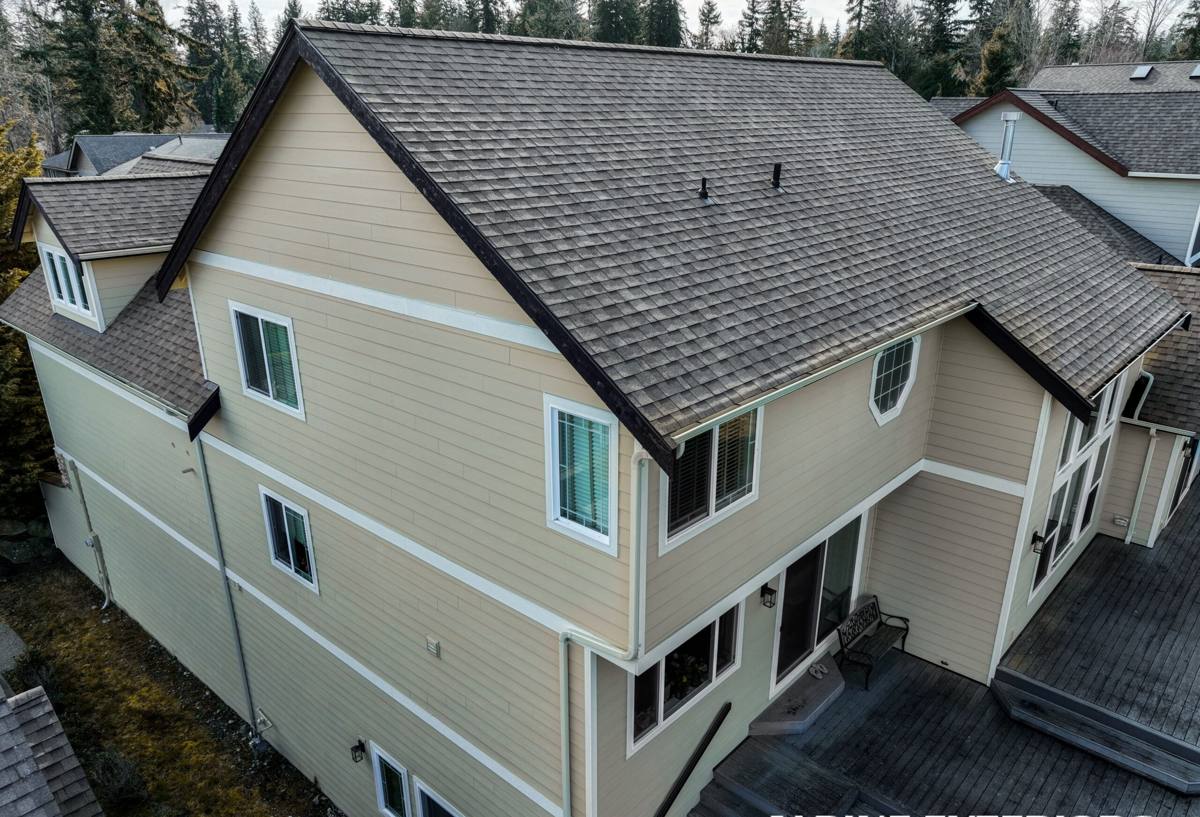
What Local Conditions Actually Do to a Deck
Salt Air and Metal Corrosion
Airborne salt is more aggressive on metal than most homeowners expect. Standard electro-galvanized screws, joist hangers, and bolts can start showing rust streaks and pitting within a season or two this close to the water, well before the wood around them shows any wear. Once a fastener corrodes, it loses holding strength quietly — the deck can look fine on the surface while the connections underneath are weakening. This is the single most common reason we see older decks in coastal parts of Whatcom County develop soft spots or wobble at the railing posts.
Moss, Algae, and Surface Traction
Ferndale and the surrounding coastline get a genuinely long stretch of overcast, damp weather every year, and horizontal wood or composite surfaces that don't get much direct sun stay wet for days at a time. That's the environment moss and algae need. Beyond the cosmetic issue, a mossy deck board is a traction hazard on stairs and near entry doors, and trapped moisture under moss accelerates rot in any wood product that isn't fully sealed on all six sides.
Driving Rain and Wind-Driven Water
Open water exposure means rain doesn't always fall straight down here — wind pushes it sideways into ledger connections, under railing caps, and behind fascia boards. A deck built to a "typical Pacific Northwest rain" standard can still let water intrude if it wasn't specifically detailed for wind-driven rain at the ledger board and post bases.
Decking Material Options for This Environment
There isn't one universally "correct" decking material — there's a correct material for a given budget, sun exposure, and maintenance appetite. Here's how the common options actually perform in a salt-air, high-moisture setting like Lummi Nation:
| Material | Moisture & Salt Behavior | Maintenance | Typical Lifespan |
|---|---|---|---|
| Pressure-treated fir/hem-fir | Prone to checking and graying; needs sealed cuts and fastener protection near salt air | Annual cleaning, re-seal every 1-2 years | 10-15 years with upkeep |
| Cedar | Naturally rot-resistant, handles moisture well, but softens with UV without finish upkeep | Re-stain or oil every 1-2 years | 15-20 years with upkeep |
| Composite (capped) | Won't rot, resists moss staining far better than wood, unaffected by salt in the board itself | Periodic wash-down, no sealing/staining | 25-30 years |
| PVC/cellular decking | Fully moisture-proof, best option for constant shade or low airflow spots | Occasional wash-down | 25-30+ years |
Where a deck sits matters as much as what it's built from. A shaded, low-airflow deck under trees or on the north side of a house will hold moisture and grow moss regardless of material, so composite or PVC decking earns its higher upfront cost fastest in those spots. A sunny, open deck can perform well in cedar or treated lumber if the owner is willing to keep up a maintenance schedule.
Structural Details We Won't Skip
The parts of a deck nobody sees are the parts that fail first in this climate if they're built to the bare minimum. On every deck we build in this area, a few details are non-negotiable regardless of budget:
- Ledger flashing: A properly lapped, self-adhered flashing membrane at the house ledger board, not just caulk, to stop wind-driven rain from tracking behind the siding.
- Footing depth and bearing: Footings sized and set to Whatcom County frost depth and soil-bearing requirements, not just "deep enough to look solid."
- Joist protection: Joist tape or a moisture barrier on top of every joist before decking goes down, so fastener holes don't become rot-starter points.
- Post-to-footing connections: Stainless or heavy hot-dip galvanized post bases set above grade, so standing water and splashback don't sit against untreated end grain.
- Airflow underneath: Framing and skirting laid out to allow ventilation under the deck, which is one of the cheapest ways to slow moss and mildew growth on the underside of boards.
Railings, Fasteners, and Hardware
Hardware is where a lot of coastal decks quietly fail first. We spec stainless steel or marine-grade coated fasteners for any connection within regular reach of salt spray, and we use hidden fastening systems on composite and PVC decking where the product allows it — fewer exposed screw heads means fewer corrosion points and a cleaner surface for water to shed off of. Railing posts get through-bolted rather than just lag-screwed wherever the structure allows it, because lateral load on a railing is exactly the kind of stress that exposes a weak, corroded connection.
Cable and glass panel railings look great on a waterfront deck but deserve an honest word of caution here: cable systems require periodic re-tensioning, and both cable and glass need more frequent cleaning in salt air to stay looking good. That's not a reason to avoid them — it's a maintenance trade-off worth knowing before you choose.
Our Process for Building a Deck in Lummi Nation
- On-site assessment: We look at sun exposure, prevailing wind direction, drainage, and existing structure (if replacing a deck) before recommending materials.
- Design and material selection: We walk through the material comparison above against your budget and maintenance preference — no pressure toward the most expensive option.
- Permitting: We handle the permit application for the jurisdiction that applies to your property and schedule required inspections around it.
- Demolition (if applicable): Old decking, framing, and footings are removed and disposed of, and we flag any hidden rot or structural issues before proceeding.
- Framing and flashing: Ledger flashing, footings, and structural framing go in first, with inspection sign-off before decking is installed.
- Decking, railing, and hardware: Final surface, railing system, and stairs are installed with the fastener and hardware standards described above.
- Final walkthrough: We go over maintenance expectations specific to the material you chose before we consider the job done.
Permits on Lummi Nation Property
Building on land within Lummi Nation can involve a different permitting path than a typical Whatcom County address, depending on land status and ownership. Rather than guess at which process applies to a given property, we confirm the correct permitting authority before design work locks in, and we build the project timeline around that answer. If you're not sure which permitting process applies to your property, that's a normal question to bring to the initial assessment — it's better to sort out early than to discover mid-project.
Maintaining a Deck Through the Wet Season
Whatever material you choose, a short seasonal routine goes a long way toward keeping moss and moisture damage off a Lummi Nation deck:
- Sweep debris and standing leaves off the deck surface regularly through fall, when moss growth accelerates fastest.
- Wash the deck surface at least once a year with a deck-safe cleaner to break up early moss and algae film before it takes hold.
- Check railing posts and stair stringers annually for any looseness — an early sign of fastener corrosion or wood softening.
- Keep gutters and downspouts near the deck clear so roof runoff isn't adding extra water onto or under the deck structure.
- Re-seal or re-stain wood decking on the schedule for your specific species — don't wait for visible graying, which means the finish already failed.
- Trim back overhanging branches to improve sun exposure and airflow, both of which slow moss growth more than any cleaning product.
Why Hire a Crew That Already Works This Area
Building codes, frost depth, wind exposure, and permitting can all shift somewhat from one part of Whatcom County to another, and a coastal, tribal-land property like those in Lummi Nation has its own wrinkles worth knowing ahead of time rather than discovering mid-project. A crew that already builds decks in this specific area has already worked through the fastener corrosion issues, the ledger flashing details for wind-driven rain, and the permitting path questions that come up here — which means fewer surprises, fewer change orders, and a deck built to actually hold up to the conditions it will sit in, not just the conditions a generic spec sheet assumes.
If you're planning a new deck or replacing one that's showing its age, we're glad to come take a look and give you a straightforward, no-pressure estimate — just use the form below to get started.