 Ferndale Siding
 Board & Batten Siding for Lummi Nation Homes
Lummi Nation sits on the water, and that changes how siding needs to be built, not just what it needs to look like. Board and batten is one of the most requested siding styles out here for its clean vertical lines and the way it reads against the trees, water, and open sky of this part of Whatcom County. But the style only holds up if the materials and installation account for what this specific location throws at a house: salt-laden air off the bay, wind-driven rain that hits siding sideways instead of straight down, and a moss season that can run most of the year in the shaded, damp corners of a property.
This page is about doing board and batten siding correctly for homes in and around Lummi Nation — what the climate demands, what a proper installation actually involves, and why the crew installing it matters as much as the siding itself.
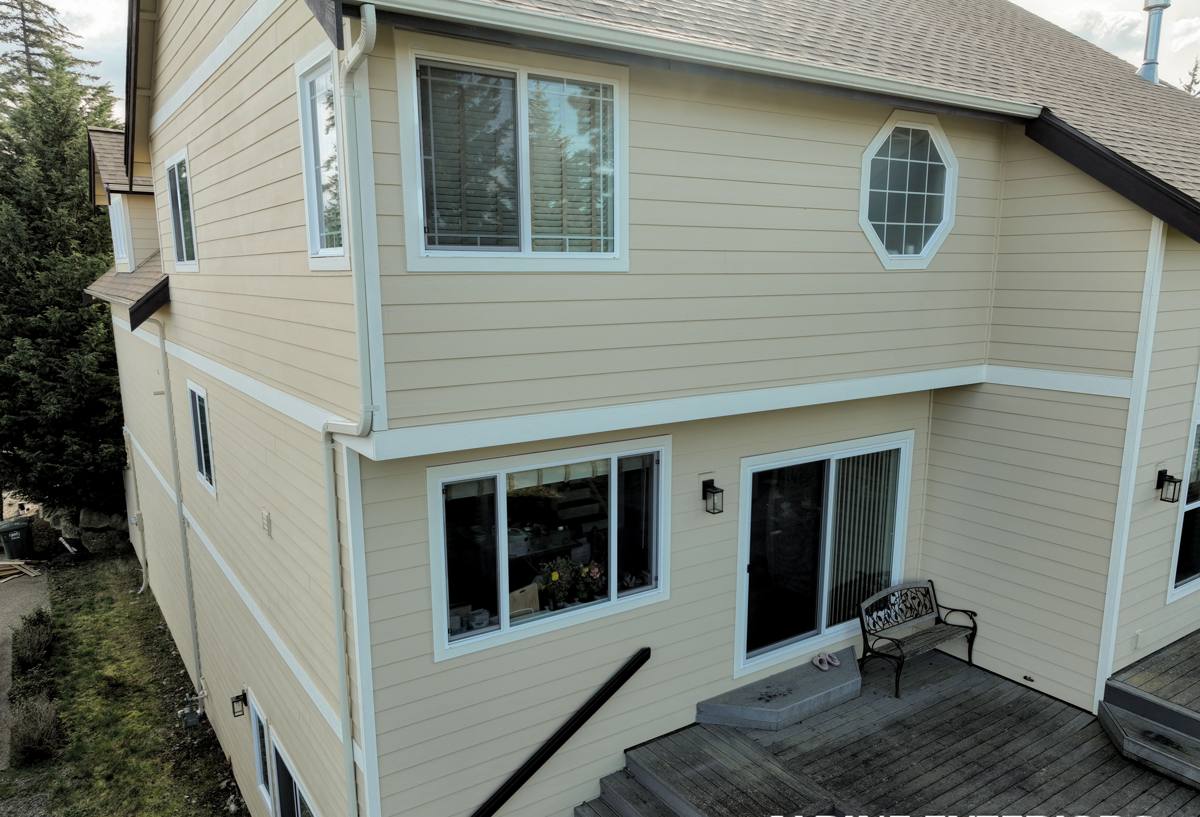
What Salt Air, Driving Rain, and Moss Season Do to Board & Batten Siding
Salt Air
Homes near Bellingham Bay and the surrounding waterways deal with airborne salt that settles on exterior surfaces and accelerates corrosion of fasteners, flashing, and trim. Untreated or under-rated hardware is one of the most common failure points we see on coastal siding jobs — not the siding panels themselves, but the screws, nails, and metal flashing holding everything together.
Driving Rain
Board and batten's vertical battens create seams that run the full height of the wall. On an exposed, wind-prone site, rain doesn't just run down the face of the siding — it gets pushed sideways and upward under gusts, testing every seam, joint, and butt edge. A board and batten system with sloppy batten spacing or under-flashed openings will eventually let water in behind the cladding, and once moisture gets behind siding on a coastal property, it stays wet longer because the air itself is more humid.
Moss and Sustained Dampness
Shaded north sides, tree-lined lots, and the generally wet Whatcom County climate mean moss and algae growth is a near-constant maintenance issue, not an occasional one. Moss holds moisture against the siding surface long after a storm passes, which is hard on paint film, caulking, and any substrate that isn't dimensionally stable.
Why Board & Batten Specifically Needs the Right Approach Here
Board and batten looks simple — wide panels with a batten strip covering each seam — but the seams are exactly where coastal weather finds a way in. A batten system relies on:
- Consistent batten spacing and fastening so panels don't shift or gap over time
- Proper standoff behind the cladding so water that does get past the surface can drain and dry
- Corrosion-resistant fasteners rated for coastal/marine exposure
- Correct flashing and sealant detailing at every window, door, corner, and penetration
- A base material that doesn't swell, rot, or delaminate when it stays damp for extended periods
Get any one of those wrong on a waterfront-adjacent property, and the siding will show it years before it should — cupping boards, stained battens, soft spots at the bottom courses, or paint failing well ahead of its expected life.
What a Correct Board & Batten Installation Involves
1. Wall Prep and Drainage Plane
Before any siding goes up, the wall needs a proper water-resistive barrier and, on most coastal homes, a rainscreen gap — a small standoff space between the barrier and the back of the siding that lets any moisture that gets past the cladding drain out and air-dry instead of sitting against the wall sheathing.
2. Batten Layout and Fastening
Battens need to be laid out evenly and fastened into structural framing, not just into sheathing, with fasteners spaced and rated to hold under wind load. This matters more here than in sheltered inland areas because sustained wind off the water puts real pressure on exterior cladding.
3. Flashing at Every Transition
Windows, doors, corners, and roof-to-wall intersections are where siding failures start. Correct step flashing, head flashing, and kick-out flashing — installed before the siding goes on, not caulked in after — is non-negotiable on a property exposed to driving rain.
4. Fastener and Hardware Selection
Coastal installations call for fasteners and metal flashing rated for salt air exposure. Standard hardware corrodes faster here than it would ten or twenty miles inland, and corroded fasteners eventually lose their grip on the siding.
5. Bottom Course and Ground Clearance
The lowest course of siding is the most exposed to splash-back, standing moisture, and moss creep from grade. Proper clearance from soil, hardscape, and roof lines keeps that bottom edge drying out between weather events instead of staying wet.
James Hardie Board & Batten Options
We install James Hardie fiber cement exclusively, and board and batten is one of the styles where that decision pays off most directly. Fiber cement doesn't swell, warp, or rot the way wood-based or wood-look products can when they stay damp — which, in this climate, they will.
| Hardie Product | What It Is | Where It Fits |
|---|---|---|
| HardiePanel Vertical Siding | Large-format fiber cement panels installed with battens over the seams | The core board and batten look, full wall coverage |
| Hardie Artisan Board & Batten | Premium panel line with a more refined, deeper-reveal batten profile | Homes wanting a higher-end, custom appearance |
| ColorPlus Factory Finish | Baked-on finish applied at the factory, not on site | Every panel and batten, for consistent color and coastal-rated durability |
The ColorPlus finish matters more here than in a lot of markets. A factory-applied finish is more consistent and better bonded than field-applied paint, which means better resistance to the fading, chalking, and moisture-driven peeling that salt air and constant damp accelerate on site-painted surfaces.
Our Process for Lummi Nation Board & Batten Projects
Assessment
We look at wall orientation, wind exposure, existing moisture damage, and how close the property sits to open water or tidal influence. That assessment drives fastener selection, flashing detail, and whether extra drainage measures are warranted.
Tear-Off and Wall Inspection
Old siding comes off and the sheathing gets inspected before anything new goes up. Covering up rot or existing moisture damage with new siding just hides the problem — we address what's underneath first.
Weather Barrier and Rainscreen
A correctly installed water-resistive barrier and drainage gap go on before any cladding, giving the wall a way to shed moisture that gets past the surface.
Installation
Panels and battens go up per James Hardie's fastening and clearance specifications, with coastal-rated hardware and full flashing at every opening and transition.
Final Walkthrough
We walk the finished job with the homeowner, check reveals and batten lines for consistency, and confirm every penetration and seam is properly sealed and flashed.
Why Hiring a Crew That Already Works Lummi Nation Matters
Siding crews unfamiliar with waterfront and near-waterfront exposure tend to build the way they'd build anywhere else — standard fasteners, standard flashing, no rainscreen. That approach might hold up fine on a sheltered inland lot. It doesn't hold up as well on a property that takes salt air and wind-driven rain on a regular basis. A crew that already works this area knows to spec coastal-rated hardware by default, knows which wall orientations need extra flashing attention, and has seen firsthand what happens when those details get skipped — because we've been the ones called back in to fix it on other products.
Familiarity with the area also means fewer surprises during the estimate: realistic timelines around weather windows, an accurate read on what the existing wall condition probably looks like once old siding comes off, and a process built around getting a home weathered-in before the wetter stretches of the year set in.
Maintenance: What to Expect After Installation
- Rinse siding periodically to clear salt residue and organic buildup, especially on sides facing prevailing wind and water
- Keep gutters and downspouts clear so roof runoff isn't dumping extra water onto siding or battens
- Trim back vegetation and tree cover where it's keeping any wall shaded and damp longer than necessary
- Watch shaded, north-facing battens for early moss growth and address it before it spreads
- Re-caulk or have caulking inspected at window and door trim every few years, as sealants age faster under constant moisture cycling
- Address any paint chips or exposed edges promptly — factory-finished ColorPlus resists this far better than field-painted alternatives, but no exterior finish is entirely maintenance-free
Cost Factors for Board & Batten in This Area
| Factor | Why It Affects Cost |
|---|---|
| Wall exposure and orientation | Sides facing open water or prevailing wind may need extra flashing and drainage detailing |
| Existing wall condition | Rot or moisture damage found during tear-off adds repair work before new siding goes on |
| Batten spacing and reveal choice | Tighter batten spacing and premium reveal profiles use more material and labor |
| Trim and detail complexity | Homes with more windows, corners, and roof intersections require more flashing work |
| Existing siding removal | Multiple layers or difficult-to-remove existing siding adds tear-off time |
We give homeowners a real number after seeing the property, not a blind quote off square footage alone — exposure and wall condition change the job too much for a one-size estimate to be honest.
Get a Straight Answer for Your Home
If you're weighing board and batten siding for a home in Lummi Nation, we're glad to walk the property, look at wall exposure and existing condition, and give you a clear, no-pressure estimate built around what this climate actually requires. Use the form below to get started.