 Ferndale Siding
 Roofing on Lummi Island Isn't the Same Job as Roofing Inland
A roof on Lummi Island lives a harder life than one a few miles inland in Ferndale. It sits in salt-laden air coming off the water, takes driving rain straight off Rosario Strait and Hale Passage, and spends a good chunk of the year under a shade canopy that never quite dries out. Add in the fact that every delivery, every crew trip, and every dumpster pull has to work around ferry logistics, and you've got a roofing job that rewards a crew who already knows the island rather than one learning it on your dime.
This page is specifically about full roof replacement for Lummi Island homes — not a general roofing overview. If your roof is past the point where patching makes sense, here's what actually matters for a house in this location, and what a correct replacement looks like.
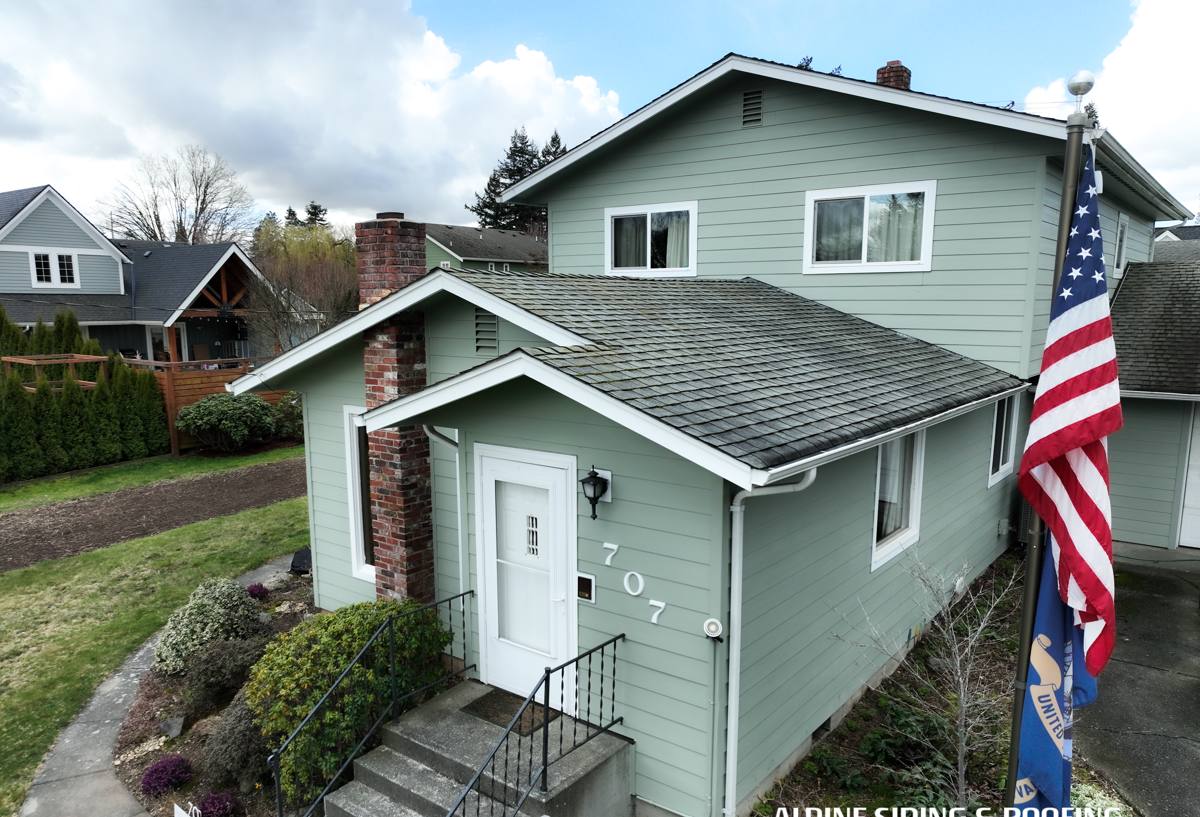
Why Lummi Island Roofs Wear Out Faster Than Average
Salt Air
Airborne salt doesn't just affect boats and dock hardware. It accelerates corrosion on exposed roofing fasteners, flashing, vents, and any metal roofing components that aren't rated for coastal exposure. Over years, salt-driven corrosion can compromise flashing seals long before the shingles themselves are worn out — which is why a roof can look "fine" from the ground while the actual weak points, the metal details, are failing underneath.
Driving Rain and Wind-Driven Moisture
Whatcom County gets a lot of rain in a normal year, but island exposure means more of it arrives sideways. Wind-driven rain finds gaps that vertical rain never would — around vents, at wall-to-roof transitions, under poorly lapped shingle courses. A roof built for average conditions can underperform here even when every shingle is technically intact.
Moss and Shade
Tree cover and the region's long damp season mean moss isn't an occasional nuisance on Lummi Island — it's a near-constant maintenance issue on north-facing slopes and shaded sections. Moss holds moisture against the roof surface, works its way under shingle tabs, and lifts them over time, which is one of the most common ways a roof that "should have" lasted longer starts leaking early.
Signs a Lummi Island Roof Needs Replacement, Not Another Repair
Repair makes sense when the damage is isolated. Replacement makes sense when the roofing system itself — not just one spot — has reached the end of its service life. Common indicators we look for on island homes:
- Granule loss heavy enough that you can see bare asphalt in multiple areas, not just one worn patch
- Moss growth that returns within a season or two of cleaning, even after treatment
- Soft or spongy decking felt underfoot during inspection, especially near valleys and eaves
- Flashing that's visibly corroded, pitted, or separating from the roof plane
- Interior staining, attic moisture, or musty odors that track back to multiple roof penetrations
- A roof approaching or past the manufacturer's expected lifespan for this climate, regardless of appearance
If only one or two of those apply and the roof is otherwise young, a repair is the honest recommendation. Replacement is for when the underlying system — deck, underlayment, flashing, and covering — is collectively failing.
What a Correct Roof Replacement Involves Here
A replacement done for average inland conditions and one done correctly for Lummi Island aren't the same scope of work, even if the shingle on top looks identical. The details that matter most in this location:
Underlayment
Given the rain exposure, we use synthetic or ice-and-water underlayment in vulnerable zones (eaves, valleys, around penetrations) rather than relying on minimum-code coverage. This is the layer that protects the deck if wind-driven rain ever gets past the shingle surface — which, on an island roof, it eventually will, somewhere, at some point.
Flashing in Corrosion-Resistant Materials
Standard galvanized flashing can start showing corrosion within a handful of years in salt air. We spec flashing and fasteners rated for coastal exposure so the metal components don't become the roof's weak link while the field shingles are still good.
Ventilation
Proper intake and exhaust ventilation matters everywhere, but it matters more under tree cover, where the roof deck stays cooler and damper longer after rain. Poor ventilation traps moisture against the underside of the deck and shortens the life of everything above it, including a brand-new roof.
Moss-Resistant Roofing Materials
For shaded or north-facing sections, algae- and moss-resistant shingles (using copper- or zinc-infused granules) meaningfully slow regrowth compared to standard shingles. It's not a permanent fix — nothing is, under enough tree cover — but it buys years between cleanings and reduces the lift-and-leak cycle moss causes.
Comparing Roofing Materials for This Exposure
There's no single "right" material for every house — it depends on budget, roof pitch, shade exposure, and how long you plan to own the home. Here's how the common options stack up specifically against salt air, rain, and moss:
| Material | Salt Air / Corrosion | Moss Resistance | Maintenance | Typical Lifespan Here |
|---|---|---|---|---|
| Standard asphalt shingle | Fasteners/flashing need coastal-rated hardware | Low unless treated | Regular moss cleaning needed | 15–20 years |
| Algae/moss-resistant asphalt shingle | Same hardware requirements as standard | Better — slows regrowth | Less frequent cleaning | 20–25 years |
| Metal roofing (coastal-rated) | Strong, if properly specified | Sheds moss more easily due to slick surface | Low, but panel coating matters | 40+ years |
| Cedar shake | Neutral | Poor — retains moisture, feeds moss/rot | High — regular treatment required | Highly variable, shorter under shade |
For most Lummi Island homes under partial tree cover, we steer clients toward algae-resistant asphalt as the value option or coastal-rated metal for a longer-term investment. Standard, untreated cedar shake in heavy shade is the combination we're most cautious about recommending here — not because the material is bad, it's just poorly matched to constant moisture and moss pressure, and the upkeep burden tends to surprise owners after a few seasons.
Our Roof Replacement Process
- Inspection and honest assessment. We check the deck, flashing, ventilation, and shingle condition before recommending replacement over repair — and we'll tell you plainly if repair is the better call.
- Scope and material selection. We walk through material options against your budget, roof exposure, and how much moss maintenance you want to deal with long-term.
- Scheduling around ferry and weather windows. Materials, dumpsters, and crew trips all get planned around ferry sailings and a realistic dry-weather window — this is where island jobs differ most from mainland ones.
- Tear-off and deck inspection. Once the old roof is off, we inspect the deck itself for rot or soft spots before anything new goes down — this is often where hidden moisture damage from years of moss or flashing failure shows up.
- Underlayment, flashing, and ventilation install. The parts you won't see again go in correctly, since they're what determines whether the new roof actually holds up to this exposure.
- Roofing material installation. Installed to manufacturer spec, with attention to lapping and fastening patterns appropriate for wind-driven rain.
- Cleanup and final walkthrough. Full site cleanup, magnetic sweep for stray fasteners, and a walkthrough so you know exactly what was done and why.
Ferry Access and Why Local Island Experience Matters
Any contractor can quote a roof replacement. Fewer have actually planned one around island ferry logistics — coordinating material deliveries, dumpster placement, and crew scheduling so the job doesn't stall out waiting on a sailing or get derailed by a weather delay nobody planned for. That planning isn't a minor detail; it's the difference between a roof that gets torn off and dried in within the same window and one that sits exposed longer than it should because logistics weren't thought through in advance. A crew that already works Lummi Island regularly has that logistics muscle memory. It shows up in fewer surprises and a tighter timeline.
Maintaining Your Roof After Replacement
A correctly installed roof still needs upkeep in this climate — that doesn't change with new materials, it just changes how often. A simple annual routine goes a long way:
- Clear debris and needles from valleys and gutters each fall before the heavy rain sets in
- Check shaded, north-facing slopes for early moss growth each spring
- Have flashing and fastener condition checked periodically, especially after severe wind events
- Keep overhanging branches trimmed back to reduce shade, debris, and moss pressure
- Address any small leak signs immediately — on this roof type, small issues don't stay small for long
Timing a Replacement Around Whatcom County Weather
Roof replacement can technically happen in most seasons here, but the driest, most predictable windows make for a cleaner install with less risk of the deck getting rained on mid-project. We plan around realistic weather patterns for this part of Whatcom County rather than pushing a job into a stretch where delays are likely — a rushed install timed badly is how corners get cut, and that's not how we operate.
If your roof is showing its age — moss that keeps coming back, granules in the gutters, flashing that looks rough, or a roof simply old enough to be a question mark — we're happy to take a look and give you a straight answer, including whether repair still makes sense. Reach out through the form below for a free, no-pressure estimate.