 Ferndale Siding
 Building New on Lummi Island Means Building for the Marine Climate From Day One
New construction is the one time a window installation gets to be done right the first time. There's no old frame to work around, no interior trim to protect, no guesswork about what's hiding behind the siding. On Lummi Island, that first-time-right window is more important than almost anywhere else in Whatcom County, because the island sits fully exposed to Rosario Strait and the Strait of Georgia weather systems that roll through it. Salt-laden air, wind-driven rain, and a long wet season that keeps moss and algae growing on north-facing surfaces for months at a time all put more stress on window openings than a typical mainland lot sees.
We're a Ferndale-based crew, and Lummi Island is part of our regular service area. That matters for new construction specifically, because window rough openings, flashing sequences, and product selection all need to be planned around this island's exposure — not treated as an afterthought once the framing is already up.
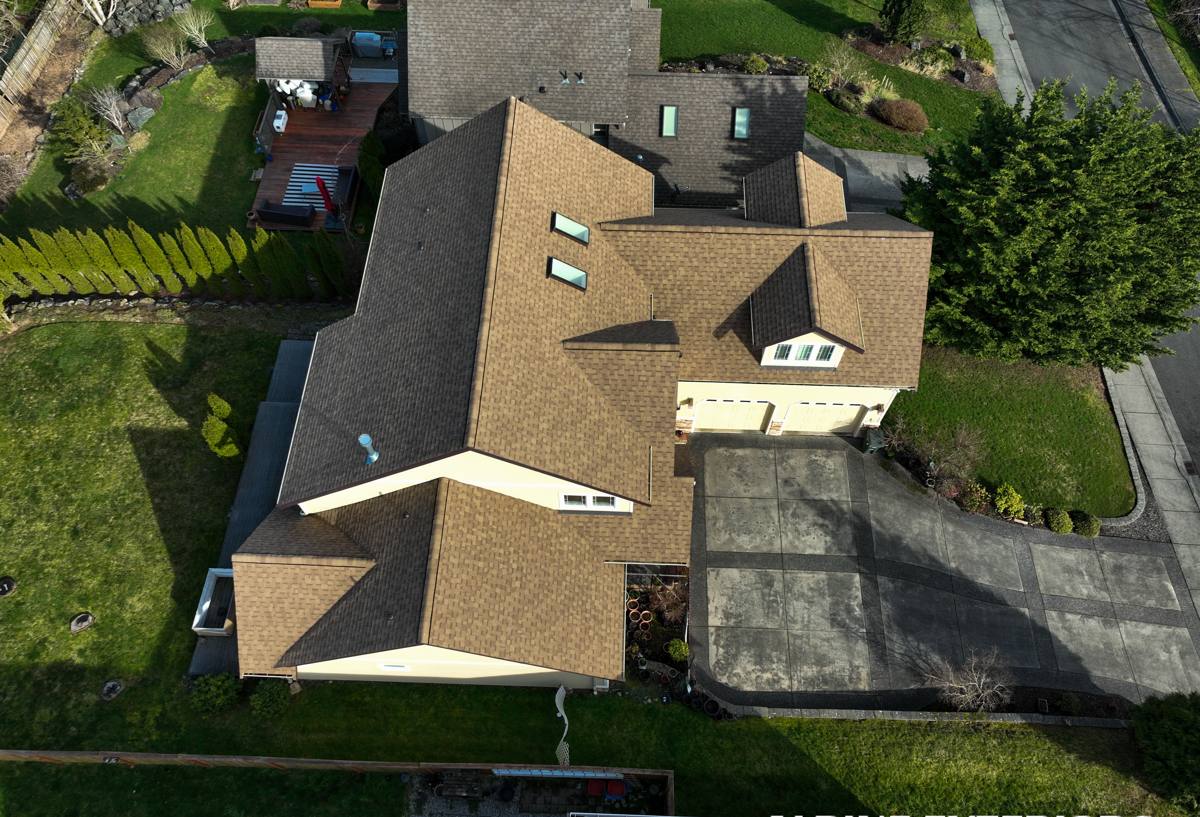
What Salt Air, Driving Rain, and Moss Season Actually Do to a Window System
Salt Air
Airborne salt accelerates corrosion on fasteners, hinges, balance systems, and any exposed metal hardware. It also breaks down cheaper finishes on vinyl and aluminum trim faster than it would inland. This doesn't mean windows can't be installed near the water — it means hardware and finish choices matter more here than they would on a Ferndale lot ten miles inland.
Driving Rain
Wind off open water doesn't just fall — it drives sideways into wall assemblies, pushing water into any gap in the flashing or sealant. A window that would leak eventually on a sheltered lot can leak within its first winter on an exposed island site if the flashing details aren't correct. This is the single biggest reason new-construction window failures happen out here, and it's almost always an installation problem, not a product problem.
Moss Season
Whatcom County's wet season stretches long, and shaded or north-facing wall sections stay damp for weeks at a time. Moss and algae growth on siding and trim near windows holds moisture against the building envelope longer than it would in a drier climate. Window trim and sill details need to shed water quickly and dry out between storms, not trap it.
What a Correct New-Construction Window Installation Involves
New-construction windows are installed with a nailing fin that gets integrated directly into the wall's weather-resistive barrier and flashing system — this is different from a replacement or "pocket" install, which works inside an existing frame. Because the window becomes part of the wall's water management system, the sequence matters as much as the window itself.
- Rough opening is checked for square, level, and correct dimension before the window ever goes in
- Sill pan flashing is installed first, sloped to drain any water that gets past the window back outside the wall
- Window is set, shimmed, and fastened per the manufacturer's structural requirements — not just "close enough"
- Side and head flashing is layered in the correct shingle-lap order so water sheds down and out, never up and in
- Nailing fin is integrated with the house wrap using compatible tape, not just caulk
- Interior and exterior sealant joints are backed and tooled correctly, not just bead-and-smear
- Insulation around the frame is filled without over-compressing, which can bow vinyl frames
Skip any one of these steps and the window can look perfectly installed for years before a leak shows up inside a wall cavity — which is exactly the kind of damage that's expensive to trace and repair once siding and interior finishes are complete.
Choosing Frame Material and Glazing for an Island Marine Climate
There's no single "correct" window product for every new build — the right choice depends on budget, exposure, and how the home is oriented to wind and water. What we do on every Lummi Island project is walk the site plan and talk through trade-offs honestly before anything gets ordered.
| Frame Material | Salt/Moisture Performance | Maintenance | Typical Fit |
|---|---|---|---|
| Vinyl | Good — won't rust or corrode; quality varies by hardware and weld quality | Low | Budget-conscious builds, secondary structures |
| Fiberglass | Very good — dimensionally stable, resists warping in wet/dry cycling | Low | Full-exposure sites, larger window openings |
| Aluminum-clad wood | Good exterior protection, but any breach in the cladding exposes wood beneath | Moderate | Homeowners who want a wood interior look with exterior durability |
| Bare wood | Weakest in direct salt exposure without diligent upkeep | High | Sheltered elevations only, or homeowners committed to regular refinishing |
We steer most fully-exposed Lummi Island elevations toward vinyl or fiberglass with marine-grade or corrosion-resistant hardware, and reserve wood or wood-clad units for protected sides of the house where they're not taking direct wind-driven rain. This isn't a knock on wood windows — it's about matching upkeep expectations to what a given wall actually faces.
Glazing and Hardware Notes
Low-E glass with argon fill is standard on most new-construction packages now and helps with both energy performance and condensation control, which matters in a climate that swings between damp cold and humid summer days. On hardware, we specify stainless steel or otherwise corrosion-resistant fasteners and balance systems on island jobs by default — the few extra dollars per window are cheap insurance against premature hardware failure from salt exposure.
Our Process, Start to Finish
- Site and plan review — we look at elevations, exposure direction, and roof/soffit overhangs before recommending products
- Product selection — frame material, glazing package, and hardware chosen to match each elevation's actual exposure, not a one-size spec for the whole house
- Coordination with the framer — rough openings and flashing plan get confirmed before windows arrive so there's no delay once framing is ready
- Installation — sill pan, window set, flashing integration, and sealant done in the correct sequence for a fully weather-tight assembly
- Walkthrough — every unit gets checked for operation, seal, and finish before we call the job done
We coordinate directly with builders and general contractors on new-construction timelines, and we're comfortable working from architectural plans rather than starting from an existing opening.
Why Island Logistics Matter More Than People Expect
Lummi Island is reached by ferry, and that changes how a construction schedule has to work compared to a lot in town. Material deliveries, crew trips, and any mid-project product exchange all have to be planned around ferry timing rather than just driven over on a whim. A crew that doesn't regularly work the island can lose days to logistics they didn't plan for — window orders that arrive at the wrong time, a crew stuck waiting on a sailing, or a callback trip that eats half a day just getting there and back.
Because we already work Lummi Island regularly, we build ferry timing into the schedule from the start: material staging, crew trips, and any punch-list work are planned around it instead of causing delays partway through the job. That's a small thing on paper, but on a new-construction timeline where trades are stacked back-to-back, it's the difference between windows going in on schedule and a framing crew waiting around for glass that missed the boat.
Common Mistakes We See on Marine-Exposure New Construction
- Flashing installed in the wrong lap order, so water is directed behind the barrier instead of over it
- Standard-grade fasteners and hardware used on fully exposed elevations, leading to early corrosion
- Sealant used as a substitute for proper flashing instead of as a secondary defense
- Same window spec used on every elevation regardless of which way it faces the water and wind
- Trim and cladding details around windows that don't shed water quickly, inviting moss and trapped moisture
None of these are exotic problems — they're standard mistakes that show up more often in wall assemblies that don't have to deal with sustained wind-driven rain and salt air. On a sheltered inland lot, a marginal install might go unnoticed for a decade. On an exposed Lummi Island elevation, the same shortcuts tend to show up much sooner.
Maintenance Checklist for New Windows in a Marine Climate
A correctly installed window still benefits from a little seasonal attention, especially through a Whatcom County wet season. New homeowners on the island should plan on:
- Rinsing salt residue off frames and glass periodically, especially on elevations facing open water
- Checking weep holes at the base of window frames to make sure they're clear and draining
- Inspecting exterior sealant joints annually for cracking or separation
- Clearing moss or algae buildup from sills and adjacent trim before it holds moisture against the wall
- Operating and lubricating hardware periodically to prevent seizing from corrosion
- Watching for condensation between panes, which can signal a failed seal on an insulated glass unit
Working With Ferndale's Permitting and Whatcom County Requirements
New-construction window work on Lummi Island falls under Whatcom County's building and energy code requirements, including current energy performance standards for glazing. We handle product specification with those requirements in mind from the start, so window selection doesn't become a problem during inspection later in the build. If you're working with an architect or general contractor already, we're glad to coordinate directly with them on window specs and scheduling.
If you're planning new construction on Lummi Island and want windows specified and installed by a crew that already knows what this island's weather does to a building envelope, we'd be glad to walk the plans with you. Reach out for a free, no-pressure estimate using the form below.