 Ferndale Siding
 Siding Repair Built for Kendall's Foothill Climate
Kendall sits inland from the water, tucked into the wooded foothills of Whatcom County along the Mount Baker corridor. That setting changes what siding damage looks like compared to homes closer to the water in Ferndale proper. Instead of constant salt exposure, Kendall homes deal with heavy tree canopy, deep shade pockets, and long stretches where siding simply never gets a chance to dry out between rain events. Add in the driving rain that rolls through this part of Whatcom County most of the fall and winter, and you've got a recipe for slow, hidden moisture damage that homeowners often don't notice until it's already serious.
We repair siding on homes throughout Kendall and the surrounding areas, and the pattern we see over and over is the same: siding that looked fine from the driveway had already been failing underneath for a year or more. This page walks through what actually causes siding damage out here, what a correct repair involves, and why the material you repair with matters as much as the repair itself.
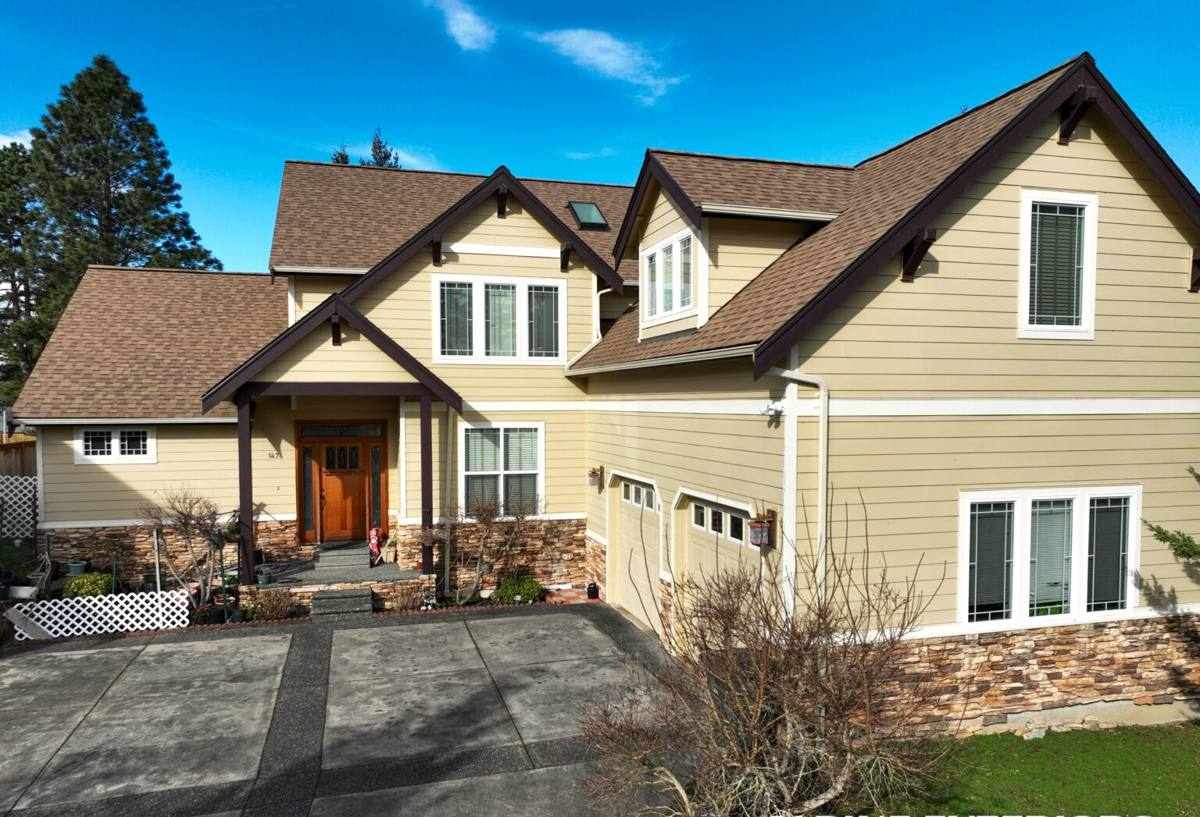
Why Kendall Homes Take a Different Kind of Beating
Shade and Moisture Don't Mix With Most Siding
A lot of Kendall properties sit under mature fir and cedar cover, which is great for privacy and lousy for siding longevity. Shaded walls stay damp longer after rain, get less direct sun to dry out, and are far more prone to moss, algae, and mildew growth than a wall that gets full afternoon sun. On wood-based or wood-composite siding products, that constant dampness is exactly the condition that leads to swelling, delamination, and rot.
Driving Rain Finds Every Weak Point
Whatcom County doesn't just get a lot of rain — it gets wind-driven rain that hits siding at an angle instead of falling straight down. That matters because wind-driven rain gets pushed into laps, seams, and fastener penetrations that would stay dry in a calmer climate. Any gap in caulking, any undersized flashing, any panel that wasn't lapped correctly during the original install becomes a moisture entry point over time.
Moss Season Runs Long Out Here
In the shaded, moisture-heavy parts of Kendall, moss doesn't come and go with the seasons the way it might on a sunnier lot — it can hang around most of the year. Moss holds water against the siding surface, keeps that surface cooler and damper than the surrounding air, and slowly works into any texture or seam it can find. Left alone, it accelerates whatever damage is already starting underneath.
Common Siding Problems We Find in Kendall
- Soft or spongy panels — usually wood or wood-composite siding that has absorbed moisture and started to break down internally, even if the paint still looks okay.
- Moss and algae staining that keeps coming back — a sign the wall isn't drying out between rain events, which is a moisture problem, not just a cosmetic one.
- Cracked or split boards — common on lower-grade materials that expand and contract with our wet winters and drier summers.
- Failed caulking and open seams — original caulk joints that have shrunk, cracked, or pulled away, giving wind-driven rain a direct path behind the siding.
- Buckling or warping near the ground — often tied to poor drainage, splash-back from grade, or siding installed too close to the soil.
- Hidden rot around windows and trim — one of the most common issues we find once we pull damaged siding off; the surface damage is usually smaller than what's happening underneath.
What a Correct Siding Repair Actually Involves
A lot of siding "repairs" are really just cosmetic patches — caulk over a crack, a coat of paint over a stain, a single board swapped without checking what's behind it. That approach might buy a season or two, but it doesn't fix the underlying moisture problem, and on a wet lot like many in Kendall, the damage usually comes back worse.
Our process starts with figuring out why the siding failed in the first place, not just where. That means:
- Full assessment of the damaged area — not just the visible boards, but the sheathing, house wrap, and flashing behind them.
- Checking for hidden moisture and rot — probing suspect areas and, where needed, opening up the wall to see the true extent of damage before quoting a fix.
- Identifying the moisture source — bad flashing, poor caulking, grading issues, or a design detail that's funneling water where it shouldn't go.
- Removing all compromised material — patching over rot or soft sheathing just traps the problem, it doesn't solve it.
- Correcting the water management detail — repairing or upgrading flashing, house wrap, and seals so the same failure doesn't happen again.
- Installing new siding to match — properly lapped, fastened, and sealed to manufacturer spec, not just close enough to look right.
Skipping any of those steps is how homeowners end up paying for the same repair twice.
Repair vs. Replacement: How We Help You Decide
Not every damaged wall needs a full re-side, but not every problem is a quick patch either. We look at how much of the wall is affected, how old and how healthy the surrounding siding is, and whether the damage points to a one-time issue or a systemic one.
| Situation | Usually a Repair | Usually Points to Replacement |
|---|---|---|
| Damage location | Isolated to one wall or small area | Spread across multiple elevations |
| Cause | Single identifiable issue (impact damage, one bad flashing detail) | Systemic moisture intrusion or aging material |
| Siding age | Newer siding, otherwise sound | Original siding nearing or past expected lifespan |
| Material condition | Surrounding siding is solid and stable | Neighboring boards are also soft, cracked, or moss-covered |
| Underlying structure | Sheathing and wrap intact | Rot or damage found behind multiple sections |
We'll always tell you honestly which category your home falls into. A targeted repair is often the right call, and we're not going to push a full re-side when it isn't warranted.
Why We Repair With James Hardie Fiber Cement
When we replace damaged sections, we use James Hardie fiber cement siding — it's the only siding product we install, on repairs and full re-sides alike. That's a deliberate standard, not a default. Fiber cement doesn't absorb moisture and swell the way wood or wood-composite products can, it's non-combustible, and it holds its factory-applied ColorPlus finish far longer than field-painted materials, which matters on shaded Kendall walls where paint failure and moss staining go hand in hand.
It also means a repaired section blends in properly. Patching a damaged wall with mismatched material — or with a product that ages and fades differently than what's already up — leaves an obvious seam for years. Hardie's consistent manufacturing and factory finish make it far easier to get a clean match, and its engineered HZ product lines are built specifically for wet, marine-influenced Pacific Northwest climates like ours.
Why Local Repair Experience Matters
Siding repair isn't just carpentry — it's diagnosing a moisture problem correctly the first time. A crew that regularly works Whatcom County homes knows what shaded, tree-covered lots like the ones common around Kendall do to a wall over time, what flashing details tend to fail first in wind-driven rain, and where moss and algae are a symptom rather than the actual problem. That local pattern recognition is the difference between a repair that lasts and one that reappears in two years wearing a fresh coat of paint.
We also know how to sequence repair work around our wet season — timing removal and re-installation to avoid leaving a wall exposed during a stretch of heavy rain, and making sure new flashing and seals have a real chance to cure properly before the next storm rolls through.
What to Watch For Between Now and Your Next Inspection
- Soft spots when you press on siding near the bottom of walls or below windows
- Moss or algae that keeps returning to the same spot after cleaning
- Paint that's peeling, bubbling, or failing faster in shaded areas than sunny ones
- Visible gaps, cracks, or separated seams in caulking
- Warping, cupping, or boards that no longer sit flat against the wall
- Any musty smell or interior staining near an exterior wall — a sign moisture has already gotten through
If you're seeing any of these signs on your Kendall home, it's worth having it looked at before another wet season adds to the damage. We offer free, no-pressure estimates — we'll tell you plainly whether you're looking at a repair or something bigger, and what it would take to fix it right.