 Ferndale Siding
 Roofing in Kendall: A Different Set of Conditions Than the Rest of Ferndale
Kendall sits back from the water, tucked closer to the foothills than the shoreline of Bellingham Bay. That changes what a roof out here actually has to deal with day to day. Homes closer to town get more direct exposure to salt-laden air off the Sound; homes in Kendall tend to sit under heavier tree canopy, with more shade, more standing moisture, and slower drying times after a storm passes through. Both situations shorten a roof's working life if the install wasn't done with the local conditions in mind — they just do it in different ways.
Whatcom County's marine climate means driving rain, long stretches of overcast weather, and a moss season that can run most of the year in shaded, tree-covered lots like a lot of what we see around Kendall. A roof here isn't just shedding water — it's fighting off constant moisture exposure, organic growth, and the freeze-thaw swings that come with elevation gain toward the foothills. A new roof installation that ignores any of that ages fast, no matter how good the shingles look going on.
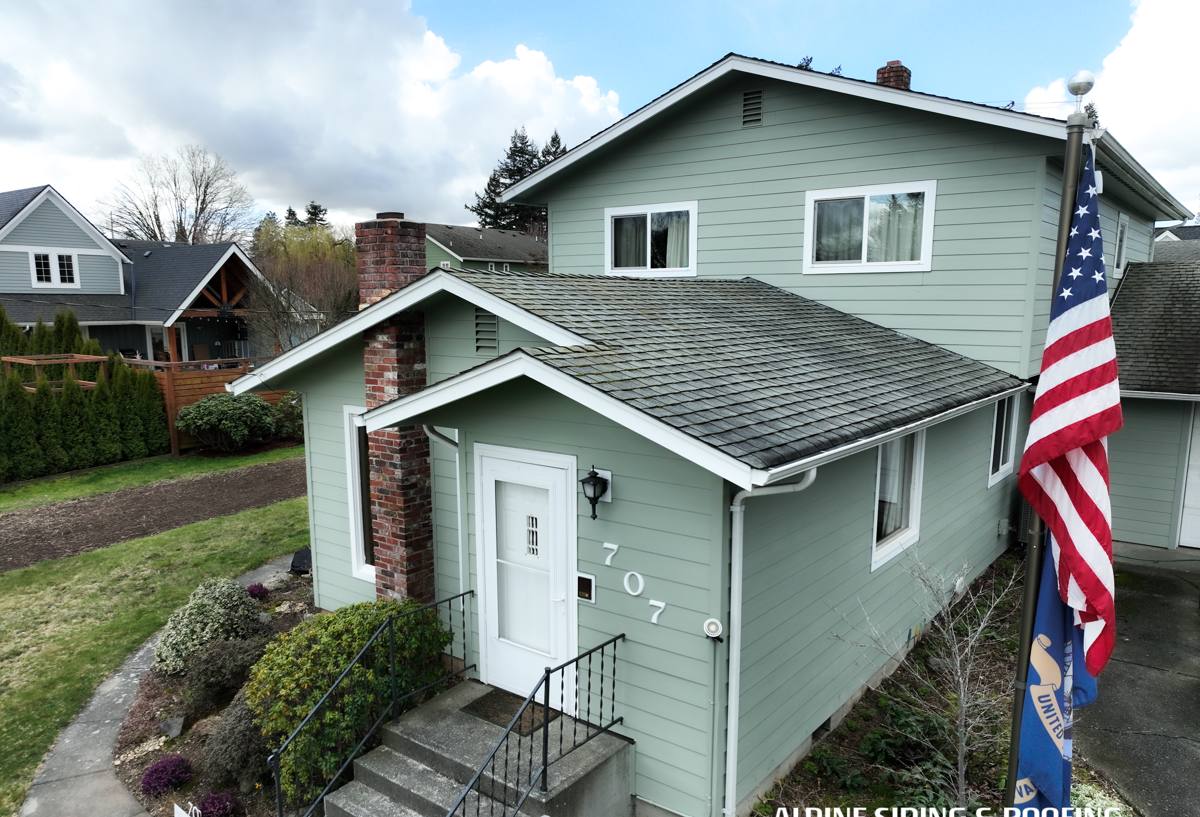
What Kendall Homes Actually Need From a New Roof
The materials matter, but the details underneath them matter more. A correct installation in this climate accounts for a few things that a generic re-roof job often skips:
- Enough ventilation to keep moisture from getting trapped in the attic during long wet stretches
- Ice-and-water shield at eaves, valleys, and penetrations — not just where code minimums require it
- Flashing detail work at chimneys, skylights, and wall intersections, since most leaks start at transitions, not open field
- Underlayment rated for extended wet exposure, since Kendall roofs don't always get a fast, dry install window
- A roofing system that resists moss colonization or at minimum doesn't feed it
Skip any one of these and the roof might look fine for a year or two before the problems that were baked in during install start to show up as stains, soft spots, or granule loss.
Tree Cover Changes the Math
Heavier tree cover means more shade, slower drying, and more debris — needles, cones, leaf litter — collecting in valleys and behind chimneys. That debris holds moisture against the roofing material long after the rain stops, which is exactly what moss and algae need to get established. It also means gutters and edge details need to be sized and detailed to handle debris load, not just water volume.
Choosing a Roofing System That Holds Up Here
There's no single "best" roofing material for every home — it depends on the roof's pitch, how much shade it sits under, the budget, and how the homeowner wants to handle long-term maintenance. Here's how the common options actually perform under Kendall's specific mix of shade, rain, and moss pressure.
| Material | Moss/Moisture Resistance | Maintenance Load | Notes for Kendall Lots |
|---|---|---|---|
| Architectural asphalt shingle | Moderate — algae-resistant granules help but don't eliminate moss risk in heavy shade | Periodic cleaning recommended in shaded areas | Good balance of cost and durability for most Kendall homes; the most common choice we install |
| Standing seam metal | High — smooth surface sheds debris and resists moss colonization | Low | Performs especially well on heavily shaded, tree-covered lots where moss is a persistent issue |
| Cedar shake | Low in shade — organic material feeds moss and rot without diligent upkeep | High | We're honest with clients that shaded Kendall lots are a tough environment for cedar; it needs real commitment to maintenance to last |
| Synthetic/composite shingle | Moderate to high, depending on product | Low to moderate | Worth considering where appearance of shake or slate is wanted without the maintenance burden |
We don't install every product on that list on every home. If a roof sits under heavy shade and the homeowner isn't planning on regular maintenance, we'll say so up front rather than sell a system that's going to disappoint in three years.
Our Installation Process
A new roof is a big enough investment that the process shouldn't be a mystery. Here's what a typical installation looks like from our end:
- On-site assessment — we look at the existing roof, decking condition, ventilation, and any moss or moisture damage before quoting anything
- Tear-off — complete removal of old roofing material down to the deck, not an overlay
- Deck inspection and repair — any soft, rotted, or delaminated sheathing gets replaced before anything new goes down
- Underlayment and ice-and-water shield installation — full coverage in vulnerable areas, sized for this climate rather than the bare code minimum
- Flashing installation — chimneys, skylights, valleys, and wall transitions detailed by hand
- Roofing material installation — installed to manufacturer spec, including proper nailing pattern and exposure
- Ventilation tie-in — ridge and intake ventilation connected and checked for balanced airflow
- Cleanup and final walkthrough — magnetic sweep for debris, gutter check, and a walk of the finished roof with the homeowner
Ventilation and Moisture Control Deserve Extra Attention Here
A roof that's shaded most of the day and rained on most of the year needs to breathe. Poor attic ventilation traps warm, moist air against the underside of the deck, which leads to premature wear from the inside — something a homeowner often doesn't notice until it shows up as staining on the ceiling or a musty attic smell. Balanced intake and exhaust ventilation isn't an optional upgrade in a climate like this; it's part of doing the installation correctly. We check existing ventilation as part of every assessment and address it as part of the install rather than treating it as an afterthought.
What Affects the Cost of a New Roof
Every roof is different, so we don't quote sight unseen. What we can tell you is what actually moves the price, so you know what you're paying for and why two quotes for the "same" roof might differ.
| Factor | Why It Matters |
|---|---|
| Roof size and number of layers to remove | More tear-off means more labor and disposal before installation even starts |
| Roof pitch and complexity | Steep or cut-up roofs with lots of valleys and penetrations take more time and detail work |
| Decking condition | Rotted or soft sheathing found during tear-off has to be replaced, which affects both cost and timeline |
| Material choice | Asphalt, metal, and composite systems carry different material and labor costs |
| Ventilation upgrades | Adding or correcting ridge and intake ventilation is worth the cost in a shaded, wet climate |
| Access and site conditions | Tree cover, driveway length, and staging space on rural Kendall lots can affect logistics and labor |
We'll walk through these line by line during the estimate so there aren't surprises once work starts.
Signs a Kendall Roof May Need Replacing, Not Just Repairing
Not every roof problem means a full replacement — sometimes a repair is the right call. These are the signs that usually point toward a new roof instead:
- Shingles that are curling, cupping, or losing granules across large sections, not just one spot
- Moss or algae growth that keeps returning within a season or two of cleaning
- Soft or spongy decking felt underfoot when walking the roof
- Daylight visible through the attic decking or staining on attic sheathing
- A roof approaching or past its expected service life with multiple past repairs
- Consistent leaks at more than one location rather than a single isolated point
Why It Matters That We Already Work in Kendall
A crew that's unfamiliar with the area is guessing at things a local crew already knows: how tree cover on a given lot affects drying time and material choice, what kind of moss pressure to expect based on sun exposure, and how rural access and driveway conditions affect scheduling material delivery and equipment staging. It also matters for permitting and code requirements specific to Whatcom County, and for timing work around the wetter stretches of the year so the install isn't fighting the weather the whole way through. Familiarity with the area isn't a marketing point — it's what keeps a project on schedule and keeps the finished roof performing the way it's supposed to.
Warranty and Long-Term Care
A new roof installed correctly should need very little from a homeowner beyond routine upkeep — periodic debris clearing, gutter checks, and keeping an eye on moss regrowth in shaded sections. We'll go over manufacturer warranty terms and our own workmanship coverage as part of the estimate, and we're upfront about what routine maintenance a given material will realistically require on a shaded Kendall lot versus a more open, sun-exposed one. A roof is only as good as its weakest detail, and we'd rather explain that clearly up front than have a homeowner find out the hard way five years in.
If your roof in Kendall is showing its age, or you just want an honest read on whether repair or replacement makes more sense, we're happy to come take a look. The estimate is free, there's no pressure attached to it, and you'll walk away with a clear picture of your options — just use the form below to get started.