 Ferndale Siding
 Kendall's Siding Problem Isn't Like Everywhere Else's
Kendall sits close enough to the water and the foothills that homes here take on a specific combination of weather stress: salt-laden air moving in off the Strait, long stretches of driving rain through fall and winter, and a moss and mildew season that can run most of the year on shaded north and west walls. None of that is unusual for Whatcom County on its own. What's unusual is how much of it a single wall can see in a given month — wind-driven rain one week, damp still air the next, and salt residue building up on siding that never fully dries between storms.
That combination is hard on siding that isn't built for it. Wood-based products absorb moisture at the seams and swell. Vinyl can hold up structurally but does nothing to stop moss and algae from taking hold in the shaded, slow-drying areas that are common on Kendall lots with mature tree cover. Paint film on softer substrates breaks down faster in salt air than it would twenty miles inland. Homeowners here end up on a maintenance treadmill: wash, re-caulk, repaint, patch, repeat — and the cycle gets shorter every few years as the substrate underneath keeps absorbing the abuse.
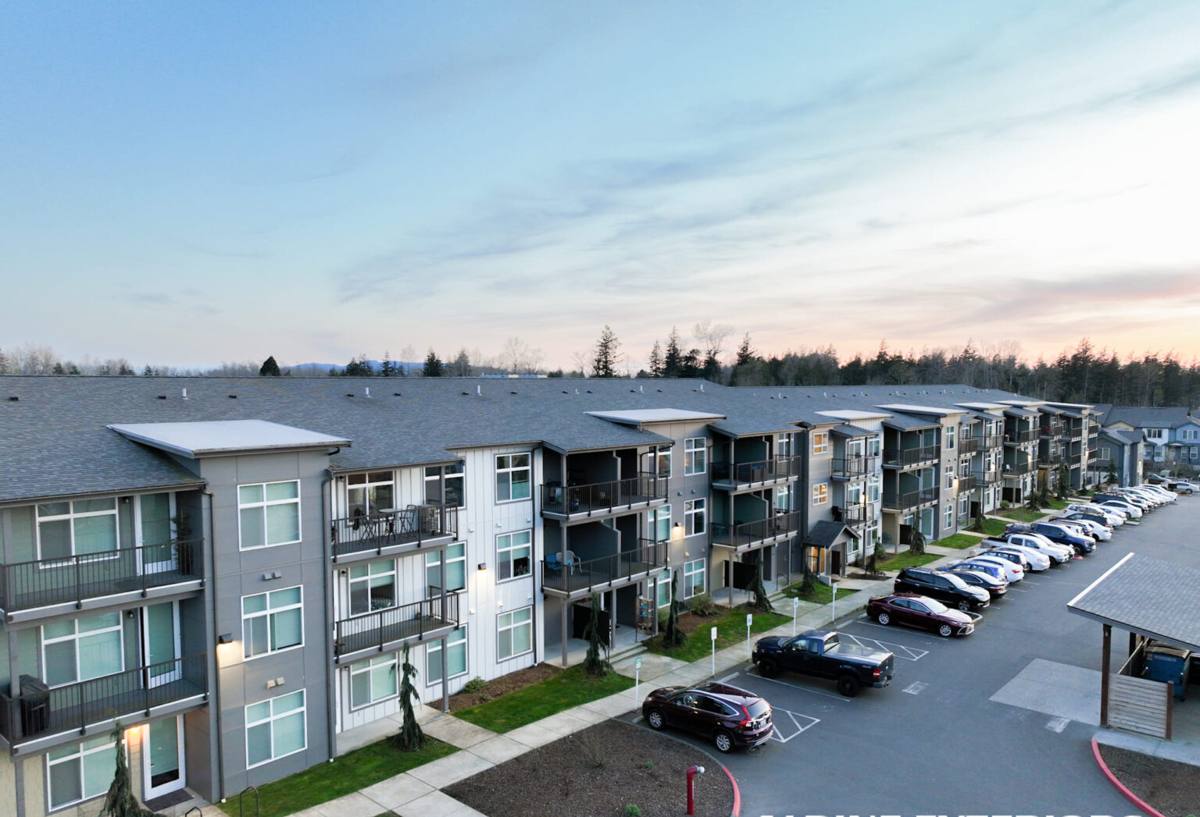
Why Fiber Cement Holds Up Where Other Materials Struggle
Fiber cement siding is made from cellulose fiber, sand, and Portland cement, pressed and cured into a dense, dimensionally stable board. It doesn't absorb water the way wood does, it doesn't warp or buckle in temperature swings, and it isn't a food source for the moss, algae, and mildew that thrive in Kendall's shaded, damp microclimates. That matters more here than in a drier part of the state, because the growing season for organic growth on north-facing walls is long and the material has to shed water reliably through most of the year, not just during a rainy stretch.
It's also non-combustible, which is worth noting given how often Whatcom County sees wildfire smoke and regional fire activity in late summer — it's not the primary reason to choose it here, but it's a real difference from wood-based and vinyl products that homeowners increasingly ask about.
What Salt Air and Rain Actually Do to a Wall System
- Salt residue accelerates corrosion on exposed fasteners and metal trim if the wrong hardware is used
- Wind-driven rain finds gaps in caulking and flashing that would stay dry in calmer climates
- Shaded, slow-drying walls grow moss and algae faster than sun-exposed elevations
- Repeated wet-dry cycles stress paint film and any seam that wasn't properly sealed
- Ground-level splash-back keeps the bottom courses of siding wetter than the rest of the wall
A siding job that ignores any of these realities will look fine for a year or two and then start showing problems exactly where you'd expect — bottom courses, north walls, and anywhere trim meets siding.
What a Correct Installation Looks Like in Kendall
Fiber cement performs the way it's supposed to only when it's installed to the manufacturer's specification, and in a climate like this the details that get skipped on a rushed job are the same ones that cause callbacks two or three winters later.
The Non-Negotiables
- Correct clearances: siding held above grade, decks, patios, and roof lines per spec so it never sits in standing water or snow
- Rainscreen or drainage plane: a gap behind the siding lets any moisture that gets past the surface drain and dry out instead of sitting against the wall
- Proper flashing at every penetration: windows, doors, vents, and hose bibs are where most leaks actually start, not the field of the siding
- Factory-primed or ColorPlus finished boards: field-cut edges get sealed, not left raw, especially on cuts that face weather
- Corrosion-resistant fasteners: stainless or coated fasteners rated for coastal-adjacent exposure, not standard interior-grade hardware
- Correct nailing pattern and blind-nailing where called for: over-driven or misplaced fasteners crack boards and create entry points for water
None of this is exotic. It's the manufacturer's published installation standard. The problem is that skipping any one of these steps doesn't show up on install day — it shows up during Kendall's next wet winter, which is exactly when it's hardest to trace back to a workmanship issue instead of "just the weather."
How Our Process Works
1. On-Site Walkthrough and Assessment
We look at every elevation, not just the one that prompted the call. Shaded north and west walls, areas near grade, and anywhere previous siding failed get specific attention, because those are the spots where Kendall's climate does the most damage.
2. Tear-Off and Substrate Check
Old siding comes off and we inspect the sheathing and framing underneath before anything new goes up. If there's water damage or rot from a prior installation's failures, that gets addressed first — covering a wet wall with new siding just hides the problem.
3. Weather Barrier and Drainage Plane
A code-compliant weather-resistant barrier goes on, with a drainage gap behind the siding so incidental moisture has somewhere to go besides your sheathing.
4. Flashing and Trim First
Windows, doors, and penetrations get flashed and detailed before the field siding goes up, not patched around it afterward.
5. Installation to Manufacturer Spec
Fiber cement boards go on with correct clearances, fastener spacing, and sealed cut edges — the details covered above, applied consistently across every elevation, including the ones that are hard to see from the street.
6. Final Walkthrough and Cleanup
We walk the finished job with the homeowner, and the site gets cleaned up — old material hauled off, yard cleared of debris.
The Product System We Install
We install James Hardie fiber cement siding exclusively. Hardie's lineup covers most of what a Kendall home needs from a single manufacturer's system, which matters for warranty coverage and for making sure every component — siding, trim, soffit — is designed to work together.
| Product | Typical Use | Why It Fits Kendall |
|---|---|---|
| HardiePlank lap siding | Primary wall siding, most homes | HZ5 formulation engineered for Pacific Northwest moisture exposure |
| HardiePanel vertical siding | Accent walls, gables, modern facades | Clean lines with the same moisture and impact resistance |
| HardieTrim boards | Corners, window and door trim, fascia | Matches expansion and contraction rates with the field siding |
| HardieSoffit panels | Eaves and overhangs | Resists the humidity that collects under shaded eaves |
| ColorPlus factory finish | Any of the above | Baked-on, UV-cured finish that outperforms field-applied paint in wet, salt-influenced air |
Why We Don't Install Everything Else
Vinyl, LP SmartSide, primed cedar, and other fiber cement brands all have a place in the market, and each does some things well. But we've made a professional decision to install James Hardie exclusively, because in a climate like Whatcom County's, the differences show up in year five and year ten, not on install day.
| Material | Where It Falls Short Here |
|---|---|
| Vinyl siding | Doesn't stop moss and algae growth on shaded walls; can warp under heat and impact; seams are a long-term maintenance point |
| LP SmartSide / engineered wood | Wood-strand core is more moisture-sensitive at cut edges and seams; performance depends heavily on caulking upkeep |
| Primed cedar or spruce | Natural wood movement and moisture absorption require an ongoing repaint and recaulk cycle in a wet climate |
| Other fiber cement brands | Not engineered specifically for Pacific Northwest exposure the way Hardie's HZ5 line is, and warranty/finish quality varies by manufacturer |
James Hardie's HZ5 formulation is specifically engineered for high-moisture, high-humidity climates like this one, backed by a strong transferable warranty and a factory finish that's built to hold color and resist the wear that field-applied paint sees in salt-influenced air. That's the trade-off we're comfortable standing behind.
What Drives Cost on a Kendall Job
| Factor | Why It Matters |
|---|---|
| Wall square footage and complexity | More corners, gables, and dormers mean more cutting, trim, and labor |
| Substrate condition | Rot or water damage found during tear-off adds repair scope before new siding goes on |
| Siding profile and finish | Lap widths, textures, and ColorPlus color options carry different material costs |
| Trim and accent work | Soffit, fascia, and vertical accent panels add scope beyond the flat wall area |
| Access and site conditions | Tree cover, tight lot lines, and multi-story sections affect staging and labor time |
We don't quote broad ranges without seeing the house — a straightforward single-story re-side and a complex two-story with multiple gables aren't the same project. What we can say honestly is that fiber cement costs more upfront than vinyl and often more than engineered wood, and that difference is offset over time by lower maintenance and a longer service life when it's installed correctly.
Long-Term Care Once It's Installed
Correctly installed Hardie siding is low-maintenance, not no-maintenance. A little seasonal attention keeps it performing the way it's designed to in this climate:
- Rinse siding annually, focusing on shaded north and west walls where moss and algae take hold first
- Check caulking at trim joints and penetrations every year or two and re-seal any that's cracked or pulled away
- Trim back vegetation and tree cover that keeps a wall section from drying out between rains
- Watch for any staining or discoloration at the bottom courses, which can signal splash-back or a drainage issue worth checking
- Keep gutters clear so overflow doesn't run down the siding face during heavy storms
Why It Matters That We Already Work Kendall
A crew that already works in Kendall knows which walls take the worst of the weather before the tear-off even starts, knows what a Ferndale-area building department expects on flashing and clearances, and has already seen how homes in this specific pocket of Whatcom County age under salt air and moss pressure. That's a different starting point than a crew working from a generic installation checklist with no sense of what this particular stretch of coastline does to a wall over ten winters.
If you're weighing a re-side in Kendall, we're glad to come take a look and talk through what your home actually needs — no pressure, no generic estimate pulled from a spreadsheet. Reach out for a free estimate using the form below.