 Ferndale Siding
 Why Lummi Island Windows Wear Out Faster Than You'd Expect
Homes around Lummi Island and the greater Ferndale area sit close to Puget Sound, and that proximity to salt water changes what a window has to survive. It's not one big event that wrecks a window out here — it's the daily grind. Salt-laden air corrodes hardware and fasteners years before it would inland. Driving rain, pushed sideways by wind off the water, tests every seal and sill. And the long, damp moss season that stretches from fall into spring keeps wood, vinyl cladding, and trim wet for months at a stretch, which is exactly the environment mold, rot, and failed seals need to take hold.
Whatcom County's marine climate isn't hostile in the dramatic sense — no hailstorms, no extreme freezes most years — but it's relentless in a quieter way. A window that's a mediocre fit in Spokane or Yakima can be a genuine liability here, because the margin for error on sealing and flashing is smaller. That's the lens we bring to every energy-efficient window job on Lummi Island: not just "how much will this cut the heating bill," but "how will this window and its installation hold up to salt air and standing moisture, year after year."
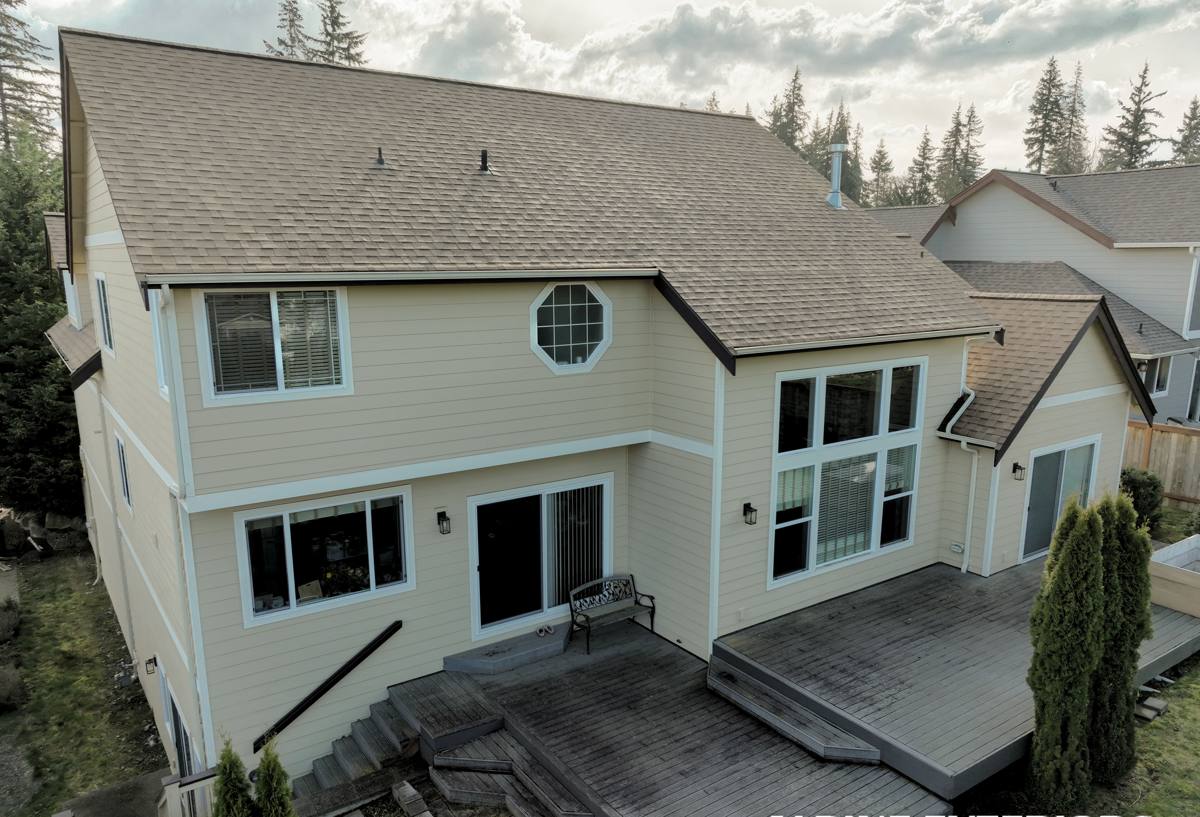
What "Energy-Efficient" Actually Means for This Location
Energy efficiency in a window comes from a combination of factors working together — the glass package, the frame material, and just as important, how well the unit is sealed into the wall. On Lummi Island, we weight these a little differently than a generic efficiency page would:
- Low-E glass coatings reduce heat loss through the glass and cut UV fading on interior floors and furniture — useful here given how much gray, diffuse daylight this area gets.
- Multi-point locking hardware pulls the sash tight against the weatherstripping, which matters more when wind-driven rain is testing that seal regularly rather than occasionally.
- Corrosion-resistant hardware (stainless or coated fasteners and hinges) holds up against salt air in a way standard-grade hardware doesn't.
- Warm-edge spacer systems in the glass unit reduce condensation at the edge of the pane — condensation that, left unchecked through a wet winter, feeds mold growth on sills and trim.
A window can carry a strong efficiency rating on paper and still underperform here if the installation doesn't account for our rain load. We've said this on other pages and it holds true for windows too: the product spec sheet is only half the story. The other half is whether the person putting it in understands what this climate does to a building envelope.
Signs Your Current Windows Are Losing You Money
Most homeowners don't replace windows because of one obvious failure — they replace them because a collection of small signs finally adds up. Worth checking for:
- Visible condensation or fogging between the panes of a double-pane window (a sign the seal has failed and the insulating gas has escaped)
- Drafts you can feel by hand near the sash or frame on a windy day
- Soft or discolored wood at the sill, especially on walls that face the prevailing weather
- Difficulty opening, closing, or locking a window that used to operate smoothly
- Visible daylight around the frame when the window is closed
- A noticeable temperature difference near the window compared to the rest of the room
Any one of these on its own might just mean a tune-up or resealing. Several of them together, especially on an older single-pane or early-generation double-pane window, usually means the window itself has reached the end of its useful service life.
What a Correct Installation Actually Involves
It's Not Just the Window Unit
The window itself gets most of the attention, but on a site exposed to driving rain, the flashing and sealing details around the opening matter just as much — arguably more. A high-efficiency window installed with poor flashing will leak water into the wall cavity long before it ever fails on energy performance, and that hidden moisture is a bigger long-term problem than a slightly higher heating bill.
A correct installation on a Lummi Island home typically includes:
- Removing the old unit and inspecting the rough opening, sill, and surrounding sheathing for hidden water damage or rot before anything new goes in
- Repairing or replacing any compromised framing or sheathing found during that inspection
- Installing sill pan flashing so any water that does get past the window drains outward, not into the wall
- Applying flashing tape and house wrap integration in the correct shingle-lap order, so water sheds down and out at every layer
- Setting the window plumb, level, and square, then securing it per the manufacturer's fastening schedule
- Sealing the interior and exterior with the appropriate sealant — not just a bead of caulk over gaps, but a proper air and water seal
- Insulating the gap between the window frame and rough opening without over-packing it, which can bow the frame
Skipping or rushing any one of these steps is how a brand-new window ends up with a moisture problem inside its first few wet seasons. This is the part of the job that doesn't show up in a showroom brochure, and it's the part that determines whether the window is still performing well in ten or fifteen years.
Frame and Glass Options Compared
There's no single "best" window material — the right choice depends on your home's exposure, your budget, and how much upkeep you want to take on. Here's an honest comparison of the main options we work with in this climate:
| Option | Strengths in This Climate | Trade-Offs |
|---|---|---|
| Vinyl | Won't rot or corrode from salt air; low maintenance; good insulating value; generally the best value | Limited color/finish options; can expand and contract with big temperature swings |
| Fiberglass | Very stable dimensionally; strong resistance to moisture and corrosion; holds paint well if you want a custom color | Higher upfront cost than vinyl |
| Wood-clad | Classic interior look; good insulator | Exterior cladding and joints need regular inspection in a wet, salty climate; higher maintenance burden |
| Aluminum | Strong and slim sightlines | Poor insulator unless thermally broken; prone to corrosion near salt water without upgraded hardware |
For most Lummi Island homes, we steer clients toward vinyl or fiberglass for the field windows, reserving wood-clad for cases where the interior aesthetic really calls for it and the homeowner is prepared for the extra maintenance. That's a professional recommendation based on how these materials actually hold up in marine air over years — not a knock on wood windows generally.
Our Process, Start to Finish
We keep this straightforward and try to minimize disruption to your home:
1. On-Site Assessment
We walk the exterior and interior of each window being considered, check for existing water intrusion or rot, and talk through which rooms or exposures are actually driving your energy loss versus which windows are just cosmetically dated.
2. Product Selection
We go over frame material, glass package, and grille/style options based on your home's exposure and your budget — no upsell pressure toward the most expensive option if it isn't the right fit.
3. Installation
Old units come out, openings get inspected and repaired as needed, and new windows go in following the flashing and sealing sequence outlined above. Most single-story homes see one to three windows installed per day depending on size and complexity.
4. Cleanup and Walkthrough
We clear debris, wipe down new units, and walk you through operation and any care recommendations before we call the job done.
What Drives the Cost
Window replacement cost varies a lot by home, and we won't quote a number without seeing the site — but these are the main factors that move the price up or down:
| Factor | Why It Matters |
|---|---|
| Frame material | Vinyl is typically the most affordable; fiberglass and wood-clad cost more upfront |
| Window size and count | Larger openings and whole-house replacements have more material and labor per project |
| Condition of the rough opening | Hidden rot or water damage found during removal adds repair time before the new window can go in |
| Access and height | Second-story or hard-to-reach windows take longer and may need additional equipment |
| Glass package | Upgraded Low-E coatings or gas fills add a modest cost for a meaningful efficiency gain |
We'd rather walk your home and give you a real number than throw out a broad range that doesn't mean much once we see the actual openings.
Why a Crew That Already Works This Area Matters
Window installation isn't the same job everywhere in Whatcom County. A crew that mostly works drier, inland conditions can put in a perfectly good window and still miss the flashing detail that keeps wind-driven rain out of a wall facing the water. We work sites around Ferndale and the surrounding Lummi Island area regularly enough to know which exposures need extra attention, which materials hold up and which don't, and how to sequence a job so it isn't sitting open during a wet spell.
That local familiarity also means we're not guessing at permit requirements or typical construction in this area — we know what we're likely to find when we open up an older wall, and we come prepared for it rather than discovering problems mid-job and stalling out.
Keeping Your Windows Performing Through Moss Season
New windows still need a little seasonal attention to keep performing well in this climate. A short checklist worth doing once or twice a year, especially heading into the wet months:
- Clear leaves, needles, and debris from window sills and tracks so water doesn't pool
- Check exterior caulking and sealant lines for cracking or gaps and have them touched up before they fail
- Wipe down hardware periodically to keep salt residue from building up on locks and hinges
- Watch for moss or algae starting to establish on north-facing trim or sills and remove it early
- Test that weatherstripping still seals tightly by feeling for drafts on a windy day
- Make sure weep holes (the small drainage openings at the base of the frame) stay clear so water can escape
None of this is difficult, but skipping it is how a well-installed window develops problems years before it should.
If your windows are drafty, fogged, or just past their prime, we're happy to take a look and give you a straightforward, no-pressure estimate — no obligation, just an honest read on what your home actually needs. Use the form below to get started.