 Ferndale Siding
 Why Windows in Kendall Take More of a Beating Than People Expect
Kendall sits back from the water compared to a lot of Whatcom County, but that doesn't mean the windows on a Kendall home have it easy. The same weather pattern that soaks Ferndale and the rest of the county — long stretches of driving rain, damp air that never fully dries out, and a moss season that seems to stretch longer every year — reaches inland too. Add in the temperature swings of a foothill-adjacent area, where cool mornings and damp evenings are the norm most of the year, and you've got conditions that work old or poorly installed windows over hard.
Older single-pane or early-generation double-pane windows in this area tend to show their age in predictable ways: fogged glass from failed seals, drafts you can feel with your hand on a cold evening, sashes that swell and stick in wet months, and frames that have started to soften at the corners from years of moisture creeping in around bad caulking. None of that is really about the glass itself failing — it's almost always about the installation, the flashing, or the sealants giving out first.
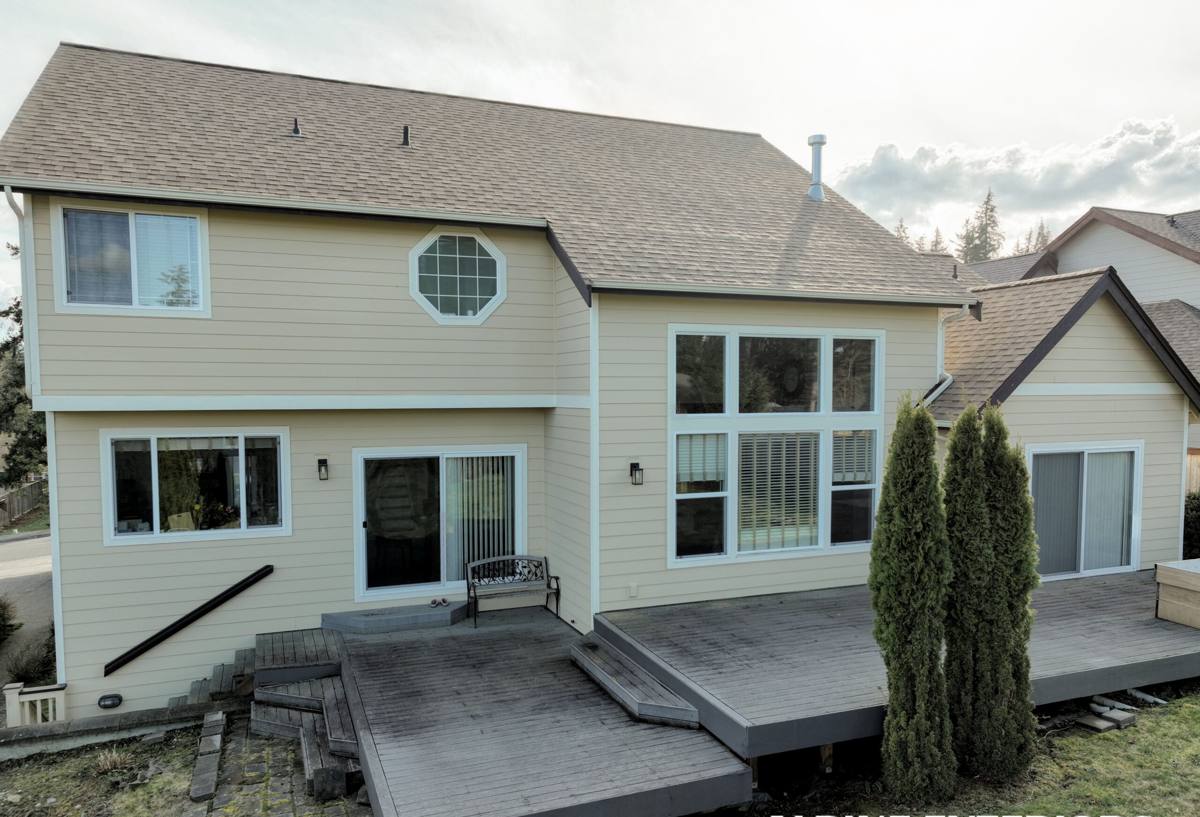
What "Energy-Efficient" Actually Means Here
It's a phrase that gets used loosely, so it's worth being specific. For a Kendall home, an energy-efficient window is doing three jobs at once: keeping conditioned air inside, keeping moisture and outside air out, and holding up physically to the wet-and-dry cycling that Whatcom County puts every exterior product through. The energy performance and the weather durability are the same conversation — a window that isn't sealed and flashed correctly won't perform to its rated efficiency no matter how good the glass package is.
The Numbers That Matter
- U-factor — measures how well the window resists heat transfer. Lower is better for our climate, where you're heating more months than cooling.
- Solar Heat Gain Coefficient (SHGC) — how much solar heat passes through. In this region, a moderate SHGC is usually the right call since we don't get the intense summer sun that drives cooling-focused choices in hotter climates.
- Air leakage rating — lower numbers mean less drafting, which matters as much here as the glass rating does, given how often we get wind-driven rain.
A window can carry a good ENERGY STAR label and still underperform in Kendall if it's installed without proper flashing integration into the wall assembly. That's the piece that gets skipped on rushed jobs.
Signs Your Current Windows Are Costing You Money
Most homeowners don't call about windows until something is visibly wrong, but by the time you can see the problem, you've usually been paying for it for a while. Worth checking for:
- Condensation or fogging between the panes (a sign the seal has failed and the gas fill, if any, is gone)
- Cold drafts near the frame even when the window is fully latched
- Visible gaps, cracked caulk, or soft/discolored trim around the window exterior
- Difficulty opening or closing — often a sign of frame swelling from moisture intrusion
- A noticeable difference in room temperature near the window compared to the rest of the house
Any one of these on its own isn't an emergency. Several together, especially paired with visible moss or algae growth on the siding or trim around the window, usually means moisture has been getting behind the frame for a while and it's worth having someone look at both the window and the wall assembly around it.
What a Correct Installation Actually Involves
The window unit itself is maybe half the job. The other half — the part that determines whether it performs for 20-plus years or starts failing in five — is how it's integrated into the wall.
Flashing and Water Management
Every window opening needs a flashing sequence that sheds water down and out, never allowing it to pool at the sill or work its way behind the sheathing. In a climate with as much driving rain as ours, this isn't optional detail work — it's the difference between a window that stays dry inside the wall cavity and one that quietly rots the framing around it.
Air Sealing
Gaps between the window frame and the rough opening need to be sealed with the right materials — not just caulk smeared around the trim, but proper backer rod and sealant, or low-expansion foam where appropriate, so the assembly can still handle minor building movement without cracking open.
Proper Fit and Shimming
A window that's shimmed out of square will bind, leak, and wear its hardware out early. Getting the reveal even and the unit plumb and level takes more time than a rushed install allows for.
Comparing Window Materials for a Kendall Home
There's no single "best" material for every house — it depends on the home's age, siding type, budget, and how much upkeep you want to take on. Here's how the common options stack up for our conditions:
| Material | Moisture Performance | Maintenance | Typical Lifespan |
|---|---|---|---|
| Vinyl | Good — won't rot, handles damp climates well | Low | 20–30 years |
| Fiberglass | Excellent — very stable in moisture and temperature swings | Low | 30-plus years |
| Aluminum-clad wood | Good exterior protection, but relies on the seal staying intact | Moderate | 20–30 years, install-dependent |
| Bare wood | Requires diligent upkeep in a wet climate | High | Varies widely with maintenance |
For most Kendall homes, we steer people toward vinyl or fiberglass because they hold up to sustained moisture exposure without the ongoing paint and sealant maintenance that wood or wood-clad products demand. That's not a knock on wood windows — it's an honest tradeoff between appearance preference and how much upkeep a homeowner wants to sign up for in a climate that doesn't give materials much of a break.
How We Approach a Window Project in Kendall
Assessment First
Before we talk product, we look at what's actually happening at each opening — the condition of the existing frame, whether there's evidence of past water intrusion, how the siding meets the window trim, and what the wall assembly behind it looks like where we can see it. This tells us whether it's a straightforward window swap or whether some of the surrounding trim or sheathing needs attention too.
Installation
We remove the old unit carefully, inspect the rough opening for hidden rot or moisture damage, correct anything we find, and then install with a full flashing and air-sealing sequence — not just drop the new window in and caulk around the outside.
Final Check
Every window gets operated, checked for square, and inspected for a clean, sealed exterior finish before we consider the job done.
Mistakes We See on Prior Window Jobs
A lot of the repair calls we get in this area aren't from bad windows — they're from good windows installed poorly. Common issues we run into on older installs:
- Caulk used as the only water barrier, with no proper flashing underneath
- Windows installed out of level or plumb, causing premature hardware wear
- Gaps around the frame packed with the wrong sealant or left unsealed entirely
- Trim reinstalled without addressing rot that was already present underneath
- Mismatched window sizing that leaves oversized gaps hidden behind trim
None of these show up on day one. They show up two, five, or ten winters later, which is why the installation quality matters as much as the window brand.
Why Local Experience in Kendall Matters
A crew that works Kendall and the broader Ferndale area regularly knows what this climate does to a window installation over time — not in theory, but from having seen it firsthand on other homes nearby. That means knowing which details can't be shortcut here, even if they'd hold up fine in a drier part of the state. It also means being available for a straightforward warranty conversation or a follow-up check without a homeowner having to track down a contractor who's moved on to other regions.
Keeping New Windows Performing Long-Term
Once new energy-efficient windows are in, a little seasonal attention keeps them performing:
- Check exterior caulking lines once a year for cracking or separation
- Keep gutters and downspouts clear so water isn't sheeting down across window trim
- Clean weep holes on vinyl and fiberglass frames so drainage isn't blocked
- Watch for moss or algae starting on nearby siding or trim, and address it early rather than letting it hold moisture against the wall
If you're dealing with drafty, fogged, or hard-to-operate windows on a Kendall property, or just want an honest look at whether an upgrade makes sense for your home, we're happy to come take a look. The estimate is free, there's no pressure attached, and you'll get a straight answer about what your windows actually need.