 Ferndale Siding
 Building a Deck That Actually Holds Up in Kendall
A deck in Kendall lives a harder life than the brochure photos suggest. Long stretches of driving rain, a moss season that seems to start earlier every year, and the moisture-laden marine air common across Whatcom County all work on wood, fasteners, and footings year-round. A deck that looks fine the first summer can start showing soft boards, rusted hardware, or a slick green film by year three if it wasn't built with this specific climate in mind. Building decks in Kendall isn't fundamentally different from building one anywhere else in the Pacific Northwest, but it does mean certain details can't be treated as optional.
This page covers what we think about specifically when we build a deck for a Kendall home: the material choices that make sense here, the structural details that keep water from doing damage you can't see, and what our process looks like from first call to final walkthrough.
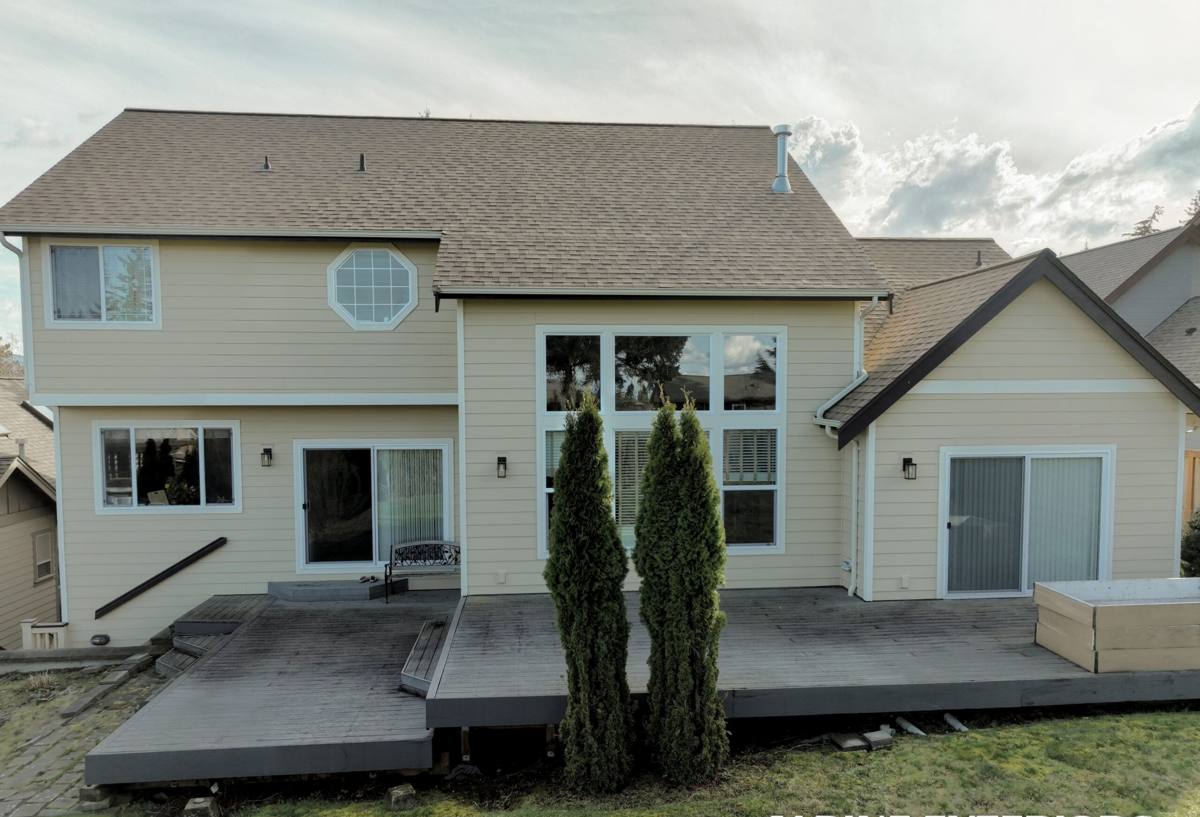
What Local Conditions Ask of a Deck
Whatcom County's weather pattern is defined by frequency, not intensity — it's not one big storm that causes problems, it's months of low-grade dampness. That changes how a deck should be designed and built in a few specific ways.
Moisture That Doesn't Go Away
Wood that's constantly damp but never fully dries out is far more vulnerable to rot than wood that gets soaked and then bakes dry in the sun. Many Kendall properties have mature trees and natural tree cover nearby, which keeps decks shaded and slow to dry after rain. That's good for comfort in the summer and bad for lumber that isn't detailed to shed water properly.
Moss and Algae Growth
Shaded, damp surfaces are exactly what moss and algae need to take hold. Beyond the appearance issue, a mossy deck surface is a slip hazard and traps moisture against the boards, accelerating whatever decay process is already underway underneath.
Corrosion on Fasteners and Hardware
Humid, salt-tinged coastal air moving inland across the county is hard on unprotected metal. Screws, joist hangers, and structural connectors that aren't rated for the exposure will corrode faster than most homeowners expect, and a failing fastener is a structural problem, not a cosmetic one.
Site Assessment: Where the Deck Actually Sits
Before we talk materials or design, we look at the specific spot the deck will occupy. Two decks fifty feet apart on the same Kendall lot can need genuinely different approaches.
- How much direct sun the area gets, and how long surfaces stay wet after rain
- Existing drainage — does water pool near the foundation or flow away from the house
- Soil conditions for footing depth and frost considerations
- The house's existing siding and wall assembly, since the ledger board attaches directly to it
- Grade and height, which determine whether stairs, guardrails, or additional bracing are required
This assessment shapes real decisions — where we place footings, how we detail the ledger connection, and whether the decking material we'd normally recommend is still the right call for that particular spot.
Choosing a Decking Material for This Climate
There's no single "best" decking material — there's a best material for a given budget, sun exposure, and maintenance appetite. Here's how the common options actually perform in a wet, shaded PNW environment.
| Material | How It Handles Our Climate | Maintenance | Typical Lifespan |
|---|---|---|---|
| Pressure-Treated Pine | Good rot resistance when properly sealed; needs consistent upkeep in shaded, damp spots | Annual cleaning, re-sealing every 1-2 years | 15-20 years with upkeep |
| Cedar | Naturally rot- and insect-resistant, ages gracefully, but softer and more prone to surface wear in constant moisture | Periodic cleaning and sealing to hold color and prevent graying | 15-25 years with upkeep |
| Composite | Doesn't rot or splinter; performs consistently in shade and damp without warping | Occasional washing; no sealing or staining | 25-30+ years, often warrantied |
| PVC/Capped Boards | Fully sealed surface, excellent moisture resistance, very stable in temperature swings | Lowest maintenance of the group | 25-30+ years, often warrantied |
Why We're Selective About Wood in Shaded, Damp Spots
Real wood decking can be a great choice, and plenty of Kendall homes are well suited to it. But wood is also the material most dependent on the homeowner keeping up with sealing and cleaning. In a spot that stays shaded and damp for months at a time, a wood deck that falls behind on maintenance will show it faster than the same deck in full sun. We'll always tell you honestly whether your specific site is a good match for wood or whether composite or capped decking will save you maintenance headaches down the road — it's a tradeoff between upfront cost and long-term upkeep, not a right or wrong answer.
Hardware Matters as Much as the Boards
Whatever decking material you choose, we use fasteners and structural hardware rated for exterior, high-moisture exposure — stainless steel or coated connectors at the joist hangers, ledger, and post bases. This is one of those details that's invisible once the deck is finished but determines whether the structure is still sound in fifteen years.
Structural Details That Prevent Hidden Damage
Most deck failures we get called to look at aren't decking problems — they're structural problems that started underneath or behind the visible surface. A handful of details make the real difference in a climate like this.
Ledger Board Flashing
Where the deck attaches to the house is the single most common point of water intrusion on any deck. Proper flashing keeps rain from working behind the siding and into the wall framing — a detail that's easy to skip and expensive to fix later.
Footing Depth and Spacing
Footings need to be sized and spaced for the actual load and soil conditions on your lot, not a generic minimum. This is also where local permitting requirements come into play.
Airflow Underneath
A deck built low to the ground with poor airflow underneath stays damp longer after every rain. Where grade allows, we build in enough clearance and ventilation to let the structure actually dry out between storms instead of staying perpetually wet.
Board Spacing and Fastening
Consistent gapping between boards lets water drain through instead of pooling on the surface, and it gives wood decking room to expand and contract without buckling. Fastener pattern matters too — hidden fastener systems look cleaner but need to be installed correctly to hold up under this much seasonal moisture cycling.
Our Deck Building Process
We keep the process straightforward and communicate what's happening at each stage, especially since weather windows in this area can affect scheduling.
- On-site assessment — we walk the property, check drainage, sun exposure, and how the deck will tie into the existing structure
- Design and material selection — we go over honest tradeoffs between materials based on your specific site, not a one-size-fits-all pitch
- Written estimate — clear scope and pricing before any work begins, no surprise add-ons
- Permitting — we handle the permit application and inspection scheduling required for the project
- Footings and framing — the structural work that determines the deck's lifespan, built to code and detailed for local conditions
- Decking, railing, and finish work — installed with attention to spacing, fastening, and flashing details
- Final walkthrough — we go over the finished deck together and cover basic care for whatever material you chose
Permits and Code Requirements
Deck construction in Whatcom County generally requires a building permit once the structure exceeds a certain size or height above grade, and guardrails and stair railings are required once the deck reaches a certain elevation. Requirements vary by exact height, attachment method, and location on the property, so we confirm the specifics for your project rather than assuming. We handle the permit application as part of our process, which also means the finished deck is documented and inspected — something that matters if you ever sell the home or need insurance documentation.
Keeping a Deck Healthy Through Moss Season
However well a deck is built, ongoing care extends its life significantly in this climate. A few habits go a long way:
- Sweep leaves and debris off regularly, especially in fall — trapped organic matter holds moisture against the boards
- Wash the surface at least once a year to remove early moss and algae growth before it takes hold
- Check and clear the gaps between boards so water keeps draining freely
- Reseal wood decking on the schedule appropriate to the product — don't wait until it's visibly graying
- Walk the underside occasionally to check for standing water, blocked drainage, or early signs of rot at the ledger
None of this is complicated, but skipping it is exactly how a well-built deck ends up needing early repairs.
Why Hire a Crew That Already Works in Kendall
A contractor who works this area regularly already knows how local soil, drainage, and weather patterns behave, and isn't learning that on your job. We also handle exterior work beyond decks — siding, trim, and related exterior repairs — which matters when a deck project touches the ledger connection and the house's existing wall assembly. Coordinating that as one job, with one crew who understands how the pieces fit together, avoids the gaps that show up when separate contractors each assume the other handled a detail.
If you're planning a new deck or need to replace one that's showing its age, we're happy to take a look and give you a straightforward, no-pressure estimate — just fill out the form below.