 Ferndale Siding
 Board and batten siding has a natural fit on Lummi Island — the vertical lines read as both classic Northwest farmhouse and modern coastal cabin, and it holds up well against the kind of weather this part of Whatcom County throws at a house. But "board and batten" is a look, not a guarantee of performance. The material behind that look, and the way it's installed, determines whether it's still doing its job in fifteen years or peeling, cupping, and rotting at the seams. We install James Hardie fiber cement exclusively, and on Lummi Island that choice matters more than almost anywhere else we work.
Why Board & Batten Works So Well Here — When It's Built Right
The board and batten profile — wide vertical panels with narrow battens covering the seams — was originally a practical response to weather, not just a style choice. Covering the joints with battens sheds water down and away from the seams instead of letting it sit in a horizontal channel the way some lap profiles can. On an island exposed to wind-driven rain off the water, that detail isn't cosmetic. It's one of the reasons the profile has stayed popular on waterfront and near-waterfront homes for generations.
The trade-off is that board and batten has more vertical seams and more fastener penetrations per square foot than standard lap siding, and every one of those is a place water can find its way in if the material or the installation is second-rate. That's the tension this page is really about: a profile that's well suited to the climate, paired with a material and crew that can actually deliver on that promise.
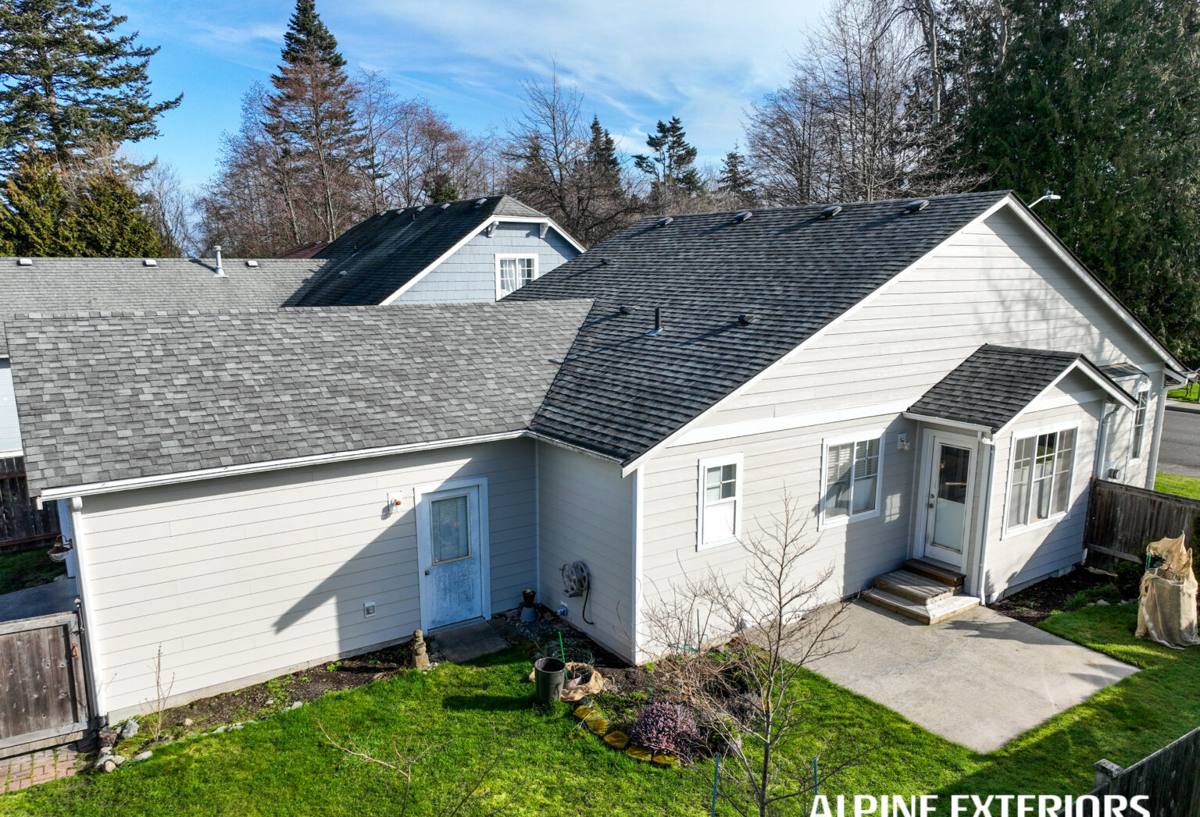
What Lummi Island's Climate Actually Does to Siding
Homes on and around Lummi Island deal with a specific combination of stressors that inland Whatcom County properties don't face in the same intensity:
- Salt air: Airborne salt from the surrounding waters accelerates corrosion on fasteners, flashing, and any metal trim, and it degrades ordinary field-applied paint faster than it degrades a factory-cured finish.
- Driving rain: Storms coming off the water don't just fall straight down — wind pushes rain sideways into vertical seams, under battens, and around window and door trim. Siding here needs to shed water horizontally, not just vertically.
- A long moss season: Cool, damp, shaded conditions for much of the year mean moss and algae get a long runway to establish themselves, especially on north-facing walls and lower courses near landscaping or grade.
- Temperature swings between marine fog and summer sun: Siding expands and contracts with daily and seasonal temperature changes; materials that don't handle that movement well eventually crack or pull away from fasteners.
None of these are dramatic, one-time events. They're slow, cumulative pressure — which is exactly the kind of stress that separates a material built for the coast from one that just happens to be installed there.
Why We Only Install James Hardie for This Application
We don't install vinyl board and batten, LP SmartSide, primed spruce, or cedar board and batten. That's a deliberate standard, not a lack of options. Each of those materials has a real weakness that shows up faster in a salt-air, high-moisture environment like Lummi Island:
- Vinyl board and batten can warp or bow in temperature swings and doesn't hold paint if a homeowner ever wants to change the color.
- Engineered wood products like LP SmartSide rely on their edges and seams staying sealed; in a profile with as many seams as board and batten, that's a lot of vulnerable points to maintain over decades.
- Cedar and primed wood look beautiful new, but they need real maintenance discipline — recoating, caulking, and moisture monitoring — to survive a long moss season without rot setting in behind the finish.
James Hardie fiber cement is non-combustible, dimensionally stable across temperature swings, and comes with a factory-applied ColorPlus finish that's cured under controlled conditions rather than brushed on at the jobsite. That finish is what actually stands up to salt air over time — it doesn't rely on a field paint job holding up against airborne salt and constant damp.
The Hardie Board & Batten System: Panels, Battens, and Finish
A correct Hardie board and batten installation isn't cedar boards nailed up with trim strips. It's an engineered system:
Panel Selection
Vertical Hardie panels (in a smooth or cedar-textured face) are sized and installed as the field material, with the panel product chosen for the home's exposure — homes closer to the water or with less roof overhang generally warrant the more weather-resistant HZ10 product line Hardie engineers for harsher climate zones.
Battens
Fiber cement battens are installed over the vertical seams at engineered spacing, fastened in a way that allows the panel behind to move slightly with temperature changes without cracking the batten or pulling the fastener loose.
Factory Finish
ColorPlus finish is baked on in a factory setting, which gives it better adhesion and fade resistance than a field-applied coat — a meaningful advantage anywhere, but especially where salt air is actively working against paint film every day of the year.
What Correct Installation Involves
The product is only half the equation. On Lummi Island specifically, installation details that might be optional elsewhere become non-negotiable:
| Detail | Why It Matters Here |
|---|---|
| Rainscreen / drainage gap behind panels | Lets any wind-driven rain that gets past the surface drain and dry out instead of sitting against the wall sheathing |
| Corrosion-resistant fasteners | Standard fasteners corrode faster in salt air; stainless or coated fasteners rated for coastal exposure hold up over the life of the siding |
| Proper flashing at every horizontal transition | Board and batten has more vertical runs meeting trim, windows, and roof lines — each transition is a potential entry point for driving rain |
| Correct panel and batten fastening pattern | Following Hardie's engineered fastening spec keeps the assembly performing as designed through freeze-thaw and wind-driven rain cycles |
| Sealed, back-primed cut edges | Any field cut exposes raw fiber cement; sealing it protects against moisture wicking into the cut edge over a long wet season |
Skip any one of these and the siding can still look right for a few years — the problems that follow from a shortcut usually show up as staining, soft spots, or paint failure well after the crew that installed it has moved on.
Our Process, Start to Finish
- On-site assessment: We look at sun exposure, wind direction, roof overhangs, grade, and how close the home sits to the water, since these all affect product selection and detailing.
- Product and profile selection: We recommend the Hardie panel line and batten spacing that fits the home's exposure and the owner's aesthetic — wider or narrower reveals, smooth or textured face.
- Tear-off and substrate check: Old siding comes off and we inspect the sheathing underneath for any moisture damage before anything new goes up.
- Weather-resistive barrier and rainscreen installation: This is the layer that does the real water management work, installed before a single panel goes up.
- Panel and batten installation: Panels are hung to spec, battens are set at engineered spacing, and every fastener follows Hardie's pattern for the product and exposure.
- Flashing, trim, and sealant detailing: Every window, door, corner, and roof transition gets flashed and sealed before final finish work.
- Final walkthrough: We review the completed work with the homeowner and cover basic care going forward.
Living With Board & Batten Siding in a Salt Air, High-Moss Climate
A correctly installed Hardie system is genuinely low-maintenance, but "low" doesn't mean zero. A simple annual check goes a long way:
- Rinse salt residue and grime off the siding once or twice a year, especially on walls facing the water
- Keep gutters clear so overflow doesn't run down the face of the siding and feed moss growth
- Trim back landscaping and tree cover that keeps lower courses shaded and damp longer than the rest of the wall
- Watch north-facing and shaded sections for early moss or algae growth and address it before it spreads
- Have caulking at trim and penetrations checked every few years, since sealant is the one component that wears out before the siding does
Why Hiring a Crew That Already Works Lummi Island Matters
Lummi Island is reached by ferry, which changes how a siding project gets planned and staged compared to a job a few miles inland in Ferndale. Materials, equipment, and crew schedules all need to account for ferry timing, and a contractor who hasn't worked the island before is learning that logistics puzzle on the homeowner's project instead of before it. A crew that's already done work out there also has a feel for how exposed a given property is — whether it's tucked in enough to treat like a standard Whatcom County home or exposed enough to warrant the more weather-resistant product line and extra flashing detail. That judgment call, made correctly up front, is worth more than any warranty paperwork if it's made wrong.
What to Ask Before You Sign a Siding Contract
Whether you talk to us or another contractor, a few questions separate a crew that understands coastal installation from one that's just installing siding wherever it's asked to:
- Which Hardie product line and thickness do you recommend for this specific property's exposure, and why?
- What fastener type will you use, and is it rated for a salt-air environment?
- Will there be a rainscreen or drainage gap behind the panels?
- How do you flash and seal the horizontal and window transitions specific to a board and batten profile?
- Have you installed Hardie siding on Lummi Island or comparable waterfront properties before?
If a contractor doesn't have clear, specific answers to these, that's worth knowing before work starts, not after.
If you're weighing board and batten siding for a home on Lummi Island, we're happy to take a look and talk through what your property actually needs — no pressure, no obligation. Fill out the form below and we'll set up a time to walk the site with you.