 Ferndale Siding
 Why Birch Bay's Coastal Climate Is Hard on Windows
Birch Bay sits right on the water, and that changes what a window has to survive compared to a house a few miles inland in Ferndale or elsewhere in Whatcom County. Salt-laden air corrodes exposed metal hardware and fasteners faster than dry inland air ever would. Driving rain off the bay pushes water sideways into gaps that would stay dry in a calmer microclimate. And the long, damp moss season here means anything with a horizontal ledge — a sill, a mullion, a poorly flashed head trim — becomes a place for organic growth to take hold if it isn't detailed correctly.
None of that means windows near the water are doomed to fail early. It means the margin for error in material choice and installation is smaller. A window that would perform fine set back from the coast can show problems within a few years on a Birch Bay lot, especially on the west- and south-facing walls that take the brunt of the weather off the water.
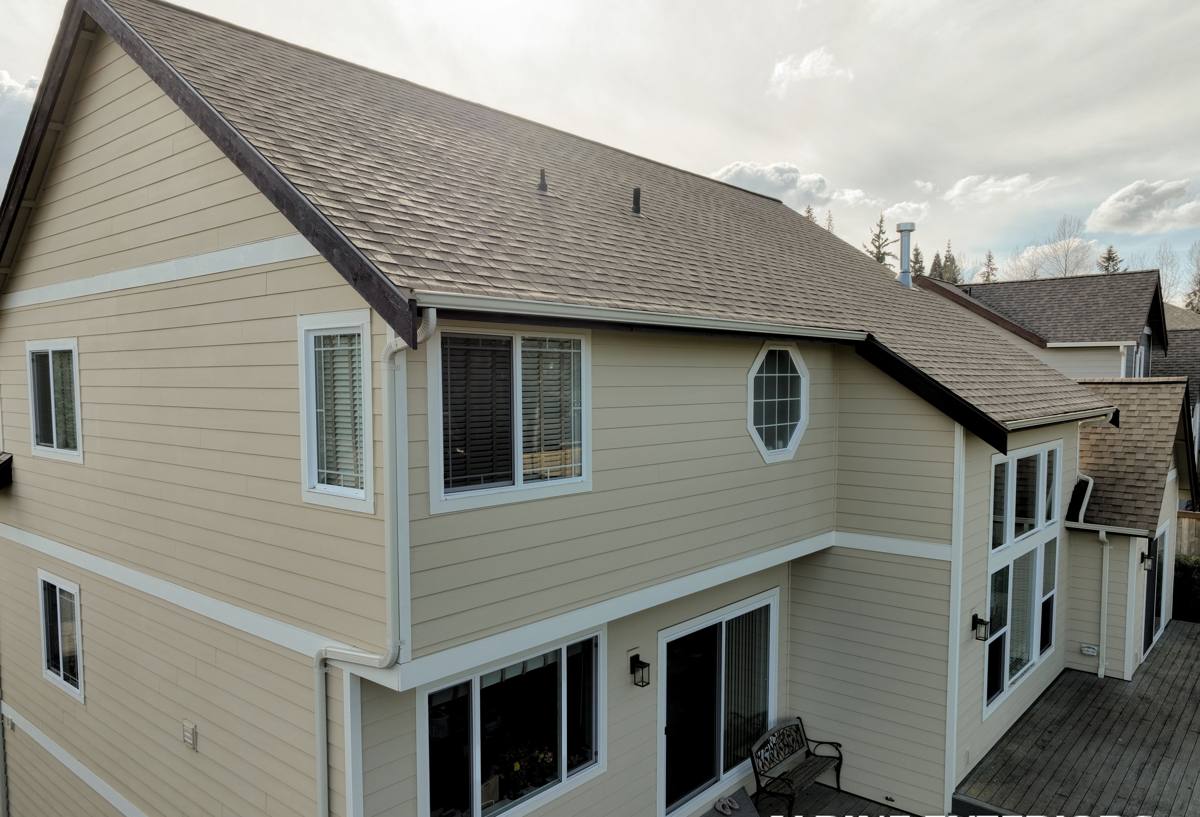
What "Custom" Actually Means for a Home Like Yours
We use "custom" for a specific reason: very few homes in Birch Bay have perfectly standard, off-the-shelf window openings, especially older cottages and homes that have been added onto or remodeled over the years. Custom windows means we measure each opening on your house, order units built to those exact dimensions, and detail the installation to whatever your wall assembly actually is — not a generic template.
This matters more here than in a lot of places, because a slightly undersized window with a shimmed and caulked gap is exactly the kind of shortcut that fails first in a driving-rain, salt-air environment. A properly sized custom unit lets us build a continuous, correctly lapped water management system around it instead of patching a gap.
What We're Solving For
- Correct fit to the actual rough opening, not a "close enough" stock size
- Frame and hardware materials that resist salt-air corrosion
- Flashing and sill details that shed wind-driven rain instead of trapping it
- Glass and seals that hold up to sustained damp conditions without fogging
- An appearance that fits the home, not just a functional swap
Material and Glass Choices That Hold Up Near Salt Water
Frame material is the first decision, and it's worth being honest about trade-offs rather than pretending one material is perfect everywhere.
| Frame Material | How It Handles Salt Air & Rain | Maintenance |
|---|---|---|
| Vinyl | Doesn't corrode; performs consistently in coastal humidity | Low — occasional cleaning, no repainting |
| Fiberglass | Very stable in wet, salty conditions; resists warping | Low — durable finish, minimal upkeep |
| Aluminum-clad wood | Good exterior protection, but cladding seams and fasteners need attention near salt air | Moderate — watch seams and hardware over time |
| Bare wood | Attractive but most exposed to moisture damage and requires diligent upkeep this close to the water | High — regular repainting/sealing |
For most Birch Bay homes we lean toward vinyl or fiberglass frames for water-facing walls, simply because there's less exposed metal hardware to corrode and no painted wood surface to maintain against constant moisture. That's a maintenance-burden judgment, not a claim that wood windows can't work here — some homeowners want the look and are willing to keep up with the upkeep, and we'll install and detail wood units correctly if that's the right call for your home.
On glass, dual-pane units with a quality low-E coating and a well-sealed insulated glass unit (IGU) are the baseline we recommend. The seal integrity of the IGU matters more in a persistently damp climate — a weak edge seal is what leads to fogged glass down the road, so we don't cut corners there.
The Installation Details That Actually Prevent Leaks
Most window failures we get called out to fix in coastal Whatcom County aren't a bad window — they're a window that was installed without the water management details a driving-rain climate demands. This is where custom work earns its keep.
What Correct Installation Looks Like
- Sill pan flashing under every opening, sloped to drain outward rather than sitting flat
- Housewrap and flashing tape lapped in the correct shingle order — upper layers over lower — so water is directed out, not in
- Head flashing that extends beyond the window's side flanges
- Backer rod and quality exterior sealant at joints designed for movement, not just filled gaps
- Fasteners and hardware rated for coastal/corrosive exposure
- Interior air sealing done separately from exterior water sealing — they solve different problems and shouldn't be treated as one step
Skipping any one of these is invisible on install day and shows up as a stain, a soft spot, or moss creeping along a sill two or three wet seasons later. This is also exactly why a site-built, custom-fit approach beats forcing a stock unit into an opening that doesn't quite match it.
Our Process, Start to Finish
1. On-Site Assessment
We walk the home, look at each opening's exposure (which walls take direct weather off the bay), check current window condition, and note anything unusual about the wall assembly before we quote anything.
2. Precise Measurement and Product Selection
Every opening is measured individually. We talk through frame material, glass package, and style options based on that wall's exposure and your budget — not a one-size answer for the whole house.
3. Custom Order
Units are built to the exact measurements taken, which is what allows a tight, properly flashed installation instead of a shimmed-and-caulked fit.
4. Removal and Installation
Old units come out, the opening is inspected for hidden water damage (which does turn up occasionally on older coastal homes), and the new window goes in with full flashing and sealing detail — not just caulk around the edges.
5. Final Walkthrough
We check operation, seals, and finish work with you before calling the job done.
Signs Your Current Windows Are Already Struggling
If you're not sure whether replacement is worth it yet, these are the practical signs we look for on coastal homes specifically:
- Corroded, stiff, or pitted hardware — locks, cranks, hinges
- Moss or algae building up on sills or lower frame edges
- Fogging or condensation between panes (a failed IGU seal)
- Soft or discolored trim/drywall below or beside the window
- Noticeable draft or whistling during storms off the bay
- Difficulty opening/closing due to swollen frames or warping
One or two of these doesn't always mean full replacement — sometimes it's a repair or reseal. But several together, especially on a bay-facing wall, usually means the window's water management has already broken down.
Cost Factors Worth Understanding Before You Budget
| Factor | Why It Moves the Price |
|---|---|
| Frame material | Vinyl is generally the most economical; fiberglass and clad-wood cost more upfront but often less in upkeep |
| Number and size of openings | More or larger openings mean more material and labor |
| Wall condition behind old windows | Hidden rot or water damage found during removal adds repair scope |
| Glass package | Upgraded low-E coatings or higher-performance IGUs cost more than standard dual-pane |
| Exposure and flashing complexity | Bay-facing or hard-to-access openings need more careful, time-intensive flashing work |
We won't quote a whole-house number without seeing the openings — condition varies enough house to house on the coast that a generic estimate isn't useful to you.
Maintaining Windows Through a Salt-Air, Moss-Season Climate
Even a well-installed window benefits from a bit of seasonal attention in a climate like this:
- Rinse salt residue off exterior frames and hardware periodically, especially after storms
- Clear moss or debris from sills and tracks before it holds moisture against the frame
- Check exterior caulking annually for cracking or separation and touch up as needed
- Operate hardware through the wet season so mechanisms don't seize
This is minor upkeep compared to the cost of water intrusion repairs, and it's the same logic that guides our material recommendations in the first place.
Why a Crew That Already Works Birch Bay Matters
Installing windows correctly in a coastal, high-rainfall area isn't the same skill set as installing them in a dry inland climate — the flashing sequence, sealant choice, and hardware selection all have to account for conditions that don't show up as a problem until a wet winter or two has passed. A crew that regularly works Whatcom County's coastal communities has already seen which details matter here and doesn't have to learn that on your house.
If you're weighing custom window replacement for a Birch Bay home, we're happy to take a look and give you a straightforward, no-pressure estimate — just fill out the form below and we'll set up a time to walk the property with you.