 Ferndale Siding
 Why Point Roberts Is a Tough Place to Own an Asphalt Shingle Roof
Point Roberts sits on its own peninsula at the southern tip of Boundary Bay, cut off from the rest of Whatcom County by the international border. That geography matters more than most homeowners realize when it comes to roofing. The community is surrounded by water on three sides, which means salt-laden air moves across every roof in town more or less constantly. Add the long, wet Pacific Northwest winters, wind-driven rain off the bay, and heavy tree cover on many lots, and you have a roofing environment that's genuinely harder on materials than most inland parts of the county.
None of this means asphalt shingles are the wrong choice for Point Roberts. They're still one of the most practical, cost-effective roofing systems available, and a huge share of homes here are shingled for good reason. But it does mean the details of the installation — the underlayment, the flashing metal, the fastening, the ventilation — carry more weight here than they would in a drier, more sheltered climate. A roof that's "fine" in Bellingham can fail early in Point Roberts if it wasn't built for the marine exposure.
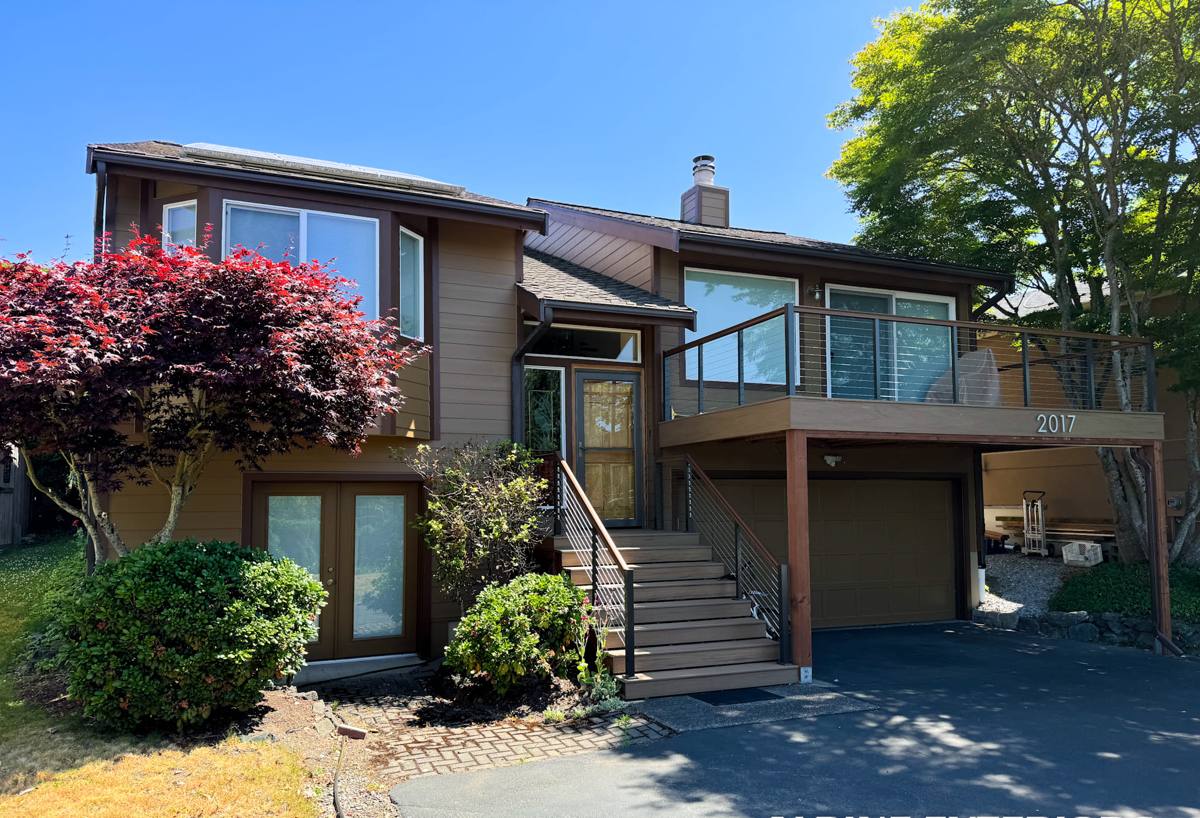
What Salt Air and Driving Rain Actually Do to a Roof
Salt Air and Metal Components
Asphalt shingles themselves tolerate salt air reasonably well, but the metal parts of a roofing system don't. Flashing, drip edge, nails, and vent housings made from lower-grade steel or uncoated materials corrode faster in a marine environment than they would even a few miles inland. Once flashing starts to rust and pit, it stops shedding water properly, and that's usually where leaks start — not in the shingle field itself.
Wind-Driven Rain
Point Roberts gets its share of storms rolling in off the water, and wind-driven rain behaves differently than rain falling straight down. It can work its way sideways under shingle tabs, around exposed nail heads, and into valleys and roof-wall intersections that weren't sealed with enough margin for error. A roof built to a bare-minimum spec might handle a light rain fine and still leak during a real wind event.
Long Moss Season
Because the region gets extended wet stretches and many lots have significant tree cover, moss and algae have a long growing window here — often close to year-round on shaded, north-facing slopes. Moss doesn't just look bad; it holds moisture against the shingle surface, lifts tabs as it grows, and slowly breaks down the granule layer that protects the shingle from UV and weather.
What a Correctly Built Shingle Roof Needs in This Climate
A roof that's going to hold up on a Point Roberts lot needs a few things done right, every time, not as upgrades but as the baseline:
- Ice-and-water shield at eaves, valleys, and around every penetration — not just the code-minimum coverage, but extended coverage where wind-driven rain is likely to push water uphill under the shingles.
- Corrosion-resistant flashing and fasteners — stainless or heavier-gauge coated metal in place of standard galvanized where the roof faces open water or gets direct salt spray.
- Proper underlayment across the whole deck, not patched sections, so the roof has a full secondary water barrier if wind ever drives moisture past the shingles.
- Balanced attic ventilation — intake at the eaves and exhaust at the ridge — so moisture from inside the house doesn't condense against the underside of the deck during our wet winters.
- Tight valley and step-flashing work at every roof-wall and chimney intersection, since these are the spots most likely to fail first in a driving-rain climate.
None of this is exotic. It's standard trade practice done with the right materials and without shortcuts. The problem is that shortcuts don't show up as leaks in year one — they show up in year five or six, after the warranty conversation has already happened and the homeowner is stuck with the bill.
Choosing the Right Shingle for a Marine, Moss-Prone Climate
Not every asphalt shingle product is built the same way, and for a Point Roberts roof, the differences matter more than the color chart. Here's how the common tiers stack up for this specific climate:
| Shingle Type | Wind Rating | Algae/Moss Resistance | Best Fit |
|---|---|---|---|
| Standard 3-tab | Lower | None built-in | Budget projects, low tree cover, sheltered lots |
| Standard architectural (laminate) | Moderate to high | Varies by line | Most homes; good balance of cost and durability |
| Algae-resistant (AR) architectural | Moderate to high | Built-in copper/zinc granules | Shaded lots, north-facing slopes, heavy moss areas |
| High-wind / marine-rated architectural | High | Often paired with AR granules | Open, water-facing lots with regular wind exposure |
For most Point Roberts homes, we lean toward algae-resistant architectural shingles with a solid wind rating. The upfront cost difference over a standard shingle is modest, and it directly addresses the two things that shorten roof life here fastest: moss growth and wind uplift. On more exposed, water-facing lots, stepping up to a marine or high-wind rated line is worth the conversation.
Moss, Algae, and Keeping a Roof Healthy Long-Term
Even a good algae-resistant shingle will eventually pick up some growth in a climate this wet, especially under tree cover. The goal isn't a moss-free roof forever — it's catching growth before it does structural damage to the shingle mat underneath. A light dusting of moss on the surface is a maintenance item. Moss that's thick enough to lift shingle tabs or hold standing moisture is a problem that's actively shortening the roof's life.
We treat moss removal as a gentle, low-pressure process — soft washing or hand removal with the right chemical treatment, never a pressure washer, which strips granules and does more damage than the moss itself. Trimming back overhanging branches where it's practical also helps, since it reduces both the shade that lets moss thrive and the debris load that clogs valleys and gutters.
How We Approach a Roofing Project in Point Roberts
Whether it's a full replacement or a targeted repair, our process stays the same:
- On-site inspection. We walk the roof (or use a drone where access or pitch makes that safer) and check the deck, flashing, ventilation, and any problem areas from the inside of the attic too, not just the surface.
- Honest scope and estimate. We tell you what's actually needed — full replacement, partial repair, or just maintenance — and explain why, in plain terms, before any work starts.
- Material selection. We walk through shingle options suited to your lot's sun/shade exposure and wind exposure, not a one-size-fits-all recommendation.
- Tear-off and deck check. On replacements, we remove the old roofing down to the deck and check for soft spots or water damage before anything new goes down — this is where hidden problems usually surface.
- Underlayment, flashing, and shingle installation. Built to the standards above, with attention to every valley, penetration, and roof-wall intersection.
- Final walkthrough. We go over the finished roof with you, including gutters, vents, and any maintenance recommendations specific to your lot.
Repair or Full Replacement: What Actually Drives the Decision
Not every roofing issue in Point Roberts means a full tear-off. The right call usually comes down to a few factors:
| Factor | Leans Toward Repair | Leans Toward Replacement |
|---|---|---|
| Roof age | Under 12–15 years | Approaching or past shingle's rated life |
| Damage extent | Isolated area, one slope, single leak source | Widespread granule loss, multiple leak points |
| Deck condition | Solid, no soft spots | Soft decking, signs of rot from long-term moisture |
| Moss/algae history | Light, surface-level growth | Recurring heavy growth lifting shingles |
| Flashing condition | Sound, minor wear | Rusted, undersized, or failing at multiple points |
We'll always tell you honestly which side of that table your roof falls on. A well-timed repair can add years of life to a roof that isn't ready for full replacement — but patching a roof that's already failing at the deck level just delays a bigger bill.
A Simple Maintenance Checklist for Point Roberts Homeowners
A few basic habits go a long way toward getting full life out of an asphalt shingle roof in this climate:
- Clear gutters and valleys of needles and leaf debris at least twice a year, more often under heavy tree cover.
- Have moss and algae treated before it thickens, not after tabs start lifting.
- After major windstorms, do a visual check from the ground for lifted or missing shingles.
- Check attic ventilation isn't blocked by insulation, especially after any attic work.
- Have flashing around chimneys, vents, and skylights inspected every few years, since it fails before the shingles usually do.
Why Hiring a Crew That Already Works in Point Roberts Matters
Point Roberts isn't a quick add-on stop for most contractors. Getting a crew and materials there means crossing the border, which takes planning that a lot of companies based elsewhere in Whatcom County simply don't bother with — leading to rescheduled jobs, rushed work to minimize trips, or contractors who just don't quote the area at all. We build Point Roberts jobs into our schedule the right way, with material deliveries and crew time planned around the border crossing so the work isn't rushed or compromised.
Just as important is knowing the roofs themselves. A crew that's worked a handful of jobs on this peninsula understands which slopes take the worst of the wind off the bay, which lots hold moss the longest, and where salt exposure tends to eat through flashing first. That local knowledge shows up in better material choices and fewer surprises down the road — not just for this job, but for how the roof holds up over the next 20 years.
If you're dealing with an aging roof, storm damage, or just want an honest read on how much life is left in your current shingles, we're happy to take a look. Reach out for a free, no-pressure estimate using the form below — we'll walk the roof, tell you what we see, and give you a straight answer either way.