 Ferndale Siding
 Windows Built for Sudden Valley's Weather, Not a Showroom
Homes near Sudden Valley sit close enough to the water and the tree line that they take a different kind of weather beating than a house twenty minutes inland. Salt-laden air off the Sound works into anything with exposed metal fasteners or unsealed wood trim. Driving rain off winter storms pushes water sideways into window assemblies that were only ever tested for straight-down rainfall. And the long, wet moss season here means anything that traps moisture against a wall — including a poorly flashed window — has months to do damage before a dry stretch ever shows up to help it out. A window that would be fine in a drier climate can fail early here if it wasn't installed with this specific environment in mind.
We work on homes in and around Ferndale and Whatcom County regularly, and Sudden Valley's mix of wooded lots, lake-adjacent moisture, and older housing stock means window installation here isn't a one-size-fits-all job. This page covers what actually matters for a correct window installation in this area — not brand marketing, just the parts of the job that determine whether your new windows last 25 years or start leaking in five.
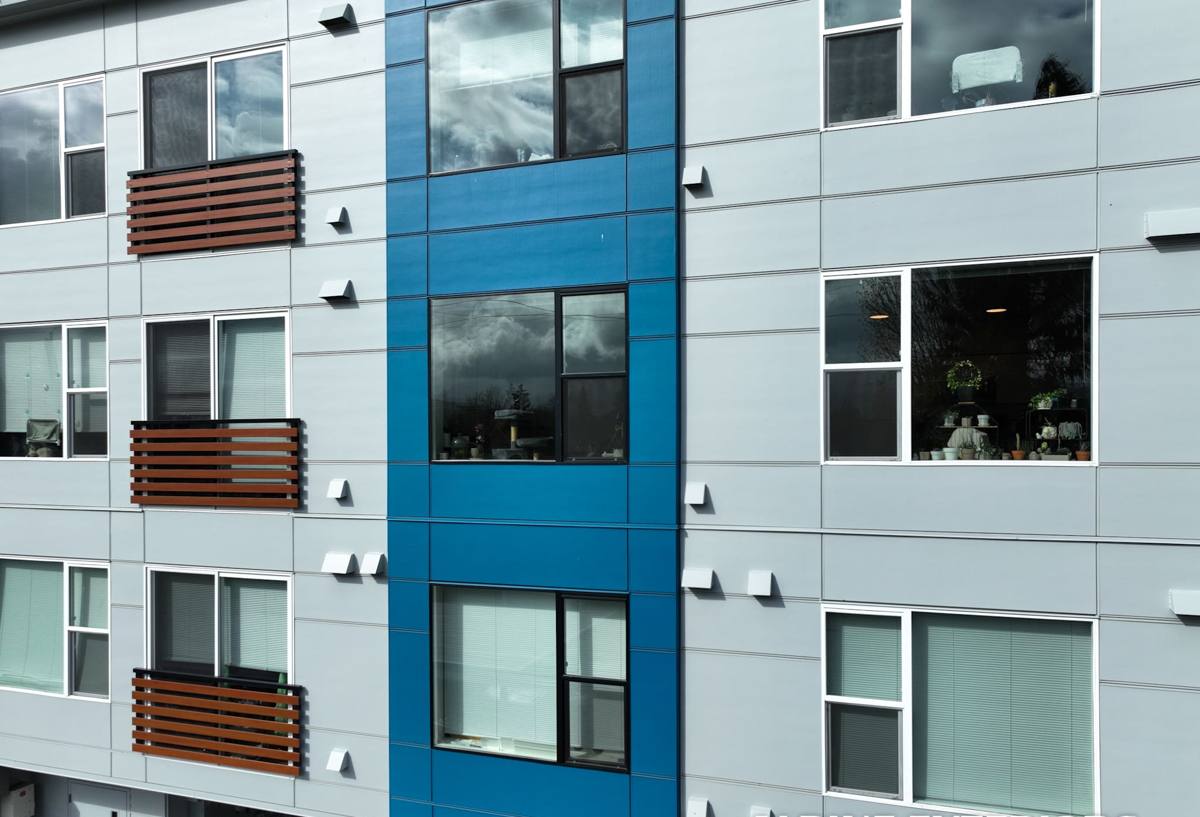
What Local Climate Actually Does to a Window Installation
Salt Air and Metal Components
Proximity to Puget Sound means airborne salt reaches further inland than people expect, especially during windier months. Salt accelerates corrosion on unprotected steel fasteners, weakens lesser-grade aluminum cladding over time, and can degrade cheap hardware finishes faster than the window's own warranty period. This doesn't mean every window needs marine-grade everything — it means the fasteners, flashing metal, and hardware chosen for this area should be selected with that exposure in mind, not just picked because they were in stock.
Driving Rain and Wind-Driven Water
Whatcom County storms frequently come with real wind behind the rain, which means water isn't just falling on a window — it's being pushed into every seam, gap, and reveal around it. A window that's only sealed on its face and not properly flashed at the sides and head will eventually let water track behind the trim and into the wall cavity. This is one of the most common causes of hidden rot we find when we pull old trim off a house in this area.
Moss Season and Sustained Moisture
The stretch of gray, wet months here isn't just about rain volume — it's about how long surfaces stay damp. Moss and algae thrive on shaded, north-facing walls and around window sills that don't shed water efficiently. Once moss establishes itself around a window frame, it holds moisture against the material continuously, which is a slow but serious threat to wood trim, sill pans, and even some fiber cement details if they weren't sealed correctly at installation.
Signs a Sudden Valley Home Needs Window Replacement
- Visible fogging or moisture between glass panes (failed seal)
- Soft or spongy wood at the sill or lower window trim
- Moss or dark staining creeping from the corners of a window frame
- Drafts you can feel near the frame even when the window is latched shut
- Difficulty opening, closing, or locking that wasn't there when the home was newer
- Visible daylight or gaps between the frame and the siding or trim
- Condensation forming on interior glass far more than it used to
- Paint peeling or bubbling specifically around window trim, not the whole wall
Any one of these on its own might just need minor repair. Several at once, especially combined with soft trim wood, usually means the window assembly and the flashing behind it have been compromised and full replacement is the more honest recommendation.
What a Correct Window Installation Actually Involves
The window itself is only part of the job. In this climate, the flashing and moisture management around the window matter as much as the unit being installed — arguably more, since a good window with bad flashing will still eventually fail, while even a mid-grade window with correct flashing will hold up.
The Sequence That Matters
- Remove the old unit carefully and inspect the rough opening for hidden rot or prior water damage before anything new goes in.
- Repair or rebuild the opening if the sheathing or framing shows moisture damage — installing a new window into a compromised opening just hides the problem temporarily.
- Install a sill pan flashing that directs any water that gets past the window back outside the wall assembly, not down into it.
- Set the window level, plumb, and square with proper shimming — even a high-end window performs poorly if it's installed out of square.
- Flash the sides and head in the correct shingle-lap order so water is always directed downward and outward, never trapped.
- Seal and insulate the gap between the window frame and the rough opening without over-compressing the frame, which can affect operation.
- Finish the exterior trim and weather barrier tie-ins so the window is fully integrated into the home's water management system, not just caulked around the edges.
That last point is where a lot of installation problems start. A window that looks finished from the curb can still be poorly integrated with the house wrap or weather-resistive barrier behind the siding. That hidden work is exactly what separates a durable installation from one that looks fine for a year or two and then starts leaking.
Choosing Materials for This Environment
We don't push one window brand as the only acceptable option, because the right choice depends on the home, the budget, and the specific exposure of that wall. What we do insist on is being straightforward about trade-offs so you're choosing with real information.
| Frame Material | Behavior in This Climate | Maintenance Consideration |
|---|---|---|
| Vinyl | Handles moisture well, no corrosion risk from salt air | Low maintenance; quality varies significantly by manufacturer |
| Fiberglass | Very stable in wet/dry cycling, resists warping | Higher upfront cost, minimal long-term upkeep |
| Aluminum | Strong but more sensitive to salt-air corrosion over time | Needs quality cladding/finish to hold up near the water |
| Wood/Wood-Clad | Best appearance, but most vulnerable to sustained moisture and moss | Requires diligent sealing and periodic maintenance |
We're generally cautious about recommending unclad or minimally finished wood windows on walls with heavy shade or north-facing exposure in this area, simply because that's where moss and sustained dampness hit hardest. That's not a knock on wood as a material — it's a maintenance-burden conversation we have honestly with every homeowner before they commit.
Cost Factors Homeowners Should Understand
We won't quote a number on a page like this because every home is different, but these are the variables that actually move the price:
| Factor | Why It Matters |
|---|---|
| Number and size of window openings | Directly scales material and labor time |
| Condition of existing framing | Hidden rot repair adds cost but is not optional if found |
| Frame material selected | Vinyl, fiberglass, and wood carry different price points |
| Replacement type | Full-frame replacement costs more than insert replacement but corrects more problems |
| Access and site conditions | Multi-story, wooded, or tight-access lots can add labor time |
| Trim and siding tie-in work | Proper exterior integration takes more time than a quick caulk-and-go job |
Full-frame replacement versus an insert (pocket) replacement is often the biggest cost decision. Inserts are faster and cheaper but only make sense when the existing frame and flashing are still sound. If we find moisture damage during inspection, we'll tell you — insert replacement over a compromised opening just locks the problem inside the wall.
Why a Crew That Knows Sudden Valley Matters
Window installation technique doesn't change much from town to town, but judgment does. Knowing which walls on a Sudden Valley lot get the most wind-driven rain, which orientations hold moss longest, and how older homes in this specific area were originally built and flashed all shape decisions on the day of installation — how much extra flashing detail to add, whether a sill pan needs a slight modification for an unusual rough opening, or whether trim needs to be rebuilt rather than reused. A crew that's done this work in this specific area brings that judgment with them instead of learning it on your house.
We also carry the practical advantage of proximity — being an established Ferndale-area crew means we can be responsive for follow-up questions, warranty concerns, or a second look if something seems off after the job, without a home visit turning into a half-day trip for us or a long wait for you.
Our Process, Start to Finish
- On-site assessment — we look at existing windows, trim condition, and signs of moisture before recommending anything
- Honest scope conversation — insert versus full-frame, material options, and what we found in the inspection
- Written estimate — clear about what's included, so there are no surprise add-ons mid-project
- Careful removal and opening inspection — catching hidden problems before new windows go in, not after
- Proper flashing and installation — following the sequence that actually protects the wall assembly long-term
- Finish work and cleanup — trim, sealing, and site cleanup so the job looks complete inside and out
- Final walkthrough — checking operation, seals, and answering any remaining questions before we consider the job done
Maintenance After Installation
Even a correctly installed window benefits from basic upkeep in this climate. Rinsing salt residue off exterior frames periodically, keeping gutters clear so overflow doesn't run down onto window heads, and knocking back moss growth near sills before it establishes will all extend the life of the installation. None of this is intensive work — it's the kind of five-minute check that's easy to fold into normal home upkeep, and it meaningfully reduces the odds of an early service call.
If you're noticing drafts, moisture, or moss creeping around your windows, or you're just planning ahead for a replacement, we're happy to come take a look. The estimate is free, there's no pressure, and you'll get a straight answer about what your home actually needs — use the form below to get started.