 Ferndale Siding
 Windows Built for a Peninsula Climate
Point Roberts sits on its own little peninsula, surrounded on three sides by saltwater and cut off from the rest of Whatcom County by the U.S.-Canada border. That geography is part of what makes the community special, and it's also exactly why windows here take more abuse than windows a few miles inland. Salt-laden air off the water works into hardware and finishes year-round. Driving rain off the Strait pushes water sideways into gaps that would stay dry in a calmer location. And the long, damp moss season that defines this part of the Pacific Northwest doesn't stop at the roofline — it creeps into window sills, tracks, and any wood trim that isn't detailed and sealed correctly.
None of that means window replacement in Point Roberts has to be complicated. It means the installation has to respect the conditions the home actually sits in, not a generic textbook install. That's the difference between windows that perform for twenty-plus years and windows that start showing fog, drafts, or rot within a handful of winters.
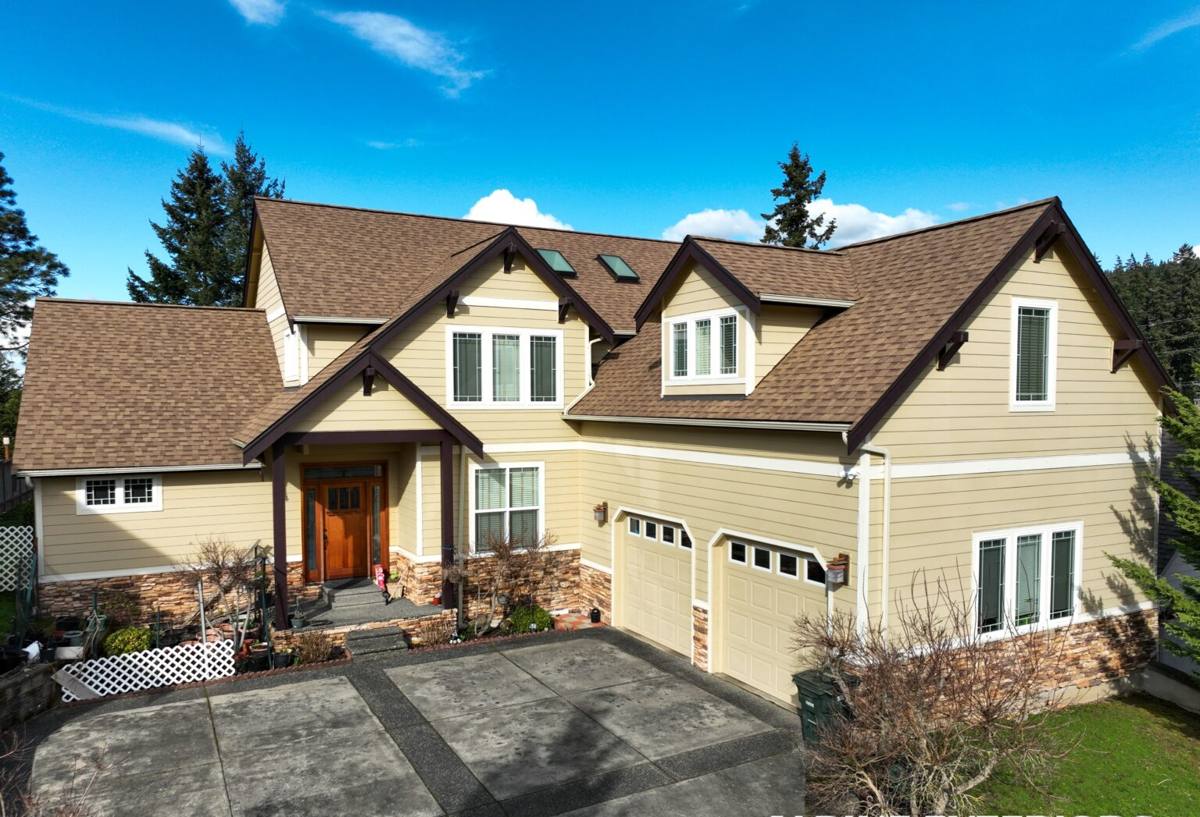
How to Tell Your Windows Are Falling Behind
Homeowners usually notice one of a few patterns before calling us. None of these are emergencies on their own, but together they're a sign the window system — not just the glass — is losing the fight against the marine climate.
- Fogging or a milky haze between panes, meaning the seal on a double-pane unit has failed
- Visible condensation or frost on the inside of the glass during cold, wet stretches
- Wood trim or sills that feel soft, spongy, or show dark staining near the corners
- Drafts you can feel by hand along the frame edge, especially during wind-driven rain
- Windows that stick, won't latch fully, or have warped out of square
- Green or black growth building up on sills or exterior casing faster than you can keep up with it
Any one of these can often be patched or resealed. Several at once, or a home with original windows that are 20-plus years old, usually means replacement is the more honest recommendation — patch jobs on failing seals and rotted framing tend to be short-term fixes that cost more over time than doing it right once.
What a Correct Window Installation Actually Involves
A window looks like a simple swap from the outside — old unit out, new unit in — but the parts that determine whether it holds up through a Whatcom County winter are mostly hidden once the trim goes back on. This is where installations succeed or fail.
Removal and Opening Inspection
Once the old window is out, we check the rough opening for hidden rot, soft framing, or old flashing that's already failed. In a salt-air, high-rain environment, this step matters more than people expect — a window installed over a compromised opening will fail again no matter how good the new unit is.
Flashing and Water Management
Proper flashing directs any water that gets behind the siding back out, rather than letting it pool at the sill. This includes sill pan flashing, correctly lapped house wrap or building paper, and flashing tape sequenced so every layer sheds water downward and outward — never trapping moisture against the framing.
Sealing and Insulation
The gap between the window frame and the rough opening gets sealed with a proper low-expansion foam or backer rod and sealant, not just spray foam packed in and forgotten. Over-filled foam can actually bow window frames out of square, which causes operational problems down the road.
Exterior Detailing
Caulking, trim, and any drip cap or head flashing get finished so water is shed away from the top and sides of the unit. This is one of the most common corner-cutting points on lower-quality installs, and it's usually the first thing to fail in a driving rain event.
Choosing the Right Window for This Climate
Material and glass choice matter more here than in drier parts of the state. The table below reflects how common options actually perform under salt air, sustained damp, and heavy wind-driven rain — not manufacturer marketing claims.
| Option | How It Handles This Climate | Maintenance Burden |
|---|---|---|
| Vinyl | Resists moisture and salt corrosion well; won't rot | Low — occasional cleaning |
| Fiberglass | Very stable dimensionally, holds paint and seals well over time | Low to moderate |
| Aluminum-clad wood | Good look, but clad seams and any exposed wood need attention near salt air | Moderate — watch seams and touch-up paint |
| Bare wood | Requires consistent upkeep to resist moss, rot, and moisture intrusion | High — regular refinishing needed |
We're honest with homeowners about that last row: a bare wood window can look great, but in a peninsula climate with this much sustained dampness and moss pressure, it demands a maintenance schedule most people underestimate when they buy it. That's a trade-off worth knowing before you commit, not a knock on wood as a material.
Glass Packages
Double-pane, low-E glass is the practical baseline for this area — it cuts heat loss and blocks a meaningful amount of UV without a big cost jump. Triple-pane adds another layer of insulation and sound dampening, which some homeowners value given how much wind and rain noise a peninsula home can pick up, but it comes at added weight and cost that isn't necessary for every wall orientation. We'll walk through which openings actually benefit from it based on your home's exposure.
Our Installation Process
- On-site assessment — we look at existing windows, framing condition, and exposure (which walls take the worst weather) before recommending anything
- Honest scope and estimate — a clear breakdown of what's being replaced, what materials we're recommending and why, and what it costs
- Ordering and scheduling — windows are ordered to the exact opening sizes, and we schedule around weather windows rather than forcing an install during a bad rain stretch
- Removal and opening prep — old units out, framing inspected and repaired if needed before anything new goes in
- Installation with full flashing and sealing detail — the water-management work described above, done to the same standard on every unit
- Exterior and interior finish work — trim, caulking, and touch-up so the finished product looks clean inside and out
- Final walkthrough — every window opened, closed, and latched with you before we call it done
Why a Point Roberts-Familiar Crew Matters
Point Roberts isn't like scheduling a job anywhere else in Whatcom County. Materials, crew, and equipment have to cross the U.S.-Canada border to get there, which means logistics and timing need to be planned into the schedule up front — not discovered as a surprise delay mid-project. A crew that already works in the community knows how to plan material deliveries and crew time so the border crossing doesn't turn into lost job-site hours or a half-finished opening left exposed to weather overnight.
There's also a building-condition side to it. Homes on this peninsula see a very specific combination of stresses — salt air, sustained wind-driven rain, and a moss season that runs long — that inland Whatcom County homes simply don't deal with to the same degree. A crew that's done this work in Point Roberts before knows where water tends to find its way in on homes exposed to that combination, and builds the flashing and sealing details accordingly instead of applying a one-size-fits-all approach.
Keeping New Windows Performing Long-Term
Good installation gets a window most of the way to a long service life. A little seasonal attention protects the rest of it.
- Rinse salt residue off exterior frames and glass periodically, especially after storms
- Clear moss and organic buildup from sills and tracks before it holds moisture against the frame
- Check exterior caulking annually and touch up any cracked or separated sections
- Make sure weep holes on vinyl or fiberglass frames stay clear so water can drain out
- Operate each window a few times a season so hardware doesn't seize from disuse
What Affects the Cost
Every home and opening is different, so we don't quote sight-unseen numbers, but a few factors consistently drive cost up or down: the number of openings, window size and configuration (single unit versus a multi-window bay or picture combination), material choice, glass package, and how much framing repair the opening needs once the old window is out. Full-frame replacements on openings with rot or water damage cost more than a straightforward insert replacement into sound framing — which is another reason we inspect before quoting rather than after.
If you're weighing whether it's time to replace windows on a Point Roberts home, we're happy to take a look and give you a straightforward assessment — no pressure, no inflated quote to scare you into a bigger job than you need. Reach out for a free estimate using the form below.