 Ferndale Siding
 Roofs in Point Roberts Take a Different Kind of Beating
Point Roberts sits on its own small peninsula at the very tip of Whatcom County, cut off from the rest of Washington and surrounded on three sides by open water. That location is part of what makes it a great place to live — and part of why roofs here wear out differently than roofs ten or fifteen miles inland. Homes catch wind off the Strait of Georgia with almost nothing to slow it down, salt-laden air settles into every exposed surface, and the long Pacific Northwest wet season keeps roofs damp for months at a stretch. None of that is dramatic on its own, but stacked together year after year, it adds up to real, measurable wear that inland Ferndale and Whatcom County homes simply don't see at the same rate.
When a storm rolls through — a windstorm that lifts shingles, a heavy rain event that finds a weak spot, or just the slow damage of months of moss growth working under roofing material — the fix needs to account for that exposure, not just patch the visible problem. That's the difference between a repair that holds and one you're calling someone back out for next winter.
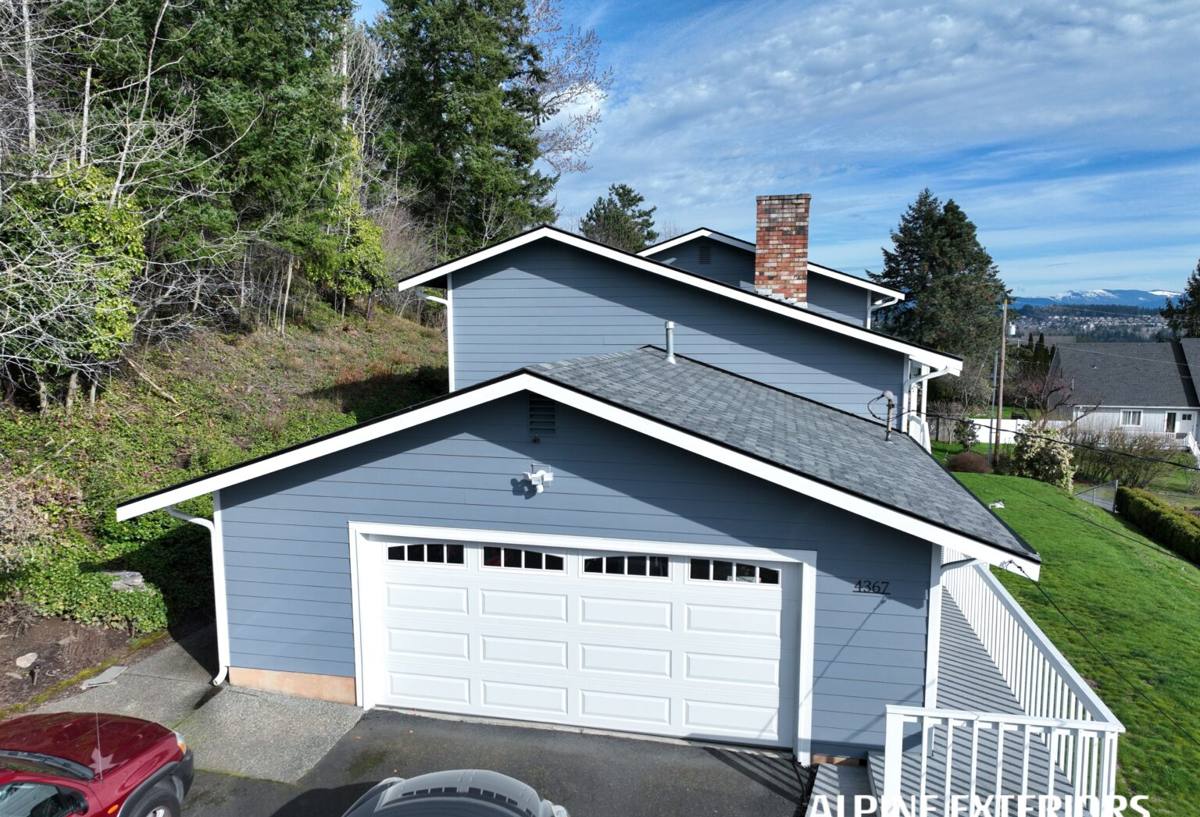
What Storm Damage Actually Looks Like Here
Storm damage on a Point Roberts roof doesn't always show up as an obvious hole or a missing shingle. A lot of it is quieter than that, and homeowners often don't notice it until there's a stain on a ceiling or ice-cold air coming through an attic vent.
Wind Damage
Wind coming off open water doesn't gust the same way wind does behind a treeline or a row of buildings. It's steadier and it gets under roofing edges — starting at ridge caps, rake edges, and any spot where flashing or fasteners have loosened over time. Once wind lifts an edge even slightly, every following rain event pushes water further under the material.
Wind-Driven Rain
Driving rain doesn't need a hole to get into a roof system — it just needs a gap. Rain pushed sideways by wind finds its way under improperly lapped shingles, around vent boots, and along valleys where water volume is highest. This is one of the most common causes of interior leaks that show up well after the storm has passed.
Moss and Trapped Moisture
Whatcom County's moss season runs long, and Point Roberts' damp, shaded, salt-air conditions are close to ideal for it. Moss holds moisture against the roofing surface, works its way under shingle tabs, and can lift material enough that wind and rain finish the job moss started. A roof that looks intact from the ground can still have moss doing quiet structural damage underneath.
Salt Air Corrosion
Metal components — flashing, fasteners, vent stacks, gutter hardware — corrode faster this close to salt water. Corroded fasteners lose their grip, corroded flashing develops pinholes, and both failures are common contributors to storm damage that looks worse than it should for the age of the roof.
What a Correct Storm Damage Repair Involves
A proper repair starts with figuring out what actually failed and why — not just covering the spot that's leaking. We look at the roofing material itself, but also the flashing, underlayment, ventilation, and any moss or debris that contributed to the failure. Skipping that step is how homeowners end up with a repair that looks fine for a season and then fails again in the same spot.
- Roof and attic inspection to confirm the source of the leak or damage — water travels, so the stain and the entry point are often not in the same place
- Removal of damaged, lifted, or moss-compromised roofing material back to sound material, not just the visibly broken piece
- Inspection and repair or replacement of underlayment where water has gotten underneath
- Flashing repair or replacement at valleys, chimneys, vents, and roof-to-wall transitions — a frequent failure point in wind events
- Re-fastening or replacing corroded hardware appropriate for salt-air exposure
- Matching replacement material as closely as possible so the repair doesn't stand out
- Moss treatment and debris clearing so the same failure doesn't repeat next season
- A check of attic ventilation, since poor airflow accelerates both moss growth and moisture damage from the inside
Repair vs. Replacement: How We Make That Call
Not every storm-damaged roof needs to be replaced, and we don't default to recommending replacement just because it's a bigger job. The honest answer depends on the roof's age, how widespread the damage is, and what condition the material is in under the surface.
| Situation | Usually Repair | Usually Replace |
|---|---|---|
| Localized wind or storm damage | Yes, if surrounding material is sound | Only if damage is widespread across multiple areas |
| Roof age | Under 12–15 years, good general condition | Nearing or past expected service life |
| Moss damage | Caught early, limited to surface and edges | Long-term moss has compromised underlayment broadly |
| Flashing failure | Isolated points (chimney, valley, vents) | Widespread corrosion across the roof |
| Interior leak history | First occurrence, single source found | Repeated leaks in different spots over time |
We'll walk you through what we find and why we're recommending one path over the other. If a repair is the honest answer, that's what we'll propose — a bigger job isn't a better job if it isn't the one your roof needs.
Why the Point Roberts Location Matters for the Work Itself
Point Roberts' geography isn't just a factor in roof wear — it's a factor in how repair work gets scheduled and done. Access to the community means routing through the border, which affects timing for material delivery and crew scheduling in a way that doesn't apply to jobs elsewhere in Ferndale or Whatcom County. A crew that's done work out there before knows to plan around that instead of discovering it mid-project.
It also matters for material choices. Fasteners, flashing, and sealants that hold up fine twenty miles inland can corrode or degrade faster this close to salt water. We spec repair materials for the exposure the roof is actually going to see, not a generic inland standard.
Our Process for a Point Roberts Storm Damage Call
- Assessment. We inspect the roof and, where accessible, the attic to find the actual source of damage — not just the symptom.
- Honest scope. We tell you plainly whether you're looking at a repair, a larger repair, or a conversation about replacement, and why.
- Written estimate. No pressure, no vague numbers — a clear scope of work and cost before anything happens.
- Scheduling that accounts for access. We plan material delivery and crew time around Point Roberts' logistics up front, so the job isn't held up mid-way.
- Repair work. Damaged material removed, underlying structure checked, flashing and fasteners addressed, replacement material matched where possible.
- Follow-up review. We walk the finished repair with you and flag anything else worth watching, like early moss regrowth or aging flashing nearby that isn't failed yet but is worth keeping an eye on.
Preventing the Next Storm From Doing the Same Damage
A storm damage repair is a good moment to reduce the odds of a repeat call. A few things make the biggest difference for homes in this kind of exposure:
- Keep gutters and valleys clear so wind-driven rain has somewhere to go instead of backing up under roofing edges
- Treat moss before it establishes rather than after it's visibly thick — early treatment is far less invasive than late-stage removal
- Have flashing and fastener condition checked periodically, especially after any named windstorm
- Confirm attic ventilation is adequate — trapped moisture from the inside accelerates the same damage storms cause from the outside
- Address small leaks immediately; a stain that seems minor now is often evidence of an entry point that will get worse with the next storm
What Homeowners Should Watch For Between Storms
You don't need to climb on the roof to keep an eye on things. From the ground or the attic, a few signs are worth acting on:
- Granules collecting in gutters or at downspout outlets
- Visible moss growth, especially on north-facing or shaded slopes
- Any daylight visible through the roof deck from inside the attic
- Water stains on ceilings or attic framing, even faint ones
- Shingle edges that look lifted or curled compared to the rest of the roof
- Rust streaks below flashing or vent stacks
Catching any of these early usually means a smaller, less expensive repair — and one less thing to worry about the next time a windstorm comes through off the water.
If you're dealing with storm damage on a Point Roberts roof, or you just want an honest look at where things stand before the next storm season, we're glad to come take a look. The estimate is free, there's no pressure to move forward, and you'll get a straight answer about what the roof actually needs — use the form below to get started.