 Ferndale Siding
 Siding Installation in Nooksack: What Local Homes Are Up Against
Nooksack sits in a part of Whatcom County where the weather doesn't do a home any favors. Between the driving rain that blows in off the Sound, the damp air that settles into the valley overnight, and a moss season that seems to start earlier every year, exterior siding here works harder than it does almost anywhere else in the state. When we install siding in Nooksack, we're not just matching a color to a house — we're building an envelope that has to shed water, resist rot, and hold its finish through decades of exactly this kind of weather.
A lot of the siding problems we get called out to inspect in this area didn't start as siding problems. They started as installation problems — a missed flashing detail, caulk used where a gap should have been left, siding nailed too tight against a foundation — that only became visible once a few Whatcom County winters had a chance to work on them. Getting the installation right the first time is the single biggest factor in whether a home's siding lasts 10 years or 40.
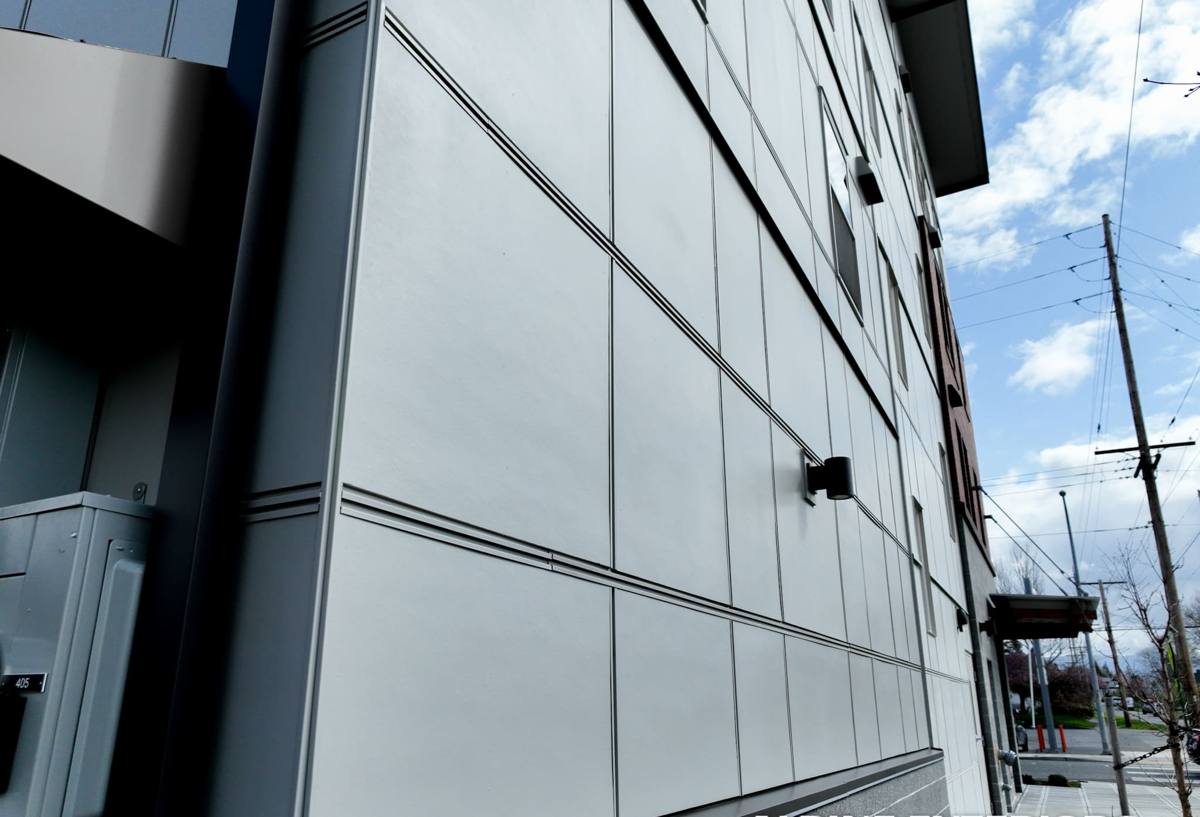
What the Nooksack Climate Does to Siding Over Time
Three things define this region's demands on exterior materials, and they compound each other:
- Salt-influenced, moisture-heavy air. Even away from the immediate waterfront, Whatcom County's marine climate keeps humidity elevated most of the year. Materials that aren't engineered for constant moisture exposure absorb it, swell, and eventually fail from the inside out.
- Driving, wind-blown rain. This isn't gentle vertical rainfall. Storms here push water sideways into wall assemblies, which means siding, flashing, and trim all have to work together as a system — not just look good individually.
- A long moss and algae season. Shaded, damp exteriors in this part of the state can stay wet for days after a storm passes. Moss and algae take hold on any surface that doesn't dry out or shed water cleanly, and they hold moisture against the siding once they do.
None of these factors are dramatic on their own. Together, over years, they're what separates a siding job that still looks sharp at year 20 from one that's cupping, staining, or rotting at year 8.
Why This Matters More Than People Expect
Homeowners moving to Nooksack from drier climates are often surprised by how fast an under-built exterior shows wear here. It's not that the materials are bad in general — it's that this specific climate finds every weakness in a product or an installation faster than most parts of the country would.
What a Correct Siding Installation Actually Involves
Siding is a system, not a single product. A correct installation in this climate covers every layer between the framing and the finished surface:
- A properly lapped weather-resistive barrier behind the siding, installed so water is directed out and down, never trapped in.
- Flashing at every window, door, and horizontal transition — the single most common failure point we find on older Nooksack homes.
- Correct fastener type, spacing, and depth for the specific siding product, following the manufacturer's installation instructions rather than generic practice.
- Proper clearance at the foundation, roofline, and any deck or porch attachment so siding never sits in standing water or constant shade-dampness.
- Caulk used only where it belongs — sealing the wrong joints traps moisture instead of releasing it, which is one of the fastest ways to cause hidden rot.
Skipping or rushing any one of these doesn't usually cause an immediate problem. It causes a slow one — which is worse, because by the time it's visible, the damage is often already inside the wall.
Why We Only Install James Hardie Fiber Cement
We made a deliberate decision to install one siding system: James Hardie fiber cement, in the HZ product lines engineered for this climate zone. We don't install vinyl, LP SmartSide, Cemplank, Allura, primed wood, or cedar. That's not a marketing position — it's a standard we hold because of what we've seen this specific climate do to materials over time.
Fiber cement is non-combustible, dimensionally stable, and doesn't absorb and release moisture the way wood-based or wood-fiber products do. James Hardie's ColorPlus finish is baked on at the factory under controlled conditions, which gives it a more consistent, longer-lasting bond than field-applied paint — a real advantage in a region where a house might only get a handful of dry painting days a year. Hardie also backs the product with a strong, transferable limited warranty, which matters to us because we're the ones who have to stand behind the installation.
We're upfront that other products have their own merits and their own fan base among contractors. Our choice to specialize in one system isn't a judgment on every homeowner's past decision — it's simply what we've found holds up best, installed correctly, against Nooksack's rain, humidity, and moss pressure.
Our Installation Process, Step by Step
- On-site assessment. We walk the exterior, check existing siding and trim condition, and look at moisture history — staining, soft spots, moss buildup — before recommending anything.
- Detailed estimate. You get a written scope covering materials, prep work, flashing and moisture-barrier details, and timeline — no vague allowances.
- Tear-off and inspection. Once old siding comes off, we inspect the sheathing underneath. Hidden rot or damage gets addressed before anything new goes up — this is where we can catch problems the old siding was hiding.
- Weather barrier and flashing. This layer gets as much attention as the visible siding, since it's what actually keeps water out of the wall long-term.
- Hardie installation to manufacturer spec. Correct fastening, clearances, and joint treatment, following James Hardie's published installation requirements for this climate zone.
- Final walkthrough. We review the finished work with you and point out anything you should know for long-term maintenance.
Comparing Siding Options for a Nooksack Home
| Factor | James Hardie Fiber Cement | Vinyl | Wood / Primed Spruce |
|---|---|---|---|
| Moisture resistance | Engineered for wet, humid climates | Doesn't absorb water, but can warp and gap | Absorbs moisture, prone to rot without upkeep |
| Finish durability | Factory-baked ColorPlus finish | Color molded in, can fade unevenly | Field-applied paint needs recoating |
| Fire resistance | Non-combustible | Combustible | Combustible |
| Moss/algae resistance | Dense surface resists buildup | Can trap moisture at seams | Porous surface, moss takes hold easily |
| Typical maintenance | Periodic wash, minimal upkeep | Low, but cracks/fades over time | Regular painting and moisture checks |
This table reflects general product behavior, not every manufacturer's version of each material. It's meant to explain why we standardized on one system rather than to make blanket claims about every product on the market.
Signs Your Nooksack Home Needs New Siding
- Persistent moss or algae staining that returns within weeks of cleaning
- Soft, spongy, or bubbling spots when you press on the siding
- Visible gaps, warping, or cupping boards
- Paint that's peeling or blistering faster than it should
- Rising energy bills that suggest the wall assembly isn't sealing well anymore
- Siding that's simply original to a home built decades ago and never replaced
Any one of these on its own might just need a repair. Several together, especially on a home with older wood or composite siding, usually means it's time to talk about full replacement.
What Drives the Cost of a Siding Installation
| Factor | Why It Matters |
|---|---|
| Home size and wall complexity | More corners, gables, and dormers mean more cutting and flashing detail |
| Existing wall condition | Sheathing repair or rot remediation adds labor before new siding goes up |
| Siding profile and trim package | Lap width, trim style, and accent details affect material and labor |
| Tear-off scope | Full removal of old siding versus a simpler re-side situation |
| Access and site conditions | Sloped lots, tight setbacks, or landscaping can affect staging and time |
We don't publish flat prices because these factors genuinely change project cost from one home to the next — but we'll walk you through exactly how they apply to your house before you commit to anything.
Why Hire a Crew That Already Works in Nooksack
Installation quality is the difference between siding that performs and siding that just looks good on installation day. A crew that regularly works Whatcom County homes already knows how local wall assemblies are typically built, what moisture patterns show up in this area, and where older homes tend to have hidden issues behind the siding. That familiarity shows up in fewer surprises during tear-off and a tighter, more weather-ready installation once the new siding goes on.
It also matters after the job is done. A local company is the one you can actually reach if a question comes up five years down the road — not a crew that passed through once and moved on.
If you're considering new siding for a home in the Nooksack area, we're happy to take a look and give you a straightforward, no-pressure estimate — just fill out the form below.