 Ferndale Siding
 Building Decks That Actually Hold Up Around Nooksack
Nooksack-area homes near Ferndale sit in one of the more demanding stretches of Whatcom County for outdoor structures. You've got salt-tinged air drifting in off the bay, long stretches of driving rain from fall through spring, and a moss season that seems to start earlier every year and last longer than anyone would like. A deck built without those three things in mind doesn't fail dramatically — it fails slowly, one soft board and one green stain at a time, until a homeowner is looking at a full rebuild years before they should have to.
We build custom decks specifically with this climate in mind, not as an afterthought. That means different fastener choices, different ledger flashing details, different framing spacing, and a maintenance conversation up front so you know exactly what you're signing up for. This page walks through what that actually looks like for a deck project in the Nooksack area — not generic deck-building advice, but the specifics that matter here.
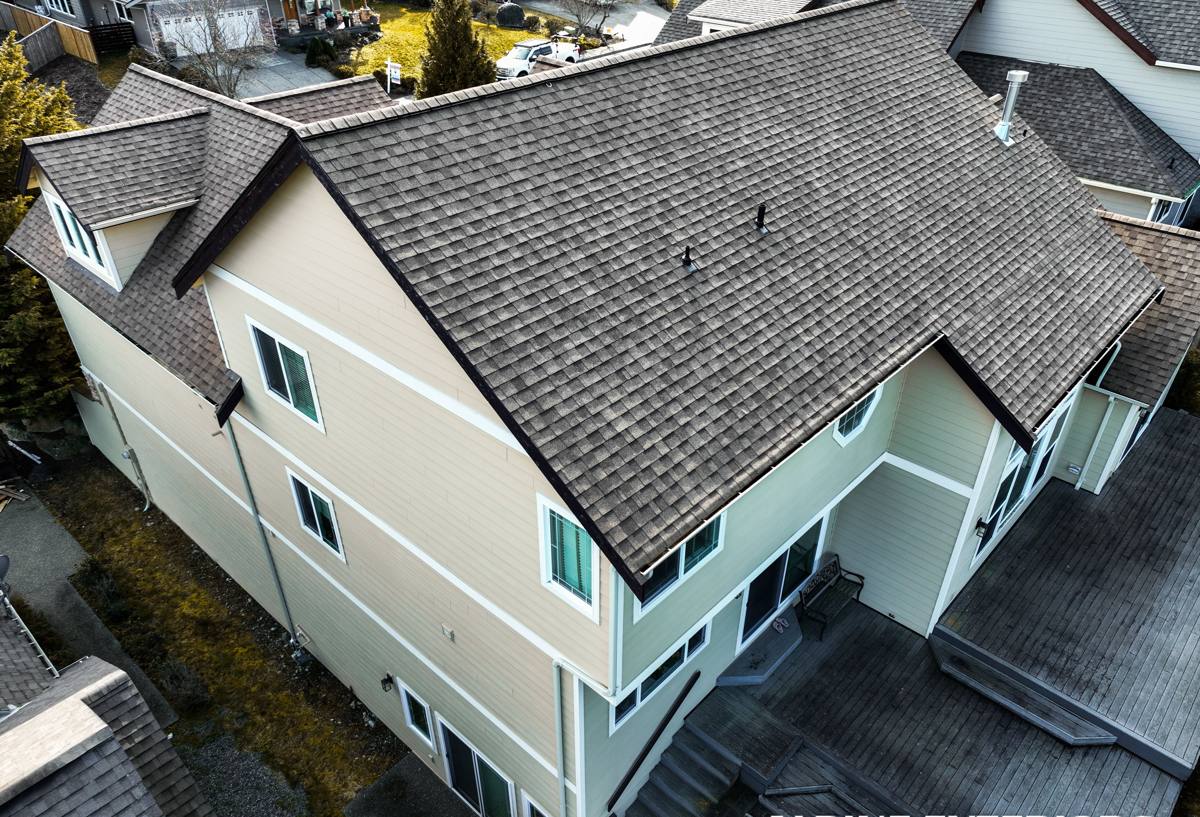
What Local Conditions Do to an Unprepared Deck
Three things drive almost every deck problem we see in this part of Whatcom County:
Salt-Influenced Air
Even a few miles inland from Bellingham Bay, moisture carries a faint salt content that accelerates corrosion on cheap or improperly rated fasteners. Standard interior-grade screws or under-spec galvanized hardware will start rusting and staining lumber within a couple of seasons. Once a fastener corrodes, it loses holding strength long before it looks obviously bad — which is exactly why fastener selection isn't a detail you skip.
Driving Rain
Rain here doesn't just fall — it comes in at an angle during winter storms, which pushes water into joints, under ledger boards, and behind poorly flashed connections that would stay dry in a calmer climate. Any deck attached to the house needs flashing detailed like the exterior siding above it, because water finds the same weak points a roof or wall would.
Moss and Sustained Dampness
Whatcom County's moss season isn't a cosmetic issue — it's a moisture-retention issue. Moss holds water against decking and framing far longer than bare wood would dry on its own, which is what actually causes rot, not the moss itself. A deck with poor airflow underneath, tight board spacing, or shaded northern exposure will grow moss faster and stay wetter longer than a deck built with drainage and airflow in mind from the start.
Decking Material Options for This Climate
There's no single "best" decking material — there's a best material for your budget, your maintenance appetite, and how much shade and moisture your specific yard gets. Here's how the common options actually perform locally:
| Material | Moss/Moisture Resistance | Maintenance | Typical Lifespan Here |
|---|---|---|---|
| Pressure-treated lumber | Good if sealed regularly; moss gets a foothold if neglected | Re-sealing every 1-2 years, regular cleaning | 15-20 years with upkeep |
| Cedar | Naturally rot-resistant, but still needs sealing against sustained damp | Annual cleaning, periodic oiling/staining | 15-25 years with upkeep |
| Composite decking | Excellent — doesn't absorb water or feed rot, though moss can still grow on the surface film | Periodic washing to clear moss/algae film; no sealing or staining | 25-30+ years, manufacturer-warrantied |
| PVC decking | Excellent moisture resistance, fully synthetic | Lowest — occasional washing | 25-30+ years, manufacturer-warrantied |
We install all of the above. What we won't do is talk a homeowner into a low-grade composite or an under-spec pressure-treated board just to hit a lower number, because in this climate the cheap version of any material is the one that comes back to bite you fastest — usually in the form of surface flaking, moisture wicking at cut ends, or fastener staining that shows up within a year or two.
The Structural Details That Actually Matter
The decking surface is the part everyone sees, but the framing underneath is what determines whether a deck lasts 10 years or 30. For Nooksack-area builds, we pay particular attention to:
- Ledger flashing: Where the deck attaches to the house, we integrate flashing with the existing siding and house wrap so water is directed out and away, not trapped behind the connection.
- Fastener grade: Stainless steel or high-grade coated fasteners rated for coastal-influenced exposure, not standard interior hardware.
- Joist spacing and blocking: Tighter spacing where composite or PVC decking requires it, proper blocking at board ends to prevent sag over time.
- Footings below frost and drainage depth: Set deep enough and positioned so standing water doesn't pool against the post base.
- Airflow underneath: Enough clearance and, where grade allows, drainage gravel or grading so the underside of the deck actually dries out between rain events instead of staying damp for weeks.
- Board gapping: Correct spacing between boards so water sheds through instead of sitting on the surface — a small detail that has an outsized effect on moss growth.
How We Approach a Nooksack Deck Project
Every property is different, but the process stays consistent:
- On-site assessment: We look at sun exposure, drainage, grade, and how the deck will tie into the house — including how existing siding and flashing are handled nearby.
- Design and material walkthrough: We talk through decking material, railing style, and layout, with honest trade-offs on cost, maintenance, and expected lifespan for your specific yard conditions.
- Permitting: Most deck projects in Whatcom County require a permit, especially anything attached to the house or elevated above a certain height. We handle that process rather than leaving it to the homeowner.
- Framing and flashing: This is where the climate-specific details above get built in — ledger flashing, fastener selection, joist layout.
- Decking, railing, and finish work: Surface installation, railing to code, and any stairs or lighting.
- Final walkthrough: We go over maintenance expectations for whatever material you chose, so there are no surprises in year two or three.
Permitting and Code in Whatcom County
Deck permitting requirements depend on height, size, and whether the structure attaches to the house, and Whatcom County and the City of Ferndale both have their own review processes depending on the property's location. Rather than guessing at requirements, we pull the correct permit for your specific project and build to the inspected structural standard — footings, guardrail height, stair geometry, and attachment details all get checked. Skipping this step is one of the more common ways homeowners end up with a deck that can't be sold or insured cleanly later.
Keeping Moss and Moisture From Winning
No deck in this climate is entirely maintenance-free, but the right build minimizes what you have to do. A basic seasonal checklist we give clients:
- Clear leaves and debris from between boards and off the surface before fall rains set in
- Wash the deck surface once or twice a year to remove early moss and algae film before it establishes
- Check and clear any drainage gaps or gravel beds underneath the deck each spring
- For wood decks, inspect the sealant/stain coat annually and reapply before it visibly wears through
- Look at fastener heads periodically for early rust staining, which signals a hardware issue worth addressing before it spreads
- Trim back overhanging vegetation that keeps sections of the deck shaded and damp longer than the rest
Why a Crew That Already Works This Area Makes a Difference
A deck contractor who mostly works drier inland climates will often under-detail flashing, under-spec fasteners, or skip drainage considerations that don't matter where they're used to building — not out of carelessness, but because it's not the problem they're used to solving. Working regularly in Ferndale and the surrounding Whatcom County communities means we're not guessing at how salt-influenced air, sustained rain, and moss actually behave here — we're building around known local failure points from the start, not learning them after a callback.
We also know the local permitting contacts and inspection expectations, which keeps projects moving instead of stalling on paperwork or rework after a failed inspection.
What a Realistic Budget Looks Like
Deck costs vary widely based on size, material, elevation, railing style, and site access, so we won't put a fake number on this page that doesn't apply to your yard. What we can say honestly: pressure-treated framing with composite or PVC decking generally costs more upfront than an all-wood build, but the maintenance savings and lifespan difference usually make up the gap over 10-15 years. Cedar sits in between — a nicer look than treated lumber with more upkeep than composite. The right answer depends on how long you plan to be in the home and how much maintenance time you actually want to spend on it.
Get a Straightforward Estimate
If you're planning a new deck or replacing one that's shown its age faster than it should have, we're happy to come take a look, walk the site with you, and give you an honest read on materials and cost — no pressure, no upsell. Fill out the form below to request a free estimate for your Nooksack-area deck project.