 Ferndale Siding
 Building New Out on the Peninsula Is Not the Same Job as Building Inland
A new-construction window install in Lummi Nation has to answer to a different climate than a build a few miles inland in Ferndale proper. Out here, homes sit close to Bellingham Bay and the Strait of Georgia, which means salt-laden air, wind-driven rain that comes at the wall sideways instead of straight down, and a moss season that runs long and heavy on anything shaded or north-facing. None of that is a reason to worry — it's just a reason to get the window install right the first time, because this is the one stage of a build where mistakes get buried behind trim, siding, and drywall before anyone notices them.
This page is about one job specifically: installing windows into a new-construction rough opening — not popping old units out of an existing wall. New-construction windows use a nailing flange that ties directly into the framing and the weather-resistive barrier, which gives us full control over how water is managed around the opening from the studs out. Done correctly, on a Whatcom County shoreline lot, that's the difference between windows that are still tight and dry in fifteen years and windows that start showing staining, soft trim, or interior moisture within the first few winters.
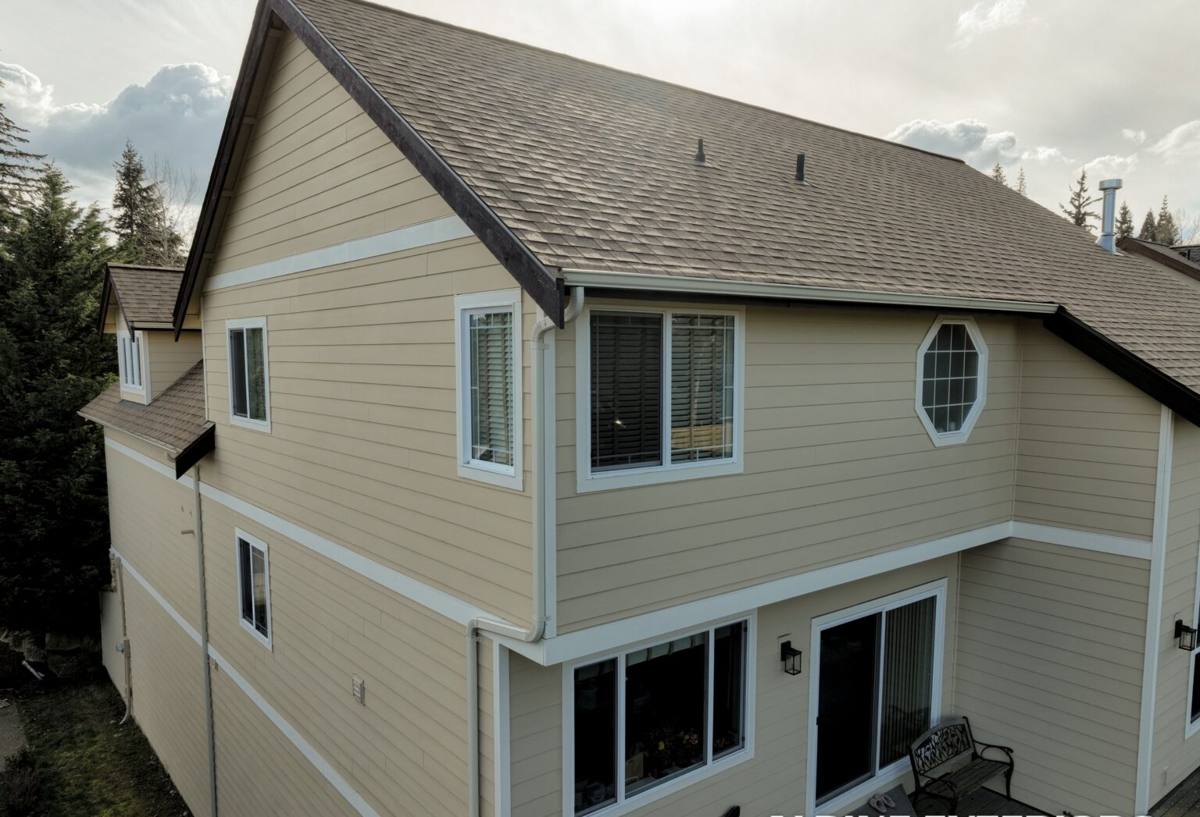
What Salt Air, Driving Rain, and Moss Actually Do to a Window Opening
Salt Air and Hardware
Airborne salt is corrosive to unprotected metal, and it doesn't stay near the water — wind carries it inland across Lummi Nation lots year-round. Window hardware, screen frames, and fasteners that aren't rated for coastal exposure will pit and corrode faster here than the same products would in a landlocked town twenty miles east. This shows up first as sticky locks, streaked staining below hinges and cranks, and eventually hardware that won't operate smoothly.
Wind-Driven Rain
Rain that's pushed sideways by wind off the water finds gaps a straight-down rain never would. It drives up under sills, behind trim, and into any flashing lap installed backwards or left short. A window that would perform fine in a calm rainstorm can still leak here if the flashing sequence at the sill and jambs isn't built to shed water outward under wind pressure, not just gravity.
Moss and Shade
Many Lummi Nation lots carry heavy tree cover, and combined with our marine humidity, that means moss and algae growth on anything that stays damp and shaded — sills, exterior trim, and the tops of window frames included. It's mostly a maintenance and appearance issue rather than a structural one, but moss holds moisture against wood trim and caulk joints longer than a clean, well-drained surface would, which shortens the life of both.
New-Construction Windows vs. Retrofit Replacement — Why the Method Matters Here
New-construction and retrofit windows aren't interchangeable, and using the wrong install method on a new build is one of the more common corners cut on jobs we've been called in to fix later. New-construction (nail-flange) windows fasten to the framing and get integrated into the weather-resistive barrier and flashing system before siding goes on — that's the correct method for a new build, and it's the only method that lets us build a proper drainage plane around the opening from scratch.
| Install Type | How It's Set | Best Used For | Water Management Control |
|---|---|---|---|
| New-Construction (Nail-Flange) | Flange fastens to framing, integrated into WRB/siding before finish work | New builds, additions with open framing | Full — sill pan, flashing laps, and WRB are built together |
| Retrofit/Insert (Pocket) | New sash frame inserted into the existing window frame, no flange | Replacing an old window without removing siding/trim | Limited — depends entirely on the condition of the existing opening |
| Block-Frame Replacement | Old frame removed down to the rough opening, new frame set and flashed | Replacements where the old flashing has failed | Good — close to new-construction control, more labor |
On a new build in Lummi Nation, there's no excuse to use anything but a proper new-construction install. The framing is open, the WRB isn't buried yet, and this is the one chance to get sill pans, flashing laps, and flange fastening built correctly before siding closes it all up.
What a Correct New-Construction Window Install Involves
The window unit itself is only part of the job. What actually determines whether a window stays dry for decades is the sequence of flashing and drainage work around it — most of which is invisible once the house is finished.
- Rough opening check. Confirm the opening is square, plumb, and sized correctly before the window ever goes in. A racked opening stresses the frame and can bind hardware for the life of the window.
- Sill pan flashing. A sloped, sealed pan under the sill so any water that gets past the window sheds back outside instead of sitting on the framing.
- Weather-resistive barrier integration. The WRB is cut and lapped in the correct shingle-style sequence — bottom to top — so water draining down the wall is always directed over, not behind, each flashing layer.
- Setting the window. Unit is set into the pan, shimmed plumb, level, and square, and fastened through the nailing flange per the manufacturer's schedule — not just at the corners.
- Head and jamb flashing. Flashing tape or metal head flashing laps over the top of the window and ties into the WRB above it, with jamb flashing tying in at the sides.
- Sealant at the right joints only. Sealant belongs at specific joints, not smeared everywhere — over-sealing a window's bottom edge can trap water inside the wall instead of letting it drain.
- Interior air sealing. Low-expansion foam or backer rod and sealant around the interior gap keeps conditioned air in and drafts out, without bowing the frame.
Every one of those steps has to be done in order. Skip the sill pan or reverse a flashing lap, and the window can look perfectly installed for years before a wind-driven rain event finally finds the gap.
Choosing the Right Window for a Lummi Nation Build
Material and hardware choice matters more here than it would on an inland build, mainly because of salt exposure and the amount of wind-driven rain the wall assembly has to shed.
| Frame Material | Coastal/Salt-Air Performance | Maintenance | Typical Cost Position |
|---|---|---|---|
| Vinyl | Good — won't corrode or rot; hardware quality varies by manufacturer | Low | Lower |
| Fiberglass | Very good — dimensionally stable, resists warping in temperature/moisture swings | Low | Mid to higher |
| Vinyl- or Aluminum-Clad Wood | Depends on cladding integrity — a breach in the cladding exposes wood to moisture and salt | Higher — cladding seams need periodic inspection | Higher |
| Bare Aluminum | Poor without a marine-grade coating — untreated aluminum corrodes and pits near salt water | Moderate | Lower to mid |
A few practical notes specific to this area:
- Ask for corrosion-resistant hardware (locks, hinges, cranks) rated for coastal or marine exposure — standard hardware finishes can start pitting within a few seasons this close to salt water.
- Dual-pane, argon-filled, low-E glass is standard for our climate and helps with both energy performance and condensation resistance during our long damp winters.
- On heavily shaded lots, favor frame colors and finishes that show less staining from moss and organic debris, and plan for the sill and trim to be reachable for periodic cleaning.
- Screens matter more here than people expect — mesh that traps organic debris holds moisture against the frame and accelerates staining.
Our Process on a New Build
We typically come in during framing, once the rough openings are set and before the weather-resistive barrier and siding go on — that timing is what lets us build the flashing and drainage plane correctly instead of working around finished work. On most jobs that looks like this: we walk the rough openings with the builder or homeowner to confirm sizes and window selections, install sill pans and set each window per the sequence above, tie the head and jamb flashing into the WRB as it's installed, and hand off a wall that's ready for siding with the window water management already built in and verified — not assumed.
Because siding is our core trade, we're paying attention to how the window flashing and the siding's own water management will work together as one system, not two separate trades that happen to meet at the same wall. That coordination matters more on a coastal build than almost anywhere else in the county.
Why Hiring a Crew That Already Works This Area Matters
Lummi Nation sits close enough to open water that the wind and rain exposure on a given lot can be noticeably different from a build a few miles away in Ferndale or elsewhere in Whatcom County — a crew that hasn't worked this specific stretch of coastline can miss that. We also know that homes built on Lummi Nation land can involve permitting and inspection steps that differ from standard county jurisdiction, and we plan our schedule and paperwork around that rather than assuming it works like any other lot.
Beyond permitting, it comes down to having actually seen how these conditions play out over time — which sills stain first, which exposures need the extra flashing detail, and which shortcuts show up as callbacks two or three winters later. That's not something a crew picks up on its first job out here.
Questions Worth Asking Any Contractor Before They Start
- Do you install a sill pan on every new-construction window, or only when asked?
- How do you integrate window flashing with the weather-resistive barrier — and can you walk me through the lap sequence?
- What hardware finish do you recommend for a lot this close to salt water?
- Who's responsible if a flashing detail leaks — the window installer or the siding crew — and how is that documented?
- Have you worked new-construction jobs on or near Lummi Nation before, and are you familiar with any permitting differences?
Getting a Realistic Estimate for Your Build
New-construction window costs depend on the number and size of openings, the frame material and glass package you choose, and how much flashing and coordination work is involved with your builder's schedule — there's no honest flat number without seeing the plans. What we can tell you upfront is that the flashing and sill pan work described above isn't an upgrade or an add-on; it's what a correct install looks like on a build exposed to this much salt air and wind-driven rain, and it costs very little extra to do it right during framing compared to fixing it after the walls are closed.
If you're planning a new build in Lummi Nation or anywhere else around Ferndale, we're happy to walk your plans, talk through window selection for your specific lot exposure, and give you a straightforward, no-pressure estimate — just fill out the form below.