 Ferndale Siding
 Siding on the Lummi Nation Has to Answer to the Water
Homes in and around the Lummi Nation sit close to Bellingham Bay and the Nooksack delta, which means the exterior of a house here is doing a different job than a house twenty miles inland. Salt-laden air moves off the water and settles on every north- and west-facing wall. Driving rain off the Strait comes in sideways, not straight down, which pushes water into seams and laps that would stay dry in a calmer climate. And the long gray stretch of fall through spring keeps exterior walls damp long enough for moss and algae to take hold on anything that doesn't shed water and dry out quickly.
None of that is exotic — it's just Whatcom County weather at its most persistent. But it adds up over years, and it's the reason siding choice and installation quality matter more here than in a lot of other places. A product or installation method that's "good enough" in a drier climate can start failing early on a home exposed to salt spray and near-constant moisture.
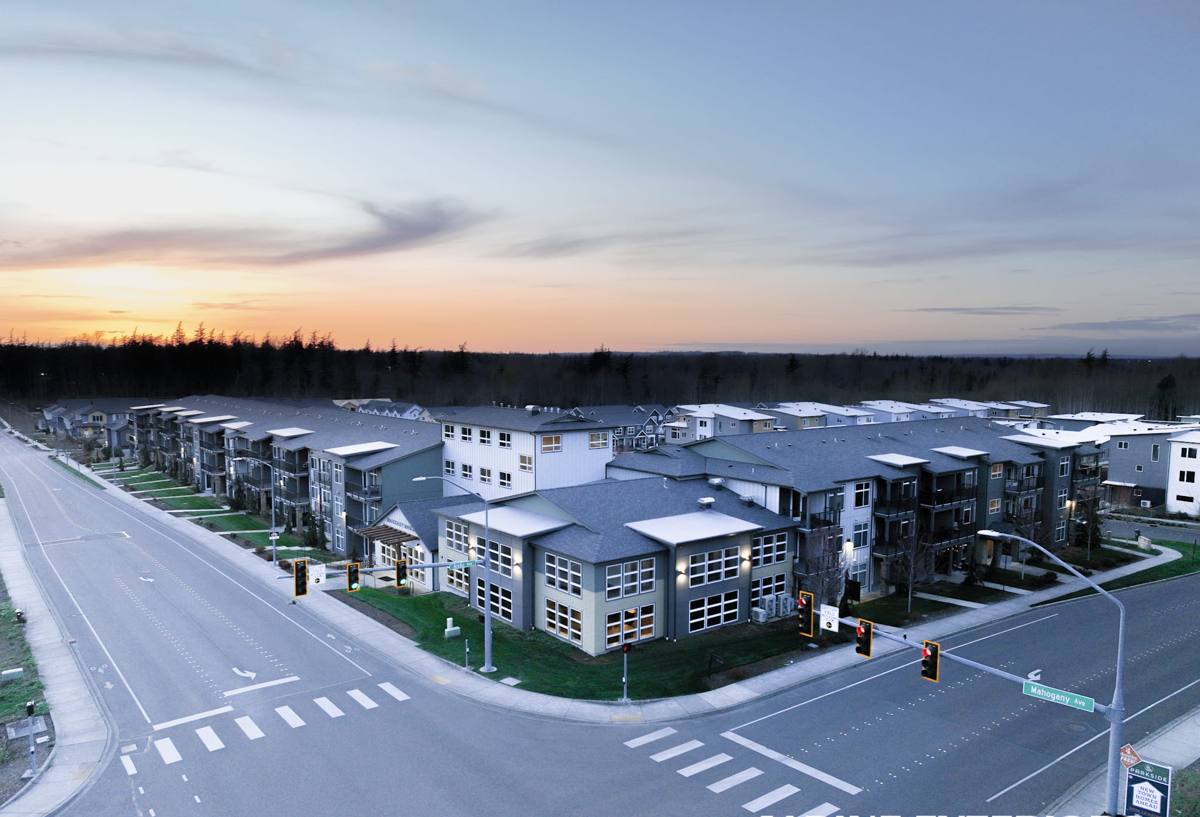
Why We Install James Hardie Fiber Cement Here — and Nothing Else
We are a James Hardie-only siding contractor. We don't install vinyl, LP SmartSide, Cemplank, Allura, primed spruce, or cedar, and on a coastal-exposure job like a Lummi Nation home, that standard matters even more than usual.
- It's non-combustible. Fiber cement doesn't feed a fire the way wood-based products can, which matters for insurance and for peace of mind in a region that sees wildfire smoke and dry-season risk even on the wet side of the state.
- It doesn't rot or delaminate from moisture exposure. Salt air and standing damp are hard on wood fiber products and can cause vinyl to warp, fade, or crack over time. Hardie's cement-based composition holds its shape and doesn't feed fungal growth the way wood-based siding can.
- The factory finish (ColorPlus) is baked on, not brushed on. A factory-cured finish resists the fading and chalking that field-applied paint shows first, especially on walls that take direct salt spray.
- HZ5 engineering. James Hardie makes climate-specific product formulations, and the HZ5 line is built for the kind of freeze-thaw and moisture cycling the Pacific Northwest coast sees. It's the right specification for this exposure, not a generic national default.
We're honest that Hardie is not the cheapest option on day one. It's heavier to install, requires specific fasteners and techniques, and costs more than vinyl up front. What you're buying is a product that's still doing its job in twenty years without needing to be torn off and replaced — which, on a home taking direct salt air, is not guaranteed with lighter-duty materials.
What a Correct Installation Actually Involves
The material is only half the equation. A lot of siding problems we get called out to fix — on any brand — trace back to installation shortcuts, not the product itself. On a salt-air, high-rainfall site, the details below aren't optional extras; they're what keeps water out of the wall assembly.
Water management behind the siding
A correctly built wall has a drainage plane and a rain screen gap behind the siding, not just siding nailed straight to house wrap. That gap lets any moisture that does get past the cladding drain and dry out instead of sitting against the sheathing. On a coastal wall taking regular wind-driven rain, skipping this step is one of the most common causes of hidden rot years later.
Flashing at every penetration
Windows, doors, hose bibs, vents, and deck ledgers are where water gets in. Proper head flashing, kick-out flashing at roof-wall intersections, and sealed penetrations matter far more than the caulk bead most people picture when they think about weatherproofing.
Fastening and clearances to spec
James Hardie publishes specific nailing patterns, fastener types, and minimum clearances from grade, roof lines, and decks. Under-driven or over-driven fasteners, wrong nail spacing, or siding installed too close to the ground are common shortcuts that void the manufacturer warranty and shorten the real-world life of the job — regardless of how good the board itself is.
Joint and butt seam treatment
Every horizontal butt joint is a potential water entry point. Factory-primed or ColorPlus-finished cut ends need to be sealed correctly, and joints should be backed and caulked per manufacturer detail — not just butted together and painted over.
Our Process for a Lummi Nation Job
- On-site assessment. We walk the exterior, check the current siding and sheathing condition, and look specifically at wind exposure, roof-wall intersections, and any existing moisture or moss staining.
- Scope and product selection. We spec the right Hardie product line, HZ5 where appropriate, and confirm trim, fascia, and flashing details before quoting — not after the crew shows up.
- Tear-off and sheathing check. Old siding comes off and we inspect the sheathing underneath for hidden rot before anything new goes up. This step is where problems from a previous installation usually surface.
- Weather barrier and rain screen installation. This is the step that's invisible once the job is done and the step that matters most for long-term performance.
- Hardie installation to manufacturer spec. Correct fastening, clearances, flashing, and joint treatment throughout.
- Final walkthrough. We review the completed exterior with the homeowner and go over basic care before we consider the job done.
Product Lines: What Fits a Coastal Whatcom County Home
| Product | Best Use | Why It Fits Here |
|---|---|---|
| HardiePlank lap siding | Standard wall cladding, most home styles | Widest track record in wet Pacific Northwest climates; pairs well with HZ5 spec |
| HardiePanel vertical siding | Modern or farmhouse-style facades, accent walls | Fewer horizontal joints means fewer potential water entry points |
| HardieShingle | Accent gables, dormers, decorative sections | Traditional look without the moisture issues of real wood shingle |
| HardieTrim | Corners, window and door trim, fascia | Matches the cement-based durability of the field siding instead of mixing in wood trim that weathers differently |
What Affects the Cost of a Job Like This
| Factor | Why It Matters |
|---|---|
| Tear-off scope | Full removal of old siding and disposal adds labor versus a bare-wall new build |
| Sheathing repair | Hidden rot found during tear-off has to be replaced before new siding goes up |
| Wall complexity | Gables, dormers, and multiple roof-wall intersections mean more flashing and cutting |
| Product line and finish | ColorPlus factory finish, trim upgrades, and panel style all shift material cost |
| Access and site conditions | Waterfront lots, tree cover, or limited equipment access can affect labor time |
We give straightforward, written estimates and walk through exactly what's driving the number — no vague allowances buried in the fine print.
Living With It: Maintenance in This Climate
Correctly installed James Hardie siding is genuinely low-maintenance, but "low" isn't "none," especially with salt air and a long moss season working against it year-round.
- Rinse siding down once or twice a year to clear salt residue and organic buildup before it takes hold, especially on north- and west-facing walls.
- Keep gutters clear so overflow doesn't run down the face of the siding and create a constant damp streak where moss and algae get a foothold.
- Trim back vegetation and tree cover that keeps walls shaded and damp longer than the rest of the house.
- Check caulking at trim joints and penetrations every couple of years — caulk is a maintenance item, not a permanent seal.
- Watch for any dark staining or soft spots near ground level or deck ledgers, which can signal a flashing or drainage issue worth catching early.
Why Local, Lummi Nation-Familiar Experience Matters
Every part of Whatcom County shares the same general climate, but exposure varies a lot house to house depending on how close you are to open water and which direction your walls face. A crew that has actually worked on homes in this area understands which walls take the worst of the wind-driven rain, how much salt exposure to plan for, and how badly moss and algae take hold if drainage details are skipped.
Homes on or near the Lummi Nation may also fall under a different permitting process than a typical Ferndale city or unincorporated Whatcom County address, depending on where the property sits. We coordinate whatever approvals actually apply to your specific site rather than assuming one blanket process fits every address in the area — that's a conversation we have with each homeowner up front, not an afterthought.
Questions Worth Asking Before You Hire Anyone for This Job
- Do you install a rain screen or drainage gap behind the siding, or fasten directly to the house wrap?
- What's your flashing detail at roof-wall intersections and around windows?
- Are you following James Hardie's published fastening and clearance specs, and can you show me the cut sheet?
- Have you worked on homes with this level of wind and salt exposure before?
- What does your warranty actually cover — labor, material, or both — and for how long?
If your siding is showing moss staining, soft spots, or you're just planning ahead for a home exposed to Bellingham Bay's weather, we're glad to take a look. Reach out for a free, no-pressure estimate — we'll walk the exterior with you, tell you honestly what we see, and lay out what correct James Hardie installation would look like for your specific home.