 Ferndale Siding
 Composite Decking for Lummi Nation's Waterfront Exposure
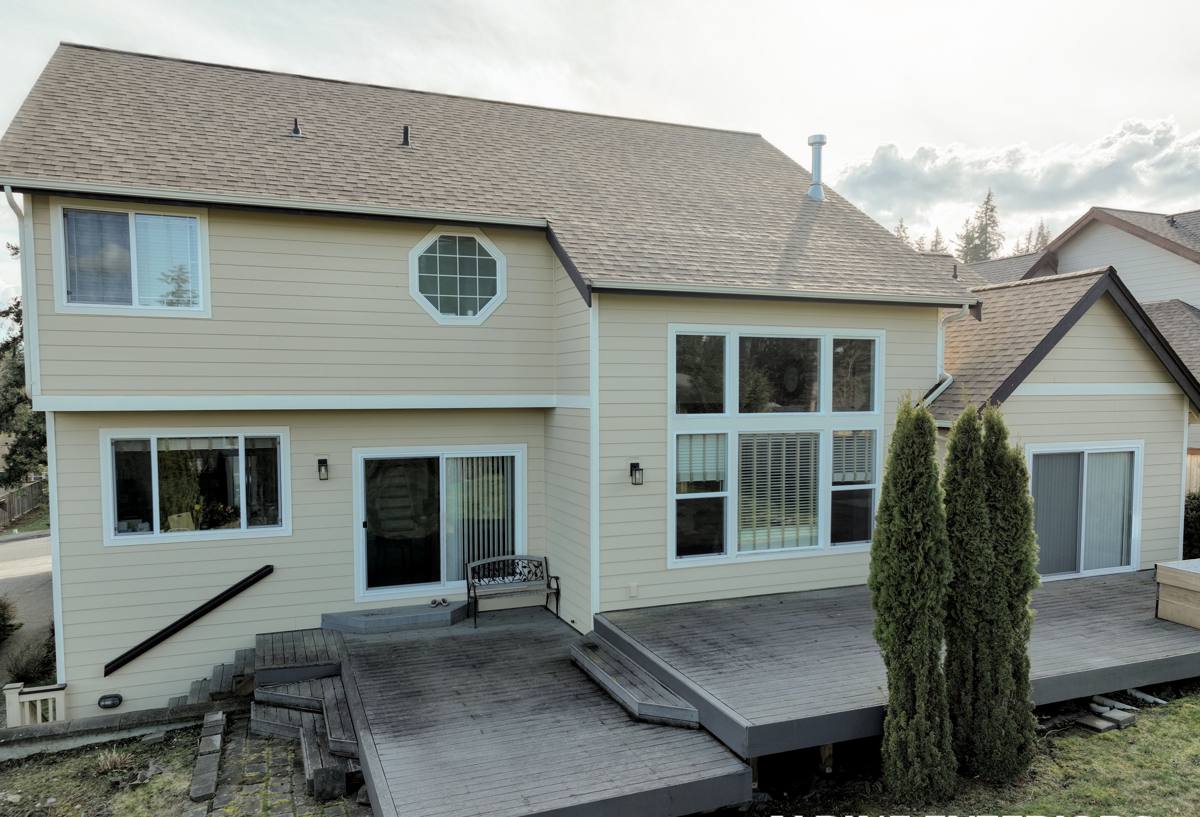
Lummi Nation sits out on the peninsula west of Ferndale, close enough to open water that its homes take a heavier version of the marine exposure the rest of Whatcom County only sees occasionally. Salt-laden air moves in off Bellingham Bay and the Strait more or less constantly, rain arrives sideways as often as it falls straight down, and the combination of dampness and shaded terrain keeps moss and mildew active for most of the year. A deck out here isn't a weekend accessory — it's an exterior structure that has to survive the same conditions that wear down siding and roofing, except it's also horizontal, walked on, and sitting closer to the ground where moisture collects.
Composite decking has become the material we recommend most often for Lummi Nation properties specifically because of how it responds to that exposure compared to solid wood. This page focuses on that one product, in this one location, and what it actually takes to get a composite deck right here.
What This Climate Does to a Deck Over Time
Salt Air and Fastener Corrosion
The closer a property sits to open water, the more salt-laden moisture settles on every exposed surface, including a deck's boards, fasteners, and any metal hardware in the structure below. Standard fasteners and connectors corrode faster under that exposure than they would a few miles inland, and once a fastener starts rusting, it can stain the boards around it and weaken the connection it's supposed to be holding.
Driving Rain and Standing Moisture
Wind off the water pushes rain sideways and underneath a deck's surface more than a calmer inland site would see. That matters because a deck isn't just a top surface — it's a structure with joists, a ledger board, and often a substructure that stays damp for long stretches if it isn't detailed to shed water. Standing moisture at board ends, around post bases, or where the deck meets the house is where deterioration actually starts, not on the open field of the decking itself.
A Long Moss and Mildew Season
Peninsula terrain, partial shade, and near-constant dampness add up to a moss and algae season that runs longer here than in the drier parts of the county. On a wood deck, that growth gets a foothold in the grain itself and has to be scrubbed and treated repeatedly. On any exterior surface, sustained moss growth also holds moisture against the material longer than open air would, which is the condition that leads to rot or decay underneath.
Sun, Salt, and Freeze-Thaw Cycling
Even on the wet side of the state, decking sees real UV exposure in summer, and Whatcom County still gets enough winter freeze-thaw cycling to stress any material that absorbs water. A board that takes on moisture and then freezes is a board that's working against itself every winter. Combined with salt exposure, that's a demanding cycle for anything short of a material built to resist water absorption at the core.
Why Composite Decking Fits This Location
We don't install every decking product on the market. For a Lummi Nation property, the case for composite over pressure-treated wood is stronger than it is almost anywhere else in our service area, simply because the exposure is more constant.
| Factor | Composite Decking | Pressure-Treated Wood |
|---|---|---|
| Moisture absorption | Low — most boards are capped or have a low-absorption core | Higher — wood fiber absorbs and releases moisture with weather cycles |
| Moss and mildew resistance | Surface growth wipes off easily; doesn't penetrate the board | Growth can work into the grain, especially on shaded boards |
| Fastener and hardware exposure | Hidden fastening systems reduce exposed metal on the surface | Surface-nailed or screwed, leaving more hardware exposed to salt air |
| Refinishing needs | None — color is built into the board | Staining or sealing needed every one to three years to hold up here |
| Splintering and cupping | Doesn't splinter; resists cupping under repeated wet-dry cycles | Can splinter and cup as boards absorb and release moisture repeatedly |
| Upfront material cost | Higher | Lower |
| Long-term maintenance cost | Lower — occasional cleaning only | Higher — recurring stain, seal, and board replacement |
Wood decking has a place, and plenty of homeowners maintain it well for years. But on a property that sees this much sustained salt, moisture, and shaded moss growth, we made a professional call: a material that doesn't need refinishing to stay protected is worth more here than a cheaper option that quietly shifts the maintenance burden onto the homeowner every spring.
Not every composite product is built the same, either. We favor boards with a fully capped or protected surface over uncapped or lower-grade composite, since a cap layer is what actually keeps moisture, salt, and staining from working into the board over time. A lower-grade composite without that protection can fade, stain, or take on moisture at a rate that starts to look a lot like wood again after a few seasons.
What Correct Installation Looks Like Here
Choosing the right board only solves half the problem. The other half is what's underneath it, and that's where a lot of deck problems in this area actually start.
Ledger Board and House Connection
The ledger board — where the deck attaches to the house — is the single most important flashing detail on the entire structure. If it isn't properly flashed to shed water away from the house rather than behind the siding, it becomes a direct path for moisture into the wall assembly, which is a problem that shows up as siding or sheathing damage long before anyone traces it back to the deck.
Joist Protection and Fastening
Composite boards are only as good as the frame underneath them. Joist tape or an equivalent moisture barrier over the tops of joists keeps water from sitting on bare framing lumber, which matters more here given how long the wet season runs. Fasteners and hidden fastening systems should be rated for exterior and, ideally, coastal exposure so they aren't the first thing to fail.
Spacing, Drainage, and Airflow
Composite boards expand and contract with temperature more than solid wood does, so gap spacing between boards has to follow the manufacturer's spec, not a guess. Proper spacing also lets water drain through rather than pool on the surface, and keeping airflow open underneath the deck helps the substructure dry out between rain events instead of staying damp for weeks at a stretch.
Post Bases and Footings
Post bases that sit directly on wet ground or in standing water accelerate corrosion of the hardware and can undermine the footing over time. Proper post base hardware, correct footing depth for our frost line, and drainage away from the base all matter more on a peninsula lot where the ground stays saturated longer than it would a few miles inland.
Our Process for a Lummi Nation Deck Project
- On-site walk-through: We look at the existing deck or the proposed site, the home's siding and roofline where the deck connects, drainage patterns, and sun and shade exposure across the day.
- Design and material selection: We talk through board options, color, and layout, and explain the trade-offs between composite grades honestly rather than steering toward whatever costs more.
- Written estimate: A clear, itemized estimate covering materials, framing work, ledger flashing, and any substructure repair the walk-through turned up.
- Demolition and framing: Removal of the old structure if applicable, then framing or reframing built to current code and rated for this area's wind and moisture exposure.
- Ledger flashing and waterproofing: Correct flashing at the house connection before anything else goes on, since this is the detail most likely to cause hidden damage if it's rushed.
- Decking installation: Boards installed to manufacturer spec for spacing, fastening, and hidden fastener systems where applicable.
- Final walk-through: A final look at the completed deck together, including drainage, railing, and any trim or fascia detail.
Cost Factors for a Composite Deck on Lummi Nation
| Factor | What It Affects | Why It Matters Here |
|---|---|---|
| Deck size and layout | Material quantity and labor hours | Straightforward math, but complex layouts around trees or grade changes add time |
| Composite grade | Board and material cost | Fully capped boards cost more upfront but hold up far longer under this exposure |
| Existing structure condition | Whether framing is reused, repaired, or replaced | Older decks near the water often have hidden joist or ledger damage once opened up |
| Ledger and flashing scope | Waterproofing labor and materials | A poorly flashed ledger is one of the more common sources of hidden wall damage in this area |
| Height and railing requirements | Structural and code requirements | Elevated decks on sloped waterfront lots need engineered railing and post connections |
| Site access | Labor time and equipment needs | Peninsula lots can have tighter access, steeper grades, or limited staging room |
Exact numbers depend on the property, which is why we walk the site in person before giving a real figure rather than quoting off a flat price list.
Signs Your Current Deck Needs Attention
- Soft, spongy, or spring-feeling boards, especially near the house or at board ends
- Moss or dark staining on the deck surface or on the framing underneath that returns quickly after cleaning
- Rusting fasteners, corroding brackets, or hardware that's visibly deteriorating
- Gaps, cupping, or warping in wood boards that weren't there a year or two ago
- Staining on the siding directly above the ledger board connection
- A railing or post that feels loose or moves under pressure
- Standing water on the deck surface after rain instead of proper drainage
Why a Crew That Already Works Lummi Nation Matters
A crew that works this stretch of Whatcom County regularly has a feel for how salt air, driving rain, and a long moss season behave on real decks over a full year, not just how a product performs on a manufacturer's data sheet. That experience shapes decisions on install day: how much drainage slope to build in, where extra flashing attention actually pays off, and which fastener and hardware upgrades are worth the added cost given how close the property sits to open water. Lummi Nation's waterfront exposure means its decks see a more constant version of the same conditions the rest of Ferndale deals with, and a crew with local, hands-on experience treats that seriously rather than building the same deck they'd build on a sheltered inland lot.
Get an Honest Look at Your Deck Project
Whether you're replacing an aging wood deck, building new, or just want an honest opinion on whether your current deck is holding up the way it should, we're glad to take a look. Reach out using the form below to schedule a free, no-pressure estimate.