 Ferndale Siding
 Windows on Lummi Island Take a Different Kind of Beating
A window that performs perfectly fine in a sheltered inland neighborhood can fail early on Lummi Island. The island sits out in the water, exposed to wind off the Strait, salt-laden air, and driving rain that comes in sideways during fall and winter storms. Add in a shaded, damp shoulder season that keeps moss and algae established on north-facing walls and trim for months at a time, and you have a climate that is genuinely harder on window units, frames, and finishes than most of mainland Whatcom County. Custom window work here isn't just about picking a style you like — it's about choosing materials, hardware, and installation details that are matched to salt exposure, wind-driven rain, and the island's own logistics.
We work on Ferndale homes daily, and Lummi Island jobs are part of that same territory. This page covers what actually matters for a custom window project out there: what the climate does to windows over time, what "custom" really means for an island house, how we handle materials and installation to keep water out, and what to expect from our process given that getting a crew and materials to the island takes real planning.
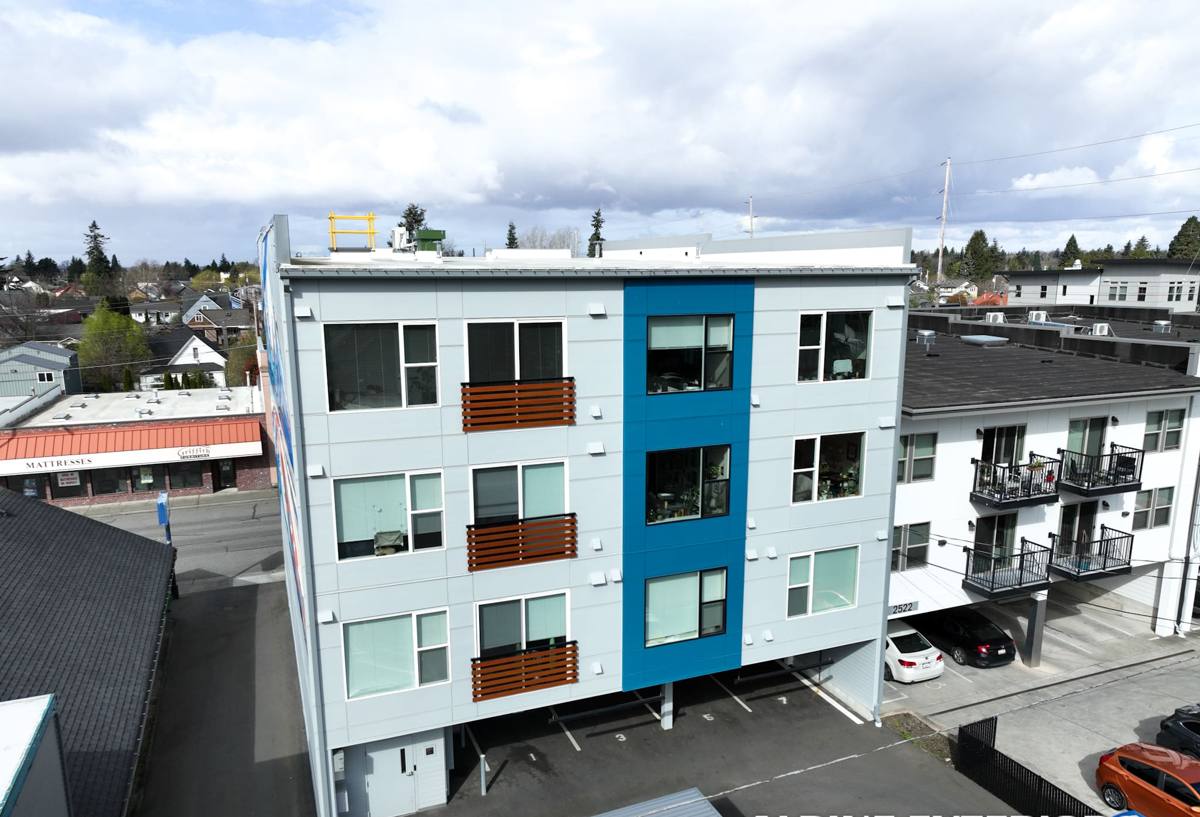
What Salt Air, Wind-Driven Rain, and Moss Season Actually Do
Salt Air and Metal Hardware
Salt in the air settles on everything — including window hardware, screen frames, and exposed fasteners. Over years, standard steel or low-grade aluminum hardware corrodes, locks get stiff or seize, and cheap screen frames pit and discolor. It's a slow process, so it's easy to underestimate until a homeowner is fighting a lock that won't turn or a slider track that's rough with corrosion.
Driving Rain
Wind-driven rain doesn't just fall on a window — it gets pushed sideways and upward into gaps that would never see water in a calmer location. This is where flashing, sill pans, and sealant details matter more than the glass itself. A window that's a great product but poorly flashed will leak on an exposed island wall long before it would on a sheltered inland lot.
Moss and Sustained Dampness
Long stretches of shade and moisture keep wood trim, sills, and cladding around windows damp for extended periods, which is exactly what moss and algae need to take hold. On wood-framed or wood-trimmed windows, that sustained dampness accelerates rot at the sill and the lower corners of the frame — usually the first place a window actually fails, well before the glass or hardware does.
What "Custom" Means for an Island Home
Custom doesn't have to mean unusual or expensive — it means the window is sized, configured, and detailed to fit your actual opening and your actual house, rather than forcing a stock size into a rough opening that doesn't quite match. On Lummi Island that shows up in a few common ways:
- Older cabins and cottages with rough openings that don't match today's standard window sizes
- Waterfront or view-oriented homes where larger fixed units or unusual configurations are mixed with operable windows
- Additions or remodels where new window openings need to blend with original construction
- Homes needing tempered or impact-resistant glass in specific locations for safety code compliance
- Mixed-material walls (wood, older siding types) where the window has to integrate cleanly with what's already there
Custom sizing also matters for performance. An ill-fitting window — even a good one — has more gaps for wind-driven rain and salt-laden air to work into over time. Getting the size and fit right the first time is one of the biggest factors in how long a window job actually lasts out there.
Materials and Glass That Hold Up in This Climate
We don't push one brand or one material for every home. The right choice depends on exposure, budget, and how the house is built. Here's how the common options generally compare for an exposed, salt-air, high-rain environment like Lummi Island:
| Frame Material | Salt Air Performance | Maintenance | Typical Trade-Off |
|---|---|---|---|
| Vinyl | Good — won't corrode or rot | Low; occasional cleaning | Fewer color/finish options; can flex in very large sizes |
| Fiberglass | Very good — stable and corrosion-resistant | Low | Higher upfront cost than vinyl |
| Wood (unclad) | Poor without diligent upkeep — vulnerable to moisture and moss-driven rot | High — regular painting/sealing | Classic look, but a real maintenance commitment in this climate |
| Wood-clad (aluminum or fiberglass exterior) | Good on the exterior face; interior wood still needs normal care | Moderate | Interior wood warmth with better exterior weather resistance |
| Aluminum | Fair — can corrode over time near salt water unless properly finished | Moderate | Slim sightlines, but thermally less efficient without thermal breaks |
For hardware and fasteners, we prioritize stainless steel or other corrosion-resistant hardware on island jobs rather than standard-grade components, simply because the exposure calls for it. On glass, dual-pane units with Low-E coatings and argon fill are our standard recommendation for this climate — they cut down on the heat loss and condensation swings that come with the area's damp, often overcast weather, without adding meaningful cost over basic dual-pane glass.
We're honest about wood: it can be the right call for a historic or high-end look, but on an exposed, moss-prone site it's a real ongoing maintenance commitment, not a one-time purchase. We'll tell you that plainly rather than sell you something that looks great on day one and becomes a maintenance headache by year three.
Installation Details That Matter More Here Than Elsewhere
The window unit itself is only part of the job. On a site that takes driving rain and salt-laden wind directly, the installation details are what actually keep water out over the long run:
Flashing and Sill Pans
Every opening gets flashed to shed water down and out, not into the wall cavity. A sill pan under the window creates a backup path for any water that does get past the primary seal, so it drains back out instead of soaking into framing.
Sealant Selection and Placement
Not all sealants hold up the same way to UV, salt exposure, and constant wet-dry cycling. We use sealants rated for exterior, weather-exposed use, and we're deliberate about where sealant goes versus where the assembly needs to breathe — sealing the wrong joint can trap moisture instead of keeping it out.
Weep Path Management
Operable windows need clear weep holes so any water that gets into the frame track can drain back out. On a site that sees more wind-driven rain than average, a blocked or poorly designed weep path turns a minor amount of water intrusion into a standing-water problem inside the frame.
None of this is exotic — it's standard trade practice done correctly and consistently. But it's exactly the kind of detail that gets rushed on a low-bid job, and it's the difference between a window that's dry in fifteen years and one that's leaking in three.
Our Process for a Lummi Island Project
- Site visit and measure. We look at exposure (which walls take the most wind and rain), existing framing condition, and any moss or moisture damage around current openings before recommending materials.
- Honest proposal. You get a clear scope, material recommendation with reasoning, and a straightforward price — no pressure, no inflated "today only" pricing tactics.
- Material staging. Because reaching the island means a ferry crossing, we plan deliveries and crew scheduling around ferry sailings so materials and the crew arrive together and the job isn't stretched out waiting on a missed crossing.
- Removal and installation. Old units are removed, openings are inspected and repaired if there's hidden rot or damage, then new windows are set, flashed, and sealed properly.
- Walkthrough and cleanup. We check operation of every window, confirm a clean seal, and leave the site tidy.
Because ferry access limits how many trips back and forth make sense in a day, we plan island jobs to minimize return visits — which means getting the order, sizing, and materials right before we ever cross over, not discovering a problem mid-install and having to wait for a part.
What Drives the Cost
Every home and opening is different, so exact pricing depends on the specifics of your project. In general terms, the main cost factors are:
| Factor | Why It Matters |
|---|---|
| Frame material (vinyl, fiberglass, wood-clad) | Material cost and long-term maintenance differ significantly |
| Window size and configuration | Larger or multi-panel units cost more than standard single units |
| Number of openings | Per-unit cost typically drops somewhat with more windows on one job |
| Condition of existing framing | Rot or moisture damage found during removal adds repair time |
| Glass upgrades | Impact-resistant or specialty glass adds cost over standard Low-E dual-pane |
| Site access and logistics | Ferry scheduling and material staging are factored into island jobs |
We'd rather walk your specific windows with you and give a number based on what we actually see than throw out a broad range that doesn't mean much for your house.
Maintaining Custom Windows in a Salt-Air, Moss-Prone Climate
Even a well-installed window benefits from basic upkeep in this environment. A short seasonal checklist goes a long way:
- Rinse salt residue off exterior frames and glass periodically, especially on wind-exposed walls
- Clear moss and debris from sills, tracks, and surrounding trim before it holds moisture against the frame
- Check and clean weep holes on operable windows so drainage paths stay open
- Inspect exterior caulking annually and re-seal any cracked or separated joints
- Lubricate locks and hardware on a schedule if you're in a heavy salt-exposure spot
- Watch for soft spots at the sill on any wood-framed or wood-trimmed windows — catching rot early is far cheaper than replacing a frame
Why a Crew That Already Works on Lummi Island Matters
Window installation is a trade where correct technique matters everywhere, but the margin for error is smaller on an exposed island site. A crew that hasn't worked this kind of environment before may not think twice about flashing details, hardware grade, or sealant choice — and those shortcuts show up as leaks, corrosion, or rot years down the line, not on install day. We also know the practical side: how to plan around the ferry so your project isn't dragged out over missed crossings, and what Whatcom County's permitting process looks like for window replacement and structural openings. That combination of climate-appropriate technical judgment and real logistical familiarity is what keeps a custom window project on Lummi Island from becoming a repeat-visit headache.
If you're planning a window project on Lummi Island — whether it's a few problem windows or a full-house replacement — we're happy to come take a look and give you a straightforward, no-pressure estimate. Use the form below to get started.