 Ferndale Siding
 Composite Decking Built for Lummi Island's Marine Climate
Lummi Island sits right on the water, and that changes what a deck has to survive. Homes here deal with salt-laden air blowing off the strait, long stretches of driving rain through fall and winter, and a moss and algae season that can run most of the year on shaded or north-facing decks. A deck built with the same specs you'd use for a dry inland lot in Whatcom County won't hold up the same way out here. Composite decking, installed correctly for this environment, is one of the more reliable ways to get a deck that still looks and performs well after years of island weather.
This page covers composite decking specifically for Lummi Island properties — what the climate demands, what a correct installation actually involves, and why working with a crew that already knows the island matters as much as the decking material itself.
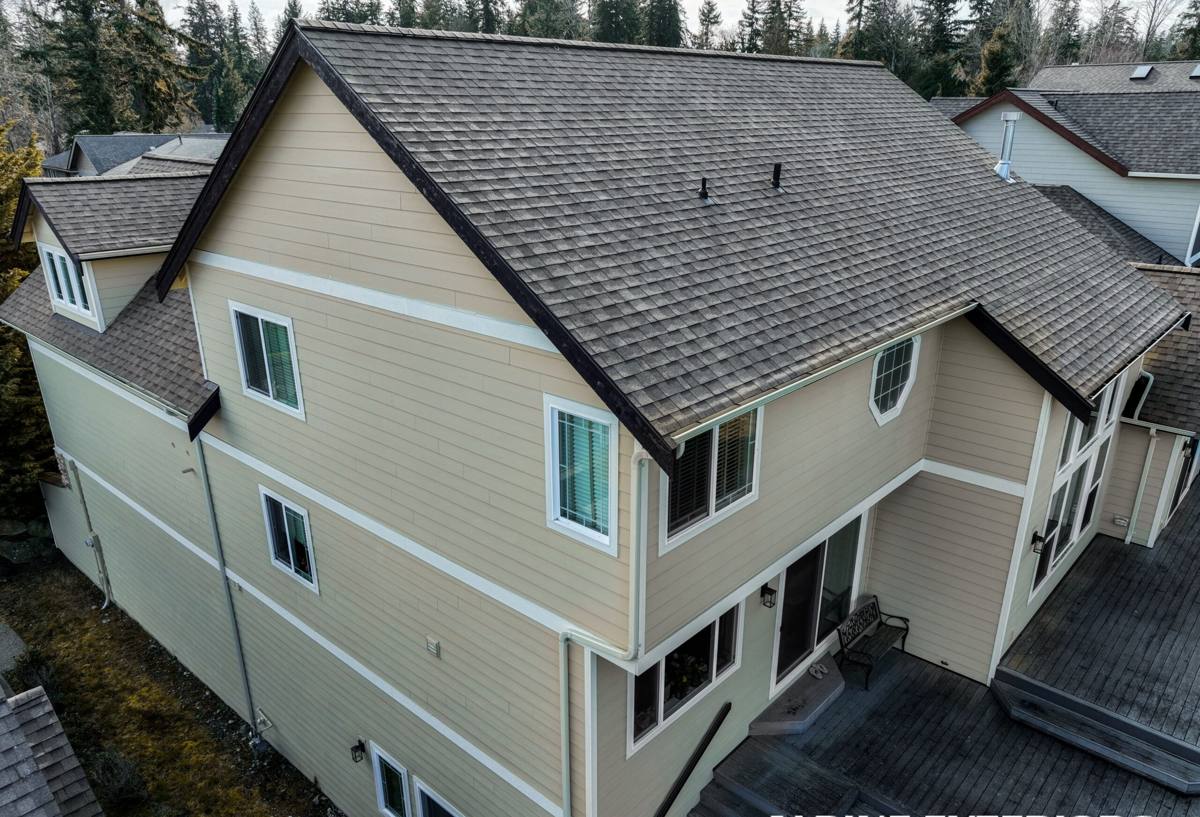
What Salt Air, Rain, and Moss Actually Do to a Deck
It helps to understand the specific stresses at work before talking about materials and process.
Salt Air
Airborne salt doesn't just affect boats and metal railings near the water — it settles on every horizontal surface, including deck boards, fasteners, and framing hardware. Over time it accelerates corrosion in low-grade screws, brackets, and connectors, and it can dull or discolor finishes that weren't rated for coastal exposure.
Driving Rain
Ferndale and the surrounding islands get sustained wet weather, and on an exposed site like Lummi Island wind-driven rain gets pushed sideways into gaps, end cuts, and fastener holes that a calmer inland site wouldn't see as much. Any spot where water can collect and sit — a poorly sloped ledger, a tight board gap, an unsealed cut end — becomes a slow, ongoing problem.
Moss and Algae
Shaded decks under trees, or decks on the north or east side of a house, stay damp longer between rain events. That moisture, combined with organic debris (needles, leaf litter, pollen), is exactly what moss and algae need to establish. Once established, moss holds moisture against the board surface and can make composite decking slick, which is a real safety issue on stairs and landings.
Why Composite Handles This Environment Well — When It's Done Right
Composite decking is engineered from wood fiber and recycled plastic, which means it doesn't absorb water and swell, split, or rot the way solid wood does. That's a genuine advantage on a salt-air, high-moisture site. But composite isn't maintenance-free or mistake-proof — the material only performs as well as the installation underneath it.
Capped vs. Non-Capped Boards
Most composite decking sold today is "capped" — the core is wrapped in a protective polymer shell on some or all sides. On Lummi Island, we recommend boards capped on all four sides where budget allows, since that shell is what actually resists moisture intrusion, staining, and UV fading in a wet, sun-exposed marine setting. Non-capped or partially capped boards can still work, but they're more sensitive to cut ends and fastener points being left unsealed.
Grooved vs. Solid Boards
Grooved-edge boards (used with hidden fastener clips) give a clean, screw-free surface and are popular for that look, but the grooves themselves can trap debris and moisture if the deck isn't kept swept. Solid-edge, face-screwed boards are easier to inspect and clean along the edges. Either works on Lummi Island — the right choice depends on how much upkeep the homeowner wants to do and the look they're after.
The Substructure Matters as Much as the Decking
This is the part homeowners often don't see, and it's where most premature deck failures actually start — not in the composite boards themselves, but in what's underneath them.
- Fasteners and hardware: Stainless steel or coated, corrosion-rated fasteners and structural connectors, not standard galvanized hardware that will pit and rust faster in salt air.
- Joist protection: A moisture-resistant joist tape or flashing on top of the framing keeps rainwater that gets between the boards from soaking directly into the joists year after year.
- Ledger flashing: Where the deck attaches to the house, correct flashing is what keeps driving rain from working its way behind the siding — a common source of hidden rot on coastal homes.
- Drainage and slope: The deck surface and the ground or structure below need enough slope and airflow that water doesn't pool anywhere, including under the deck itself.
- Board spacing: Gaps sized correctly for composite's expansion and contraction, and wide enough to let debris wash through instead of packing in and feeding moss.
A composite deck built on a substructure that skips any of these steps will still look fine for the first season or two. The problems that show up later — soft spots, rust streaks, boards that don't sit flat — almost always trace back to what was done (or not done) before the first board was ever installed.
Composite, Wood, and PVC — An Honest Comparison for This Site
| Material | Moisture Behavior | Maintenance | Notes for Lummi Island |
|---|---|---|---|
| Composite (capped) | Does not absorb water; resists swelling and rot | Periodic cleaning to prevent moss/algae buildup | Strong fit for salt air and heavy rain when substructure is done correctly |
| Natural wood (cedar, fir) | Absorbs moisture; prone to splitting, cupping, and rot over time | Regular sealing/staining, more frequent than most owners expect | Can look great short-term but needs consistent upkeep to hold up here |
| PVC (cellular) | Fully moisture-resistant, no wood fiber to hold water | Low; occasional cleaning | Very durable option, generally a higher material cost than composite |
We don't push one material as the only right answer — the table above reflects genuine trade-offs. For most Lummi Island homeowners, capped composite hits the balance point between upfront cost, low ongoing maintenance, and real durability against the salt-and-rain cycle this area sees.
Why Local Experience on Lummi Island Actually Matters
Lummi Island isn't a typical job site logistics-wise. Access is by ferry, which means material deliveries, crew scheduling, and equipment staging all need to be planned around ferry timing rather than just driving a truck to the door. A crew that hasn't worked the island before can lose real time — and add real cost — relearning that on your project.
Beyond logistics, working coastal and island properties around Ferndale and Whatcom County repeatedly means we've seen how salt exposure, wind direction, and shade patterns play out on real decks over multiple seasons — not just at handoff, but years later when a callback tells us what actually failed and why. That's the kind of knowledge that shapes fastener choice, flashing detail, and board selection before a single board goes down, not after a problem shows up.
Our Process
- On-site assessment: We look at sun and shade exposure, drainage, existing structure (if replacing an old deck), and how exposed the site is to wind-driven rain off the water.
- Material selection: We walk through capped vs. non-capped, grooved vs. solid-edge, and color/finish options based on your budget and how much maintenance you want to take on.
- Substructure work: Framing inspection or rebuild, corrosion-rated hardware, joist protection, and correct ledger flashing before any decking goes down.
- Installation: Boards installed with manufacturer-specified spacing and fastening methods, cut ends sealed where the product requires it.
- Final walkthrough: We go over basic care — cleaning cadence, what causes moss to take hold, and what to watch for — so the deck is easy to maintain from day one.
Maintenance in a Marine Environment
Composite cuts down on maintenance dramatically compared to wood, but "low maintenance" isn't "no maintenance" on a site like this.
- Sweep off needles, leaves, and pollen regularly, especially on shaded or covered decks where debris doesn't wash away on its own.
- Rinse the deck periodically to clear salt residue and organic buildup before it has a chance to feed moss or algae.
- Clean visible moss or algae promptly with a soft brush and a cleaner rated for composite — pressure washing at the wrong angle or distance can damage the board's surface.
- Check railings, stairs, and fastener points once or twice a year for early signs of corrosion or loosening hardware.
- Keep gutters and downspouts near the deck clear so runoff isn't dumping extra water directly onto or under the deck surface.
What to Ask Before Hiring a Deck Contractor on Lummi Island
- Do they have experience with ferry-access logistics and scheduling material deliveries for island jobs?
- Do they use corrosion-rated fasteners and hardware suited to salt-air exposure, or standard galvanized hardware?
- Will they detail the substructure work — joist protection, ledger flashing, drainage — in writing, not just the visible decking?
- Can they explain the trade-offs between capped and non-capped boards, and grooved vs. solid-edge, for your specific site conditions?
- Do they carry appropriate licensing and insurance for work in Whatcom County?
If you're weighing a new composite deck or a replacement on Lummi Island, we're happy to take a look at the site, talk through material options honestly, and give you a straightforward, no-pressure estimate. Use the form below to get started.