 Ferndale Siding
 Window Installation Built for Everson's Climate
Everson sits inland from Bellingham Bay in the Nooksack River valley, but it still gets the full weather package that defines western Whatcom County: long stretches of driving rain, heavy winter humidity, and a moss season that seems to start earlier every year. Homes here don't fail because of one big storm — they fail slowly, from years of moisture finding its way into places it shouldn't be. Window openings are one of the most common entry points, and a poorly installed or aging window can quietly cause rot, mold, and energy loss for years before anyone notices a problem.
Window installation isn't just a product swap. The window itself matters, but how it's flashed, sealed, and tied into the surrounding siding and wall assembly matters more. We approach every Everson job the same way: treat the opening as a system, not just a hole to fill.
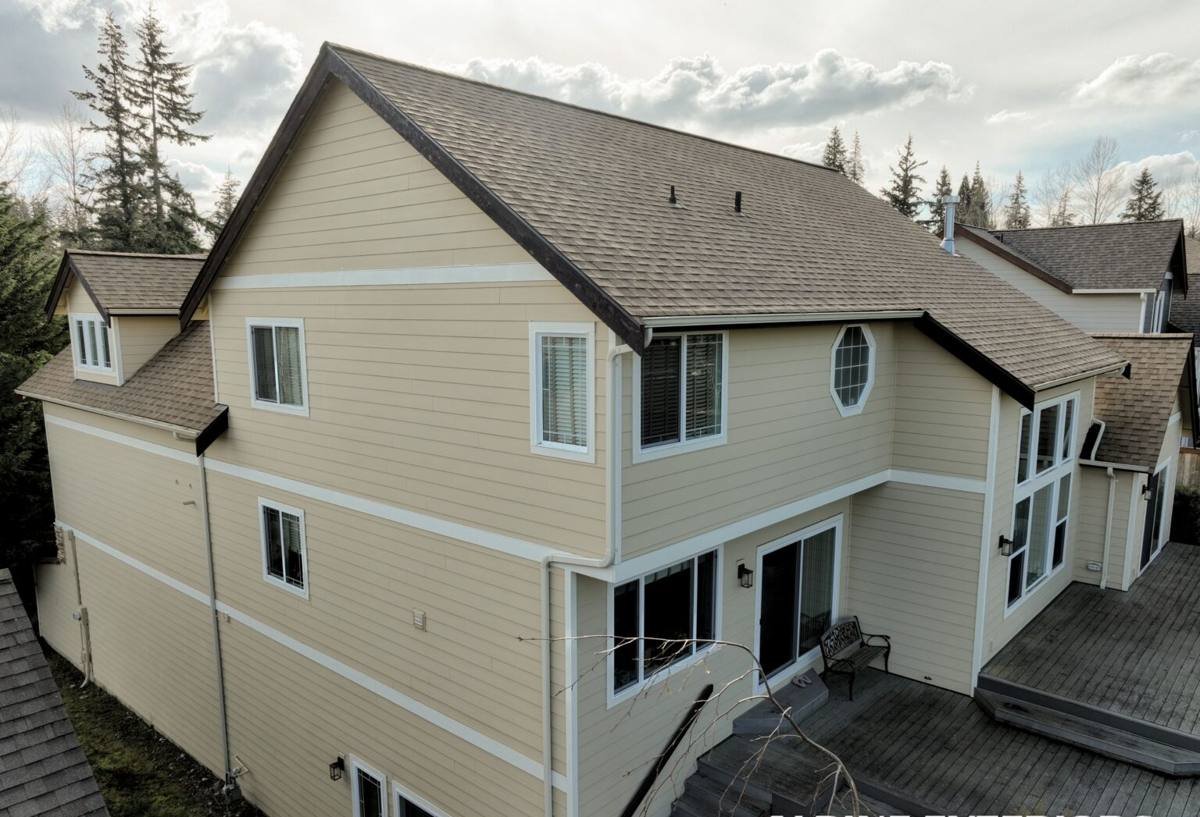
Signs Your Windows Need Attention
Whatcom County's damp climate accelerates window problems that might take twice as long to show up in a drier region. Most homeowners notice one or two of these before they call:
- Condensation or fogging between glass panes (a sign the seal has failed)
- Drafts you can feel near the frame even with the window latched shut
- Wood trim or sills that feel soft, spongy, or show dark staining
- Windows that are difficult to open, close, or lock properly
- Visible gaps between the window frame and siding or trim
- Moss or algae growth on the sill or lower frame that keeps coming back
- Noticeably higher heating bills without another obvious cause
- Paint that's peeling or bubbling specifically around window edges
Any one of these can be a minor fix. Two or three together usually mean the window and its surrounding flashing are due for replacement, not repair.
What a Correct Installation Actually Involves
It Starts Below the Window, Not At It
The single most important part of a window installation is the part nobody sees once the job is done: the sill pan and flashing sequence. A sill pan creates a shallow, sloped barrier under the window that catches any water that gets past the sash and directs it back outside instead of into the wall framing. In a climate like ours, skipping or half-doing this step is the number one reason windows that "look fine" end up with rot behind them five or ten years later.
Flashing Has an Order — And the Order Matters
Flashing tape and building paper need to be layered like shingles, so water always sheds downward and outward, never into a seam. Get the sequence backward — house wrap over the top flange instead of under it, for example — and you've built a funnel instead of a barrier. It's invisible on installation day and very visible on a repair estimate a few years later.
Air Sealing Without Overpacking
The gap between the window frame and the rough opening needs to be insulated, but stuffing it too tight with fiberglass or spray foam can actually bow the frame and cause the sash to bind. We use a low-expansion foam or backer rod approach that seals the gap without putting pressure on the frame itself.
Choosing the Right Window for This Climate
There's no single "best" window material — it depends on your home, your budget, and how much upkeep you want to sign up for. Here's how the common options stack up for a wet, moss-prone climate like Whatcom County's:
| Material | Moisture Behavior | Maintenance | Typical Trade-Off |
|---|---|---|---|
| Vinyl | Won't rot; handles moisture well | Low — occasional cleaning | Frame can expand/contract with big temperature swings |
| Fiberglass | Excellent — very stable in wet/dry cycles | Low | Higher upfront cost than vinyl |
| Wood-clad | Good if maintained; vulnerable if seals fail | Higher — needs periodic sealing/paint checks | Best classic look, but least forgiving of neglect |
| Aluminum | Conducts cold, prone to condensation | Low | Poor insulator for this climate unless thermally broken |
For most Everson homes, we steer people toward vinyl or fiberglass for their day-to-day moisture resistance. If you're set on a wood-look window for a specific style of home, that's a legitimate choice — we just make sure you understand it's a product that needs annual attention here, not a "install and forget" one, given how much rain the frame will see over its lifetime.
Glass Package Matters as Much as Frame Material
Low-E coatings and argon-filled double glazing are close to standard now, and for good reason in a climate with our winter humidity — they reduce interior condensation as much as they reduce heat loss. If you're replacing windows anyway, it's rarely worth downgrading the glass package to save a small amount up front.
Our Installation Process
- On-site assessment: We look at each opening individually — old windows in the same house often have different issues, especially on sun-exposed versus shaded walls.
- Accurate measurement and ordering: Correct sizing avoids gaps that lead to air and water infiltration later.
- Careful removal: We check the framing and sheathing behind the old window for hidden rot or moisture damage before anything new goes in.
- Sill pan and flashing: Installed in the correct shingle-lap order every time, no shortcuts.
- Window set and leveled: Shimmed, squared, and fastened so the sash operates smoothly for years, not just on day one.
- Insulation and air sealing: Low-expansion foam or backer rod around the frame perimeter.
- Exterior trim and sealant: Weather-rated caulking at the joints most exposed to wind-driven rain.
- Final walkthrough: We test operation, check for square, and confirm the exterior seal before we call it finished.
What Affects the Cost
Every quote we give is specific to the house, but the main factors that move the price up or down are consistent from job to job:
| Factor | Why It Matters |
|---|---|
| Number and size of windows | More/larger openings mean more material and labor |
| Frame material chosen | Vinyl, fiberglass, and wood-clad have different unit costs |
| Condition behind the old window | Hidden rot or framing damage adds repair time before installation can proceed |
| Access and window type | Second-story, oversized, or specialty-shaped windows take longer to install correctly |
| Trim and siding tie-in | Matching existing trim profiles or siding cuts adds finish work |
Most window replacement projects land somewhere in the range of several hundred to a couple thousand dollars per window depending on those factors — we'll give you an exact number for your specific home rather than a generic estimate, since the variables above can shift the price quickly in either direction.
Why It Matters to Hire a Crew That Works This Area
Window installation done wrong doesn't usually show up as a problem right away — it shows up two, five, or ten years later as rot, mold, or a failed seal, often after the installer is long gone. A crew that regularly works in Ferndale, Everson, and the surrounding Whatcom County towns has seen how these climate patterns actually play out on real homes over time: which flashing details hold up to a wet winter, which materials handle our humidity swings, and which shortcuts always come back to bite the homeowner. That's not something you get from a crew that mostly works drier inland regions and treats every install the same way.
We also know that Everson has a mix of housing stock — from older farmhouses to newer construction — and each comes with its own quirks around framing, existing trim, and how the wall assembly was originally built. Matching the installation approach to the actual house in front of us, rather than a one-size-fits-all method, is a big part of getting a lasting result.
Keeping New Windows Performing Long-Term
A correct installation is most of the battle, but a little upkeep keeps it that way:
- Clear debris and moss from window wells and sills each fall before the rainy season sets in
- Check exterior caulking annually and touch up any cracked or shrunk sealant
- Keep gutters clear so overflow doesn't run down onto window heads
- Watch for condensation between panes — it signals a seal failure, not something you can fix with cleaning
- Trim back vegetation that holds moisture against the exterior frame
If you're noticing drafts, fogged glass, or moss creeping around your window frames, it's worth having them looked at before another wet season adds to the damage. We're happy to walk your property, take a look at what's going on, and put together a straightforward, no-pressure estimate — just fill out the form below to get started.