 Ferndale Siding
 Why Everson Homes Put Extra Demands on Siding
Everson sits inland from the coast, but it isn't spared from the moisture that defines exterior work across Whatcom County. Homes here deal with long stretches of driving rain, humid air off the Nooksack River valley, and a shoulder season that can run from October well into April. Add in tree cover and shaded north-facing walls, and you get the same enemy that shows up on siding all over this part of Washington: sustained dampness that never fully dries between storms.
Farther west, closer to Ferndale and the coastline, salt air adds another layer of corrosion and finish breakdown to the mix. Even homes further inland get some of that influence carried in on weather systems moving off the Strait of Georgia, on top of the region's already heavy annual rainfall. The practical result for an Everson homeowner is the same regardless of exact distance from saltwater: siding here has to handle near-constant moisture exposure and a long moss season, not just the occasional wet week.
That combination is exactly what causes premature failure in siding products that aren't built for it — swelling at seams, moss and algae staking a claim on north walls, paint that fails years ahead of schedule, and trim that softens from the inside out before anyone notices from the street.
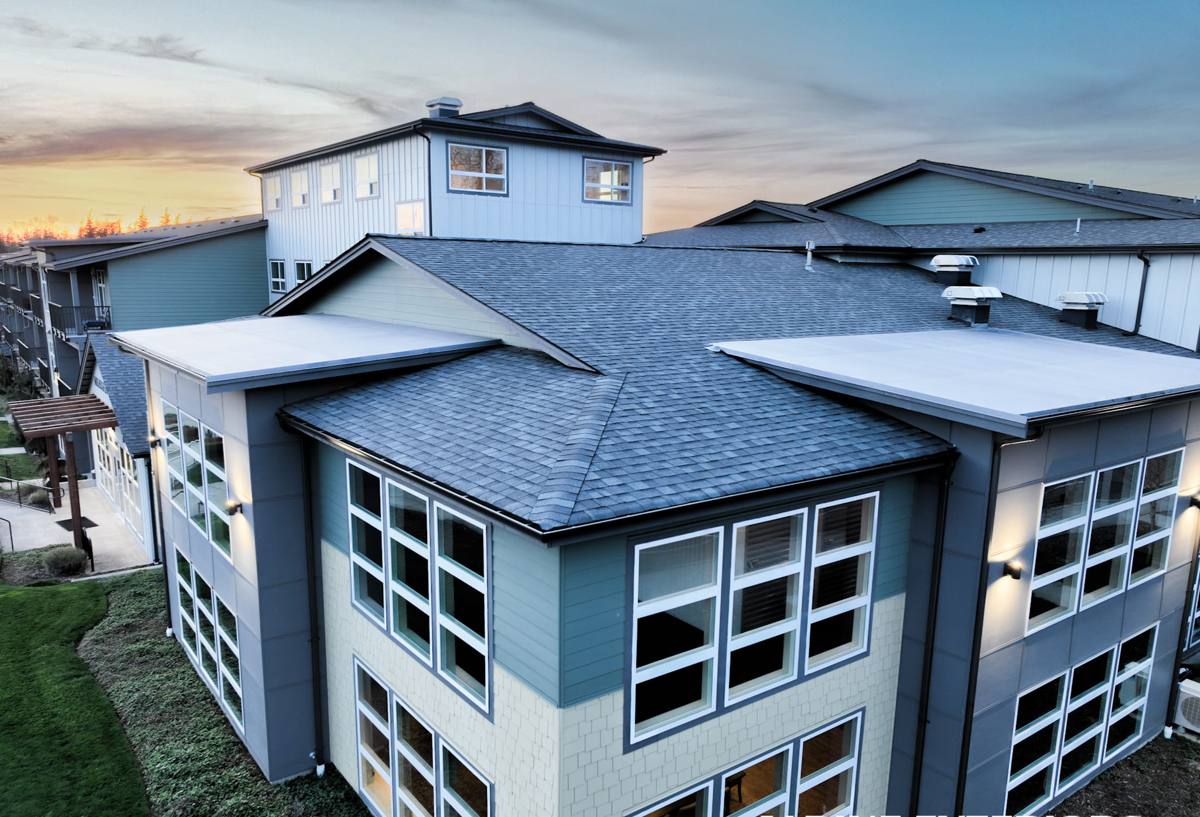
What "Correct" Siding Installation Actually Means
Siding installation isn't just nailing boards to a wall. A correct installation is a moisture-management system, and in a climate like Whatcom County's, every layer of that system matters more than it would in a drier region. Done right, siding installation on an Everson home includes:
- A weather-resistant barrier (housewrap or building paper) installed with proper shingle-lap overlap so water sheds downward and out, never inward
- Correctly flashed windows, doors, and penetrations, integrated with the water-resistive barrier rather than just caulked over it
- Rainscreen or proper drainage gap where the wall assembly calls for it, so siding can dry on both faces instead of trapping moisture against the sheathing
- Manufacturer-specified fastener type, spacing, and penetration depth — not "close enough"
- Correct clearances at grade, decks, patios, and roof lines so siding never sits in standing water or constant splash-back
- Factory-cut and factory-primed or factory-finished edges wherever possible, with field cuts properly sealed
Skip or shortcut any one of these steps and the siding itself becomes almost irrelevant — water will find the gap. This is the part of the job that separates a crew that installs siding as a specialty from a crew that treats it as a quick add-on to a larger remodel.
Why We Install Only James Hardie Fiber Cement
We made a deliberate decision to install one product line — James Hardie fiber cement siding — and nothing else. Not vinyl, not LP SmartSide, not Cemplank or Allura, not primed spruce or cedar. That's not a marketing angle; it's a standard we hold because of what we've seen these products do, and not do, in exactly this climate over time.
Where the alternatives fall short here
Vinyl siding is inexpensive and easy to install, but it's a petroleum-based product that expands, contracts, and can warp or crack in cold snaps, and it offers essentially no fire resistance. LP SmartSide and other engineered wood products use real wood strand as their base — durable in many climates, but wood-based products are inherently more vulnerable to the swelling and edge deterioration that comes from sustained moisture exposure if any seam, cut edge, or fastener point isn't sealed exactly to spec. Primed spruce and cedar are attractive, traditional choices, but they demand a repainting and caulking maintenance cycle that gets harder to keep up with in a region where the siding barely gets a chance to fully dry out for months at a time. Other fiber cement brands, like Cemplank and Allura, are legitimate fiber cement products — our decision to standardize on Hardie isn't about disqualifying the category, it's about consistency of factory finish, product engineering, and warranty support across every job we do.
What Hardie gets right for this climate
James Hardie fiber cement is non-combustible, dimensionally stable, and doesn't rely on wood fiber as its structural base, which removes the swelling and rot pathway that drives most siding failures we see in Whatcom County. Hardie's ColorPlus factory finish is baked on and warranted separately from the substrate, which means the finish doesn't depend on a field paint job holding up through a wet Pacific Northwest winter. Hardie also engineers specific HZ5 product formulations for regions like ours with higher moisture exposure — the product is built assuming the climate we actually have, not a generic national average.
| Factor | Vinyl | LP SmartSide / Wood-Based | James Hardie Fiber Cement |
|---|---|---|---|
| Moisture/rot resistance | Resists rot but can warp | Vulnerable at unsealed cuts and seams | Cement-based, does not rot |
| Fire resistance | Low | Combustible | Non-combustible |
| Finish longevity | Color molded in, can fade | Field-paint or factory-primed, needs upkeep | Factory ColorPlus finish, separately warranted |
| Maintenance | Low, but limited repair options | Regular caulk/paint inspection needed | Periodic wash and caulk check |
| Typical lifespan (installed to spec) | 20–30 years | 20–30 years | 30+ years |
Signs an Everson Home's Siding Needs Attention
Because so much of the damage that shows up on siding here starts as a moisture problem rather than an appearance problem, it pays to know what to look for before a wall assembly is compromised:
- Moss or algae buildup concentrated on north- or shade-facing walls that keeps returning after cleaning
- Soft spots, bubbling, or visible swelling at panel seams, corners, or butt joints
- Paint that's peeling or chalking well ahead of a normal repaint cycle
- Visible gaps or separation at trim, window, and door edges
- A musty smell or visible staining on interior walls that back up to exterior siding
- Siding that feels spongy or gives slightly when pressed near the base of the wall
Any one of these is worth a professional look. Together, they usually mean the water-management layer behind the siding — not just the siding itself — needs to be addressed as part of the fix.
Our Installation Process
We run the same disciplined process on every Everson-area siding job, because the climate doesn't give you a second chance if a step gets skipped.
- On-site assessment — we inspect existing siding, sheathing condition, and problem areas (trim, decks, grade clearance, roof-wall intersections) before quoting anything
- Tear-off and sheathing check — old siding comes off and any compromised sheathing is identified and addressed before anything new goes up
- Water-resistive barrier and drainage plane — installed with correct overlap and, where the assembly calls for it, a rainscreen gap so the wall can dry on both sides
- Flashing integration — windows, doors, and penetrations flashed and tied into the barrier system, not just caulked afterward
- Hardie panel or plank installation — installed to manufacturer fastening and clearance specifications, with factory-finished edges used wherever the layout allows
- Trim, caulking, and touch-up — factory-matched caulk and touch-up paint at cut edges and seams
- Final walkthrough — we go over the finished job with the homeowner before calling it done
Cost Factors for a Siding Installation Project
Every home is different, and we won't quote a number without seeing the house, but the main variables that move the price on an Everson siding project are consistent:
| Factor | Why It Matters |
|---|---|
| Home size and wall complexity | More corners, dormers, and roof-wall intersections mean more cutting, flashing, and labor time |
| Tear-off scope | Removing old siding and repairing damaged sheathing adds time before new siding can go on |
| Siding profile chosen | Lap plank, shingle-style, and panel systems differ in material and labor cost |
| Trim and accessory work | Fascia, soffit, and trim replacement is often bundled in for a consistent finished look |
| Access and site conditions | Steep grades, tight lot lines, or limited equipment access affect labor time |
Because Hardie is the only product we install, pricing conversations stay simple — we're not upselling you between tiers of material quality. The variability is in the house, not in which siding grade you can afford.
Why a Crew That Already Works in Everson Matters
Siding installation done right depends on judgment calls that generic experience doesn't always cover: how much rainscreen gap a particular wall assembly needs, where moss pressure is worst on a given lot, how local grade and drainage patterns affect a foundation line, and how Whatcom County's building department expects flashing details to be handled. A crew that regularly works Ferndale, Everson, and the surrounding Whatcom County area has already made those judgment calls dozens of times over, on homes facing the same weather your home faces every winter. That familiarity shows up in fewer callbacks, fewer surprises mid-project, and a finished product that's actually built for where it sits — not for a generic climate zone.
Caring for Hardie Siding After Installation
One of the practical advantages of standardizing on James Hardie is that ongoing maintenance is genuinely low, especially compared to wood or wood-composite alternatives:
- Rinse siding annually with a garden hose to clear pollen, dust, and early moss growth before it takes hold
- Keep gutters clean and downspouts directed away from the foundation so siding isn't sitting in splash-back
- Trim back vegetation and tree limbs that keep walls shaded and damp longer than they need to be
- Inspect caulking at trim and seams every year or two and touch up as needed
- Address any impact damage promptly — fiber cement holds up well, but a cracked panel left unaddressed can let moisture behind the wall system
None of this is difficult, and it's a fraction of what a wood or wood-composite system demands over the same number of years in this climate.
Get a Straight Answer for Your Home
If your Everson home's siding is showing moss, soft spots, failing paint, or you're simply planning ahead for a replacement, we're happy to take a look and give you an honest read on what your home actually needs. There's no pressure and no upsell between siding grades — just a straightforward look at the house and a clear estimate. Use the form below to request a free estimate.