 Ferndale Siding
 Decks Built for Everson's Wet, Mossy Climate
A deck in Everson does a lot more work than a deck in a dry climate. Between the salt air carried in off Puget Sound and Bellingham Bay, months of driving rain, and a moss season that can stretch from fall clear into spring, an outdoor structure here is under near-constant pressure. Wood that would last decades in a dry inland town can start showing rot, fastener corrosion, or slick moss growth within a few seasons if it wasn't built with this specific climate in mind. We build custom decks for homeowners throughout the Ferndale and Everson area, and almost every repair call we get traces back to the same root cause: the deck was built to a generic standard instead of a Whatcom County one.
This page is about what actually matters when you're planning a custom deck here — not decking trends, but the structural and material decisions that determine whether your deck is still solid, safe, and good-looking in fifteen years.
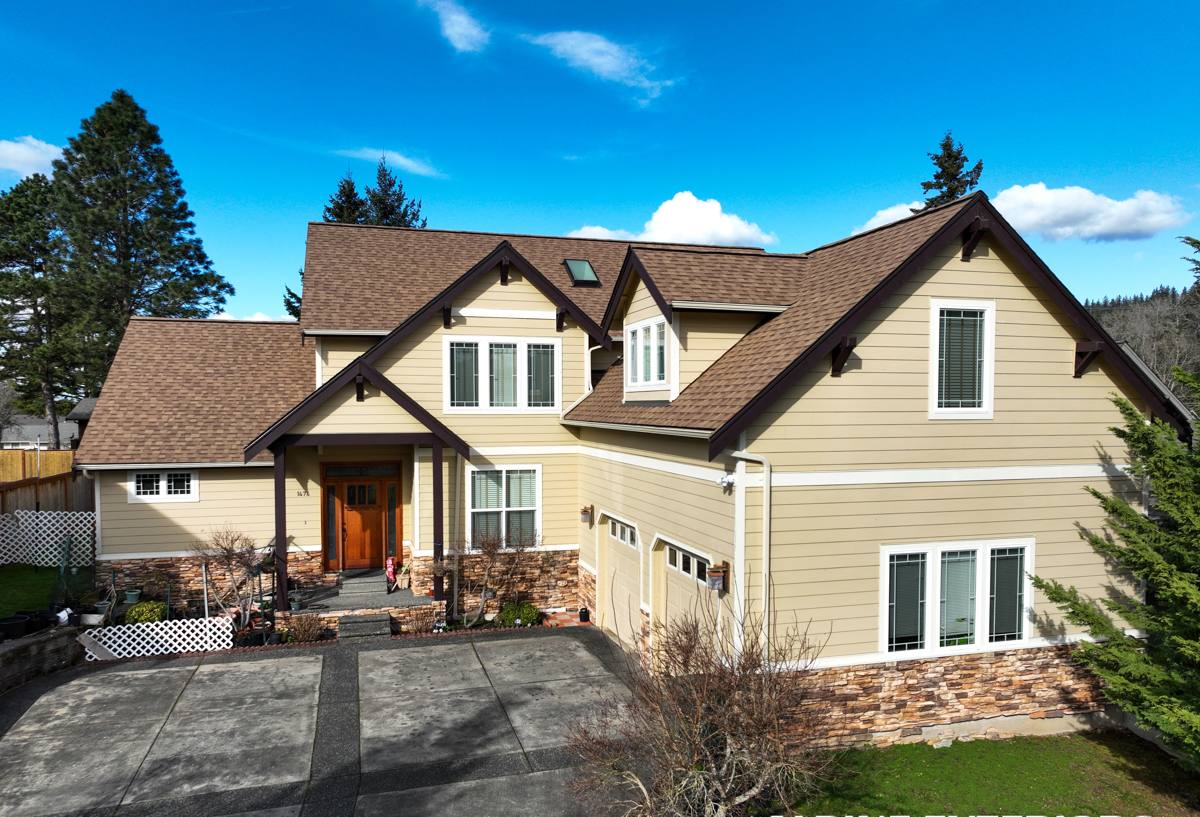
What a Deck Has to Handle Here
Constant moisture, not just rain
It's not just the total rainfall that wears on a deck — it's how long everything stays damp. Low winter sun angles, fog off the river bottoms near Everson, and heavy cloud cover mean wood, hardware, and footings can stay wet for days at a stretch. Anything that traps water against a structural member — a poorly flashed ledger board, a joist with no airflow underneath, decking boards laid too tight — becomes the spot where rot starts first.
Salt air and metal fatigue
Proximity to Puget Sound means airborne salt is a real factor for hardware, even a fair distance inland. Standard zinc-coated fasteners and connectors corrode faster here than the box label assumes. We treat corrosion-resistant hardware as a baseline requirement, not an upgrade.
Freeze-thaw cycling
Whatcom County winters aren't brutal, but they're not mild enough to ignore either. A handful of hard freezes each year, combined with saturated ground, is exactly the condition that heaves poorly set footings and splits wood that was already holding water. Footings need to be set to the depth and bearing standard the county requires for this frost zone — not just deep enough to "seem sturdy."
Choosing Decking Material for This Climate
There's no single "best" decking material — there's the material that fits your budget, your maintenance appetite, and how much moss and moisture exposure your particular site gets. Here's how the common options actually compare for an Everson-area build:
| Material | Moisture Behavior Here | Maintenance | General Cost Range |
|---|---|---|---|
| Pressure-treated fir/hem-fir | Good if properly sealed; prone to checking and splinter if finish is neglected | Re-stain/seal every 1-2 years in this climate | Lowest upfront cost |
| Cedar | Naturally rot- and insect-resistant, but still needs sealing against constant wet | Annual cleaning, periodic oiling | Mid-range |
| Composite decking | Doesn't rot or absorb water; some early-generation boards trapped moisture and grew mold in shaded, damp spots | Periodic washing to keep moss/algae from taking hold; no sealing | Higher upfront, lowest long-term maintenance |
| PVC decking | Fully moisture-proof; performs consistently in wet, shaded yards | Occasional washing | Highest upfront |
For heavily shaded lots near trees or the river bottom — common around Everson — we lean homeowners toward composite or PVC in the shaded zones even if the rest of the deck is wood, simply because shade plus moisture is where wood decking struggles hardest. That's a maintenance-and-moisture judgment call, not a brand endorsement — every material has trade-offs, and we'll walk through them honestly for your specific lot.
What a Correctly Built Deck Involves
Footings and framing
Footings need to bear on undisturbed, load-rated soil at the depth Whatcom County's code requires for this frost zone, not a shortcut depth. Joist spacing and beam sizing should be calculated for your actual decking material and span — composite and PVC boards often need tighter joist spacing than solid wood to avoid flex over time, and that's frequently missed by crews used to building wood-only.
Ledger board flashing
Where the deck attaches to the house is the single most common failure point we see on older decks in this area. A ledger board that isn't properly flashed lets water track behind it and into the house rim joist — a slow, hidden rot problem that can go unnoticed for years in a climate this wet. Correct flashing (and proper standoff from the siding or sheathing) is non-negotiable on every deck we attach to a structure.
Fasteners and connectors
We use corrosion-resistant structural connectors and fasteners rated for ground contact and treated lumber compatibility — treated lumber's chemical makeup corrodes standard hardware faster, and combined with salt air, using the wrong fastener grade is how you end up with rust streaks and weakened joints in under five years.
Airflow underneath
Ground clearance and cross-ventilation under the deck matter more here than in a dry climate. Framing too close to grade, or boxing in the underside without vents, traps humidity against the joists year-round — a slow rot sentence even for treated wood.
Moss, Algae, and Keeping the Deck Safe Underfoot
Moss on a deck isn't just cosmetic — it's a slip hazard, and it holds moisture against the board surface, which shortens the life of whatever finish or sealant you're using. A few build-time decisions make a real difference in how much moss problem you'll actually have:
- Proper board spacing so water sheds through instead of pooling on the surface
- Decking oriented and sited to get whatever seasonal sun the lot allows
- A finish or board material chosen with your yard's actual shade level in mind, not a catalog photo
- Gutters or drip edges positioned so roof runoff isn't dumping directly onto the deck surface
- Adequate underside airflow so the whole structure can actually dry out between rains
Even with all of that done right, moss and algae are a fact of life here — the goal isn't zero maintenance, it's a deck that's easy to keep clean and doesn't fight you the whole time.
Permits and Building Code in the Area
Deck projects in and around Everson typically fall under Whatcom County's building code requirements, and depending on height, size, and attachment to the home, that usually means a permit and an inspection at the footing stage before framing can proceed. We handle that process as part of the job — pulling the right permit, scheduling inspections, and building to the standard the inspector is going to check for, not around it. Skipping this step is one of the most common corners cut by unlicensed or out-of-area crews, and it's the homeowner who ends up dealing with it at resale or during an insurance claim.
Our Process, Start to Finish
- On-site assessment — we look at your yard's drainage, sun/shade pattern, soil, and how the deck will attach to the house before recommending anything.
- Design and material selection — sized and specified for your actual site conditions, not a generic template.
- Permitting — we pull what's required and schedule the county's footing inspection.
- Build — footings, framing, flashing, decking, and railings, in that order, with each stage checked before moving to the next.
- Final walkthrough — we go over the finished deck with you, including what maintenance it actually needs going forward.
Why a Crew That Already Works Everson Matters
A deck built by a crew that's never worked this specific climate tends to make the same mistakes: hardware that wasn't rated for salt air, ledger flashing done to a dry-climate standard, footings set to a generic depth instead of the local frost-line requirement. None of those mistakes show up on day one — they show up in year three or four, as rust streaks, soft spots, or a ledger board quietly rotting behind the siding.
We work in Ferndale, Everson, and the surrounding Whatcom County communities regularly, which means we're not guessing at how this climate treats a deck over time — we're building to what we've already seen hold up and what we've seen fail. That local track record is the difference between a deck that needs real work again in five years and one that just needs the normal seasonal cleaning.
Getting Started
If you're planning a new deck or replacing one that's showing its age, we're happy to come take a look and walk you through options that fit your lot, your budget, and how you actually want to use the space. There's no pressure and no cost to get our take — use the form below to request a free estimate.