 Ferndale Siding
 Why Decks Near Lummi Nation Wear Out Faster
Homes along the water in and around Lummi Nation deal with a harder combination of conditions than most inland Ferndale properties. Salt-laden air off Bellingham Bay and the surrounding waterways accelerates corrosion on anything metal. Driving rain off Whatcom County's frequent storms drives moisture sideways into joints, ledger connections, and end grain that a straight-down rain would never reach. And the long stretch of gray, wet months each year gives moss, algae, and mildew a huge head start on any horizontal wood surface that doesn't drain and dry quickly.
None of this is exotic knowledge — it's just what happens to a structure that sits outside, low to the ground, exposed to weather, year after year. A deck that was built without those specific conditions in mind will show it early: soft boards, rusted fasteners bleeding orange streaks, green film in shaded corners, and a substructure that's weaker than it looks from the top. Replacement done right accounts for all of it from the framing up, not just the decking you can see.
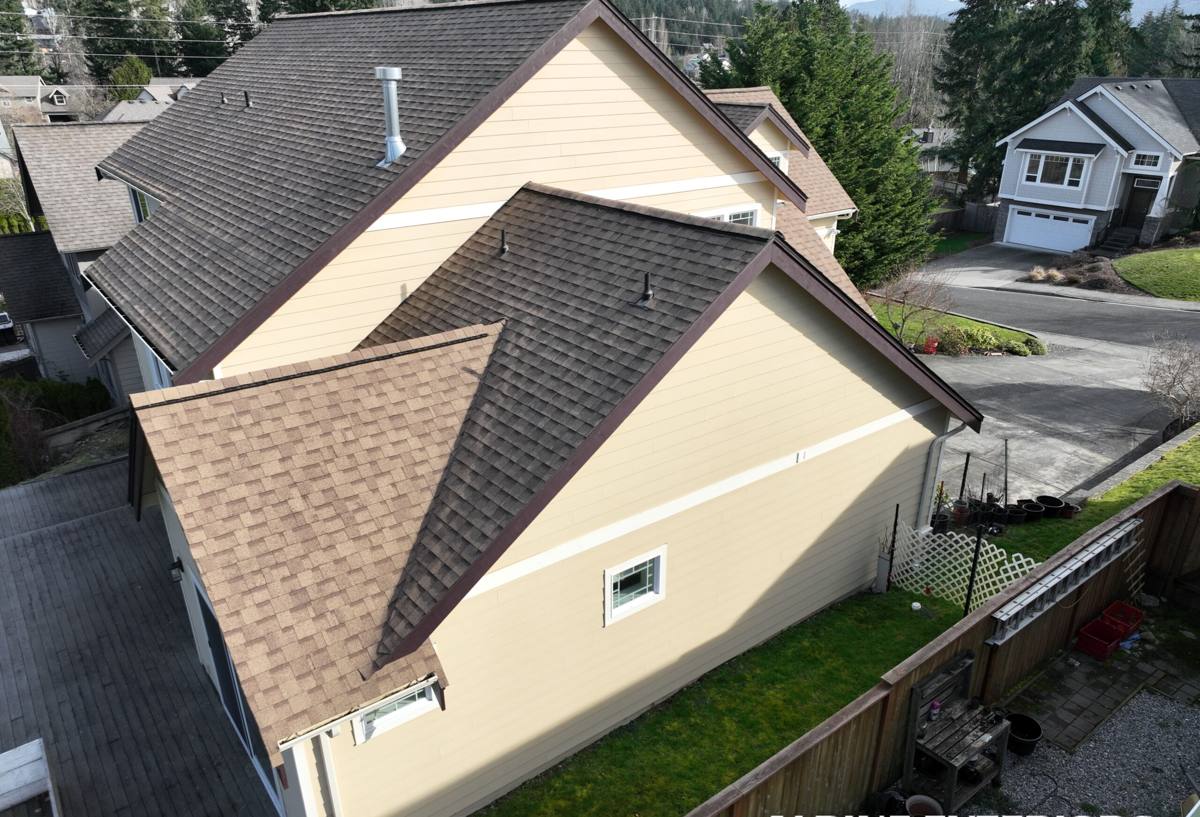
Signs a Deck Needs Replacement, Not Another Repair
Repairing a board here and there can extend a deck's life for a while, but at some point patching costs more in the long run than starting over correctly. Common signs it's time to replace rather than repair include:
- Soft, spongy, or spring-back decking across multiple areas, not just one board
- Rust stains bleeding from screws or bolts, especially near the ledger board
- Visible gaps opening between boards as they cup, twist, or shrink unevenly
- Persistent moss or dark staining that returns within weeks of cleaning
- A ledger board or rim joist that feels soft when probed, or shows separation from the house
- Railings that flex or posts that wiggle at the base — often a sign the framing underneath has failed
- A deck older than 15–20 years that was built before current flashing and fastener standards were common practice
If you're only seeing one or two of these and the framing underneath is sound, repair may still make sense. If several show up together, or if the framing itself is compromised, replacement is usually the more honest recommendation — and the safer one.
Choosing Materials That Actually Hold Up Here
There's no single "best" decking material for every home, but there are real tradeoffs worth understanding before you decide, especially this close to salt water and moisture.
| Material | How It Handles Salt Air & Moisture | Maintenance | General Cost Position |
|---|---|---|---|
| Pressure-treated wood | Good if properly sealed and detailed; end grain and cut edges need extra attention | Annual cleaning, periodic re-staining or sealing | Lowest upfront cost |
| Cedar or other naturally durable wood | Handles moisture well when finished and maintained; still weathers over time | Regular cleaning and re-finishing to keep appearance and protection | Mid-range |
| Capped composite decking | Excellent resistance to moisture absorption and staining; won't rot | Occasional washing; no staining or sealing needed | Higher upfront, lower long-term upkeep |
| PVC decking | Very good moisture resistance; fully synthetic | Minimal; periodic cleaning | Highest upfront cost |
Fasteners and hardware matter as much as the decking itself. In a salt air environment, standard galvanized fasteners can start showing rust within a few seasons. We use stainless steel or high-grade coated fasteners rated for coastal exposure, along with hidden fastening systems where the decking product supports it, to reduce both corrosion and the number of exposed metal points that can fail first.
Framing and Substructure Materials
Whatever decking you choose on top, the framing underneath deserves equal attention. Pressure-treated lumber rated for ground contact is standard for posts and beams, but the connectors — joist hangers, post bases, structural screws — need to match that exposure. A deck can look brand new on the surface and still be failing underneath if the substructure hardware wasn't specified correctly.
What a Correct Deck Replacement Actually Involves
A deck replacement is more than pulling up old boards and screwing down new ones. Done correctly, it addresses everything a wet, salt-exposed climate stresses first.
Ledger Board and House Connection
The ledger board — where the deck attaches to the house — is the single most common point of failure on decks in this region, because it's where water intrusion can also damage the home's structure behind the siding. Correct flashing at this connection, installed so water sheds away from the house rather than pooling against it, is non-negotiable on any replacement we build.
Footings and Posts
Footings need to be sized and set to local frost and soil conditions, with posts anchored using corrosion-resistant hardware rather than buried directly in concrete, which traps moisture against the wood. We inspect and typically replace footings during a full deck replacement rather than reusing old ones of unknown condition.
Joists, Beams, and Airflow
Proper joist spacing and beam sizing for the actual span and load, plus enough clearance underneath for airflow, keeps the substructure drier and slows down rot and mildew growth in the crawlspace below the deck.
Decking Installation and Gaps
Board spacing matters more here than in drier climates — gaps that are too tight trap moisture and debris, which feeds moss growth; gaps that are too wide look sloppy and can be a tripping or safety issue. We set spacing based on the specific material's expansion behavior.
Railings and Stairs
Railings and stair stringers take a lot of environmental abuse and structural load at the same time. We build these to current code requirements for height, baluster spacing, and load, using the same corrosion-resistant hardware as the rest of the structure.
Drainage and Moss: The Long-Term Maintenance Reality
Given the long moss season in this part of Whatcom County, no deck — regardless of material — stays completely moss-free forever without some homeowner attention. What good construction does is reduce how fast it comes back and how much damage it can do in the meantime. That means decking with consistent, well-planned gaps, a substructure with real airflow underneath, and grading or drainage near the base of the deck that moves water away instead of letting it pool.
We also recommend a simple annual routine: a gentle wash (not a high-pressure blast, which can damage wood fibers or composite surfaces), a look at fastener heads for early rust, and a check of the ledger flashing area for any signs of water staining on the siding above it. Catching a small issue in year three is a lot cheaper than replacing a deck again in year eight.
Permits and Working Near Tribal Land
Properties in and around Lummi Nation can fall under different permitting jurisdictions depending on whether the land is tribal trust land or fee land, and whether it sits within Whatcom County or Lummi Nation's own planning authority. This isn't something to guess at — before any replacement begins, we help confirm which permitting process applies to your specific property and make sure the project is submitted correctly the first time. Getting this step wrong can delay a project by weeks, so we treat it as part of the job, not an afterthought.
Our Deck Replacement Process
1. On-Site Assessment
We walk the existing deck, check the ledger connection, probe the framing for soft spots, and talk through what you actually use the space for — entertaining, grilling, a quiet spot with morning coffee — since that shapes layout and material decisions.
2. Honest Recommendation
We'll tell you plainly if repair is a reasonable option instead of full replacement. We don't have a reason to push a bigger job than the deck needs.
3. Permitting
We confirm the correct jurisdiction and handle the permit submission and any required inspections tied to it.
4. Tear-Out and Structural Inspection
Removing the old deck lets us actually see the ledger connection, the rim joist behind it, and the soil and footing conditions below — details that are impossible to fully judge from the surface.
5. Framing and Flashing
New footings, posts, beams, joists, and ledger flashing go in to current standards, sized for the deck's actual load and span.
6. Decking, Railings, and Finish Work
Decking, railings, and stairs are installed with fasteners rated for this environment, and everything is checked for level, spacing, and secure attachment before we call it done.
7. Final Walkthrough
We walk the finished deck with you, cover basic maintenance, and answer any questions before we consider the job complete.
Why It Matters to Hire a Crew That Already Works Lummi Nation
A contractor who's worked in this specific area already understands the practical realities: which permitting office to start with, how salt exposure actually behaves on a deck a hundred yards from the water versus a mile inland, and what moisture and moss patterns look like on homes in this part of Ferndale through a full year of seasons. That local familiarity shows up in fewer surprises, fewer callbacks, and a deck that's actually built for the conditions it will sit in rather than a generic set of assumptions.
Questions to Ask Before You Hire
Whoever you choose for a deck replacement, it's worth asking a few direct questions before signing anything:
- Are you licensed and insured to work in Washington, and can you provide proof?
- Will you pull the correct permit for my property's jurisdiction, and who handles that paperwork?
- What fastener and hardware grade do you use, and is it rated for coastal or salt-air exposure?
- How will the ledger board be flashed and connected to the house?
- What's your plan for footings — are old footings reused or replaced?
- What's included in a written estimate, and what could change that price?
- Do you offer any workmanship warranty, and what does it actually cover?
A contractor who answers these clearly and specifically, without vague reassurances, is a good sign. One who brushes past them is worth a second look elsewhere.
Ready for a Straight Answer About Your Deck?
If your deck near Lummi Nation is showing its age — soft spots, rust stains, moss that keeps coming back — we're happy to take a look and give you an honest read on repair versus replacement. Reach out for a free, no-pressure estimate using the form below.