 Ferndale Siding
 Lummi Island Decks Deal With a Tougher Climate Than Most People Realize
A deck on Lummi Island isn't working under the same conditions as one twenty miles inland. Sitting out in the Salish Sea, the island gets a steady dose of salt-laden air, driving rain off the water, and long stretches of gray, damp weather that keep wood and hardware wet far longer than homeowners expect. Add in tree cover on many lots and you get shaded, slow-drying deck surfaces that grow moss and algae for a good chunk of the year. None of this means a deck can't last — it just means repairs done for a typical Whatcom County backyard don't always hold up out here. Fasteners corrode faster, ledger connections stay damp longer, and moss buildup does more than look bad — it holds moisture against the wood and turns boards slick and dangerous underfoot.
When we look at a deck repair on Lummi Island, we're not just patching what's broken. We're asking why it broke in the first place, because on this island the answer is almost always tied to moisture, salt exposure, or both.
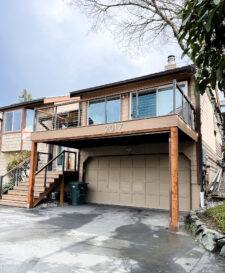
Signs a Deck Needs Real Repair — Not Just a Cleaning
A lot of Lummi Island decks look rough simply from moss and grime, and a good cleaning fixes that. But some symptoms point to actual damage that a pressure wash won't solve. Before you spend money on cosmetic work, it's worth knowing the difference.
- Soft, spongy, or springy spots when you walk across the decking
- Fasteners that have popped up, rusted through, or left dark streaking around the screw heads
- Gaps or separation where the deck ledger meets the house
- Visible daylight or gaps between joists and beams that weren't there before
- Persistent black or green staining that comes back within weeks of cleaning
- Railings or stair stringers that flex, wobble, or feel less solid than they used to
- Wood that's gone gray and fibrous, or that a screwdriver can push into without much resistance
Any one of these on its own might be minor. Several together usually means moisture has been getting into the structure for a while, and that's a repair job, not a cleaning job.
What an Honest Deck Repair Actually Involves
Starting Below the Surface
Deck boards are the part everyone sees, but they're rarely the whole story. A repair that only replaces surface boards without checking the framing underneath — joists, beams, posts, and the ledger board bolted to the house — is a repair that's likely to need doing again soon. On a marine-exposed property, we check those structural members for rot, corrosion at connection points, and any place water has been pooling instead of draining off.
Flashing and Water Management
Most deck failures we see trace back to water getting into a joint that should have been sealed or flashed — usually where the deck ledger meets the house siding, or where posts meet the ground or a concrete footing. Correct flashing at these points is what keeps rainwater from being driven, by wind off the water, straight into the framing. Fixing the boards without fixing the flashing just buys a little time.
Fasteners and Hardware
Standard exterior screws and joist hangers corrode faster this close to salt water. We replace failed hardware with fasteners and connectors rated for coastal exposure, since using anything less on an island property is just scheduling the next repair.
Matching or Upgrading the Decking
Depending on what's underneath, a repair might mean sistering damaged joists and reusing sound decking, replacing sections of boards to match the existing deck, or recommending a broader resurfacing if enough of the surface has gone soft. We'll tell you honestly which category your deck falls into rather than upselling a full rebuild you don't need.
Decking Materials: How They Hold Up in a Salt Air, High-Moss Climate
Material choice matters more here than in a drier inland climate. Here's how the common options compare for a Lummi Island setting.
| Material | Moisture & Salt Air Behavior | Moss/Algae Tendency | Maintenance Needs |
|---|---|---|---|
| Pressure-treated lumber | Good rot resistance if properly sealed and maintained; fasteners are the weak point | Moderate — needs regular cleaning in shaded spots | Re-seal every 1–2 years, inspect fasteners annually |
| Cedar | Naturally rot-resistant but softer surface; can gray and check faster in driving rain | Moderate to high in shaded areas | Regular sealing; more frequent cleaning |
| Composite decking | Handles moisture and salt air well; core doesn't rot | Can still grow surface algae/moss, especially textured boards in shade | Low — periodic washing, no sealing |
| PVC/capped decking | Excellent moisture and salt resistance | Lower than wood, but not immune in constant shade | Low — occasional washing |
There's no single right answer for every home — a shaded, heavily wooded lot leans us toward composite or capped boards for the surface, while a sunnier, more open site can do well with properly maintained wood. We'll walk your specific situation with you rather than push one product across the board.
Our Deck Repair Process
- On-site inspection. We walk the deck, check the framing from underneath where accessible, test boards and railings, and look at ledger and flashing conditions.
- Honest assessment. We tell you what's cosmetic, what's structural, and what's likely to fail next if left alone — in plain language, not a sales pitch.
- Written scope and estimate. You get a clear breakdown of what we'll repair, what materials and hardware we're using, and why.
- Repair work. Framing repairs and flashing corrections happen first, then fastener and hardware replacement, then decking and railing work.
- Final walk-through. We check the deck together before we consider the job done.
Repair or Replace? How We Make the Call
Homeowners often assume any deck trouble means a full rebuild. That's not usually true. The decision comes down to how much of the structure — not just the surface — has been compromised.
- If the framing, ledger, and posts are sound and only the surface boards or a section of railing has failed, repair is the right call and the more cost-effective one.
- If rot has reached multiple joists, the ledger connection, or support posts, patching those areas individually can cost more over time than addressing the deck as a whole.
- Age matters too — an older deck built without today's flashing standards may keep generating the same failure in new spots even after a repair, which is worth knowing before you commit to a patch-only approach.
We'd rather tell you a repair will only buy you a couple of years than sell you one and let you find that out on your own.
Keeping a Repaired Deck From Needing Repair Again
Whatcom County's long wet season and Lummi Island's added salt exposure mean maintenance isn't optional if you want a repair to last. A few habits go a long way:
- Sweep leaves and debris off the deck regularly — trapped organic matter is what feeds moss and holds moisture against boards
- Keep gutters and downspouts clear so runoff isn't dumping directly onto or under the deck
- Clean moss and algae off the surface at the start of the wet season, before it gets a foothold
- Reseal wood decking on the schedule appropriate for the product — don't wait until it's visibly gray
- Do a quick fastener and railing check once a year, especially after winter storms
Why It Matters to Hire a Crew That Already Works on Lummi Island
Lummi Island is reached by a short ferry crossing, which changes how repair work has to be planned — materials, crew, and equipment all need to be staged and timed around the schedule rather than treated like a normal in-town job. A contractor who hasn't worked the island before can underestimate that logistics piece, which shows up as delays or rushed work.
More importantly, a crew that's done repair work on the island already knows what marine exposure does to decks here — which fastener grades hold up, which flashing details actually keep driving rain out, and which shaded, moss-prone spots on a property need extra attention. That local experience is the difference between a repair that's built for this specific climate and one that's built for a generic set of conditions and happens to be installed here.
Get a Straight Answer About Your Deck
If your Lummi Island deck has soft spots, rusting hardware, persistent moss, or just doesn't feel as solid as it used to, we're happy to take a look and give you an honest read on what it needs — repair, partial rebuild, or just a good cleaning and maintenance plan. Fill out the form below for a free, no-pressure estimate.