 Ferndale Siding
 Building Decks for Lummi Island's Marine Climate
Lummi Island sits out in the salt air off Whatcom County, and that changes what a deck has to survive. A deck built to a generic set of plans might hold up fine forty miles inland, but out here it's dealing with salt-laden wind, driving rain off the water, and a moss season that can run half the year. Building decks correctly for this island isn't about using fancier materials for their own sake — it's about understanding which details actually matter when the weather doesn't let up.
We work throughout Ferndale and the surrounding Whatcom County communities, including Lummi Island, and we've learned that decks here fail in predictable ways: fasteners corrode faster than inland, ledger connections trap moisture if they're not flashed right, and any horizontal surface that doesn't shed water fast enough grows moss within a season or two. A correctly built deck accounts for all of that from the design stage, not as an afterthought.
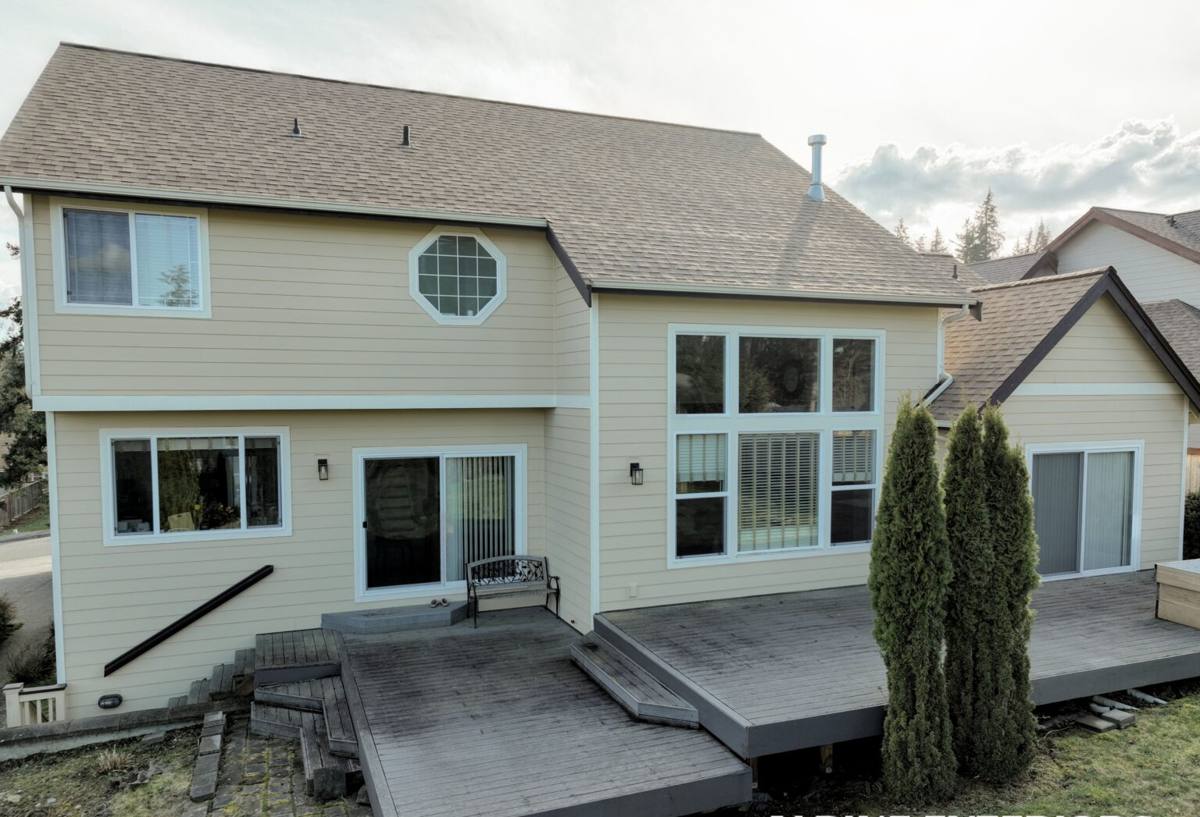
What Salt Air Does to a Deck Over Time
Proximity to saltwater accelerates corrosion on anything metal — nails, screws, joist hangers, bolts, and railing hardware all take more abuse here than they would in a dry inland yard. Standard electro-galvanized fasteners can start showing rust streaks and pitting well before a deck's structural life is over, and once corrosion sets into a fastener, it weakens the connection long before it's visually obvious.
The fix isn't complicated, but it does mean spending more upfront on hardware:
- Stainless steel or heavy hot-dip galvanized fasteners rated for coastal exposure, not standard exterior-grade hardware
- Structural connectors (joist hangers, post bases, hurricane ties) matched in coating quality to the fasteners driven into them — mixing a premium hanger with a bargain nail defeats the purpose
- Railing hardware and any exposed brackets in a finish that resists pitting, since these are the most visible corrosion points on the whole structure
None of this is exotic — it's simply matching the hardware spec to the actual environment instead of building to a generic inland standard.
Driving Rain and Deck Drainage
Rain that comes in sideways off the water behaves differently than a straight-down inland downpour. It gets driven under railings, into ledger connections, and behind any trim that isn't properly flashed. A deck design that looks fine on paper can still let water track back toward the house if the flashing details aren't right.
Where Water Gets In
The most common failure point on any deck, coastal or not, is the ledger board — the piece that attaches the deck framing to the house. Done wrong, it becomes a channel that funnels water directly into the wall framing behind it, which you won't see until there's rot or a soft spot years later. Done right, it's flashed so water sheds away from the house at every point along that connection, and that detail matters more on Lummi Island than almost anywhere else in the county because of how much wind-driven rain the ledger has to shed.
Decking Gaps and Slope
Board spacing and the deck's overall slope both affect how fast water clears the surface. Too tight a gap between boards and water sits, feeding rot and moss. Too little slope away from the house and water pools instead of running off. These are small numbers — fractions of an inch — but they're the difference between a deck that dries out between storms and one that stays damp for days.
Moss Season and Surface Maintenance
Whatcom County's wet season is long, and a shaded or north-facing deck can stay damp for weeks at a stretch. Moss and algae take hold on any surface that doesn't dry quickly, and once established, they make the deck surface slippery and start to hold moisture against the wood or composite underneath.
A few design choices make a real difference in how much moss a deck deals with over its life:
- Adequate gaps between boards so air and water both move through, not just across the surface
- Clear space underneath the deck for airflow, rather than framing that traps humid air against the joists
- Decking material and finish chosen with the deck's actual sun exposure in mind — a shaded deck needs a more moss-resistant surface than one that gets afternoon sun
- Gutter and downspout placement that doesn't dump roof runoff directly onto or under the deck
No deck built in this climate will be entirely moss-free forever, but these details cut down how often it needs scrubbing and how fast a slick surface builds back up.
Choosing Decking Material for Lummi Island Conditions
There's no single "best" decking material — the right choice depends on how much maintenance a homeowner wants to do and how the deck sits relative to sun, shade, and salt exposure. Here's how the common options actually compare in this climate:
| Material | Salt Air Behavior | Moss/Moisture Resistance | Maintenance |
|---|---|---|---|
| Pressure-treated lumber | Holds up well if fasteners are corrosion-rated | Needs regular cleaning and sealing to resist moss | Annual cleaning, periodic re-sealing |
| Cedar | Naturally decay-resistant, ages to gray if unsealed | Moderate — benefits from finish in shaded areas | Sealing every 2-3 years for color retention |
| Composite decking | Doesn't corrode, but check hidden fastener specs | Good, but can still grow surface algae in deep shade | Periodic washing, no sealing needed |
| PVC/capped composite | Excellent, fully synthetic | Very good moisture resistance | Occasional washing |
We'll walk through these trade-offs honestly for your specific site — a deck tucked under trees on the shaded side of a Lummi Island home needs a different recommendation than one out in open sun facing the water.
Why We're Selective About Certain Composite Products
Not every composite or capped product on the market performs the same in a wet, salt-influenced environment. Some earlier-generation composites are prone to moisture absorption at cut edges and fastener points if they're not detailed correctly during installation, which can lead to swelling or surface issues over time. Our standard is to use products with a track record in coastal Pacific Northwest conditions and to detail every cut edge and fastener penetration properly, rather than treating composite as a "install and forget" material. It still requires the right installation discipline — it just shifts where that discipline matters most.
Structural Considerations Specific to This Site
Beyond materials, the structure underneath the decking has to be sized and protected correctly for long-term coastal exposure.
Footings and Posts
Post bases should sit above grade on proper footings, keeping wood posts out of standing water and off damp soil. On sites with any grade or drainage challenges — common on hillside or waterfront-adjacent lots — footing depth and placement need to account for local soil and drainage conditions rather than a one-size-fits-all spec.
Ledger Attachment and Flashing
As covered above, this is the single most important structural detail for keeping water out of the house itself. We flash every ledger connection to shed water away from the siding and framing, and we check the condition of the siding and sheathing behind an existing ledger location before attaching anything new to it.
Joist Spacing and Span
Joist spacing and span need to match the decking material chosen — composite and PVC products often have different span tables than wood, and installing them on spacing meant for lumber can lead to a bouncy or under-supported deck over time.
Our Deck Building Process
We approach every deck project the same structured way, whether it's a full rebuild or new construction:
- Site assessment — we look at sun exposure, drainage, existing structure (if replacing a deck), and how the site is exposed to wind and rain off the water
- Design and material selection — we walk through decking, hardware, and railing options with the trade-offs specific to your site's exposure
- Permitting — deck construction in Whatcom County typically requires a permit; we handle that process as part of the project
- Demolition (if applicable) — removal of an existing deck, with a check of the ledger area and framing behind it for hidden moisture damage
- Framing — footings, posts, beams, and joists built to span and spacing requirements for the chosen decking material, with corrosion-rated hardware throughout
- Decking and railing installation — installed with proper gapping, fastening, and flashing details for this climate
- Final walkthrough — we go over the finished deck and basic care so you know what to expect from it season to season
What to Check Before Hiring a Deck Builder on the Island
Lummi Island's ferry access and rural roads mean not every contractor based elsewhere is set up to service the island reliably for follow-up work, warranty issues, or multi-day projects. Before hiring, it's worth confirming a few things:
- The contractor is licensed and insured to do structural deck work, not just cosmetic repairs
- They pull the required Whatcom County permit rather than skipping it
- They can speak specifically to how they handle ledger flashing and fastener selection for coastal exposure — a vague answer here is a red flag
- They have a realistic plan for ferry scheduling and material staging, since deliveries and crew time both need to work around the ferry
- They'll give you a written scope that specifies decking material, hardware grade, and railing type — not just a lump-sum number
A crew that already works Lummi Island regularly has usually already solved the logistics problems that catch out-of-area contractors off guard — ferry timing, material staging, and scheduling around weather windows that are narrower here than on the mainland.
Maintaining Your Deck After Installation
A well-built deck in this climate still needs some seasonal attention to stay ahead of moss and moisture:
- Sweep debris off the surface regularly, especially in fall when leaves and needles accumulate and trap moisture
- Clean the surface at least once a year to remove early moss and algae growth before it gets established
- Check railing hardware and fasteners periodically for early signs of corrosion, particularly on decks with direct water exposure
- Keep gutters and downspouts clear so roof runoff isn't draining onto or under the deck
- Re-seal wood decking on the schedule appropriate to the species and finish used
None of this is heavy maintenance, but skipping it is how a well-built deck starts looking tired well before it should.
If you're planning a new deck or replacing one that's past its prime on Lummi Island, we're glad to walk the site with you and put together a straightforward, no-pressure estimate. Use the form below to get started.