 Ferndale Siding
 Windows Built for the Lummi Nation Coastline
Homes in and around Lummi Nation sit close to the water, and that changes what a window has to survive. This isn't like replacing windows in an inland neighborhood where the biggest concern is a hot afternoon sun. Here, the air itself carries salt off Bellingham Bay and the Strait of Georgia, the rain comes in sideways more often than straight down, and the gray months stretch long enough that moss and mildew get a real foothold on anything that stays damp too long. A window that isn't specified for this environment will show it within a few seasons — not with a dramatic failure, but with the slow, creeping kind of damage that's expensive to catch late and cheap to prevent early.
We work custom window installs for homes in this part of Whatcom County regularly, and the patterns repeat. Salt-laden air corrodes hardware that isn't rated for it. Driving rain finds gaps that a standard install in a drier climate would never expose. And moss doesn't just grow on roofs — it takes hold in window sills, cladding seams, and anywhere water sits instead of draining. Getting a window right here means designing for all three from the start, not treating them as afterthoughts.
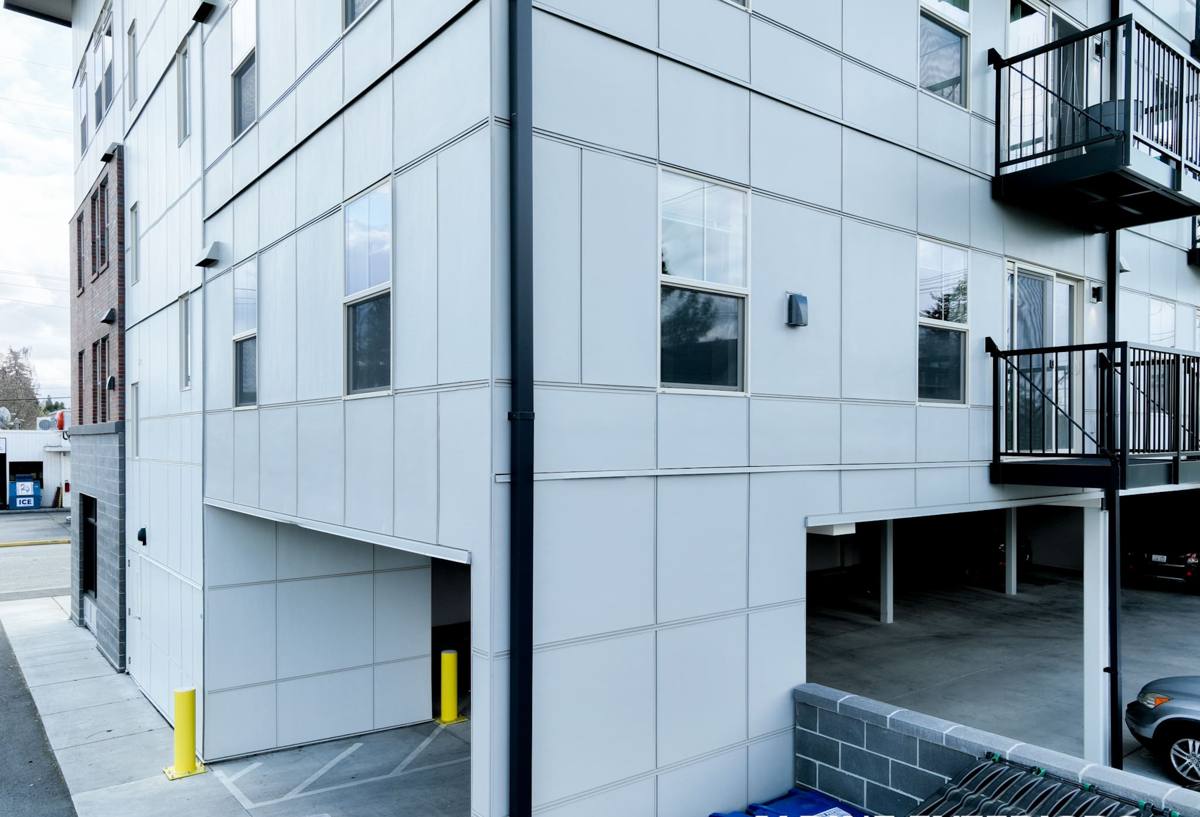
What Salt Air and Driving Rain Actually Do to a Window
Corrosion You Don't See Until It's a Problem
Salt air is hard on metal. Cheaper hardware — hinges, locks, balance systems, even some fasteners — can start corroding well before the glass or frame shows any wear. Once hardware corrodes, windows get harder to open and close, seals stop compressing evenly, and small gaps open up that let in more moisture. It's a slow spiral, and it's one of the most common reasons an otherwise decent-looking window stops performing.
Driving Rain Finds the Weak Point
Rain that falls straight down is forgiving of small installation mistakes. Rain that's being pushed sideways by wind off the water is not. It gets driven into any gap in the flashing, any shortcut in the sealant work, any place where the window-to-wall transition wasn't detailed correctly. In a lot of houses we look at, the window unit itself is fine — the problem is what's around it. That's why we treat flashing and water management as part of the window job, not a separate concern.
Frame Material Comparison for This Climate
There's no single "best" frame material for every home — it depends on budget, maintenance appetite, and how exposed the house is to wind and salt spray. Here's how the common options actually perform in a coastal Whatcom County setting:
| Material | Salt Air Resistance | Maintenance | Typical Lifespan Here |
|---|---|---|---|
| Vinyl | Good — won't corrode, some UV fading over decades | Low | 20-30 years |
| Fiberglass | Excellent — very stable in temperature and moisture swings | Low | 30-40+ years |
| Aluminum-clad wood | Fair to good if hardware and cladding seams are properly detailed | Moderate | 20-30 years, dependent on upkeep |
| Bare wood | Poor without diligent upkeep — most exposed to moisture and moss | High | Highly variable |
We don't push one material on every homeowner. A lot of it comes down to how exposed a particular wall of the house is — a window facing open water or prevailing wind takes more punishment than one tucked on a sheltered side. We'll walk the house with you and talk through what actually makes sense for each opening, not just the front door's worth of curb appeal.
A Note on Wood Windows
We're not against wood windows — they can look great and plenty of homeowners want that look. But we're honest about the trade-off: in a salt-air, high-moisture environment, bare or under-maintained wood is the material most likely to give you trouble, and it asks the most of you in ongoing care. If you want the wood look with less maintenance risk, aluminum-clad or fiberglass options that mimic wood profiles are worth discussing before committing to solid wood on an exposed wall.
Glass and Weatherproofing Choices That Matter Here
Beyond the frame, a few glass and sealing decisions make a real difference for homes near the water:
- Dual or triple-pane glass with a quality low-E coating helps with both energy performance and condensation control, which matters when humid marine air meets a warm interior.
- Corrosion-resistant hardware — stainless or coated components hold up far longer than standard-grade hardware in salt air.
- Warm-edge spacers reduce the condensation and seal fatigue that cold, humid climates accelerate.
- Properly detailed weep systems so any water that does get past the outer seal has a clear path back out instead of pooling in the frame.
None of these are exotic upgrades — they're standard-grade choices that happen to matter more here than they would somewhere drier and less coastal.
Our Installation Process for Lummi Nation Area Homes
The window unit is only part of the job. How it's installed determines whether it actually performs the way it's rated to. Our process for homes in this area follows the same sequence every time:
- On-site assessment — we look at each opening individually, checking existing framing, flashing condition, and how exposed that particular wall is to wind-driven rain.
- Measurement and custom fit — older homes in this region are rarely perfectly square, so we measure for the actual opening, not a catalog size.
- Removal and inspection — once the old window is out, we check the sheathing and framing underneath for any hidden moisture damage before anything new goes in. This is often where a problem you didn't know about gets caught early.
- Flashing and water management — proper flashing tape, sill pans, and integration with the existing weather barrier so water is directed out, not into the wall.
- Setting the window — shimmed and fastened to spec, checked for square and level, not just eyeballed.
- Sealing — interior and exterior sealant appropriate for the material and exposure, with attention to the corners and joints where most leaks actually start.
- Final check — operation, seal, and cleanup before we call it done.
Skipping or rushing any one of these steps is how a good window ends up performing like a cheap one. It's also the most common reason we get called out to fix work someone else did.
Signs Your Current Windows Are Losing the Battle
If you're on the fence about whether it's time to replace rather than repair, a few signs point clearly toward replacement in this climate:
- Visible condensation or fogging between panes — the seal has failed and the insulating gas is gone
- Hardware that's stiff, corroded, or won't latch cleanly anymore
- Soft or discolored wood at the sill or frame corners
- Moss or dark staining building up on the sill or exterior trim that comes back no matter how often it's cleaned
- A noticeable draft or cold spot near the window on windy days
- Paint or finish that's peeling from the inside out, which often points to trapped moisture rather than just age
Any one of these on its own might not mean much. Two or three together, especially on a wall that takes direct weather, usually means the window's water and air seal has already broken down.
Moss Season and Ongoing Window Care
Whatcom County's long gray stretch from fall through spring is exactly the kind of environment moss and mildew thrive in, and windows aren't immune just because they're not the roof. Sills, tracks, and the base of frames can hold moisture longer than the rest of the exterior, especially on shaded or north-facing walls. A quick seasonal habit — clearing debris from sills and tracks, checking that weep holes aren't blocked, and keeping an eye out for any new staining — goes a long way toward getting the full lifespan out of a new window. We're happy to walk you through what to watch for on your specific windows once they're installed.
Why a Crew That Already Works This Area Matters
Window installation isn't a one-size-fits-all trade, and the difference shows up most in coastal, weather-exposed areas like this one. A crew that mostly installs in drier, more sheltered parts of the state may not think twice about hardware grade, flashing detail, or how much wind-driven rain a particular wall really takes. We work in and around Ferndale and the surrounding Whatcom County coastline regularly, so those aren't special considerations for us — they're just how we build every job. That familiarity also means fewer surprises during the walkthrough and a more accurate sense of what your home specifically needs, rather than a generic recommendation.
If you're weighing a full custom window replacement or just want an honest read on whether your current windows are holding up, we're glad to take a look. Reach out for a free, no-pressure estimate — fill out the form below and we'll set up a time to walk the property with you.